Home
Home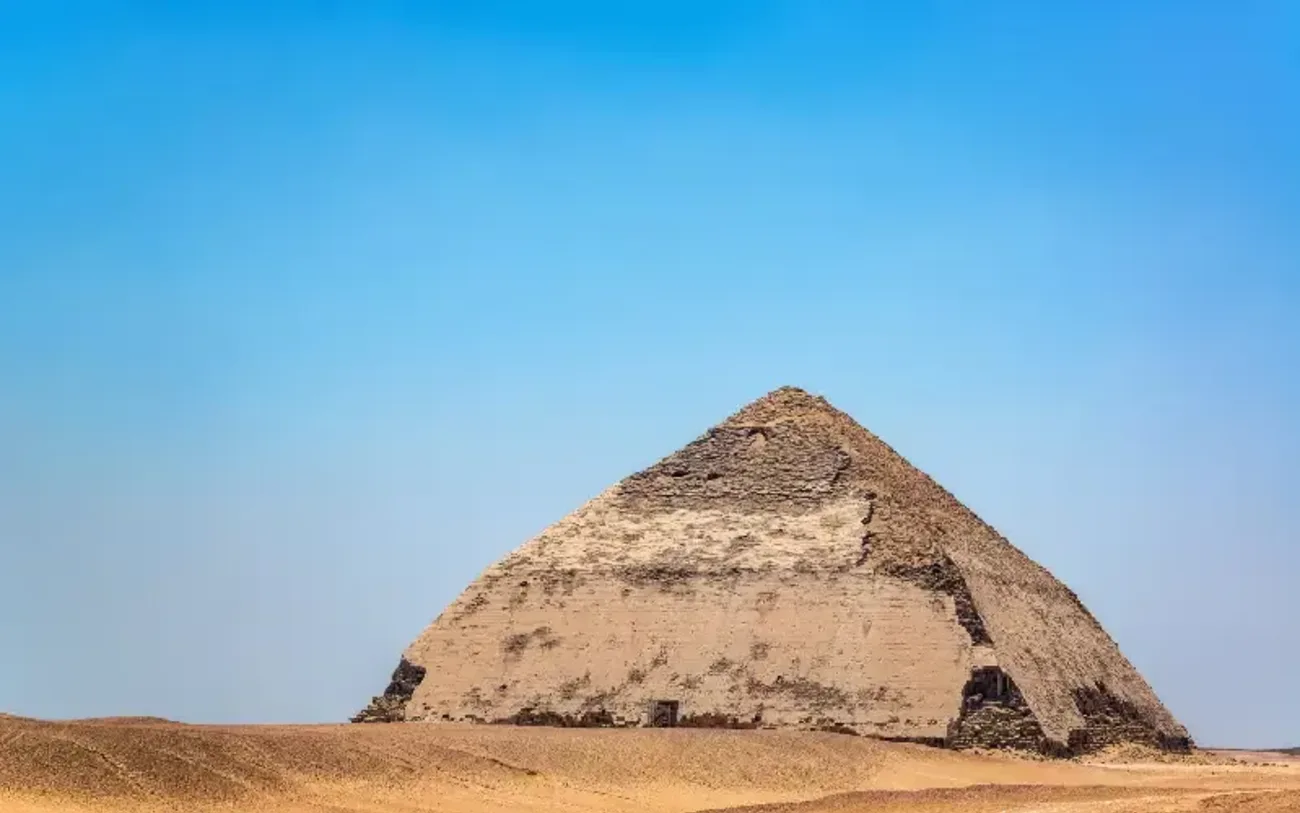
The shift in inclination occurs about 47 meters above ground, marking the moment when ancient builders made a dramatic correction to stabilize the monument. Rising to 104.7 meters in height with a base of 189 meters, the Bent Pyramid represents a key turning point in pyramid development. Known to the ancient Egyptians as the “Southern Shining Pyramid,” it once gleamed with polished Tura limestone casing—much of which remarkably survives today.
After being closed for decades, the pyramid reopened to visitors in 2019 for the first time since 1965, allowing modern explorers a rare opportunity to enter its inner chambers and experience Egypt’s early engineering achievements firsthand.
The Bent Pyramid in Egyptian History
Sneferu’s Era of Experimentation
The Fourth Dynasty marks a period of extraordinary architectural innovation, and Sneferu (2613–2589 BCE) stands at its center. His reign witnessed the transition from stepped pyramids to true smooth-sided forms. Unlike many pharaohs, Sneferu built multiple pyramids, each representing a stage of experimentation.
His early attempt at Meidum revealed structural challenges, prompting a move to Dahshur where he commissioned two ambitious monuments: the Bent Pyramid and the Red Pyramid, the latter becoming Egypt’s first fully successful smooth-sided pyramid.
Why the Bent Pyramid Changed Shape
The Bent Pyramid captures a moment when builders were still learning how to manage weight distribution, slope angles, and foundation stability. Its steep initial angle mirrored designs from earlier pyramids the Egyptians were trying to upgrade. Midway through construction, however, cracks and subsidence forced a reconsideration.
Instead of abandoning the monument, architects reduced the angle, creating the iconic bend. This adaptation ultimately paved the way for the consistent 43° angle used successfully in the Red Pyramid.
Symbolic Meaning and Original Name
The pyramid’s ancient name, “The Southern Shining Pyramid,” refers to its reflective limestone casing and its sacred position within Dahshur’s spiritual landscape. In Egyptian cosmology, pyramids represented the primeval mound of creation and served as stairways for the king’s eternal ascent. The Bent Pyramid’s bright exterior would have been a powerful symbol of divine rebirth and royal legitimacy.
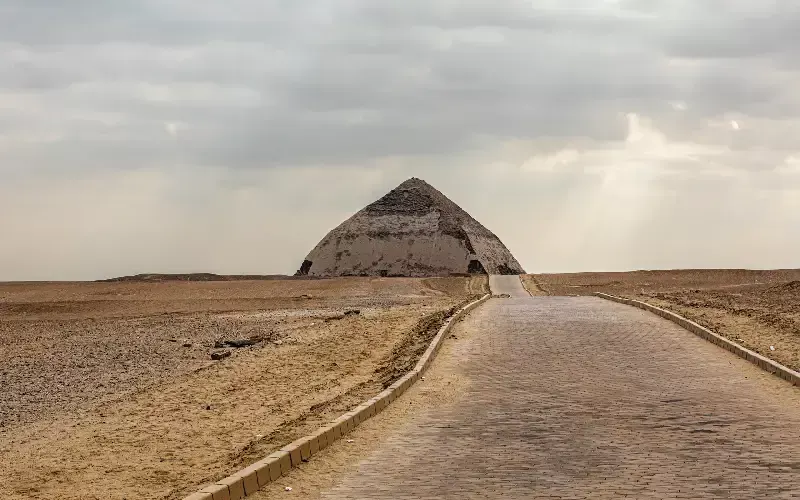
The Bent Pyramid was constructed around 2600 BC during the reign of Pharaoh Sneferu, the founder of Egypt's Fourth Dynasty. It was part of Sneferu's ambitious pyramid-building program, which included multiple structures.
Construction Phases
Archaeology reveals the Bent Pyramid was built in three major phases, each responding to structural challenges.
Phase 1: A Bold Beginning
The earliest phase envisioned an even steeper structure—perhaps 58°–60°, which would have produced a 125-meter pyramid. This extreme slope became unstable almost immediately. Evidence of this ambitious plan survives in foundational corridors and offsets that preserve the original intended shape.
Phase 2: Moderated Angle and Expanded Base
Builders recalibrated, lowering the angle to 54° and extending the base to 188 meters. Stones were still laid in inward-leaning layers, a technique inherited from step pyramids. But as construction progressed, the weight again created internal cracks—particularly noticeable around the 49-meter mark. These structural stresses forced yet another redesign.
Phase 3: Final Form and Critical Adjustments
The final phase produced the bent profile. Reducing the angle to 43° saved the monument from collapse and established a new engineering method: horizontal masonry layers instead of inclined ones. This innovation became the standard for all later pyramids, including the Great Pyramid of Khufu.
The result was a slightly shorter but structurally stable monument with a total volume of approximately 1.44 million cubic meters.
Tura Limestone Casing
One of the Bent Pyramid’s most extraordinary features is its remarkably preserved outer casing. Made from fine Tura limestone, these smooth blocks demonstrate the high-quality finishing work typical of Fourth Dynasty craftsmanship. Some sections still gleam in the desert light, offering rare insight into how pyramids originally appeared.
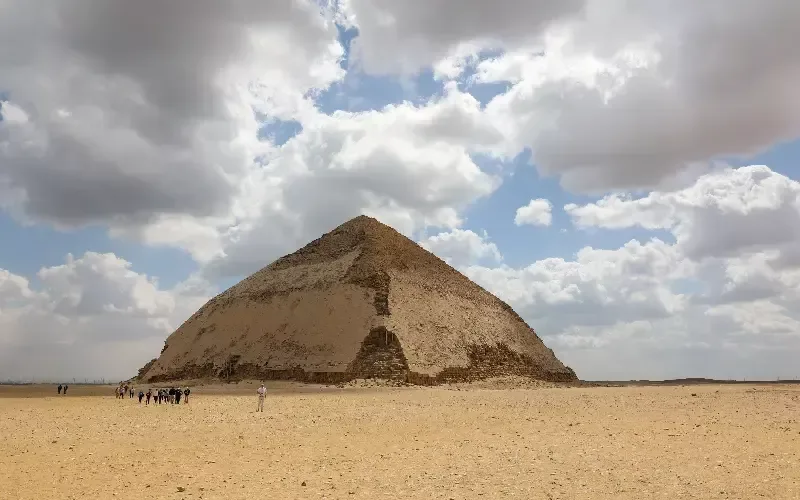
The Bent Pyramid was primarily constructed using limestone blocks. Its outer casing, much of which is still intact, was made of fine Tura limestone transported from quarries across the Nile. The stones were likely cemented using an artificial calcium-silicate binder.
The Bent Pyramid's unique shape resulted from structural challenges during construction. Initially built at a steep 54-degree angle, signs of instability prompted architects to reduce the angle to 43 degrees midway through construction, creating its characteristic "bent" appearance.
Customize Your Dream Vacation!
Get in touch with our local experts for an unforgettable journey.
Plan Your Trip
Interior Architecture and Unique Features
The Bent Pyramid’s interior is unlike any other pyramid of its era. It features:
Dual Entrances and Two Chamber Systems
- A northern entrance, 12 meters high.
- A western entrance, 33 meters above ground.
Each entrance leads to a separate internal system of corridors and chambers:
- The lower chamber, accessed from the north.
- The upper chamber, reached from the west.
These chambers were later linked by a narrow, irregular tunnel carved through the masonry—likely an afterthought created during internal adjustments.
Corbelled Vaults and Ancient Cedar
Both chambers feature impressive corbelled ceilings, designed to distribute weight. The lower chamber reaches a height of nearly 17 meters, creating a dramatic interior space. Archaeologists discovered fragments of cedar beams, not as structural supports but as part of the funerary equipment.
An Unusual Portcullis System
The western passage contains a security system unique to the Bent Pyramid: two portcullis blocks that slide along 45-degree ramps rather than dropping vertically. One still remains in its original tilted position, supported by ancient cedar props.
The Bent Pyramid features a rare dual entrance system, with separate entrances on the northern and western faces leading to different internal chambers. It also has an unusual connecting passage between these chambers and an innovative portcullis security system.
The Satellite Pyramid and Surrounding Complex
Satellite Pyramid
Located 55 meters south of the main pyramid, the smaller satellite pyramid rises 26 meters and mirrors the Bent Pyramid’s later 43-degree angle. Inside, a descending corridor leads to a chamber similar in layout to early prototypes of the Great Pyramid. Evidence suggests it never housed a burial, indicating a symbolic or ritual purpose.
Causeway and Valley Temple
A 700-meter causeway once connected the Bent Pyramid to its valley temple, Egypt’s earliest decorated pyramid temple. Reliefs depicted royal estates and offerings from various districts, reflecting Sneferu’s authority across the kingdom.
A Man-Made Sacred Landscape
Archaeological studies show that the Dahshur plateau was deliberately leveled and shaped. Gardens, water basins, and ritual enclosures were constructed to integrate the pyramid into a carefully designed spiritual environment. This demonstrates that Sneferu’s builders viewed the landscape itself as part of the sacred complex—not merely the structures.
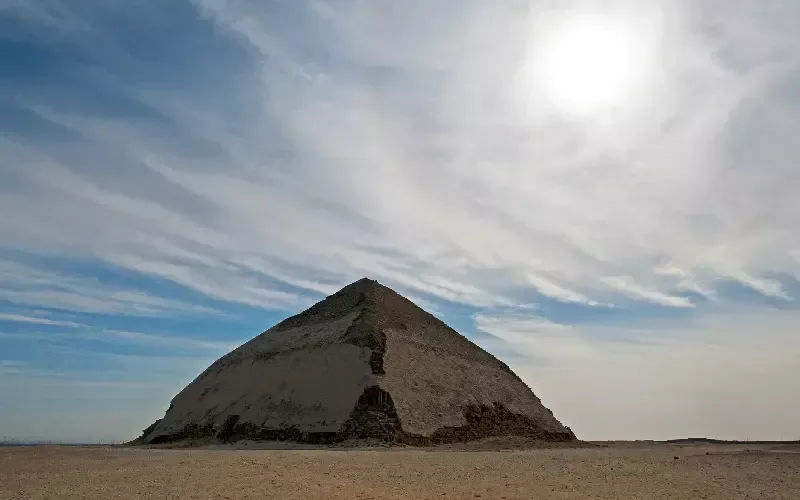
The Bent Pyramid is part of a larger complex that includes a satellite pyramid, a limestone-paved causeway, and a valley temple. The entire area was deliberately modified to create an artificial landscape, emphasizing the monument's grandeur and religious significance.
More than 4,000 years after its construction, the Bent Pyramid stands as one of ancient Egypt’s most important architectural milestones. Its unusual form is not a failure, but a testament to experimentation, adaptation, and innovation. Every change in angle, every structural adjustment, and every engineering breakthrough helped shape the future of pyramid design.
The pyramid’s preserved outer casing, dual-chamber system, and unique portcullis mechanisms offer unparalleled insights into early Old Kingdom engineering. Meanwhile, its surrounding temples, satellite pyramid, and engineered desert plateau reflect a sophisticated understanding of sacred architecture.
Today, the Bent Pyramid represents the moment when ancient builders solved the challenges that made the Great Pyramid possible. It is a monument not only to Sneferu’s ambition but to the ingenuity that defined an entire civilization.
Yes. After being closed for more than 50 years, the Bent Pyramid reopened to the public in 2019. Visitors can now explore its descending corridors, upper and lower chambers, and the connecting tunnel inside—an experience not available at most Old Kingdom pyramids.
Both pyramids were built by Pharaoh Sneferu, but the Red Pyramid represents the “successful” version of the smooth-sided pyramid. Lessons learned from the Bent Pyramid’s structural issues helped engineers perfect the angle and construction method used for the Red Pyramid.
The Bent Pyramid is one of the best-preserved pyramids in Egypt, retaining most of its original casing stones. It provides rare insights into early pyramid construction techniques, architectural experimentation, and the transition from step pyramids to true pyramids.
Unlike earlier pyramids built closer to fertile land, the Bent Pyramid stands in a carefully engineered desert landscape. Archaeologists discovered man-made terraces, ceremonial basins, and garden enclosures that formed part of its ritual setting.
Yes. The Bent Pyramid predates Khufu’s Great Pyramid by several decades. As one of Sneferu’s earlier projects, it represents a crucial experimental stage that paved the way for the engineering mastery seen at Giza.


The Great Pyramids of Giza, Egypt’s iconic monuments, showcase ancient engineering brilliance and remain the last wonder of the ancient world, continuing to fascinate visitors and researchers alike.

The Egyptian Museum in Cairo houses over 170,000 ancient artifacts, including Tutankhamun's complete collection and golden death mask. Opened in 1902, it's the world's largest repository of Egyptian antiquities.

Khan el-Khalili is Cairo’s legendary medieval bazaar, where centuries-old Islamic architecture, vibrant trade, and timeless cafés create a living cultural landmark.

The Great Sphinx of Giza, with its lion body and pharaoh head, represents ancient Egyptian artistry, symbolic power, and enduring cultural fascination.

Tanoura is a traditional Egyptian Sufi dance known for its colorful spinning skirts, spiritual rhythm, and deep roots in ancient mystic traditions.

Saqqara, Egypt's ancient necropolis, features Djoser's Step Pyramid—the world's oldest. Spanning 3,000 years, it preserves royal tombs and sacred animal burials.

The Valley Temple at Giza, built 2570 BCE by Khafre, features 16 granite columns and hosted sacred afterlife rituals. Explore Fourth Dynasty architecture.

The Citadel of Cairo is a historic medieval fortress and royal complex, showcasing centuries of Egyptian power, Mamluk architecture, and Islamic heritage, now preserved as a UNESCO World Heritage Site.

Khufu's Solar Boat is a 142-foot cedar vessel discovered 1954 near the Great Pyramid. Built without nails 4,500 years ago, it's now at Grand Egyptian Museum.

St. George Church in Old Cairo, founded 684 AD, features unique circular design, sacred healing relics & underground chapel linked to the Holy Family's refuge.

Pyramids Sound and Light Show transforms Giza into open-air theater with 50 minutes of narration, music & lighting bringing ancient Egyptian history alive.

The Djoser Pyramid at Saqqara is Egypt's first pyramid, built 2600 BCE by architect Imhotep. Standing 62.5m tall, it reopened to visitors in 2020.

The Hanging Church in Old Cairo is a 1,300-year-old Coptic sanctuary built on Babylon Fortress. Free entry, open daily 9 AM-5 PM, dress modestly required.
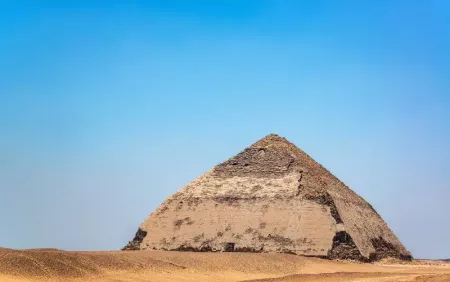
The Bent Pyramid at Dahshur features a rare bent profile created by ancient construction adjustments, offering insight into Egypt’s earliest attempts at smooth-sided pyramids.

Coptic Cairo features 4th-century churches and recent tomb discoveries revealing early Christian heritage. Explore the Hanging Church, Abu Serga & sacred sites.
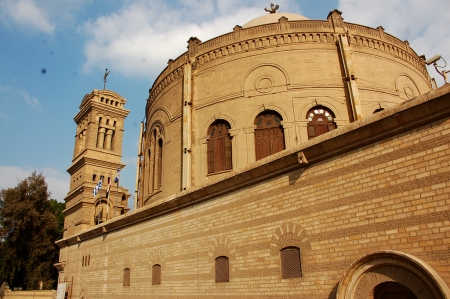
Saint Barbara’s Church in Coptic Cairo is one of Egypt’s oldest Christian monuments, dating back to the 5th–6th century. Known for housing the relics of Saint Barbara, the church reflects centuries of Coptic heritage, architectural evolution, and deep spiritual significance.

Explore the Fortress of Babylon, a major Roman fort in Old Cairo known for its strategic location, massive towers, and enduring historical significance.
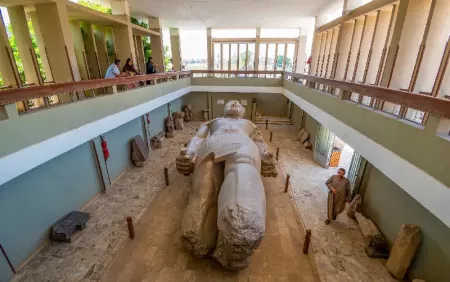
Memphis Necropolis is Egypt’s ancient royal burial site, home to pyramids, tombs, and monuments that reflect the early development of pharaonic civilization.
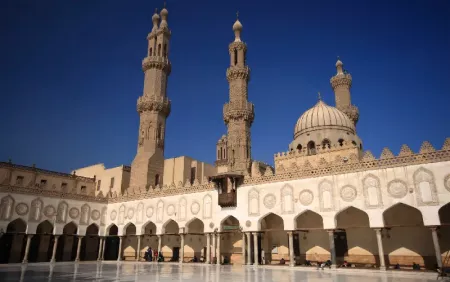
Al-Azhar Mosque is a landmark of Islamic scholarship and Fatimid architecture, home to the world’s second-oldest university and a symbol of Cairo’s spiritual heritage.
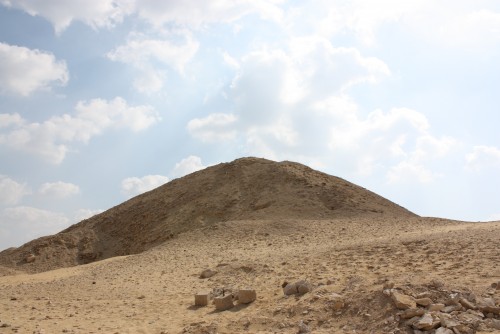
Teti’s Pyramid in Saqqara is an Old Kingdom monument built for the first king of the Sixth Dynasty. Known for its Pyramid Texts and unique mortuary chapel, it remains one of Egypt’s most historically important royal tombs.
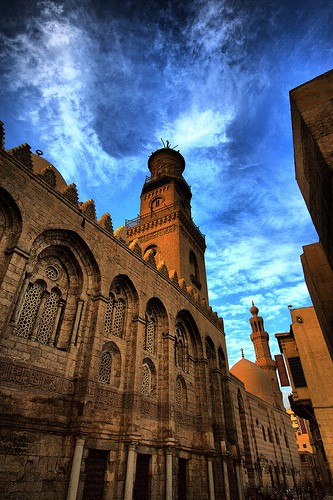
Al Muizz Street is one of Cairo’s oldest and most vibrant historic avenues, showcasing centuries of Islamic architecture. Lined with mosques, palaces, and bustling markets, it offers a captivating walk through Egypt’s medieval past.
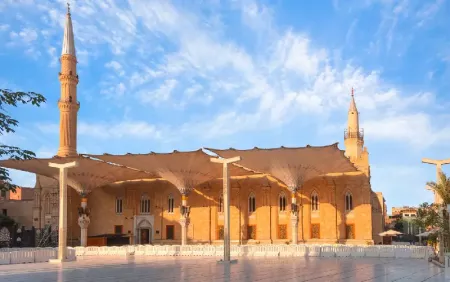
Al-Hussein Mosque is one of Cairo’s most sacred Islamic landmarks, built in 1154 and revered for housing the head of Imam Hussein. Located by Khan El-Khalili, it blends centuries of architectural heritage and remains a major pilgrimage site.
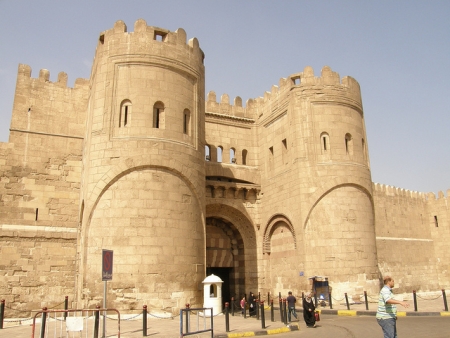
Bab al-Futuh is an 11th-century Fatimid gate in Old Cairo, famous for its massive round towers and strategic role in the city’s medieval fortifications.
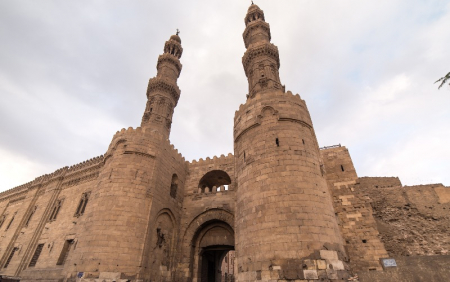
Bab Zuweila is one of Cairo’s last surviving medieval gates, built in 1092 CE by the Fatimid vizier Badr al-Jamali. Famous for its towering twin bastions, massive wooden doors, and later Mamluk minarets, it served as a defensive stronghold, execution site, and ceremonial gateway. Today, it stands as one of Cairo’s most iconic historic monuments.
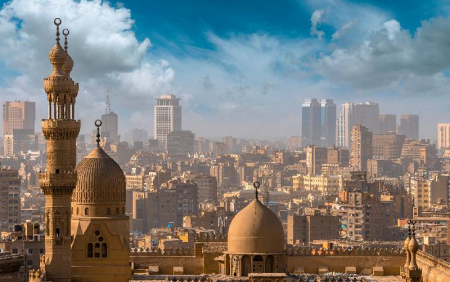
Al Rifai Mosque in Cairo blends Neo-Mamluk architecture with royal history. Completed in 1912, it serves as both a majestic mosque and mausoleum for Muhammad Ali’s family.
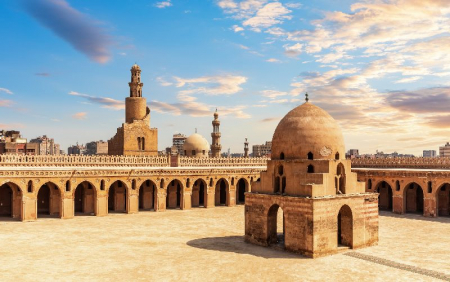
The Ibn Tulun Mosque, Cairo’s oldest well-preserved mosque, dates back to 879 CE. Famous for its vast square layout, intricate arches, and 128 ornate stucco windows, it remains a pinnacle of early Islamic architecture and a must-visit historical landmark.
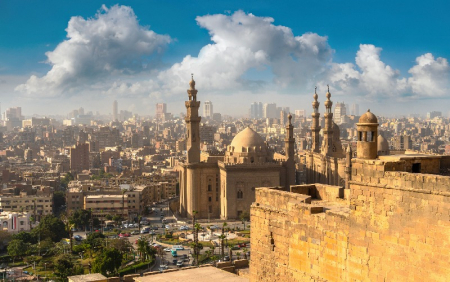
The Sultan Hassan Mosque, built in the 14th century, is a Bahri Mamluk architectural marvel in Cairo, renowned for its grand portal, extensive madrasas, and historic significance.

The Suez Canal, Egypt’s iconic waterway, connects Africa and Asia, handling thousands of ships yearly and shaping international trade.
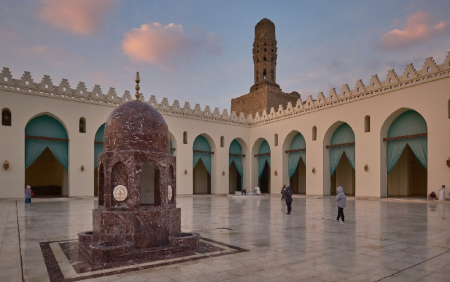
Al-Hakim Mosque, Cairo, is a stunning Fatimid-era mosque built between 990–1013 CE. Famous for its grand courtyard, distinctive minarets, and rich history, it remains a key cultural and religious landmark.
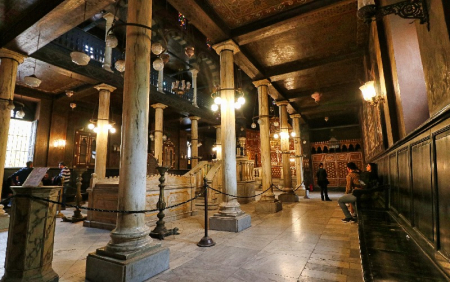
The Ben Ezra Synagogue, founded in the 11th century in Old Cairo, is Egypt’s oldest Jewish monument and the discovery site of the renowned Cairo Geniza.