Home
Home
The Citadel of Cairo, founded by Salah ad-Din in 1176, served as Egypt’s political and military heart for over seven centuries. Perched on a strategic hill, it evolved from a defensive fortress into a sprawling royal complex under the Mamluks, featuring palaces, harems, and administrative quarters. Over centuries, successive rulers added architectural flourishes, creating a symbol of Egyptian power and Islamic heritage. Today, as part of Historic Cairo’s UNESCO World Heritage Site, the Citadel stands as a testament to Egypt’s enduring political, cultural, and architectural legacy.
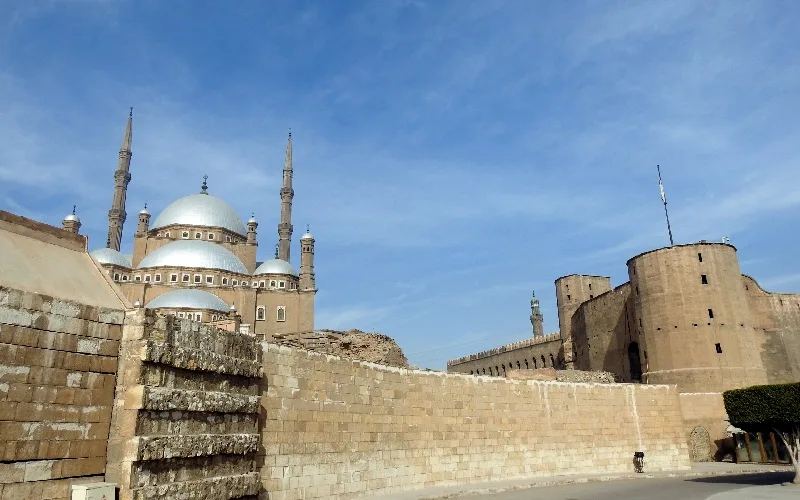
The Citadel's Role in Egypt's Political History
Perched majestically atop the strategic Mokattam Hills, this fortress witnessed a remarkable transformation—from military outpost to the beating heart of Egyptian governance. The Citadel's walls hold secrets of power struggles, dynastic ambitions, and political maneuvering that shaped an empire for seven remarkable centuries.
From Ayyubid stronghold to royal residence
The year 1176 CE marked a pivotal moment when Saladin's military engineers first broke ground on these limestone heights. The great sultan understood that controlling Cairo meant commanding Egypt, and commanding Egypt required an unassailable seat of power. His fortress initially served one purpose: repelling Crusader advances threatening the Islamic heartland.
Death, however, often reshapes the grandest plans. Saladin's heirs discovered that ruling required more than military might—it demanded spectacle, ceremony, and the ability to receive tributary princes and foreign ambassadors with appropriate majesty. Palace wings sprouted alongside the original battlements, transforming the stark military compound into a residence worthy of the Ayyubid name.
The Mamluks, those extraordinary former slaves who seized Egypt's throne in 1250 CE, recognized the Citadel's symbolic power immediately. Sultan Qalawun and his lineage understood that legitimacy flowed not merely from military victories but from occupying the same heights where Saladin once planned his campaigns. Audience halls replaced simple guard quarters, and reception chambers emerged where once only armories stood.
Sultan al-Nasir Muhammad's reign between 1293-1340 CE represents the fortress's golden age of political importance. Palace after palace rose within the protective walls, each more magnificent than the last. These weren't mere residences—they were statements of power designed to awe visiting dignitaries and remind subjects of Mamluk supremacy.
700 years of continuous rule from the Citadel
Seven centuries—an almost incomprehensible span of continuous governance from a single location. The Citadel's political significance outlasted empires, religions conflicts, and technological revolutions while remaining the unchanging center of Egyptian authority.
Ottoman cannons may have breached Cairo's gates in 1517, but the conquerors immediately recognized the Citadel's irreplaceable value. Istanbul ruled the empire, yet Egypt's governors continued conducting provincial affairs from these ancient chambers. The fortress adapted once again, housing Ottoman administrators who maintained the tradition of ruling from Saladin's chosen heights.
Political intrigue continued flourishing within these walls even after official conquest. Mamluk emirs, though nominally defeated, wielded considerable influence under Ottoman oversight. This delicate balance persisted until Muhammad Ali Pasha's brutal elimination of Mamluk power in 1811—an event that ironically occurred within the very fortress the Mamluks had once called home.
Muhammad Ali himself chose to maintain this centuries-old tradition while simultaneously dragging Egypt toward modernity. His decision to govern from the Citadel while constructing European-style palaces elsewhere demonstrates the fortress's enduring political magnetism. Even a ruler bent on westernizing Egypt couldn't entirely abandon the symbolic power of Saladin's legacy.
Khedive Ismail's eventual departure to Abdeen Palace in the late 19th century finally broke this extraordinary chain of continuity. Yet those 700 years of uninterrupted rule from the Mokattam Heights remain unmatched in Egyptian history—a testament to one man's strategic vision that outlasted the very civilization he sought to defend.
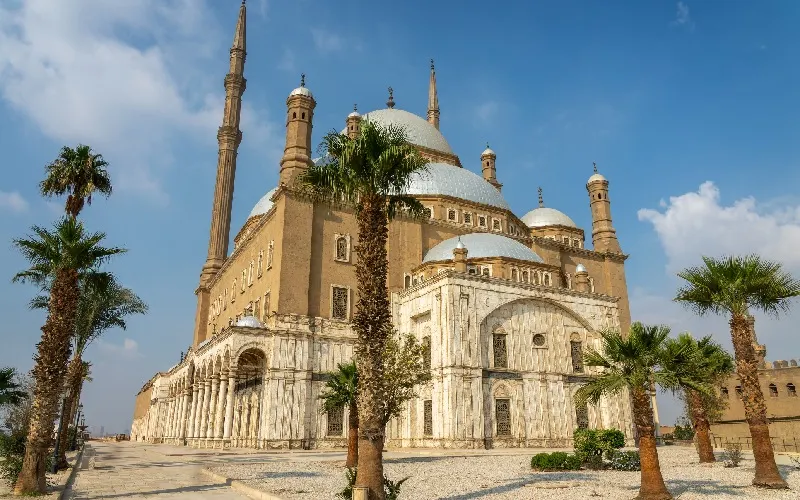
The Citadel in Cairo is a medieval Islamic fortress that served as the seat of government and residence for Egyptian rulers for nearly 700 years. It was originally built by Salah ad-Din (Saladin) in 1176 and has since evolved through various dynasties, playing a crucial role in Egypt's political and architectural history.
Architectural Evolution Through Dynasties
Stone tells stories, and nowhere does this truth resonate more powerfully than within the Citadel's walls, where centuries of architectural ambition have layered one dynasty's vision upon another's foundation.
Ayyubid foundations and defensive design
Baha al-Din Qaraqush, Saladin's trusted chief eunuch, orchestrated the fortress construction that began in 1176 CE. The Northern Enclosure formed the heart of this original masterpiece, where massive defensive walls rose ten meters skyward and stretched three meters thick. Round towers punctuated these formidable barriers, their curved surfaces designed to deflect siege weapons while enabling defenders to rain flanking fire upon any foolhardy attackers.
Qaraqush drew his building stones from the very landscape around him—limestone quarried from the Muqattam Hills themselves provided the fortress bones. Yet this practical builder displayed remarkable audacity, also harvesting stone from minor pyramids at Giza and Abusir, literally incorporating pharaonic antiquity into medieval Islamic defense. Perhaps most ingenious of all, the legendary Yusuf's Well plunged 87 meters through solid rock, its spiral depths ensuring water would flow even during the longest siege.
Mamluk palaces and ceremonial halls
The Mamluks approached the Citadel with grander ambitions than mere defense. Sultan Baybars (1260-1277) fundamentally altered the fortress geography when he constructed the Bab al-Qulla gate, dividing the complex into distinct northern and southern realms. This separation reflected Mamluk political sophistication—different areas for different functions, each serving the complex needs of their warrior-sultanate.
Al-Nasir Muhammad stands apart as the Citadel's most prolific builder, his intermittent reign between 1293 and 1341 producing architectural marvels that still inspire wonder. His Ablaq Palace (Qasr al-Ablaq), completed in 1313-1314, showcased the distinctive red-and-black masonry that became a Mamluk signature. The Great Iwan (al-Iwan al-Kabir), erected in 1311, served as a throne hall where the sultan received dignitaries beneath soaring arches that proclaimed Mamluk power.
Ottoman military quarters and mosques
Ottoman conquerors arrived in 1517 with different architectural priorities. Their modifications emphasized military functionality over palatial grandeur. The massive Burg al-Muqattam tower exemplifies this approach—25 meters tall with a 24-meter diameter, this cylindrical giant dominated the fortress skyline. Wall sections received Ottoman reinforcement, adapting medieval defenses to face gunpowder warfare.
Religious architecture also reflected the changing times. The Sulayman Pasha Mosque, completed in 1528, served the spiritual needs of Janissary troops who garrisoned the fortress. This structure introduced Ottoman architectural vocabulary to Egyptian soil, its design speaking to soldiers far from their Anatolian homeland.
Muhammad Ali's modernization and mosque
Muhammad Ali Pasha's 19th-century transformation proved the most dramatic architectural intervention in the Citadel's long history. The Albanian-born ruler demolished countless medieval structures, replacing them with monuments suited to his modernizing vision. His namesake mosque (1830-1848) crowns this architectural revolution—twin minarets soar 84 meters heavenward, while a central dome rises 52 meters above the prayer hall, supported by four graceful semi-domes.
The Alabaster Mosque, as visitors often call this gleaming structure, deliberately echoes Istanbul's imperial architecture. Its Ottoman styling conveyed complex political messages—homage to the sultan in Constantinople, yet bold assertion of Egyptian independence. Every alabaster-clad surface proclaimed Muhammad Ali's ambitions, transforming a medieval fortress into a stage for modern power.
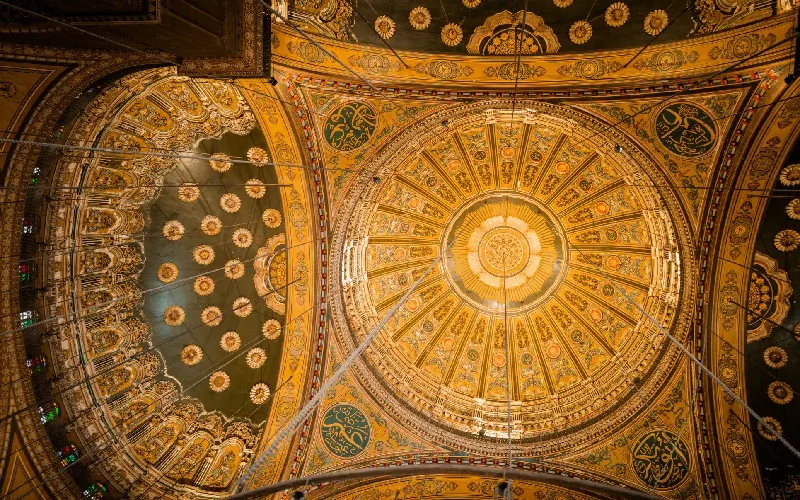
The main attractions include the Mosque of Muhammad Ali (also known as the Alabaster Mosque), the Al-Nasir Muhammad Mosque, and the Mosque of Sulayman Pasha. Visitors can also explore the ancient water systems, including the remarkable Well of Joseph, and enjoy panoramic views of Cairo from the Citadel's elevated position.
Customize Your Dream Vacation!
Get in touch with our local experts for an unforgettable journey.
Plan Your TripReligious and Civic Structures Within the Citadel
Three remarkable mosques stand within the Citadel's walls, each telling distinct stories of faith, power, and architectural innovation across Egypt's Islamic centuries. These sacred spaces, alongside ingenious water systems, reveal how rulers balanced spiritual devotion with practical survival needs.
Mosque of Muhammad Ali: Ottoman influence
Muhammad Ali Pasha's crowning architectural achievement soars above Cairo between 1830 and 1848, its alabaster-clad surfaces earning the popular designation "Alabaster Mosque". Those twin 84-meter minarets pierce the sky as Egypt's tallest, deliberately echoing Istanbul's imperial mosques rather than traditional Cairene designs. This conscious Ottoman styling reflected Muhammad Ali's complex relationship with his nominal overlords—simultaneously honoring and challenging their authority through stone and mortar.
Al-Nasir Muhammad Mosque: Mamluk legacy
Royal prayers echoed through this sacred space for Mamluk sultans, first constructed in 1318 before its 1335 reconstruction. Eastern Islamic influences shaped its distinctive twin minarets, originally adorned with brilliant green tiles that caught sunlight across the fortress. Inside, geometric patterns dance across the ceiling while the wooden minbar displays exquisite ivory and mother-of-pearl inlay work—testament to the artistic sophistication of Mamluk craftsmen.
Mosque of Sulayman Pasha: Janissary use
Egypt's first Ottoman-style mosque emerged in 1528, breaking architectural traditions that had dominated Cairo for centuries. Ottoman Janissary troops, who had marched into Egypt just eleven years earlier, required their own sacred space within the conquered fortress. Its pencil-thin minaret and central dome crowned with green ceramic tiles announced a new architectural era in the ancient city.
Cisterns and water systems for survival
Deep beneath the fortress, Salah ad-Din's engineers carved the extraordinary "Well of Joseph" 85 meters into living rock, complete with spiral staircases and an innovative waterwheel mechanism. Sultan al-Nasir Muhammad later expanded this hydraulic marvel in 1312, creating an elaborate aqueduct network that channeled Nile waters through carefully positioned towers and waterwheels. These engineering triumphs ensured the Citadel could withstand prolonged sieges—water flowing steadily upward through human ingenuity and mechanical precision.
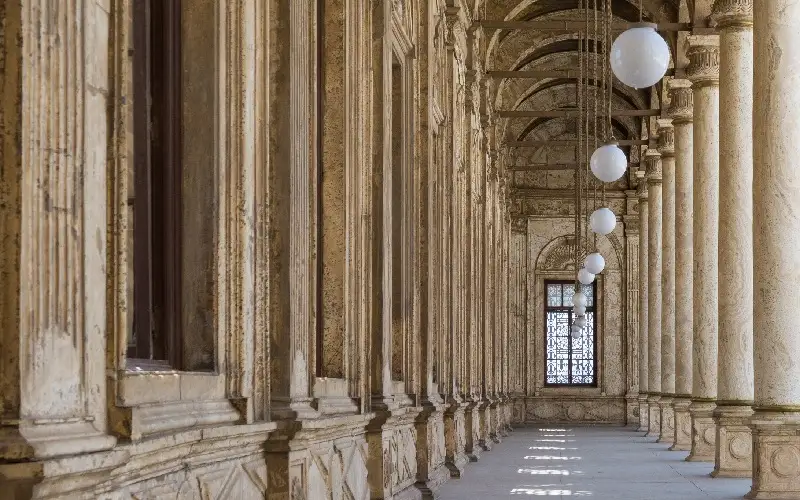
A typical visit to the Cairo Citadel takes about 1 to 1.5 hours. This allows enough time to explore the main attractions, including the mosques and the stunning city views. However, history enthusiasts may want to allocate more time to fully appreciate the site's rich heritage.
Legacy, Preservation, and UNESCO Recognition
International acclaim arrived for the Citadel when UNESCO designated Historic Cairo as a World Heritage Site in 1979. This prestigious recognition acknowledged Cairo's emergence as "the new center of the Islamic world, reaching its golden age in the 14th century".
UNESCO World Heritage Site designation
UNESCO's evaluation committee praised Historic Cairo for its "absolutely unquestionable historical, archeological and urban importance". The designation encompasses far more than just the Citadel itself—Mamluk palaces, traditional urban domestic architecture, and countless architectural treasures collectively demonstrate Cairo's extraordinary wealth as a historic Islamic capital. Yet even this international recognition could not immediately solve complex preservation challenges. Proper delimitation boundaries and effective protective measures remained ongoing concerns following the site's inscription.
Restoration efforts in the 20th century
Military occupation defined much of the Citadel's modern era. British forces controlled the site until 1946, followed by decades of Egyptian military use that kept these ancient walls closed to curious visitors. The tide turned dramatically in 1983 when Egyptian authorities opened substantial portions to the public. This pivotal moment launched ambitious refurbishment programs that converted historic structures into museums, breathing new life into centuries-old spaces — and today the Citadel can be explored as part of Egypt tours that take visitors through the full sweep of Cairo's extraordinary Islamic heritage.
Recent preservation work continues this tradition of careful restoration. The Suleiman Pasha al-Khadim Mosque reopened in 2023 following a meticulous five-year restoration project that focused particularly on stone facade repairs and minaret refurbishment.
The Citadel as a symbol of Cairo's skyline
Muhammad Ali's mosque commands attention across Cairo's sprawling landscape, its imposing dome and twin Ottoman-style minarets creating an unmistakable silhouette. This commanding presence from atop Mokattam Hills serves dual purposes—historically reinforcing the city's defensive capabilities while projecting an aura of political prestige and architectural grandeur that continues captivating observers today.
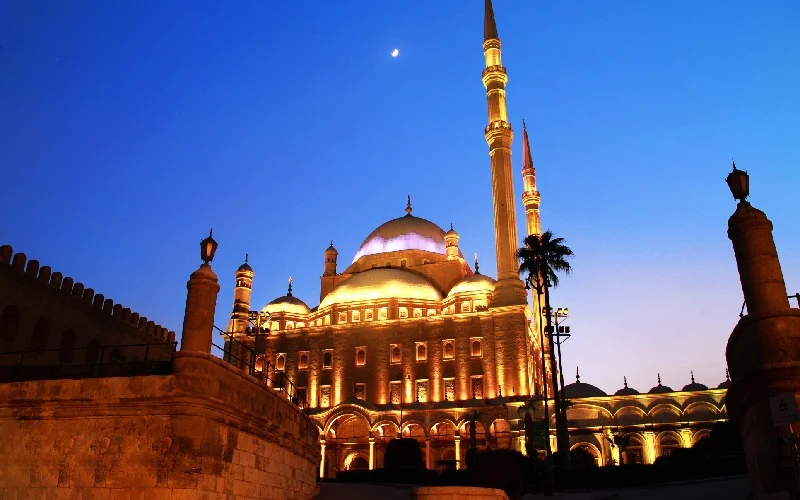
Yes, the Cairo Citadel is part of the "Historic Cairo" World Heritage Site, designated by UNESCO in 1979. This recognition highlights its historical, archeological, and urban importance as a significant part of Cairo's Islamic heritage.
The Citadel of Cairo stands as a monumental chronicle of seven centuries of Egyptian governance. From Salah ad-Din’s original military fortress to the lavish Mamluk palaces, Ottoman adaptations, and Muhammad Ali’s transformative renovations, the complex embodies centuries of political ambition, architectural innovation, and administrative ingenuity. Ingenious features like the 87-meter Well of Joseph highlight the practical mastery required to sustain life and governance atop its elevated perch. Today, as part of Historic Cairo’s UNESCO World Heritage Site, the Citadel preserves layers of history within its walls, inviting visitors to explore the enduring legacy of Egyptian power, Islamic architecture, and cultural heritage.
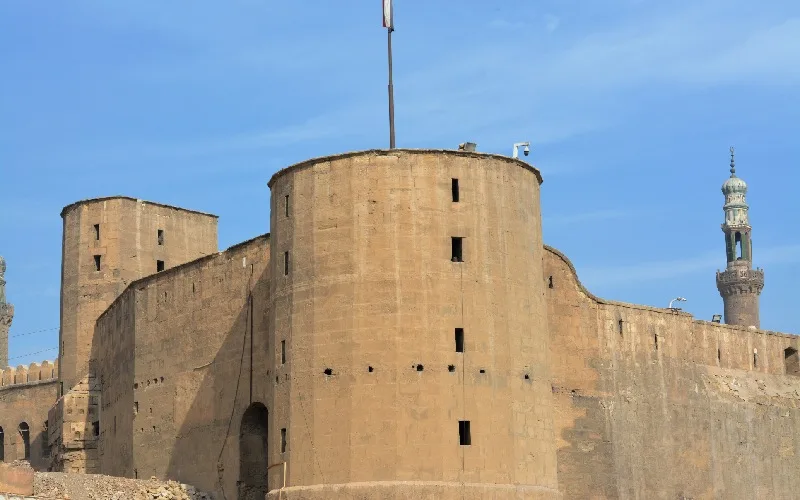
The Citadel's function has evolved significantly over the centuries. It began as a military fortress, then became a royal residence and seat of government for various dynasties. In the 20th century, it served as a military garrison. Today, it is primarily a historical site and tourist attraction, with parts of it converted into museums.
The Citadel showcases medieval Islamic architecture with influences from Mamluk, Ottoman, and later Egyptian styles. Its mosques feature large domes, minarets, intricate carvings, and decorative alabaster, reflecting the artistic and religious tastes of successive rulers.
Yes, the Citadel’s elevated location atop the Mokattam Hills offers sweeping views of Cairo, including historic mosques, the Nile, and the surrounding cityscape—making it a prime spot for photography and sightseeing.
Yes, the Citadel houses several museums, including the Military Museum, the Police Museum, and smaller exhibitions showcasing historical artifacts, weapons, and items from various dynasties, providing insight into Egypt’s political and military history.
Yes, visitors are required to purchase an entry ticket. Fees vary depending on whether you want access to the mosques, museums, or both. Guided tours are also available for a more in-depth experience.
Occasionally, the Citadel hosts cultural events, exhibitions, and guided historical tours. Religious holidays may also see ceremonies in the mosques, while some spaces are used for temporary art or heritage displays celebrating Cairo’s Islamic history.

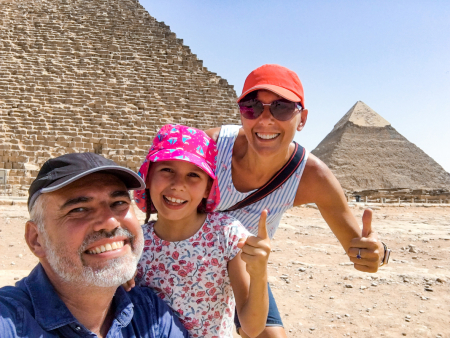

The Great Pyramids of Giza, Egypt’s iconic monuments, showcase ancient engineering brilliance and remain the last wonder of the ancient world, continuing to fascinate visitors and researchers alike.

The Egyptian Museum in Cairo houses over 170,000 ancient artifacts, including Tutankhamun's complete collection and golden death mask. Opened in 1902, it's the world's largest repository of Egyptian antiquities.

Khan el-Khalili is Cairo’s legendary medieval bazaar, where centuries-old Islamic architecture, vibrant trade, and timeless cafés create a living cultural landmark.

The Great Sphinx of Giza, with its lion body and pharaoh head, represents ancient Egyptian artistry, symbolic power, and enduring cultural fascination.

Tanoura is a traditional Egyptian Sufi dance known for its colorful spinning skirts, spiritual rhythm, and deep roots in ancient mystic traditions.

Saqqara, Egypt's ancient necropolis, features Djoser's Step Pyramid—the world's oldest. Spanning 3,000 years, it preserves royal tombs and sacred animal burials.

The Valley Temple at Giza, built 2570 BCE by Khafre, features 16 granite columns and hosted sacred afterlife rituals. Explore Fourth Dynasty architecture.

The Citadel of Cairo is a historic medieval fortress and royal complex, showcasing centuries of Egyptian power, Mamluk architecture, and Islamic heritage, now preserved as a UNESCO World Heritage Site.

Khufu's Solar Boat is a 142-foot cedar vessel discovered 1954 near the Great Pyramid. Built without nails 4,500 years ago, it's now at Grand Egyptian Museum.

St. George Church in Old Cairo, founded 684 AD, features unique circular design, sacred healing relics & underground chapel linked to the Holy Family's refuge.

Pyramids Sound and Light Show transforms Giza into open-air theater with 50 minutes of narration, music & lighting bringing ancient Egyptian history alive.

The Djoser Pyramid at Saqqara is Egypt's first pyramid, built 2600 BCE by architect Imhotep. Standing 62.5m tall, it reopened to visitors in 2020.

The Hanging Church in Old Cairo is a 1,300-year-old Coptic sanctuary built on Babylon Fortress. Free entry, open daily 9 AM-5 PM, dress modestly required.
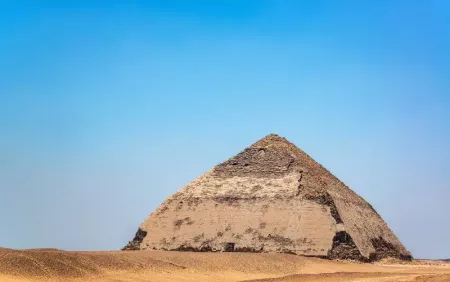
The Bent Pyramid at Dahshur features a rare bent profile created by ancient construction adjustments, offering insight into Egypt’s earliest attempts at smooth-sided pyramids.

Coptic Cairo features 4th-century churches and recent tomb discoveries revealing early Christian heritage. Explore the Hanging Church, Abu Serga & sacred sites.
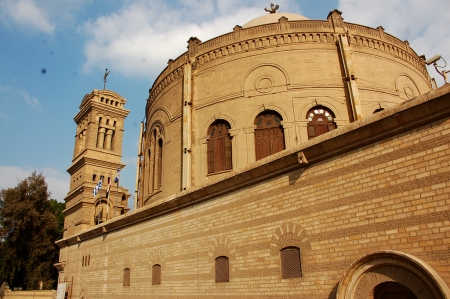
Saint Barbara’s Church in Coptic Cairo is one of Egypt’s oldest Christian monuments, dating back to the 5th–6th century. Known for housing the relics of Saint Barbara, the church reflects centuries of Coptic heritage, architectural evolution, and deep spiritual significance.

Explore the Fortress of Babylon, a major Roman fort in Old Cairo known for its strategic location, massive towers, and enduring historical significance.
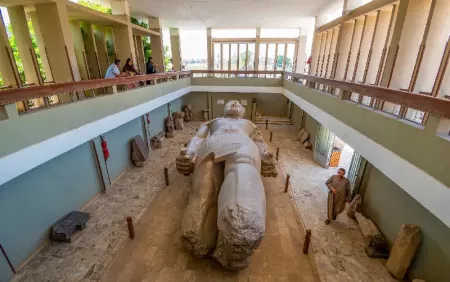
Memphis Necropolis is Egypt’s ancient royal burial site, home to pyramids, tombs, and monuments that reflect the early development of pharaonic civilization.
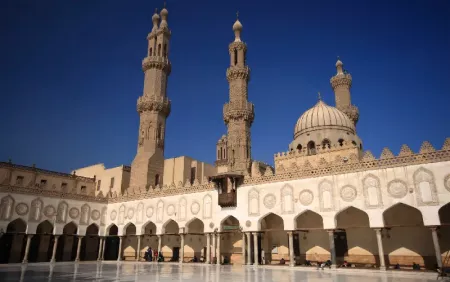
Al-Azhar Mosque is a landmark of Islamic scholarship and Fatimid architecture, home to the world’s second-oldest university and a symbol of Cairo’s spiritual heritage.
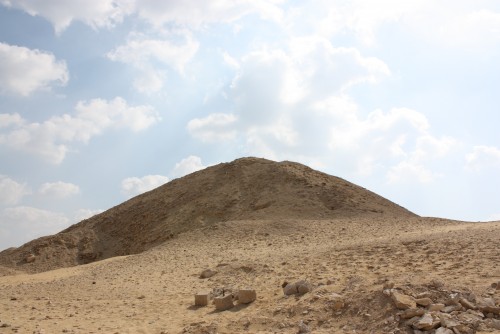
Teti’s Pyramid in Saqqara is an Old Kingdom monument built for the first king of the Sixth Dynasty. Known for its Pyramid Texts and unique mortuary chapel, it remains one of Egypt’s most historically important royal tombs.
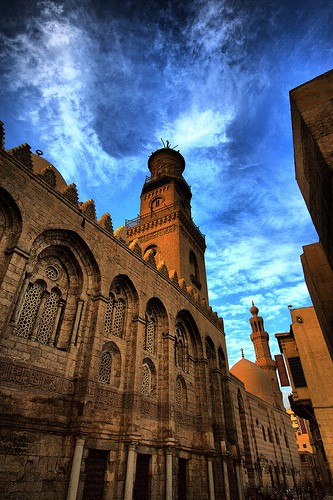
Al Muizz Street is one of Cairo’s oldest and most vibrant historic avenues, showcasing centuries of Islamic architecture. Lined with mosques, palaces, and bustling markets, it offers a captivating walk through Egypt’s medieval past.
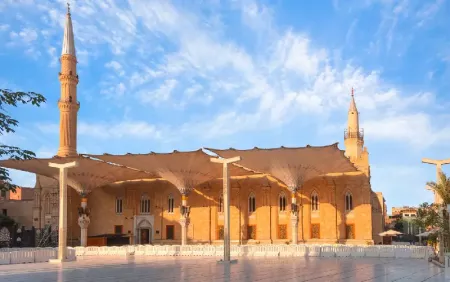
Al-Hussein Mosque is one of Cairo’s most sacred Islamic landmarks, built in 1154 and revered for housing the head of Imam Hussein. Located by Khan El-Khalili, it blends centuries of architectural heritage and remains a major pilgrimage site.
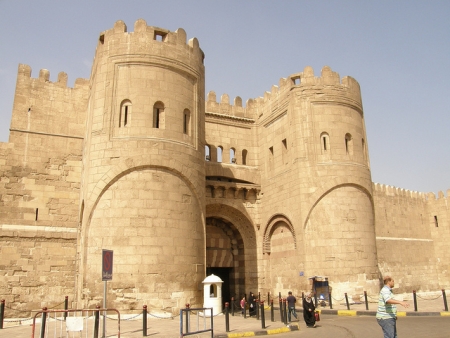
Bab al-Futuh is an 11th-century Fatimid gate in Old Cairo, famous for its massive round towers and strategic role in the city’s medieval fortifications.
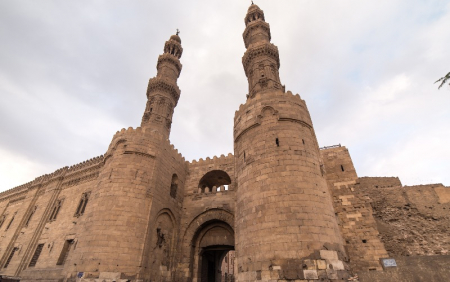
Bab Zuweila is one of Cairo’s last surviving medieval gates, built in 1092 CE by the Fatimid vizier Badr al-Jamali. Famous for its towering twin bastions, massive wooden doors, and later Mamluk minarets, it served as a defensive stronghold, execution site, and ceremonial gateway. Today, it stands as one of Cairo’s most iconic historic monuments.
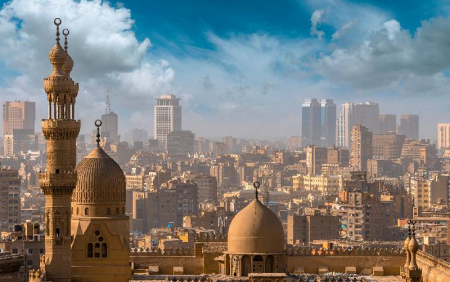
Al Rifai Mosque in Cairo blends Neo-Mamluk architecture with royal history. Completed in 1912, it serves as both a majestic mosque and mausoleum for Muhammad Ali’s family.
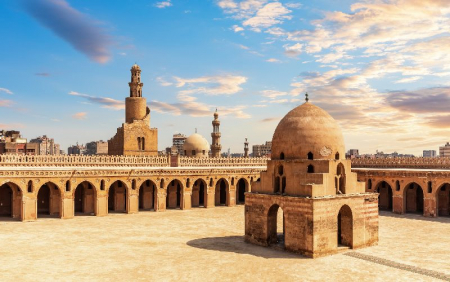
The Ibn Tulun Mosque, Cairo’s oldest well-preserved mosque, dates back to 879 CE. Famous for its vast square layout, intricate arches, and 128 ornate stucco windows, it remains a pinnacle of early Islamic architecture and a must-visit historical landmark.
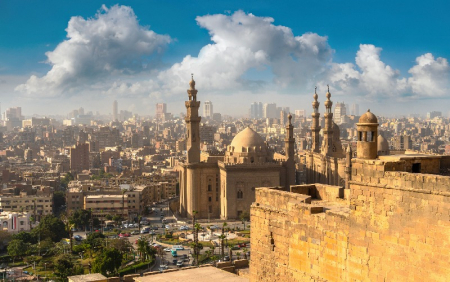
The Sultan Hassan Mosque, built in the 14th century, is a Bahri Mamluk architectural marvel in Cairo, renowned for its grand portal, extensive madrasas, and historic significance.

The Suez Canal, Egypt’s iconic waterway, connects Africa and Asia, handling thousands of ships yearly and shaping international trade.
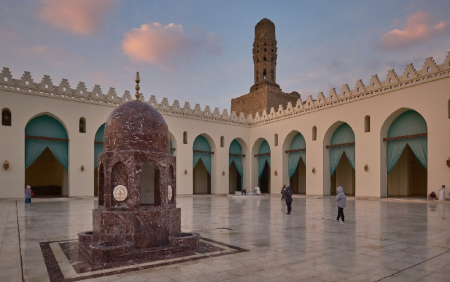
Al-Hakim Mosque, Cairo, is a stunning Fatimid-era mosque built between 990–1013 CE. Famous for its grand courtyard, distinctive minarets, and rich history, it remains a key cultural and religious landmark.
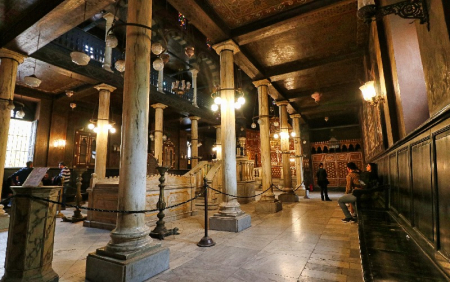
The Ben Ezra Synagogue, founded in the 11th century in Old Cairo, is Egypt’s oldest Jewish monument and the discovery site of the renowned Cairo Geniza.