Home
Home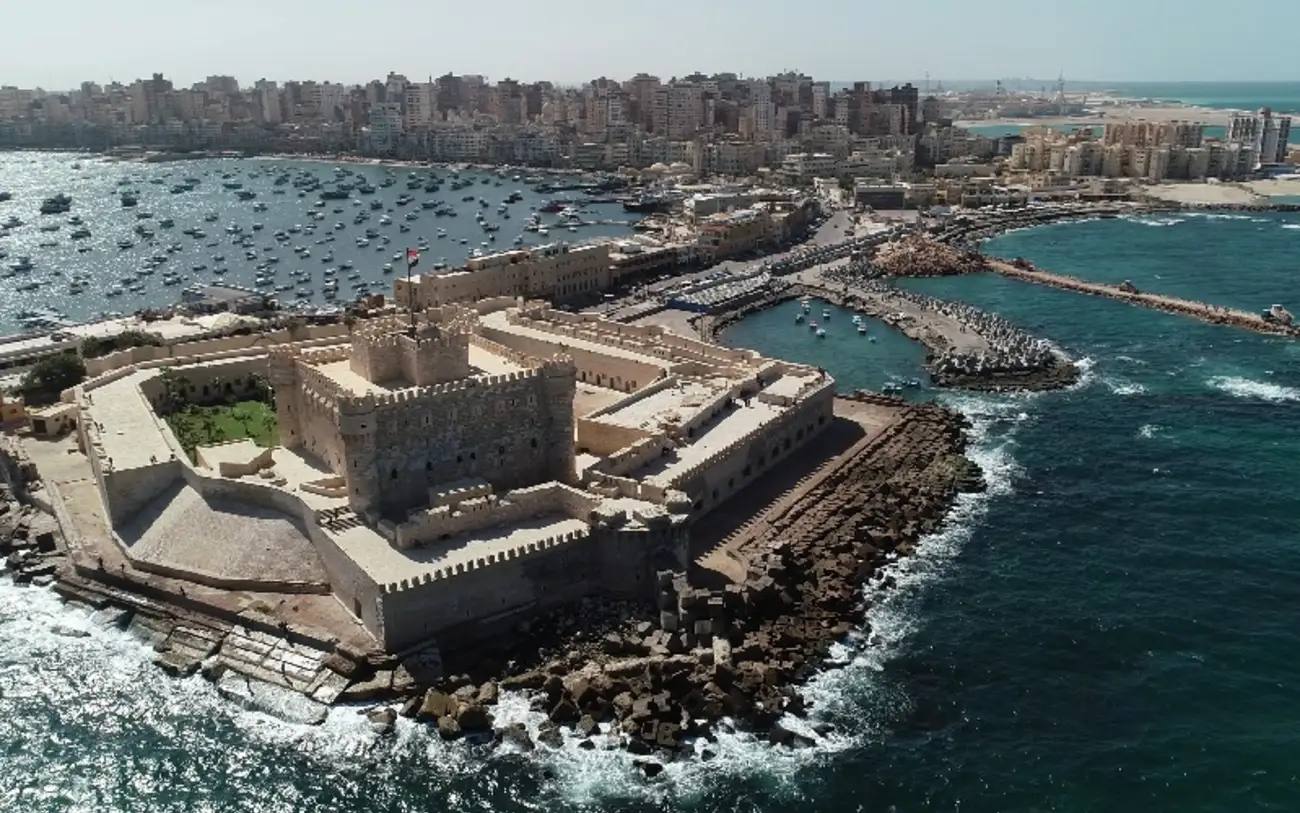
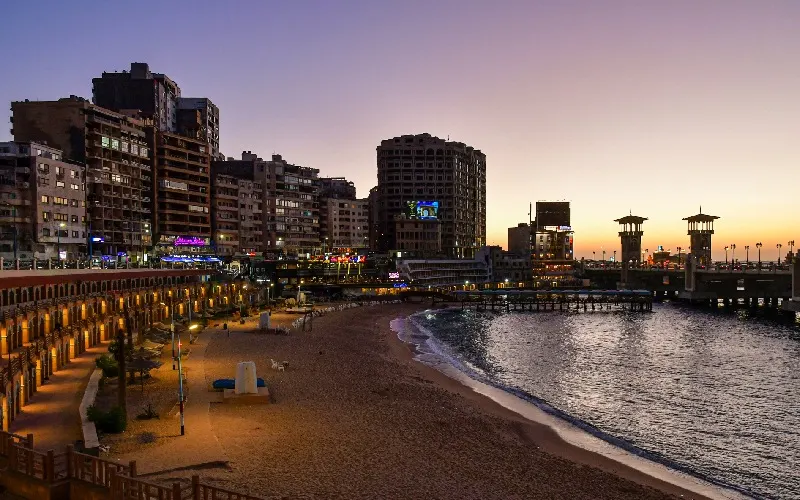
Founded in 331 BC by Alexander the Great, Alexandria stands as one of history's most significant ancient cities, known as the "Bride of the Mediterranean." This legendary metropolis was once the world's most populous city and a leading center for science, culture, and scholarship. Alexandria housed three remarkable wonders: the Lighthouse of Alexandria, the Great Library, and the Catacombs of Kom El Shoqafa. Today, it remains Egypt's principal seaport and second-largest city, with a population of 5,362,527, continuing its legacy as a major Mediterranean cultural and economic hub.
Founding and Ancient History of Alexandria
Before Alexander the Great arrived, a modest fishing village called Rhacotis occupied the site of what would become one of history's greatest cities. Archaeological evidence indicates human settlement in this area dating back to approximately 1000 BCE. The location offered strategic advantages—reliable ship access unlike other Nile Delta ports and protection from fierce Mediterranean storms.
The origins of Rhacotis and Alexander the Great's vision
In 331 BCE, Alexander the Great founded Alexandria after conquering Egypt from the Persians. He selected this coastal site for its natural harbor sheltered by Pharos Island and its position at the western edge of the Nile Delta. The Greek architect Dinocrates of Rhodes designed the city following a Hippodamian grid pattern with broad avenues intersecting at right angles. Alexander envisioned a significant port that would facilitate trade between Egypt and his vast empire. However, he departed shortly after establishing the city and never returned before his death in 323 BCE.
Ptolemaic rule and the rise of the Great Library
Following Alexander's death, his general Ptolemy took possession of Egypt and eventually declared himself Pharaoh as Ptolemy I Soter in 305 BCE. Under the Ptolemaic dynasty, Alexandria rapidly expanded, surpassing Carthage in size within a generation. The Ptolemies successfully blended Greek and Egyptian religions while preserving their own Greek language and culture.
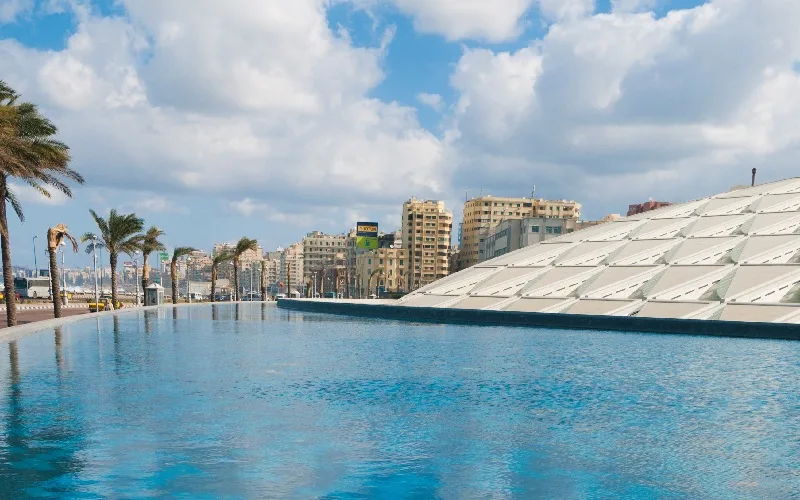
One of Ptolemy I's most consequential acts was beginning construction of the Great Library of Alexandria. His successor, Ptolemy II Philadelphus, completed this project. The library collected texts from across the known world—every ship entering Alexandria's harbor was required by law to surrender its books for copying. At its peak, the library reportedly held approximately 500,000 scrolls, though estimates vary from 40,000 to 700,000.
The Lighthouse of Alexandria and its global influence
The Lighthouse of Alexandria, constructed during the reign of Ptolemy II around 280 BCE, became one of the Seven Wonders of the Ancient World. Built by Sostratus of Cnidus, this marvel stood approximately 400 feet tall. Its three-tiered structure featured a rectangular base, octagonal midsection, and cylindrical top. At night, a fire burned at its summit, while a massive brass disk reflected torchlight to guide ships safely past dangerous reefs. The lighthouse remained operational for over 1,000 years until damaged by earthquakes between 956 and 1303 CE.
Alexandria was founded by Alexander the Great in 331 BC and became one of the most important cities in the ancient world. It was home to the Great Library and the Lighthouse of Alexandria, one of the Seven Wonders of the Ancient World. The city served as a major center for science, culture, and scholarship throughout history.
Islamic and Medieval Alexandria
In 641 CE, Muslim Arab armies under the command of Amr ibn al-As conquered Alexandria, ending Byzantine control over Egypt. The city surrendered after a fourteen-month siege, marking a pivotal shift in Mediterranean power dynamics.
The Arab conquest and early Islamic governance
Following conquest, the first Arab governor to visit Alexandria was Utba ibn Abi Sufyan, who constructed a governor's palace in 664-665. Alexandria was not chosen as Egypt's capital since Caliph Omar ibn Al-Khattab learned the city became isolated during annual Nile floods. Although many wealthy Romans departed, causing economic recession, local Copts generally welcomed the new Muslim rulers. Under the Umayyad Caliph Muawiya, Alexandria flourished as a harbor, attracting Arabs from the Levant and Arabian Peninsula.
Medieval trade routes and European merchant presence
Throughout the late medieval period, Alexandria regained prominence as Egypt's most important commercial port. The city became a crucial link in global trade networks, handling goods from Arabia, India, Southeast Asia, and Africa. These included spices, precious stones, pearls, exotic woods, and ivory. Alexandria's strategic location offered merchants the cheapest and fastest route compared to alternatives through Syria or Constantinople. European merchants established permanent communities, with Venetians securing particularly advantageous trading privileges through agreements with Egyptian sultans. These European traders resided in designated areas called funduqs under consular authority.
Cultural and religious life under Islamic rule
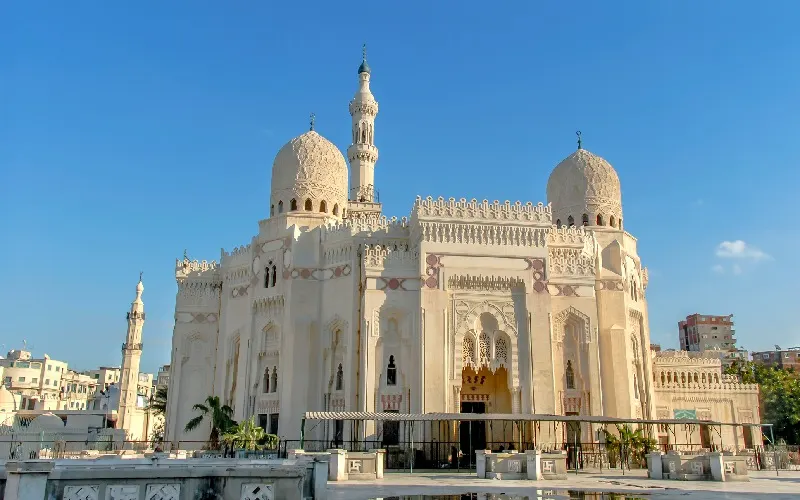
Religious architecture flourished as Alexandria developed its Islamic identity. Four significant mosques became city landmarks: Al-Nabi Danial, Sidi Gaber, Al-Mursi Abul Abbas, and Al-Attarine. The 13th-century traveler Ibn Battuta described Alexandria as "remarkable in appearance and solid of construction." He documented numerous Muslim saints residing in the city and called it "a trading market for all nations," highlighting that despite changes in governance, Alexandria maintained its cosmopolitan character.
Customize Your Dream Vacation!
Get in touch with our local experts for an unforgettable journey.
Plan Your TripModern Development and Economic Role
After centuries of decline, Alexandria experienced a dramatic rebirth in the early 19th century. From a desolate town of merely 6,000 inhabitants in 1806, it transformed into a bustling cosmopolitan center with 100,000 residents by 1849.
19th-century revival under Muhammad Ali
Muhammad Ali Pasha, who became Egypt's governor in 1805, envisioned Alexandria as the cornerstone of his modernization efforts. Between 1817 and 1821, he commissioned a 75-kilometer canal connecting Alexandria to the western branch of the Nile, greatly improving the city's fresh water supply. His introduction of Jumel cotton in 1820 proved revolutionary—production soared from 944 to 228,078 hundredweight within just four years. The economic boom attracted European businesses, with their presence tripling from 23 firms in 1822 to 69 by 1837.
Industrial zones and petroleum sector
Today, Alexandria stands as an industrial powerhouse, generating approximately two-fifths of Egypt's total industrial production. The city's manufacturing zones span several districts—from Al-Qabbārī with its asphalt works and paper mills to Al-Maks with its tanning industries and cement works. Especially significant is Alexandria's petroleum sector, which houses six refineries and three petrochemical complexes. These facilities represent 45% of Egypt's total oil refining capacity, supplying 35% of the national demand for gasoline and diesel. Recently, Alexandria Petroleum Company refined over 3.5 million tons of crude oil in fiscal year 2024/25.
Alexandria's role in Egypt Vision 2030
As Egypt looks toward the future, Alexandria plays a central role in the nation's Vision 2030 sustainability goals. The city recently secured two major green projects focusing on sustainable transportation and innovative hydrogen fuel technology. The Alexandria 2032 Vision specifically addresses urban challenges through comprehensive development in housing, transportation, and infrastructure. The Water Vision for Alexandria 2030 aims to establish a sustainable urban water supply system to counter the documented 20% decline in Nile water supply since 2007.
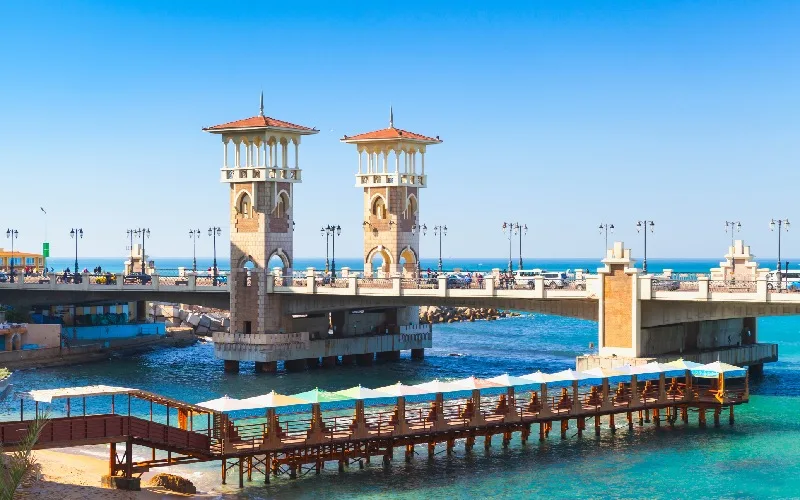
Alexandria's economy has evolved significantly. In the 19th century, it experienced a revival under Muhammad Ali Pasha with the introduction of cotton production. Today, it's an industrial powerhouse, generating about two-fifths of Egypt's total industrial production, with a strong focus on petroleum refining and petrochemicals.
Urban Layout and Architectural Heritage
The physical design of Alexandria reveals the genius of Greek urban planning fused with millennia of subsequent development. Designed by Dinocrates, the city originally featured a grid layout with broad streets intersecting at right angles.
Ancient city planning and the Heptastadion
The Heptastadion, a monumental causeway built during the Ptolemaic period in the 3rd century BC, connected Pharos Island to the mainland. This remarkable structure, measuring seven stadia (approximately 1.3 kilometers) in length and 200 meters in width, created Alexandria's two distinct harbors—the Great Harbor (Portus Magnus) on the east and the commercial Portus Eunostus on the west. Two bridges allowed vessel passage between these harbors. Over centuries, silt accumulation transformed this causeway into the land now occupied by modern development.
Modern districts and administrative divisions
Today's Alexandria extends across the area where the ancient Heptastadion once stood. The Turkish Quarter, located on the promontory stem, represents the oldest surviving section of the city, housing both fine mosques and diverse neighborhoods.
Iconic landmarks: Pompey's Pillar, Catacombs, Citadel of Qaitbay
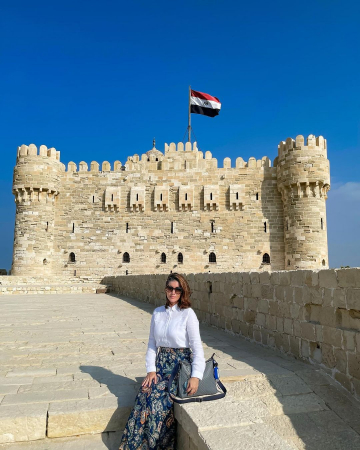
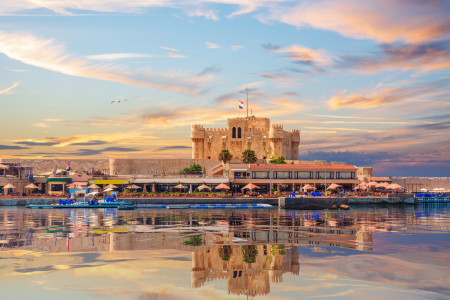
Pompey's Pillar stands as the only ancient monument in Alexandria remaining in its original location. This 26.85-meter-high Roman triumphal column was erected between 298-302 AD honoring Emperor Diocletian. The nearby Catacombs of Kom El Shoqafa, discovered in 1900, descend 35 meters underground and blend Egyptian, Greek, and Roman architectural styles. The Citadel of Qaitbay, built between 1477-1479 AD by Sultan Al-Ashraf Qaitbay, stands where the ancient Pharos Lighthouse once stood — and all of these landmarks can be explored as part of Egypt tours that include Alexandria as a day trip or overnight stay from Cairo.
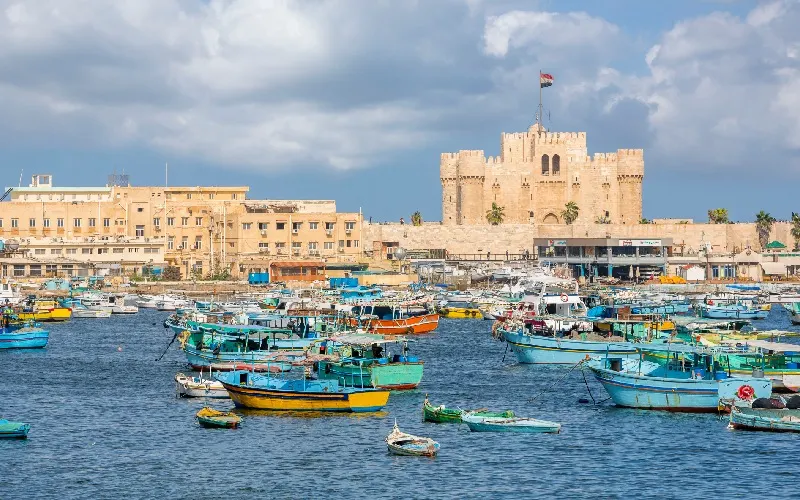
Alexandria boasts several iconic landmarks, including Pompey's Pillar, a 26.85-meter-high Roman triumphal column; the Catacombs of Kom El Shoqafa, which blend Egyptian, Greek, and Roman architectural styles; and the Citadel of Qaitbay, built on the site of the ancient Pharos Lighthouse.
Originally designed with a grid layout featuring broad intersecting streets, Alexandria's urban landscape has evolved over millennia. The ancient Heptastadion causeway, which connected Pharos Island to the mainland, has transformed into land occupied by modern development. Today, the city extends across this area, with the Turkish Quarter representing its oldest surviving section.
Alexandria stands as a testament to over two millennia of rich history, transforming from a modest fishing village into one of the ancient world's greatest cities. Alexander the Great's vision created a metropolis that flourished under Ptolemaic rule, becoming home to the legendary Great Library and Pharos Lighthouse.
Through Byzantine and Islamic periods, Alexandria maintained its cosmopolitan character and commercial importance as a crucial link in global trade networks. The city's 19th-century renaissance under Muhammad Ali Pasha saw its population surge from 6,000 to 100,000 residents, establishing foundations for modern development.
Today, Alexandria functions as an industrial powerhouse generating two-fifths of Egypt's industrial production while preserving its architectural heritage spanning multiple civilizations. As Egypt's principal seaport and second-largest city, Alexandria continues bridging past achievements with contemporary ambitions, remaining integral to the nation's future vision.
Alexandria continues to be a crucial city for Egypt. It serves as the country's principal seaport and second-largest city. The city plays a significant role in Egypt's Vision 2030, with initiatives focusing on sustainable transportation, innovative hydrogen fuel technology, and comprehensive urban development in housing, transportation, and infrastructure.
The Great Library of Alexandria, which held an estimated 40,000 to 700,000 scrolls, was the largest library in the ancient world. Built under Ptolemy I and completed by Ptolemy II, it likely declined gradually over centuries due to fires, wars, and reduced funding rather than a single catastrophic event.
Alexandria earned this nickname due to its stunning coastal location, historical importance, and cultural significance. Its position along the Mediterranean Sea combined with its rich heritage and cosmopolitan character made it one of the region's most celebrated cities.
The Lighthouse of Alexandria (Pharos) was one of the Seven Wonders of the Ancient World, standing approximately 400 feet tall. Built around 280 BCE, it guided ships for over 1,000 years before being damaged by earthquakes between 956 and 1303 CE. The Citadel of Qaitbay now stands on its former location.
As of 2023, Alexandria has a population of 5,362,527, making it Egypt's second-largest city after Cairo and the largest city on the Mediterranean coast.
In 641 CE, Muslim Arab armies conquered Alexandria after a fourteen-month siege, ending Byzantine control. Despite this change, Alexandria maintained its cosmopolitan character and commercial importance, flourishing as a major trading hub under Islamic rule.
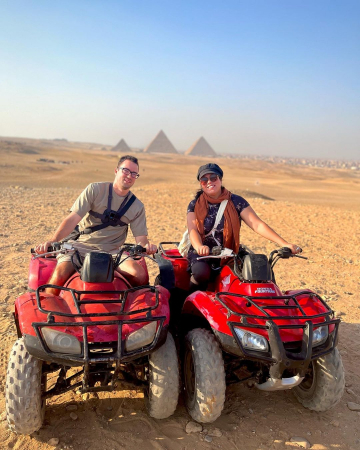
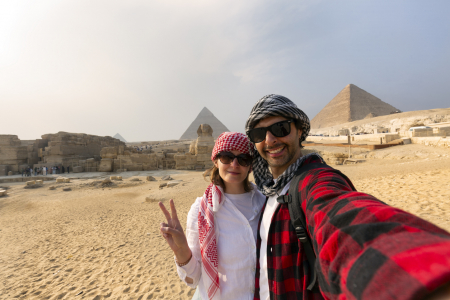

The Library of Alexandria in Egypt was a legendary center of learning, housing hundreds of thousands of scrolls and attracting renowned scholars, making Alexandria the intellectual capital of the ancient world.

Explore Alexandria’s 4th-century Roman amphitheatre, a unique circular theatre with marble seating and historical significance spanning Roman, Byzantine, and Islamic eras.

Pompey’s Pillar is a 26.85-meter Roman column in Alexandria, dedicated to Emperor Diocletian, and stands as one of the largest monolithic columns ever built.

The Catacombs of Kom El Shoqafa are Alexandria's largest Roman necropolis, discovered in 1900. This 35-meter deep burial complex blends Egyptian, Greek, and Roman styles across three underground levels, dating from the 2nd-4th centuries CE.
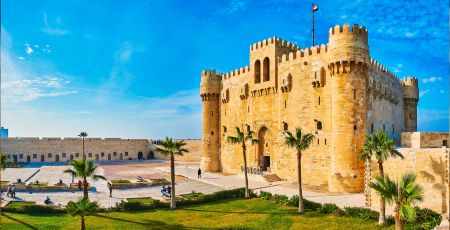
Located on the very Grounds of the ancient lighthouse in Alexandria , the Citadel & fort of Sultan Qaitbay is a landmark of the coastal city of Alexandria is filled with history and amazing details for you to DIscover.

El Alamein is a historic WWII battleground 100km west of Alexandria where decisive 1942 battles turned the war's tide. Today it features war memorials and museums alongside New El Alamein City, a modern smart city development opened in 2018.

Alexandria, founded by Alexander the Great in 331 BC, is Egypt's legendary Mediterranean seaport. Once home to the ancient Great Library and Pharos Lighthouse, this historic city of 5.3 million residents blends remarkable ancient wonders with vibrant modern coastal culture.