
 Home
Home.jpg "Sound and Light Show at Karnak Temple")
Every evening, ancient history awakens within the towering columns of Karnak Temple, where modern illumination technology breathes life into 4,000-year-old stones. This extraordinary multimedia spectacle unfolds across the Karnak Temple Complex in Luxor, one of Egypt's most magnificent archaeological treasures. Darkness falls upon the colossal pillars and statues, only to reveal them moments later bathed in brilliant hues while narratives from pharaohs long past echo through the night air.
The experience transports visitors across millennia through carefully orchestrated sensory elements. Those towering columns and grand halls, already impressive during daylight hours, take on an almost supernatural quality under strategic illumination. Traditional Egyptian melodies weave through the ancient corridors, creating an atmospheric backdrop that enhances every carved hieroglyph and weathered statue. Each evening's performance reveals not merely architectural splendor, but unlocks the profound historical currents and mythological beliefs that once pulsed through this sacred complex, offering modern audiences a window into the spiritual heart of ancient Egyptian civilization.
What is the Karnak Sound and Light Show?
Born from mid-20th century innovation, the Karnak Sound and Light Show emerged as a pioneering effort to bridge the gap between ancient Egyptian civilization and contemporary understanding. This 75-minute evening presentation unfolds exclusively after sunset across the temple grounds, creating a photographer's paradise and a contemplative sanctuary for those seeking deeper historical connections. What began as an educational experiment has matured into Luxor's premier nighttime attraction, captivating visitors who crave an alternative lens through which to examine this ancient marvel.
A brief overview of the show format
Rather than confining audiences to theater seats, this remarkable experience invites participants to traverse the illuminated temple complex on foot. The journey commences at the legendary Avenue of Sphinxes, where precisely positioned lights reveal the ram-headed guardians that once formed a sacred processional route linking Karnak to Luxor Temple. Guests then advance through imposing gateways before entering the magnificent Great Hypostyle Hall, following a meticulously planned pathway. Along this route, historical narratives unfold in chronological sequence, delving into Thebes' ascendancy, the veneration of deities such as Amun, and the monumental achievements of pharaohs including Seti I and Ramses II. The experience reaches its crescendo at the Sacred Lake, where temple reflections shimmer across the water's surface, providing a tranquil conclusion to this temporal odyssey.
How the temple becomes the stage
Karnak Temple Complex undergoes a remarkable metamorphosis, evolving into a vast open-air performance venue where each architectural element assumes a starring role. Wandering through these sacred grounds, visitors witness massive columns, elaborate hieroglyphic inscriptions, and towering monuments radiating against the star-filled sky. The temple's already imposing dimensions become even more pronounced through calculated lighting arrangements that reveal architectural subtleties often overlooked during daytime exploration. This spectacular presentation transforms colossal pillars, ancient obelisks, and carved statues into active participants within the unfolding historical drama, generating the remarkable sensation of temporal displacement.
Use of narration, music, and lighting
Multilingual narration available in ten languages forms the foundational structure of this immersive encounter. Voices rich with ancient poetry guide visitors through the temple complex's origins and chronicle pharaohs' devotional achievements in honoring the god Amun. The storytelling technique allows long-deceased rulers to seemingly address modern audiences directly, as though they have returned from eternity to share their extraordinary legacies.
Complementing these narratives, ethereal melodies drift through the ancient stonework, forging emotional bridges to the historical events being recounted. Simultaneously, sophisticated lighting effects breathe color into the temple's features—columns radiate in golden, scarlet, and azure tones, statues emerge dramatically from shadow, and hieroglyphic inscriptions illuminate as though carved mere moments ago. This harmonious blend of elements produces what visitors consistently describe as an "enchanting and supernatural experience" that renders ancient history accessible to newcomers and Egyptology enthusiasts alike.
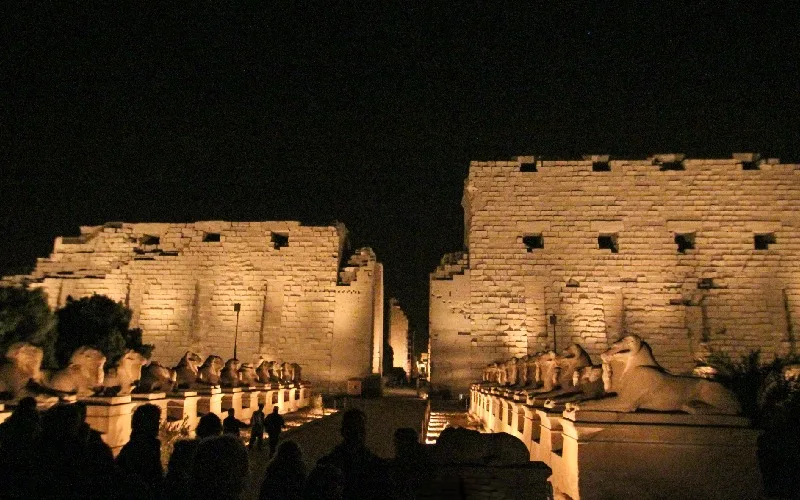
The narration for the Karnak Sound and Light Show is offered in ten different languages, making it accessible to a wide range of international visitors.
The Visual and Emotional Experience
Once darkness envelops Karnak Temple, sophisticated lighting technology and synchronized soundscapes breathe new life into the ancient landmark. The visual spectacle becomes particularly remarkable as dramatic illumination transforms the temple's massive structures into a canvas of vivid historical storytelling.
Lighting effects on ancient carvings
The most captivating aspect of the Karnak Sound and Light Show lies in how the illumination reveals intricate details of wall reliefs. Vibrant hues cast across ancient stones make hieroglyphics and carvings stand out dramatically against the night sky. Colored lights dance across stone surfaces, highlighting intricate depictions of pharaohs, gods, and sacred animals that often escape notice during daytime visits. High-definition projection systems and energy-efficient LED lighting create dramatic shadows that emphasize the three-dimensional quality of temple carvings.
The illumination of colossal columns and statues magnifies their imposing presence, allowing visitors to truly appreciate the architectural brilliance of ancient craftsmen.
Sound design and its immersive role
The auditory landscape proves equally compelling as haunting music mysteriously flows through the ancient city. Traditional Egyptian instruments create a powerful soundscape that echoes through the nighttime, guiding visitors through various periods of Egyptian history. The narration, delivered in poetic tones, evokes a profound sense of reverence and awe as it describes the construction of colossal temples and the reign of legendary pharaohs. This combination of sound and visual elements enhances the emotional impact, making visitors feel genuinely connected to ancient Egyptian culture.
How the show evokes a sense of time travel
Walking through Karnak Temple during the sound and light performance creates an almost spiritual experience. Visitors proceed along illuminated paths past glowing statues and obelisks, where the barriers of time seem to dissolve. The reflections of colored lights rippling across the Sacred Lake create an otherworldly atmosphere. This multi-sensory journey allows modern audiences to witness Karnak in a way impossible during daylight hours, offering a deeper appreciation for the temple's historical significance.
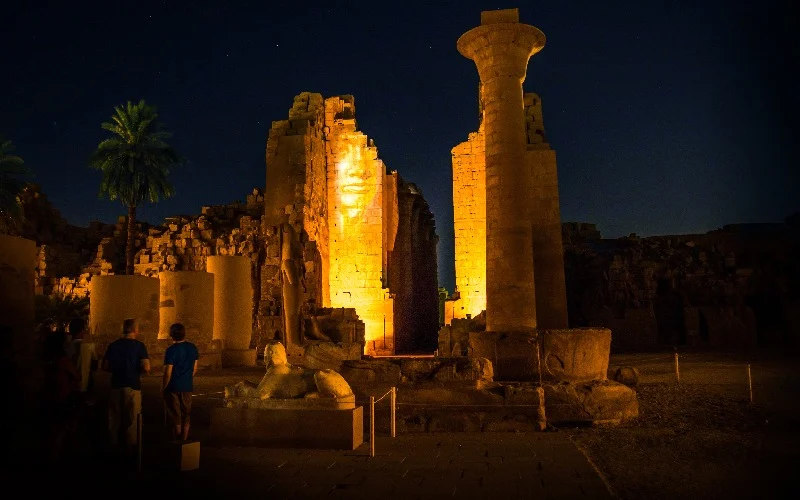
This show uniquely combines advanced lighting technology, traditional Egyptian music, and poetic narration to bring the ancient temple complex to life, creating an enchanting and supernatural experience.
Customize Your Dream Vacation!
Get in touch with our local experts for an unforgettable journey.
Plan Your TripHistorical Stories Told Through the Show
The temple grounds become a living chronicle where four millennia of Egyptian civilization unfolds through masterful storytelling. Each illuminated pathway guides visitors through a chronological exploration of history, presenting events precisely where they originally transpired.
Depictions of pharaohs and gods
Legendary rulers emerge from the shadows as central figures in this historical tapestry. Tutankhamun, Ramses II, and Queen Hatshepsut appear through strategic lighting that brings their carved portraits to vivid life. These ancient monarchs address modern audiences directly, sharing tales of their accomplishments and revealing glimpses into royal existence. The narrative extends beyond earthly rulers to honor Amun-Ra, the supreme deity for whom this magnificent complex was constructed. Additional divine figures populate the story, including Osiris, Isis, Ra, and the sacred Theban triad—Amun alongside his consort Mut (goddess of justice) and their son Khonsou (moon god).
Key historical events featured
Pivotal moments in Egyptian civilization receive dramatic treatment throughout the presentation. The temple's origins unfold as visitors discover how construction began four thousand years ago under Seti I's leadership. Subsequent generations of pharaohs continuously expanded these sacred grounds across fifteen centuries, ultimately creating one of Earth's most colossal religious monuments. Royal victories and architectural achievements receive prominent attention as the narrative progresses. The performance weaves these historical milestones into a captivating chronological account that traces Egyptian civilization's remarkable ascent.
How mythology is woven into the narrative
Sacred beliefs form the foundation upon which the entire Karnak experience rests. Divine stories and mortal interactions create an intricate web of ancient understanding. Ceremonial practices that once filled these sacred spaces receive detailed exposition. The transformation of Amun into Thebes' principal deity receives particular emphasis, revealing the political and religious forces that shaped this spiritual center. This skillful integration of historical facts with mythological traditions illuminates how religious devotion and daily existence remained inseparably connected throughout ancient Egyptian society.
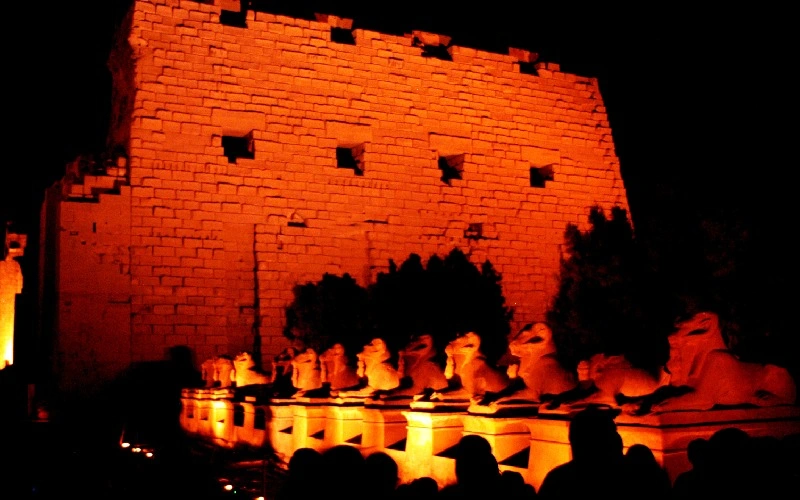
The show highlights famous pharaohs such as Tutankhamun, Ramses II, and Queen Hatshepsut, as well as important Egyptian gods like Amun-Ra, Osiris, and Isis.
Why the Show Leaves a Lasting Impression
Visitors often find themselves profoundly moved by what unfolds during these evening hours at Karnak Temple. This nocturnal encounter with ancient Egypt creates enduring memories that extend far beyond typical tourist experiences.
Experiencing Karnak in a new light
Darkness reveals what daylight conceals at the Karnak Temple complex, which awakens "in a blaze of color, music, and storytelling" that reveals architectural details invisible during daylight visits. Strategic illumination highlights impressive architecture while enhancing the emotional impact of the space. Rather than simply viewing ruins, visitors witness stones that seem to "tell their own story" as columns glow against the night sky. This nighttime transformation is described as "nothing short of magical".
Emotional connection to ancient history
The performance forges unexpected bonds between contemporary visitors and ancient civilizations. Pharaohs seemingly "speak" to audiences and "arise to tell the story of their interesting lives," establishing personal connections with historical figures. The haunting music that "mysteriously flows through this ancient city" further enhances this bond. Many describe the experience as "enchanting and supernatural".
How it deepens appreciation for Egyptian culture
The show functions as a remarkable educational instrument that renders complex history accessible to modern minds. Careful storytelling helps audiences "envision what life was like thousands of years ago". The performance provides genuine insight into the architectural achievements, religious practices, and cultural values that defined ancient Egypt. Visitors depart with newfound respect for the sophisticated civilization that created these monuments, often inspiring further study of Egyptology and ancient cultures.
Within the ancient walls of Karnak Temple, modern technology achieves something remarkable: it resurrects the voices of pharaohs and awakens stones that have slumbered for millennia. This multimedia presentation, born in the mid-20th century, has matured into far more than a tourist attraction—it serves as a bridge between our contemporary world and the profound mysteries of ancient Egypt.
The true genius of this nocturnal experience lies in its ability to dissolve the barrier between observer and history. Archaeological remnants become storytellers, their illuminated surfaces revealing narratives that daylight visits cannot convey. The interplay between haunting melodies and poetic narration creates an emotional depth that penetrates beyond mere factual learning, touching something fundamental about human curiosity and wonder.
Each pathway through the illuminated complex offers discoveries that extend well beyond architectural appreciation. The Sacred Lake's reflective waters, the towering columns of the Great Hypostyle Hall, and the sphinx-lined avenue each contribute to a larger understanding of how ancient Egyptians conceived their relationship with the divine. Modern projection technology serves this ancient wisdom, making millennia-old religious concepts accessible to minds shaped by entirely different worldviews.
What emerges from this carefully orchestrated encounter transcends entertainment or education alone. Visitors find themselves walking where priests once performed sacred rituals, where pharaohs sought divine blessing, where the spiritual life of an entire civilization once flourished. The experience creates a form of time travel that no museum display or textbook can replicate—a direct encounter with the living pulse of ancient Egyptian culture.
Long after the final notes fade and darkness reclaims the temple, this journey through illuminated history continues to resonate. The Sound and Light Show at Karnak Temple stands as testament to humanity's enduring fascination with its past, proving that ancient wisdom, when properly presented, can still speak powerfully to modern hearts and minds.
Yes, the show is designed to be accessible and engaging for all audiences, providing a chronological journey through 4,000 years of Egyptian history in an easy-to-understand format.
Show times vary by season, usually starting shortly after sunset. In summer, shows typically begin later in the evening, while winter performances start earlier.
The show takes place inside the Karnak Temple Complex, guiding visitors through selected areas as lighting and narration unfold at different monuments and courtyards.
Photography is generally allowed, but flash photography and tripods may be restricted to preserve the atmosphere and avoid disturbing other visitors.

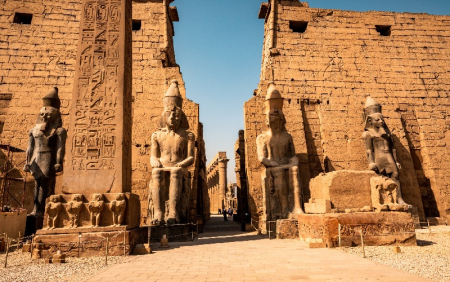
Luxor Temple, built by Amenhotep III and expanded by Ramses II, is a breathtaking New Kingdom monument dedicated to the renewal of kingship. Located on Luxor’s east bank, it stands as one of Egypt's most iconic sanctuaries, celebrated for its grand pylons, colossal statues, and deep religious significance.
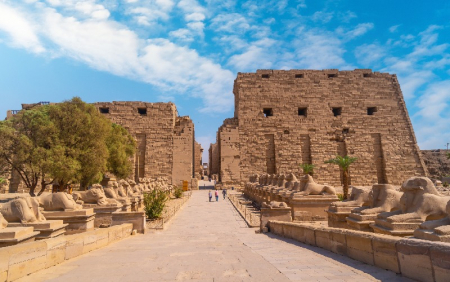
Karnak Temple in Luxor is an iconic ancient Egyptian complex, showcasing grand architecture, rich history, and the spiritual and political legacy of Thebes across nearly 2,000 years of construction.
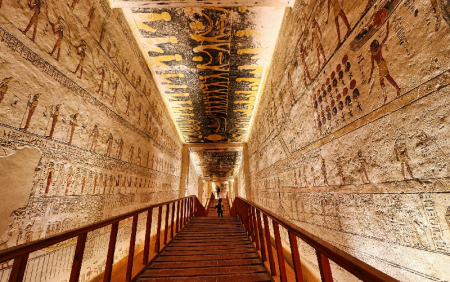
The Valley of the Kings is Egypt’s legendary royal necropolis, featuring 65 tombs of New Kingdom pharaohs, remarkable engineering, and world-famous discoveries like Tutankhamun’s burial.
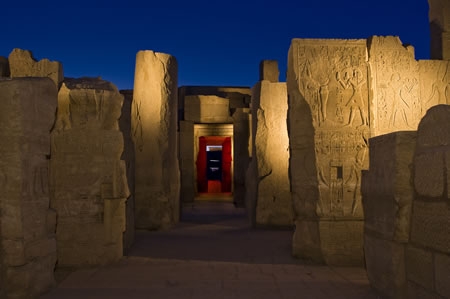
The Karnak Sound and Light Show transforms the vast temple complex into a magical nighttime spectacle, combining illuminated monuments, music, and storytelling to bring ancient Egyptian history vividly to life.
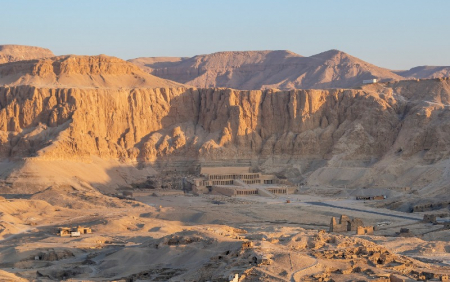
Discover the Valley of the Queens in Luxor, Egypt, with royal tombs, stunning art, and UNESCO heritage significance.
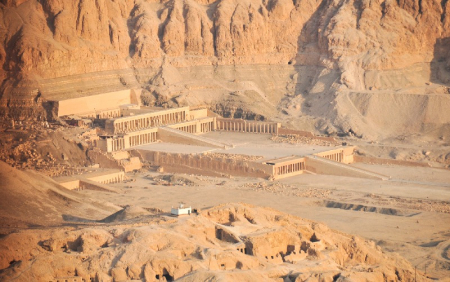
The Temple of Hatshepsut is a breathtaking 18th-Dynasty mortuary temple at Deir el-Bahari, famed for its grand terraces, cliffside design, and historical significance.
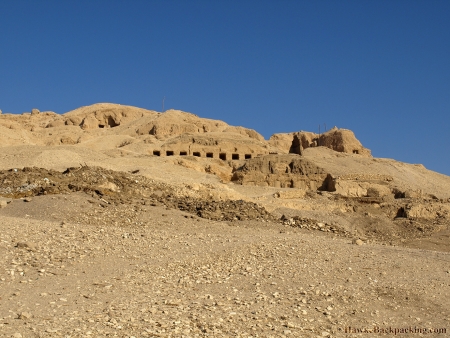
Explore the Valley of the Nobles in Luxor and learn how its 400+ tombs reveal vivid scenes of daily life and remarkable artistry from ancient Egypt’s New Kingdom.
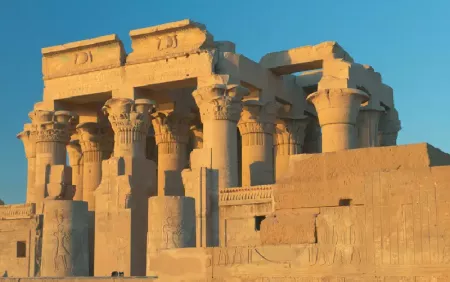
Kom Ombo Temple—Egypt’s remarkable twin sanctuary honoring Sobek and Haroeris, famed for its perfect symmetry and sacred crocodile traditions.
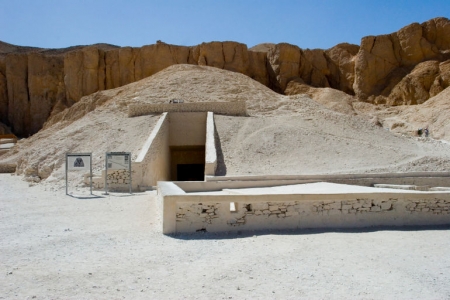
Tutankhamun’s tomb revealed over 5,000 stunning treasures, from gold chariots to the iconic mask, reshaping our understanding of ancient Egypt after its discovery in 1922.

Dendera Temple, 60km from Luxor, is Egypt's remarkably preserved healing sanctuary for Hathor. Explore vivid colors, hidden crypts & ancient astronomical knowledge.
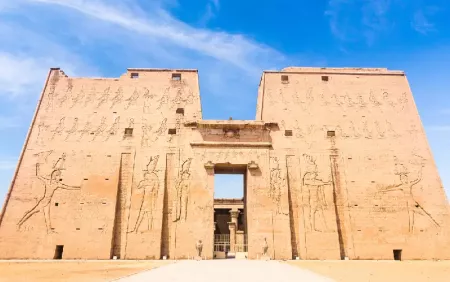
The Temple of Edfu, buried for centuries, is one of Egypt’s best-preserved temples—offering a vivid look into Ptolemaic religion, mythology, and architecture.
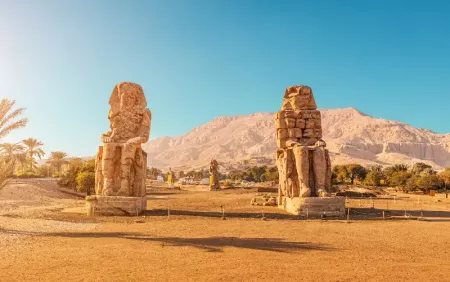
The Colossi of Memnon are 18-meter statues of Amenhotep III, once famed for their mysterious dawn “singing,” which captivated ancient visitors and inspired over a hundred inscriptions.
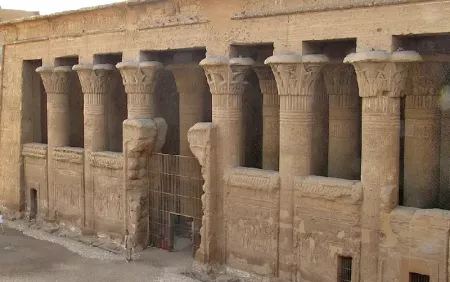
The Temple of Khnum at Esna, built from the Ptolemaic to Roman periods, features a stunning hypostyle hall with 24 ornate columns and reflects centuries of devotion to the creator god Khnum.
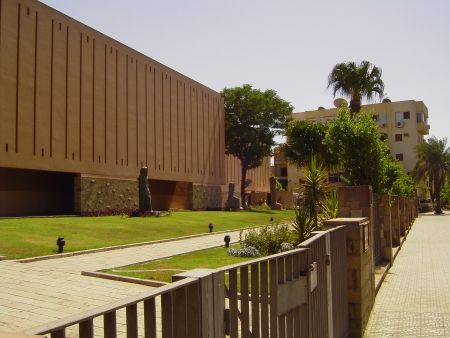
Luxor’s Mummification Museum offers an immersive look at ancient embalming methods, displaying tools, human and animal mummies, and the notable mummy of Masaharta.
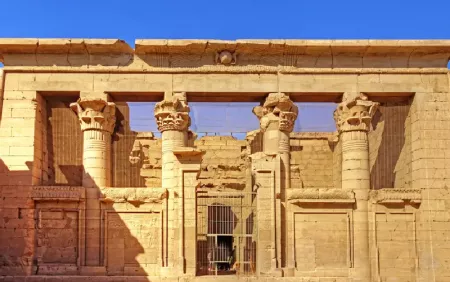
Kalabsha Temple, built under Emperor Augustus, was rescued from rising Nile waters in the 1960s and relocated block by block to New Kalabsha Island. Today, it remains a key UNESCO-recognized Nubian monument.

Soar above Luxor at sunrise in a hot air balloon and witness ancient temples, the Nile, and royal necropolises from the sky. This unforgettable experience offers breathtaking views and a unique perspective on Egypt’s timeless heritage.
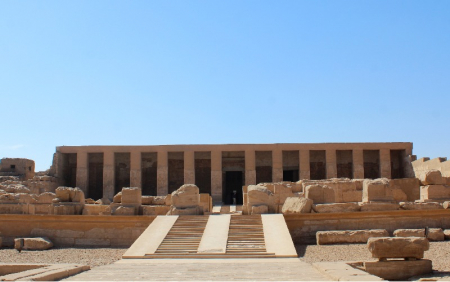
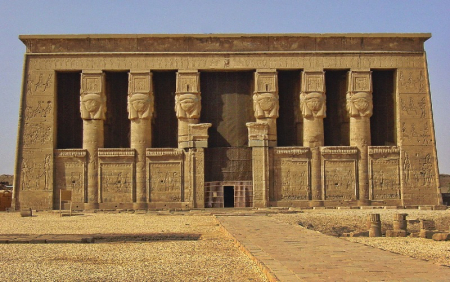
Explore the Temple of Hathor at Dendera, a remarkably preserved ancient Egyptian sanctuary dedicated to the goddess of love, music, and healing, renowned for its zodiac, vibrant reliefs, and astronomical ceilings.
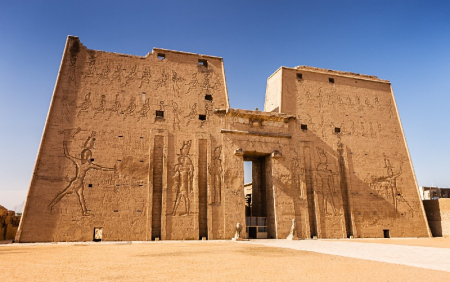
Visit the Temple of Horus at Edfu, a remarkably preserved Ptolemaic temple showcasing ancient Egyptian rituals, art, and architecture.
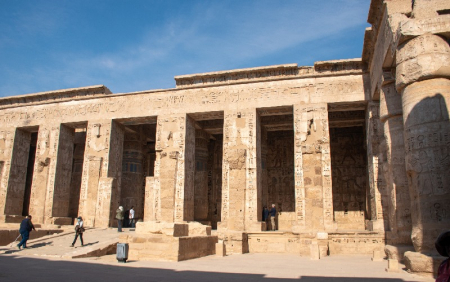
Explore Medinet Habu, Ramesses III’s temple, where history, religion, and artistry come alive on Luxor’s West Bank.
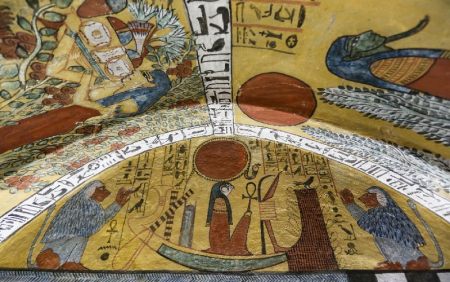
Deir el-Medina was home to the elite artisans who built and decorated Egypt’s royal tombs. Discover their homes, work, religion, and extraordinary daily life.
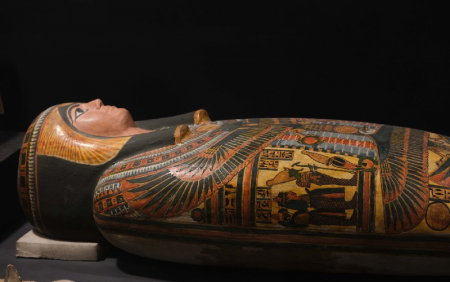
The Mummification Museum in Luxor showcases ancient Egyptian embalming, mummies, and artifacts, including Masaharta’s preserved remains and mummified animals.
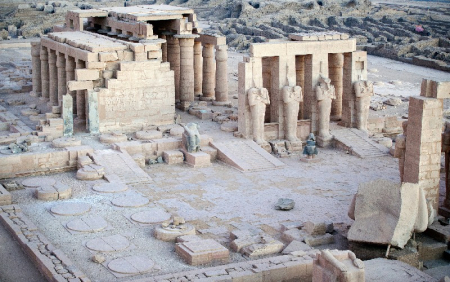
Discover the Mortuary Temple of Amenhotep III, once the largest in Thebes, famed for the Colossi of Memnon and ongoing restorations in Luxor.