Home
Home
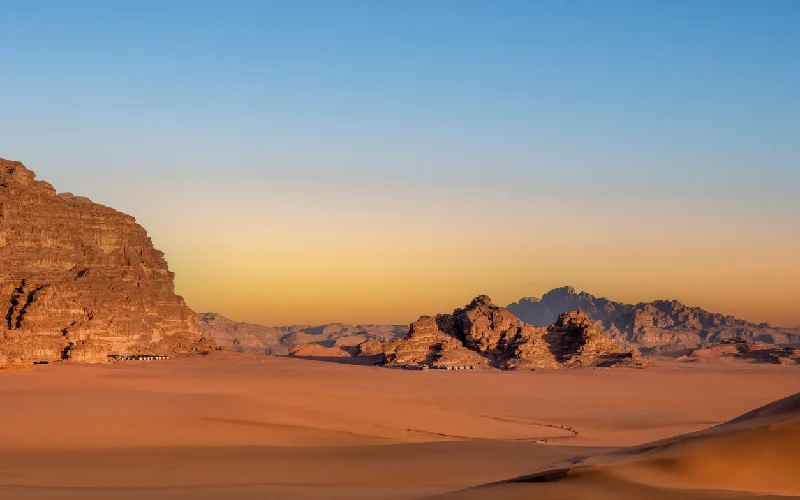
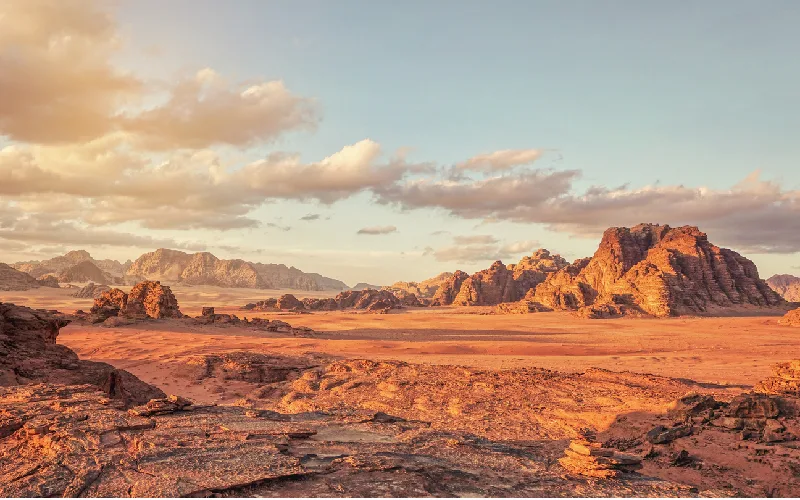
Wadi Rum is a vast protected desert valley located in the southern Governorate of Aqaba in Jordan, approximately 60 kilometres northeast of the city of Aqaba and 120 kilometres south of the ancient city of Petra. Covering an area of approximately 720 square kilometres, it is the largest wadi in Jordan and one of the most visually spectacular desert landscapes in the world.
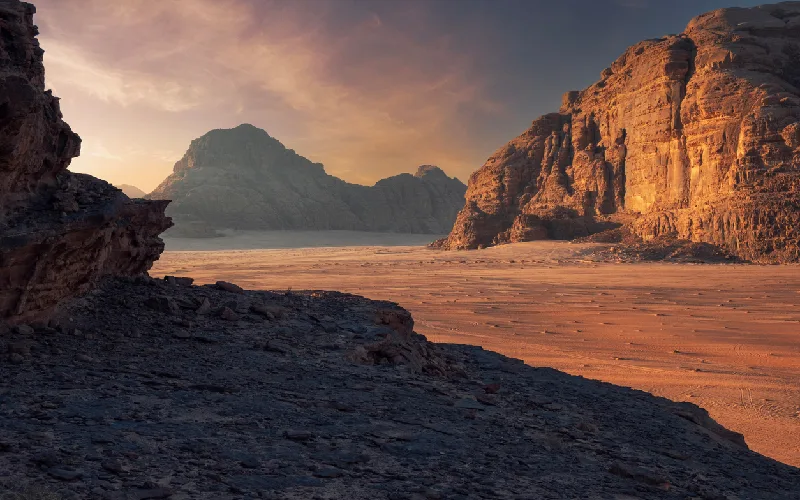
Known in Arabic as Wadi Rum — which translates approximately as the Valley of the Moon — the area is characterised by towering sandstone and granite mountains rising dramatically from flat red sand plains, narrow canyons cutting deep into ancient rock formations, natural arches, rock bridges, and the remnants of one of the oldest continuously inhabited desert environments on earth. Its extraordinary geology, rich archaeological heritage, and living Bedouin culture led to its inscription as a UNESCO World Heritage Site in 2011.
Wadi Rum desert has captured the imagination of the wider world through its association with T.E. Lawrence, the British officer who operated in the region during the Arab Revolt of 1916 to 1918 and described the landscape in his celebrated memoir Seven Pillars of Wisdom with language that has defined how many visitors approach the desert to this day.
The Geology and Natural Landscape of Wadi Rum
The landscape of Wadi Rum is the product of geological processes spanning hundreds of millions of years. The oldest rocks visible in the area are Precambrian granite formations dating back approximately 500 to 600 million years, formed during a period of intense volcanic and tectonic activity that shaped the basement of the Arabian Peninsula. Above these ancient granites lie thick sequences of sandstone deposited during later geological periods, sculpted over millennia by wind, water, and the expansion and contraction of rock under extreme temperature variations.
The result is a landscape of extraordinary diversity and visual drama. Massive inselbergs — isolated rock mountains rising abruptly from the desert floor — dominate the skyline, their sheer faces streaked with the dark colouration of desert varnish, a mineral coating formed over thousands of years by the slow oxidation of iron and manganese within the rock surface. Narrow siq corridors — canyon passages similar in character to those found at Petra — cut through the mountains, creating sheltered pathways that have guided human movement through the desert for millennia.
Natural arches and rock bridges are among the most distinctive features of the Wadi Rum desert landscape. These formations result from the differential erosion of sandstone layers of varying hardness, a process that gradually removes softer material while leaving more resistant rock in place. The most celebrated of these natural arches reach impressive dimensions and have become iconic landmarks within the protected area.
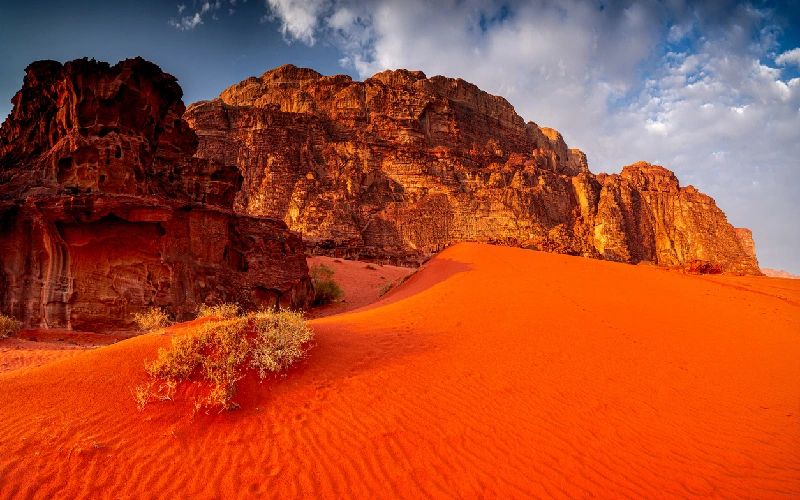
The red colouration that characterises the sandy plains of Wadi Rum derives from the high iron oxide content of the sandstone, which weathers to produce a fine red sand that covers much of the valley floor. This vivid coloration, which shifts dramatically between orange, red, and purple depending on the angle and intensity of sunlight, contributes substantially to the landscape's visual impact and has led to frequent comparisons with the surface of Mars.
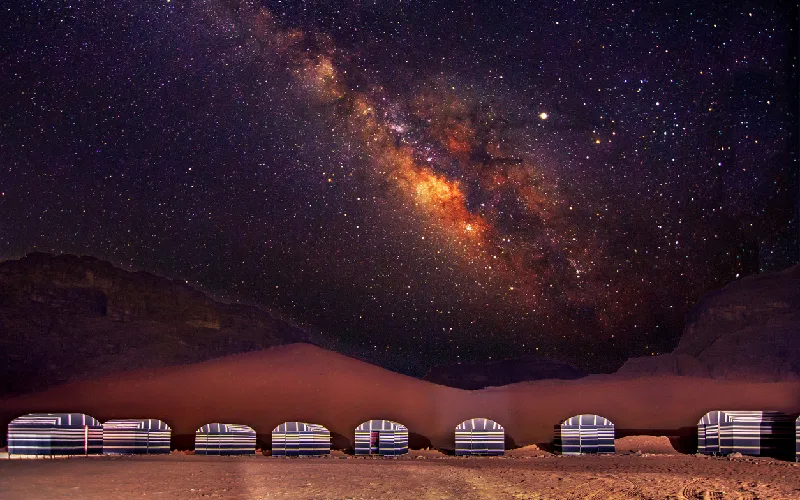
The red colour of Wadi Rum's sand and rock formations comes from iron oxide — the same compound that gives Mars its distinctive red appearance. The combination of red plains, towering rock formations, and absence of vegetation creates a landscape so similar to depictions of the Martian surface that Wadi Rum has been used as a filming location for several major productions set on Mars.
The Human History of Wadi Rum
Human presence in Wadi Rum desert extends back at least 12,000 years, placing the earliest inhabitants in the Neolithic period following the end of the last Ice Age. The relative abundance of water sources — springs emerging from the base of the sandstone mountains where they meet the impermeable granite below — made the valley habitable in an otherwise arid region and attracted successive waves of human settlement across many thousands of years.
The most significant early inhabitants were the Thamudic and Nabataean peoples, who left extensive evidence of their presence across the rock faces of Wadi Rum in the form of inscriptions, petroglyphs, and carved drawings. Thamudic inscriptions — written in a script predating the Nabataean alphabet — record personal names, prayers, and territorial markings across hundreds of rock surfaces throughout the valley.
Nabataean inscriptions, dating primarily from the period between the fourth century BCE and the second century CE, provide evidence of the Nabataean trading networks that passed through the Wadi Rum desert on routes connecting the Hejaz with Petra and the Mediterranean world.
The Nabataeans also constructed a small temple in Wadi Rum, the remains of which are still partially visible near the modern village of Rum. Dedicated to the goddess Allat, it represents one of the few permanent structural remains of Nabataean occupation in the area, most evidence of their presence being in the form of the inscriptions and petroglyphs scattered across the valley's rock faces.
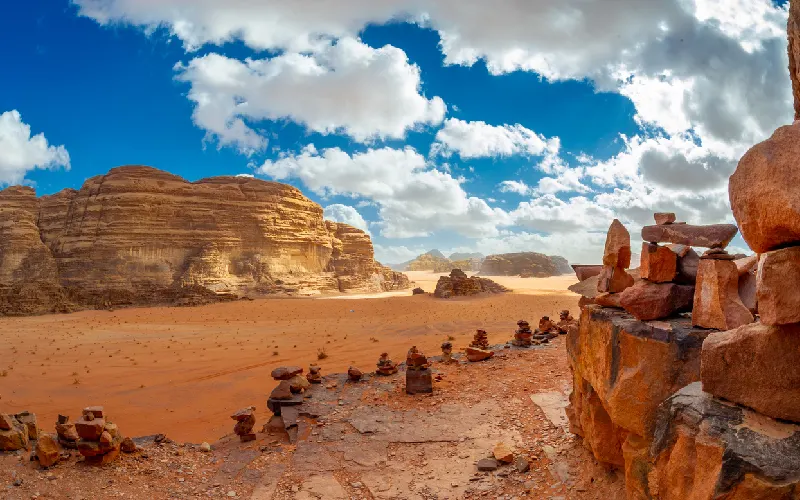
The oldest inscriptions in Wadi Rum date back approximately 2,000 years to the Thamudic and Nabataean periods, though some petroglyphs may be considerably older. These carved writings and drawings represent one of the most significant collections of ancient rock art in the Middle East and provide direct evidence of the human communities that inhabited and passed through the desert over many thousands of years.
Customize Your Dream Vacation!
Get in touch with our local experts for an unforgettable journey.
Plan Your Trip
T.E. Lawrence and Wadi Rum in Modern History
The association between Wadi Rum and T.E. Lawrence — known as Lawrence of Arabia — represents the most widely recognised chapter in the desert's modern history and has shaped international awareness of the landscape more than any other single factor.
Thomas Edward Lawrence was a British Army officer and archaeologist who served as a liaison between British forces and Arab tribal leaders during the Arab Revolt against Ottoman rule between 1916 and 1918. Operating across the desert territories of the Hejaz and what is now Jordan, Lawrence spent considerable time in the Wadi Rum area, using it as a base for operations and describing its landscape with remarkable literary power in his memoir Seven Pillars of Wisdom, published in 1926.
Lawrence's descriptions of Wadi Rum introduced the landscape to a global readership and established the romantic and adventurous associations that continue to draw visitors to the desert today. A rock formation known as the Seven Pillars of Wisdom, visible from the road approaching the valley entrance, takes its name directly from Lawrence's book, as do several other sites within the protected area that have acquired popular names derived from his association with the region.
The spring from which Lawrence reportedly drank near the base of Jabal Rum is known as Lawrence's Spring and remains one of the named visitor sites within the protected area — a modest natural feature elevated to landmark status entirely through its literary and historical association.
The Bedouin People of Wadi Rum
The contemporary human presence in Wadi Rum is defined by the Zalabia and Zuwaideh Bedouin tribes, whose ancestors have inhabited the desert for many generations and whose cultural identity remains deeply rooted in the landscape, traditions, and knowledge systems of desert life.
Bedouin society in Wadi Rum is organised around extended family and tribal structures, with knowledge of the desert — its water sources, navigable routes, weather patterns, and ecological resources — passed between generations through oral tradition and direct practical experience. This accumulated knowledge represents a form of intangible cultural heritage that is as significant as the physical monuments and inscriptions of the valley's ancient inhabitants.
Traditional Bedouin practices visible in Wadi Rum include goat and camel herding, the preparation of traditional foods including flatbread baked on open fires and the slow-cooked lamb dish known as zarb, the production of woven textiles, and the maintenance of the large goat-hair tents — bayt al-sha'ar, meaning houses of hair — that have characterised Bedouin domestic life across the deserts of Arabia for centuries.
The Jordanian government designated Wadi Rum a protected area in 1998, and the subsequent development of community-based tourism has provided the Bedouin communities of the valley with an alternative economic foundation alongside traditional herding practices. This development has allowed Bedouin families to remain in the desert environment that defines their cultural identity while participating in the growing international interest in the landscape they have inhabited for generations.
Wadi Rum is home to the Zalabia and Zuwaideh Bedouin tribes, whose communities have inhabited the desert for many generations. Their deep knowledge of the landscape — its water sources, routes, and ecology — has been passed down through oral tradition across centuries. The development of community-based tourism has allowed these communities to maintain their presence in the desert while sharing their cultural heritage with visitors from around the world.
Wadi Rum as a UNESCO World Heritage Site
Wadi Rum was inscribed on the UNESCO World Heritage List in 2011 under the designation Wadi Rum Protected Area, recognised as a Mixed World Heritage Site — a distinction acknowledging outstanding value in both natural and cultural categories simultaneously. This dual recognition is relatively rare within the UNESCO World Heritage framework and reflects the exceptional character of a site where geological grandeur and human cultural heritage are inseparably intertwined.
The natural criteria for inscription recognised the outstanding geological and geomorphological features of the landscape — its ancient rock formations, natural arches, and the exceptional visual qualities of the desert environment. The cultural criteria acknowledged the extraordinary concentration of rock inscriptions, petroglyphs, and archaeological remains that document human presence in the area across thousands of years, alongside the living cultural traditions of the Bedouin communities who continue to inhabit the valley.
Conservation management of Wadi Rum operates under the authority of the Aqaba Special Economic Zone Authority, which oversees visitor management, environmental protection, and the regulation of activities within the protected area. The challenge of balancing increased tourism with the preservation of both the natural landscape and the living Bedouin culture represents the central ongoing management concern for the protected area.
Wadi Rum in Popular Culture and Film
The extraordinary visual qualities of Wadi Rum desert have made it one of the most frequently used filming locations in the world for productions requiring desert landscapes, alien environments, and epic natural settings. The combination of red sand plains, dramatic rock formations, and vast open skies provides a visual vocabulary that cinematographers and production designers have found uniquely adaptable to a wide range of narrative contexts.
The association between Wadi Rum and cinematic depictions of Mars is particularly well established. The landscape's geological similarity to popular conceptions of the Martian surface — in terms of colouration, terrain type, and the absence of vegetation — has led multiple major productions to use the valley as a stand-in for the red planet. This association has in turn reinforced popular awareness of Wadi Rum among audiences who may have encountered the landscape cinematically before visiting in person.
The legacy of T.E. Lawrence also brought Wadi Rum significant cinematic attention through David Lean's 1962 film Lawrence of Arabia, which used the valley extensively as a filming location and introduced the landscape to a global cinema audience at a time when international tourism to Jordan was in its earliest stages. The film's visual treatment of the desert — emphasising its scale, silence, and overwhelming physical grandeur — established an aesthetic approach to Wadi Rum that has influenced subsequent productions and the expectations of visitors ever since.
The Wadi Rum Protected Area covers approximately 720 square kilometres of desert landscape in southern Jordan. This vast territory encompasses the main valley and its surrounding mountains, canyons, and plains, containing hundreds of named geological features, archaeological sites, and Bedouin heritage locations distributed across one of the Middle East's most extraordinary natural environments.
Traditional activities in Wadi Rum include trekking on foot through the desert landscape, climbing the sandstone and granite formations, camel riding along ancient caravan routes, and camping under the extraordinarily clear desert sky. Jeep safaris allow visitors to cover larger areas of the protected zone and access rock inscriptions, natural arches, and sand dunes that would be unreachable on foot within a single day.
Spring, from March through May, and autumn, from September through November, offer the most comfortable temperatures for exploring the desert. Summer temperatures in Wadi Rum can be extreme during the day, though evenings remain cooler. Winter visits are possible and offer the dramatic experience of the desert at its most atmospheric, though temperatures after sunset can drop significantly and occasional rainfall occurs.
Wadi Rum translates approximately as the Valley of the Moon in Arabic, though the precise etymology of the name Rum is debated among scholars. Some derive it from an Aramaic root meaning high or elevated, referring to the towering rock formations that define the landscape. The name Valley of the Moon has become widely used in tourism contexts and reflects the otherworldly quality of the desert environment.
The Jordanian government declared Wadi Rum a protected area in 1998, recognising the need to manage the increasing tourist interest in the valley while preserving its natural environment and the cultural heritage of its Bedouin communities. It was subsequently inscribed as a UNESCO World Heritage Site in 2011 under the designation Wadi Rum Protected Area.




Learn about Jordan attractions, ancient history, and local traditions. Find must-visit places and start planning your unforgettable experience today.
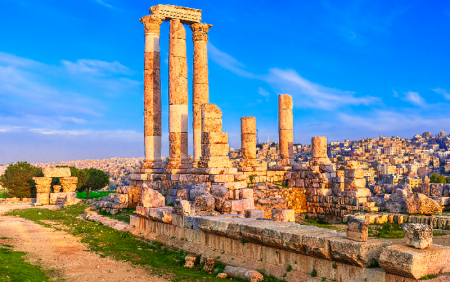
Jordan's capital and largest city, Amman spreads across a landscape of hills with a history reaching back nine millennia — from Neolithic settlement to Roman Philadelphia to modern Arab capital.
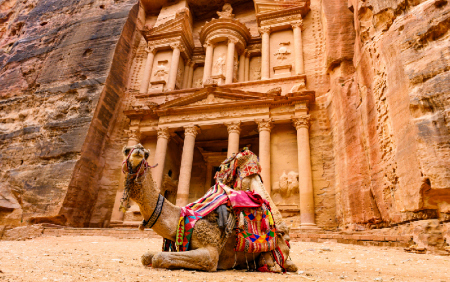
Petra is an ancient city carved into rose-red sandstone cliffs in southern Jordan, once the capital of the Nabataean civilisation and one of the most significant archaeological sites in the world — a UNESCO World Heritage Site and one of the New Seven Wonders of the World.
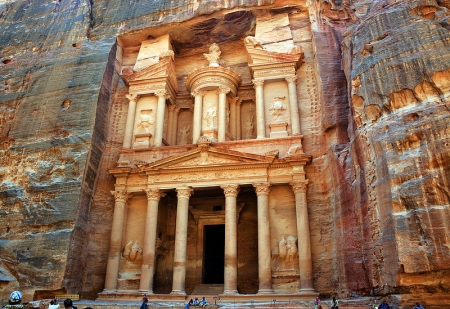
The Treasury (al-Khazneh) positioned opposite the main route into Petra. it was given by the local Bedouin tribes behind the belief that the urn on top of the front entrance contained the treasure of a pharaoh.
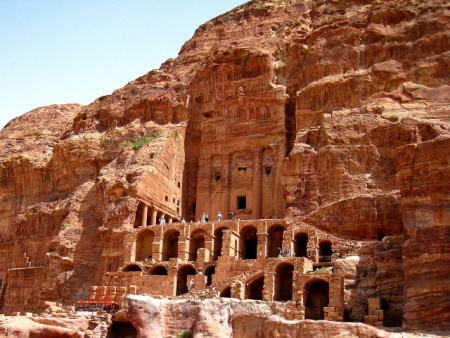
During any trip to Petra, you shouldn't miss the unpredictable Royal Tombs that took its name from the rich decoration. Know More!
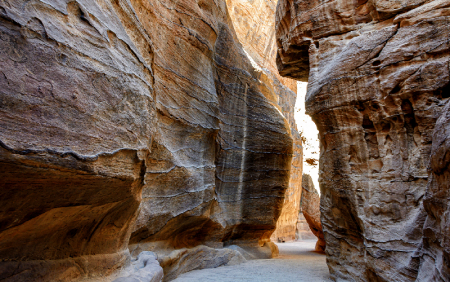
A 1.2-kilometre gorge with walls rising up to 180 metres, the Siq is Petra's main entrance — a natural rock fissure the Nabataeans turned into a processional way and a water system.
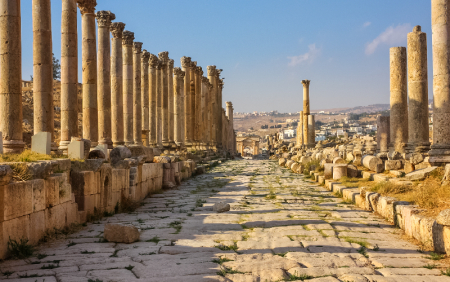
Jerash in northern Jordan is one of the best-preserved Roman cities outside Italy. A former member of the Decapolis league, it retains its colonnaded streets, temples, theatres and triumphal arches after nearly two thousand years.
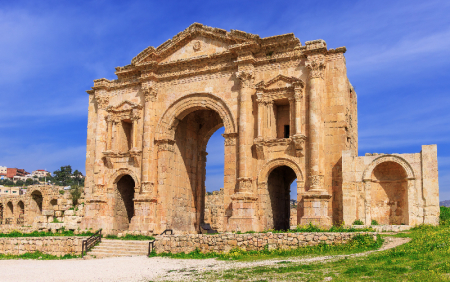
The monumental Roman gateway built to welcome Emperor Hadrian to ancient Gerasa in AD 129 — and still the most dramatic first sight in Jerash today.
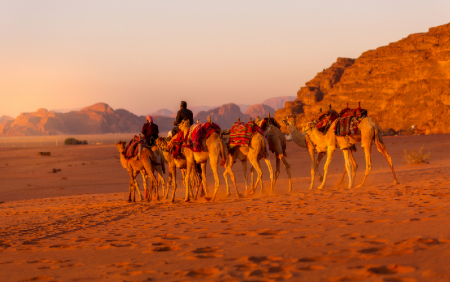
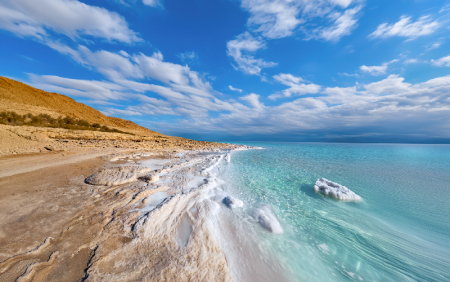
The Dead Sea is a hypersaline lake in the Jordan Rift Valley, sitting around 430 metres below sea level — the lowest point on Earth and one of the saltiest waters in the world. Its mineral-rich water and therapeutic mud have drawn health seekers for thousands of years.
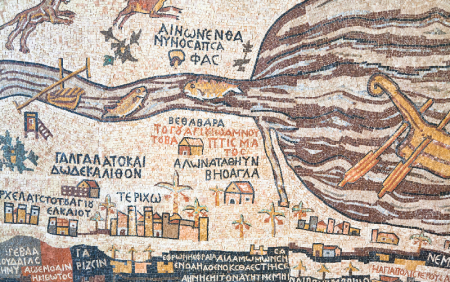
A sixth-century mosaic pavement in Madaba, Jordan, the Madaba Map is the oldest surviving cartographic image of the Holy Land — and the earliest detailed depiction of Jerusalem anywhere.

An ancient town on Jordan's King's Highway, Madaba holds the greatest concentration of Byzantine mosaics in the country — including the oldest surviving map of the Holy Land.
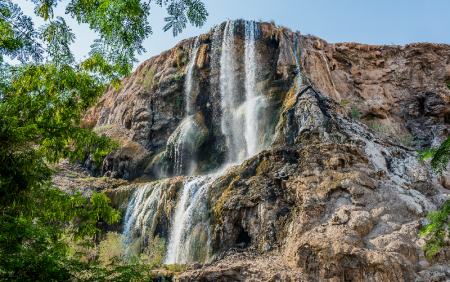
A chain of thermal waterfalls in a desert gorge below sea level, Ma'in Hot Springs has drawn bathers since antiquity — and appears on the sixth-century Madaba Map by name.
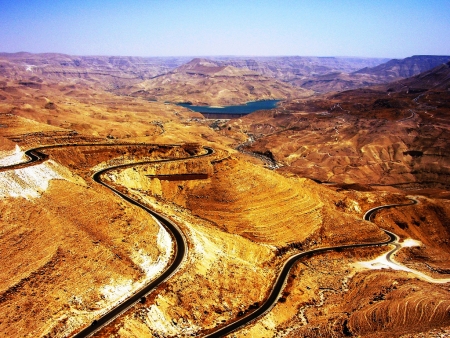
Mount Nebo is an elevated Mountain in Jordan, approximately 817 metres above sea level,.... Know More!
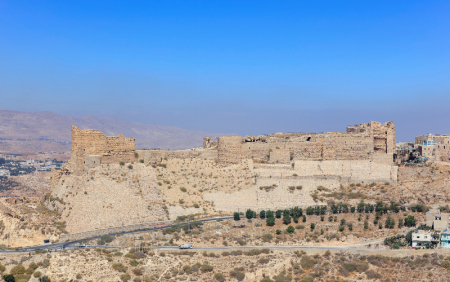
Built from the 1140s on a spur above the King's Highway, Kerak Castle is one of the largest Crusader fortresses in the Levant — and the setting for one of the strangest sieges in medieval history.
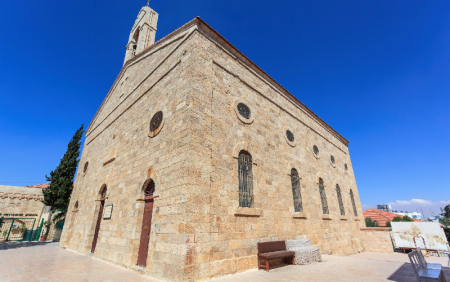
A working Greek Orthodox church in Madaba, Jordan, built in the 1890s over a Byzantine predecessor — and home to the sixth-century mosaic map of the Holy Land.

Mukawir (Machaerus) is an hour away and about 45 kms, away from Madaba on the Kings’ Highway. Know More !
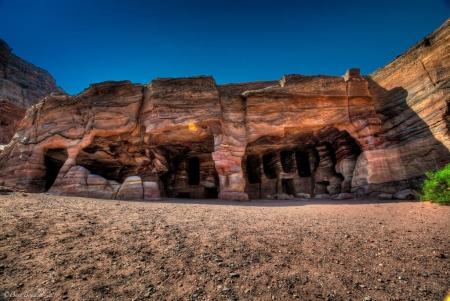
The Nabataeans (Nabateans) were an Arab people who lived in northern Arabia and the Southern Levant. They built the assumed capital city of Petra. Know more!
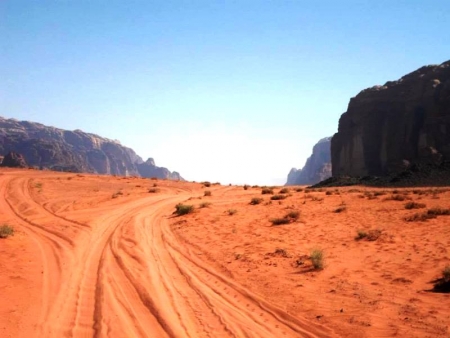
Lawrence of Arabia is a film directed by the global British director David Lean in 1962 and production of Sam Spiegel and starring Peter O'Toole role Lawrence.