
7 Must-Visit Historical sites in Turkey
Explore Turkey’s rich past through its historical sites, from stunning Roman ruins to unique underground cities and rock-cut wonders.
Experience the Nile's exclusive routes in luxury aboard Ashranda's dahabiyas, Nuun and Nuut, enjoying unique sites, gourmet meals, and personalized service.
Sail the Nile in refined comfort aboard the Nebyt Dahabiya, one of Ashranda’s most elegant vessels. With stylish cabins and a tranquil sundeck, Nebyt offers a peaceful journey between Luxor and Aswan.
Eyaru Dahabiya blends luxury with authentic Egyptian culture, offering serene Nile cruises to hidden sites between Luxor and Aswan.
Experience a journey through multiple destinations with expertly curated itineraries that connect you to the best each country has to offer.
Explore TourGot questions? We’ve got answers. Find everything you need to know to plan your perfect trip.
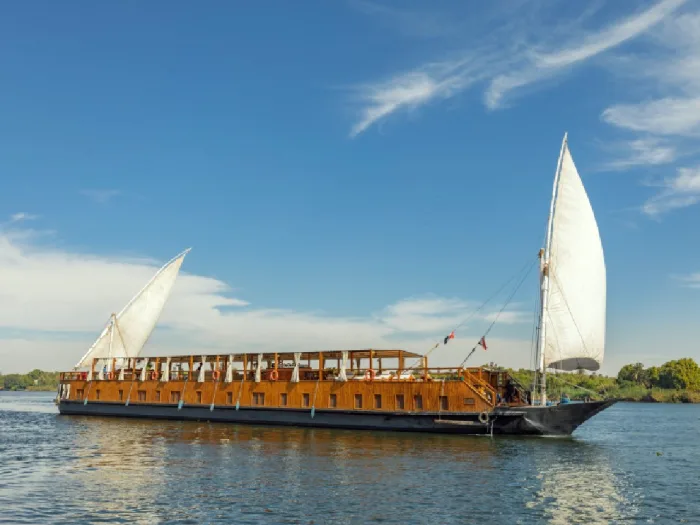
A Dahabiya is a traditional wooden sailing boat used on the Nile, typically carrying just 8–12 cabins, far smaller than a standard motorised Nile cruise ship. The name comes from the Arabic word for "golden," reflecting the boats once used by Egyptian nobility.
A Dahabiya is much smaller and quieter than a standard Nile cruise ship, carrying a fraction of the passengers and relying partly on sail rather than a large engine. This means a slower, more intimate journey with closer access to riverbank villages and smaller sites that bigger ships can't reach.
Most Dahabiyas carry between 8 and 20 guests, compared to 80–160 passengers on a standard Nile cruise ship, giving a noticeably more personal and exclusive atmosphere on board.
Dahabiya cruises are typically offered as 4, 5, or 8-day voyages between Luxor and Aswan, similar in length to standard Nile cruises but at a more relaxed pace.
Dahabiyas cost more per person because they carry far fewer guests, meaning the crew, chef, and guide are shared among a much smaller group, resulting in a higher level of personal service throughout the trip.
A Dahabiya follows the same general Luxor–Aswan route as a standard cruise, visiting Karnak Temple, Luxor Temple, the Valley of the Kings, Hatshepsut Temple, Edfu, Kom Ombo, and Philae Temple, often with extra stops at smaller riverside sites.
Yes, because of their smaller size and shallower draft, Dahabiyas can dock at quieter riverbanks and villages along the Nile that aren't accessible to the larger standard cruise ships, offering a more authentic glimpse of local life.
Yes, a Dahabiya is one of the most popular choices for honeymoons on the Nile, thanks to its small passenger numbers, attentive crew, and quiet, romantic atmosphere compared to a larger ship.
Yes, Dahabiyas such as the Nuun, Nuut, and Eyaru can be chartered exclusively for a private group or family, meaning the entire boat, crew, and guide are dedicated to your party alone.
A Dahabiya package typically includes full-board gourmet dining, a private or small-group Egyptologist guide, entrance fees to temples, and air-conditioned transfers, with international flights usually booked separately.
Most Dahabiyas don't have a swimming pool due to their smaller size, but they do offer a spacious open-air sun deck, often used for dining, lounging, and watching the riverbank scenery pass by.
Wi-Fi availability varies by vessel and can be limited on traditional Dahabiyas, particularly in more remote stretches of the river, so it's worth checking with your specific boat if a reliable connection matters to you.
Dining on a Dahabiya is typically more personal than on a larger ship, with a dedicated onboard chef preparing fresh meals for the smaller group, often served on the open deck rather than in a large dining hall.
Yes, modern Dahabiya cabins are air-conditioned, though the overall style tends to favour a more traditional, understated decor compared to the larger luxury Nile cruise ships.
A Dahabiya can suit families seeking a quieter, more relaxed pace, though the lack of a pool and smaller passenger numbers mean it may feel less geared towards children than a larger standard cruise ship with more onboard activities.
October to April offers the most comfortable conditions for a Dahabiya cruise, with mild daytime temperatures ideal for time spent relaxing on the open sun deck between temple visits.
Booking a Dahabiya 4–6 months in advance is recommended, as their very limited cabin numbers mean availability sells out faster than on standard or even luxury Nile cruise ships.
Traditional Dahabiyas are designed to sail using large canvas sails when conditions allow, though most modern vessels also have a support engine or tow boat to maintain the schedule when wind conditions aren't favourable.
These are different vessels within Ashranda's Dahabiya fleet, each with its own cabin layout and interior style, though all follow similar Luxor–Aswan routes and offer the same intimate, small-group Dahabiya experience.
Yes, a Dahabiya cruise can be combined with 2–3 nights in Cairo to see the Pyramids of Giza and the Grand Egyptian Museum, either before boarding or after disembarking.
Abu Simbel is usually offered as an optional add-on excursion from Aswan rather than a standard stop on a Dahabiya itinerary, arranged either by road or short flight.
Many Dahabiyas offer a small selection of drinks on board, sometimes included in the package and sometimes charged separately, so it's worth confirming the inclusions with your specific vessel.
Lightweight, comfortable clothing, sun protection, and a few smarter outfits for evening dining are recommended for a Dahabiya cruise, along with a light layer for cooler evenings on the open deck.
See how we’ve made every journey exceptional — straight from those who’ve traveled with us.
Explore unique stories, insider tips, and must-see spots to make the most of your visit.
Explore our curated travel blogs to Stay updated with the latest travel tips, destination guides, and insider stories!