
 Home
Home
The museum features authentic embalming tools—such as knives, hooks, natron, and resins—alongside mummies of humans from various social classes and sacred animals like cats and crocodiles. A highlight of the collection is the mummy of Masaharta, a high priest of Amun from the 21st Dynasty. With an entrance fee of only $5, the museum provides an affordable and immersive way to understand ancient funerary practices and beliefs.
The Origins and Purpose of the Luxor Museum
The Luxor Museum was created to preserve and showcase the extraordinary archaeological finds of the Theban region. Unlike larger institutions, the museum emerged from a focused plan to create a refined, specialized space that illuminates the artistic achievements of ancient Egypt.
How the Museum Was Established in 1975
The idea for the museum began in 1962 when the Egyptian Ministry of Culture recognized the need for a dedicated venue outside Cairo. Storage issues in the Egyptian Museum accelerated the plan. Architect Dr. Mahmud El-Hakim was commissioned to design the building, blending modern lines with a layout ideal for showcasing antiquities.
Construction finished in 1969, and the following years were dedicated to careful selection and arrangement of artifacts. The museum officially opened on December 12, 1975, during the presidency of Anwar El-Sadat. While the initial collection was small, it expanded steadily as significant finds from Thebes were transferred for public display. The result is a museum known for its clarity, organization, and high archaeological value.
The Role of the Supreme Council of Antiquities
The Supreme Council of Antiquities (SCA) played a central role in shaping the museum’s identity. To avoid overcrowding and to maintain quality, the SCA selected only the finest artifacts from local excavations. Their goal was not quantity but precision: each statue, relief, or object had to contribute meaningfully to the narrative of Theban history.
The SCA also continued to expand the collection as new discoveries were made. Their curatorial strategy ensured that the Luxor Museum developed into one of Egypt’s most elegant and educational archaeological institutions.
Why Luxor Was Chosen as the Location
Luxor—ancient Thebes—was Egypt’s capital during some of its most powerful eras, especially the New Kingdom. The city was filled with monumental temples, tombs, and artistic masterpieces funded by Egypt’s imperial wealth. Its location along the Nile Corniche between Luxor and Karnak temples made it an ideal site for a major museum.
The importance of the museum increased dramatically after the 1989 discovery of the Luxor Temple Cachette, a hidden collection of superb statues buried beneath the temple floor. This discovery confirmed that Luxor itself was a treasure-filled archaeological zone, perfectly suited for a dedicated museum.
Key Exhibits and Artifacts on Display
Although smaller than Cairo’s grand museums, the Luxor Museum excels in quality. Its exhibits highlight masterful art, royal heritage, and exceptional craftsmanship.
Royal Mummies and Their Significance
Two of the museum’s most important pieces are the mummies of:
- Ahmose I, the founder of the 18th Dynasty, who expelled the Hyksos.
- Ramesses I, founder of the 19th Dynasty, whose mummy was repatriated from Canada in 2003.
Displayed in climate-controlled cases, these mummies represent pivotal figures in Egyptian history and illustrate the scientific achievement of ancient mummification.
Statues and Stelae From the New Kingdom
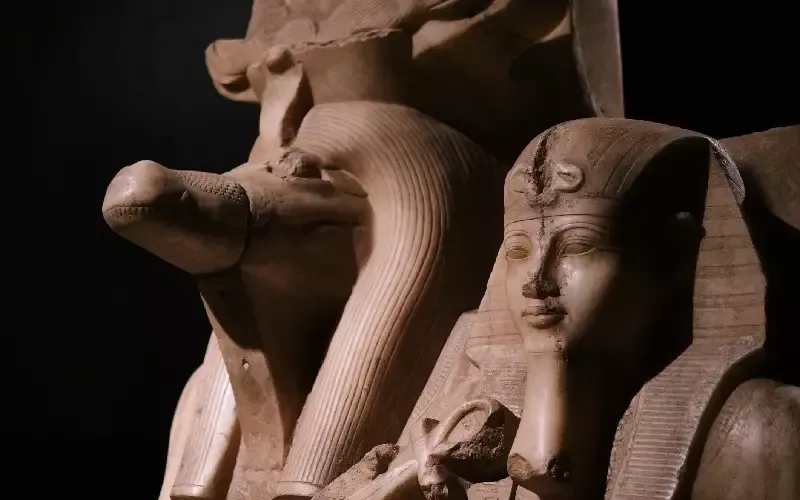
The Luxor Temple Cachette provides a large portion of the museum’s masterpieces. Sixteen statues from this find are displayed in a dedicated hall designed to allow full 360-degree viewing.
Highlights include:
- A stunning quartzite statue of Amenhotep III, 239 cm tall.
- A unique composite statue of Atum and King Horemheb.
- A beautifully carved Hathor statue from Amenhotep III’s reign.
- The Kamose stela, a major historical monument from ca. 1550 BCE.
These works demonstrate the skill of New Kingdom artisans and offer vivid portraits of gods, kings, and sacred animals.
Funerary Items and Objects From Daily Life
The museum also presents:
- Jewelry of gold, bronze, and ivory
- Amulets and ritual pendants
- Ushabti figurines
- Everyday pottery and household objects
- Funerary equipment from tombs
Together, these pieces offer a balanced view of both elite and everyday life in ancient Egypt.
The Reconstructed Wall of Akhenaten
One of the museum’s most famous features is an 18-meter-long reconstructed wall made from 183 talatat blocks taken from Akhenaten’s temple at Karnak. These blocks display scenes of daily life and royal ritual performed under the Aten. This is the only fully reconstructed talatat wall in Egypt and a rare window into Amarna art.
The Luxor Museum stands out for its carefully curated collection of high-quality artifacts from the Theban region. Unlike larger museums, it offers an uncluttered display with clear multilingual labeling, focusing on quality over quantity in its exhibitions.
Don't miss the Royal Mummies Hall featuring Ahmose I and Ramesses I, the statues from the 1989 Luxor Temple Cachette, and the reconstructed wall of Akhenaten. These exhibits offer unique insights into ancient Egyptian art and beliefs.
While the Luxor Museum includes artifacts from many eras, it places strong emphasis on the New Kingdom, especially the 18th and 19th Dynasties. Many of its masterpieces—including statues from the Luxor Temple Cachette and royal regalia—reflect the artistic peak of this period.
Customize Your Dream Vacation!
Get in touch with our local experts for an unforgettable journey.
Plan Your Trip
How the Museum Connects to Ancient Egyptian Beliefs
The Luxor Museum’s artifacts are not merely artistic; they were deeply embedded in the spiritual worldview of ancient Egyptians.
The Concept of the Afterlife
Egyptian religion centered on the belief that life continued beyond death, requiring:
- A preserved physical body
- Spells and guidance texts (e.g., the Book of the Dead)
- Ritual objects for protection
- Offerings for nourishment in the afterlife
The museum illustrates the journey through the underworld, including the Weighing of the Heart before Osiris, where a soul’s righteousness was judged by comparison to the feather of Ma’at.
Symbolism in Funerary Art and Objects
Many exhibited artifacts hold protective or magical significance:
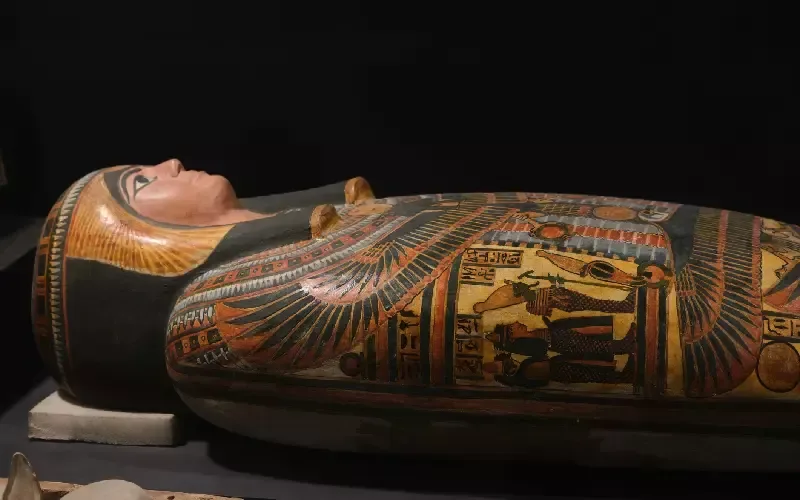
- Coffins inscribed with spells for safety
- Ushabti figurines meant to serve the deceased
- Funerary masks representing rebirth
- Amulets shaped like scarabs, ankhs, and sacred animals
These objects reveal how art, religion, and magic were inseparable in Egyptian thought.
The Role of Gods Like Osiris and Anubis
The museum displays important representations of:
- Osiris, ruler of the underworld
- Anubis, guardian of mummification
- Sekhmet, goddess of war and healing
These deities illuminate the complex religious system that shaped Egyptian society and funerary practices.
Differences Between Luxor Museum and the Mummification Museum
Despite their proximity in Luxor, each museum serves a distinct purpose.
Focus of Each Museum
- Luxor Museum: Art, sculpture, royal history, New Kingdom masterpieces
- Mummification Museum: Embalming tools, ritual practices, anatomy, sacred animals, and funerary beliefs
Types of Artifacts Displayed
Luxor Museum features:
- Statues, stelae, architectural elements
- Royal objects and monumental pieces
The Mummification Museum displays:
- Surgical tools
- Canopic jars
- Animal mummies
- Natron, oils, and resin containers
- The mummy of Masaharta
How They Complement Each Other
Together, they present a complete view of ancient Egyptian life:
- Luxor Museum highlights civilization and artistic achievement.
- Mummification Museum explores the afterlife and spiritual transformation.
While the Luxor Museum focuses on art, sculpture, and royal legacy, the Mummification Museum is dedicated exclusively to ancient Egyptian embalming practices. Together, they provide a comprehensive view of ancient Egyptian life, death, and afterlife beliefs.
The Museum’s Role in Preserving Egyptian Heritage
Conservation and Restoration
The museum maintains strict environmental controls and employs trained conservators who use non-invasive restoration methods to preserve artifacts without altering their authenticity.
Educational Programs and Exhibitions
Through multilingual descriptions, temporary exhibitions, and student programs, the museum strengthens public understanding of Egypt’s heritage and encourages younger generations to appreciate archaeological preservation.
Collaborations With International Institutions
Partnerships with international museums and universities support research, artifact conservation, and cultural exchange. These collaborations enhance local expertise and ensure the long-term preservation of the region’s treasures.
The Luxor Museum serves as an essential showcase of Egypt’s artistic and cultural heritage, featuring carefully selected artifacts—mainly from the New Kingdom—presented in a clear, well-organized setting. Its most notable exhibits include the royal mummies of Ahmose I and Ramesses I, statues from the 1989 Luxor Temple Cachette, and the reconstructed Akhenaten wall, all of which highlight both artistic excellence and deep religious symbolism centered on life, death, and the afterlife.
Together with the nearby Mummification Museum, which focuses specifically on embalming practices, the Luxor Museum offers a comprehensive understanding of ancient Egyptian beliefs by presenting both the artistic celebration of life and the spiritual preparations for death. Beyond exhibition work, the museum plays a vital role in conservation, education, and international research collaborations, ensuring the preservation and continued study of Egypt’s ancient legacy.
Yes, the Luxor Museum serves as an educational hub, offering interpretive displays with multilingual explanations. It also hosts temporary exhibitions and provides specialized programs for Egyptian schoolchildren to foster appreciation for their heritage.
Photography rules vary, but generally photos without flash are allowed in many sections of the museum. However, some sensitive areas—such as the Royal Mummies Hall—may restrict photography to protect the preservation environment.
The museum’s structure features a modern, minimalist architectural design created by Dr. Mahmud El-Hakim. Its spacious layout, clean lines, and controlled lighting were deliberately chosen to highlight artifacts without distraction.
Yes. One defining feature of the Luxor Museum is that every object comes from the Theban region. This makes it unique among Egyptian museums, offering a geographically focused view of the area’s archaeology and history.
The museum includes a small gift shop with books, replicas, and souvenirs, and it frequently hosts lectures, educational workshops, and school programs designed to engage both visitors and local students with ancient Egyptian culture.
A typical visit to the Luxor Museum takes about 1-2 hours. This allows enough time to explore the key exhibits, including the royal mummies, statues from the Luxor Temple Cachette, and the reconstructed wall of Akhenaten.

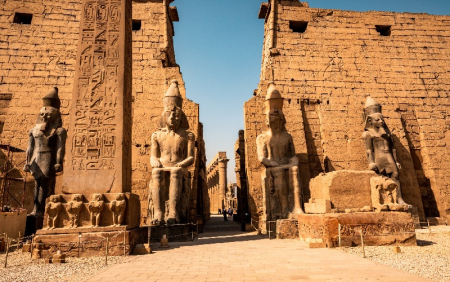
Luxor Temple, built by Amenhotep III and expanded by Ramses II, is a breathtaking New Kingdom monument dedicated to the renewal of kingship. Located on Luxor’s east bank, it stands as one of Egypt's most iconic sanctuaries, celebrated for its grand pylons, colossal statues, and deep religious significance.
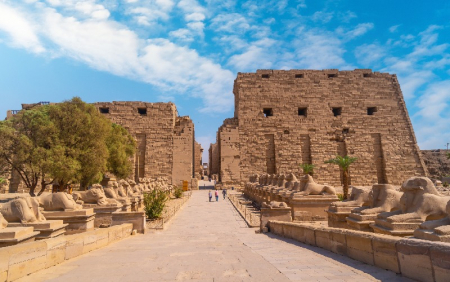
Karnak Temple in Luxor is an iconic ancient Egyptian complex, showcasing grand architecture, rich history, and the spiritual and political legacy of Thebes across nearly 2,000 years of construction.
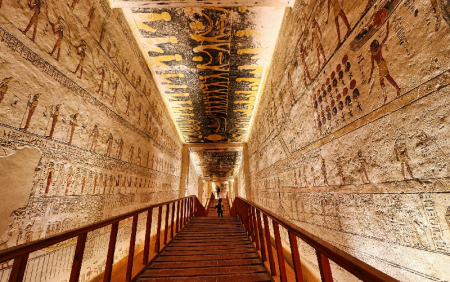
The Valley of the Kings is Egypt’s legendary royal necropolis, featuring 65 tombs of New Kingdom pharaohs, remarkable engineering, and world-famous discoveries like Tutankhamun’s burial.
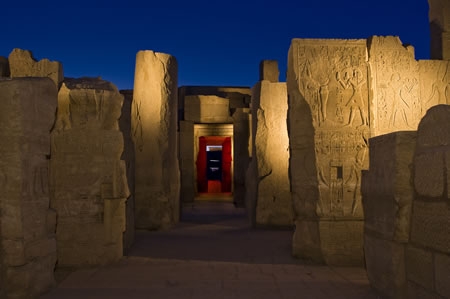
The Karnak Sound and Light Show transforms the vast temple complex into a magical nighttime spectacle, combining illuminated monuments, music, and storytelling to bring ancient Egyptian history vividly to life.
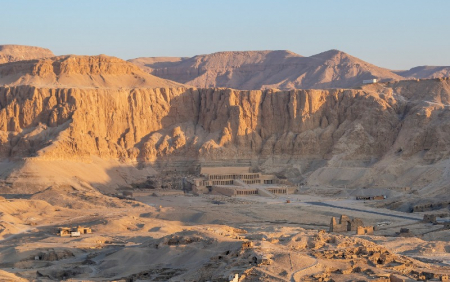
Discover the Valley of the Queens in Luxor, Egypt, with royal tombs, stunning art, and UNESCO heritage significance.
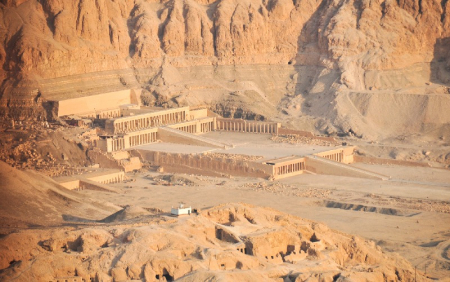
The Temple of Hatshepsut is a breathtaking 18th-Dynasty mortuary temple at Deir el-Bahari, famed for its grand terraces, cliffside design, and historical significance.
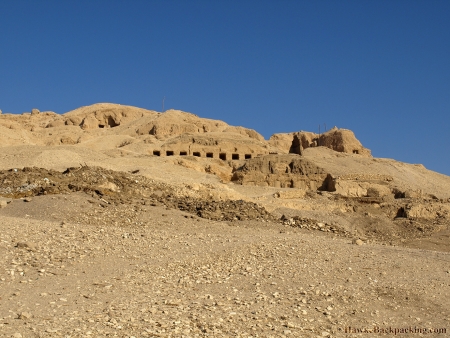
Explore the Valley of the Nobles in Luxor and learn how its 400+ tombs reveal vivid scenes of daily life and remarkable artistry from ancient Egypt’s New Kingdom.
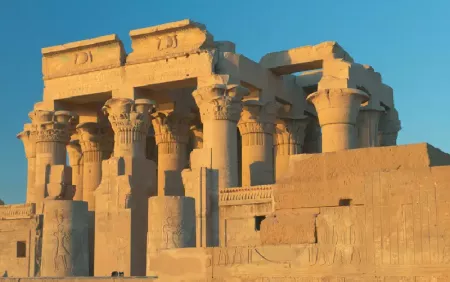
Kom Ombo Temple—Egypt’s remarkable twin sanctuary honoring Sobek and Haroeris, famed for its perfect symmetry and sacred crocodile traditions.
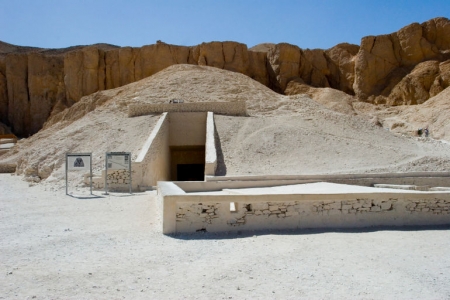
Tutankhamun’s tomb revealed over 5,000 stunning treasures, from gold chariots to the iconic mask, reshaping our understanding of ancient Egypt after its discovery in 1922.

Dendera Temple, 60km from Luxor, is Egypt's remarkably preserved healing sanctuary for Hathor. Explore vivid colors, hidden crypts & ancient astronomical knowledge.
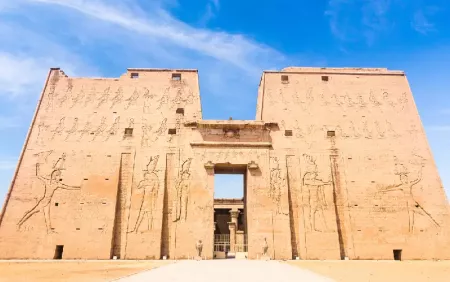
The Temple of Edfu, buried for centuries, is one of Egypt’s best-preserved temples—offering a vivid look into Ptolemaic religion, mythology, and architecture.
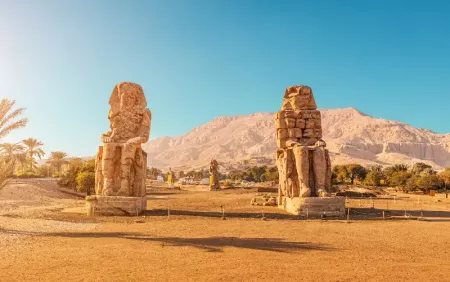
The Colossi of Memnon are 18-meter statues of Amenhotep III, once famed for their mysterious dawn “singing,” which captivated ancient visitors and inspired over a hundred inscriptions.
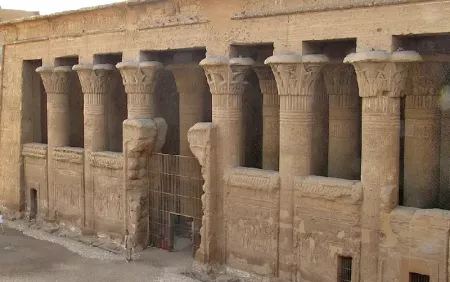
The Temple of Khnum at Esna, built from the Ptolemaic to Roman periods, features a stunning hypostyle hall with 24 ornate columns and reflects centuries of devotion to the creator god Khnum.
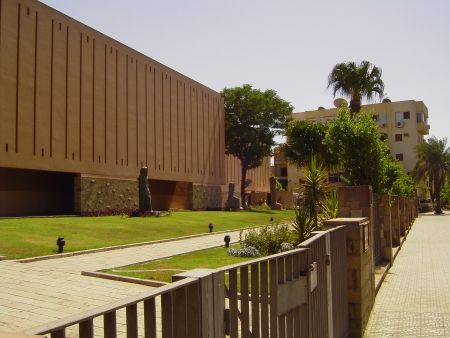
Luxor’s Mummification Museum offers an immersive look at ancient embalming methods, displaying tools, human and animal mummies, and the notable mummy of Masaharta.
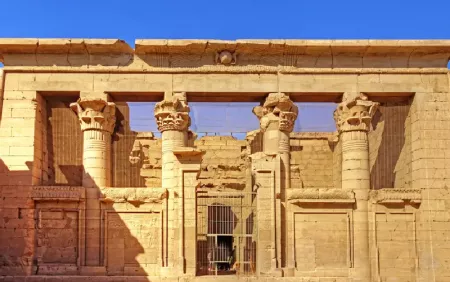
Kalabsha Temple, built under Emperor Augustus, was rescued from rising Nile waters in the 1960s and relocated block by block to New Kalabsha Island. Today, it remains a key UNESCO-recognized Nubian monument.
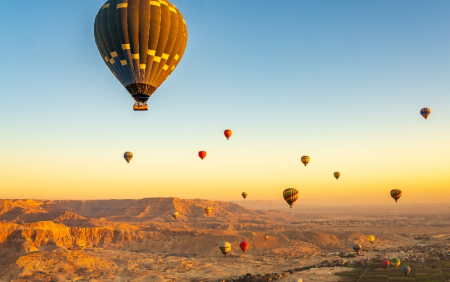
Soar above Luxor at sunrise in a hot air balloon and witness ancient temples, the Nile, and royal necropolises from the sky. This unforgettable experience offers breathtaking views and a unique perspective on Egypt’s timeless heritage.
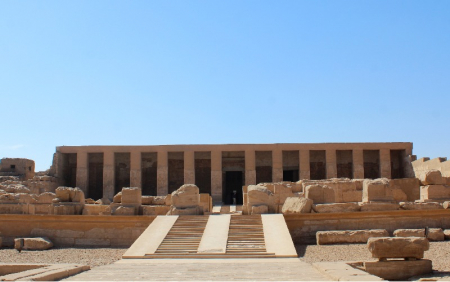
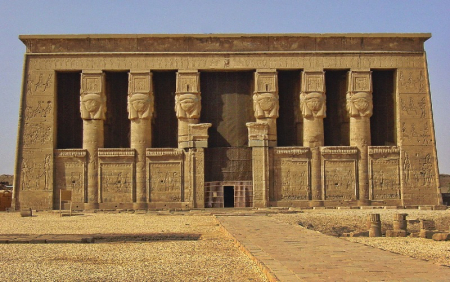
Explore the Temple of Hathor at Dendera, a remarkably preserved ancient Egyptian sanctuary dedicated to the goddess of love, music, and healing, renowned for its zodiac, vibrant reliefs, and astronomical ceilings.
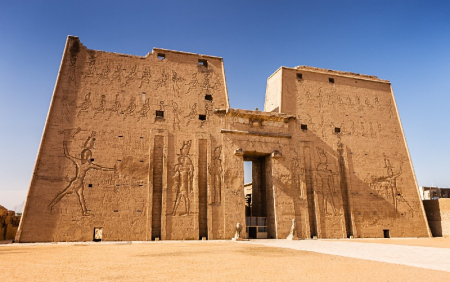
Visit the Temple of Horus at Edfu, a remarkably preserved Ptolemaic temple showcasing ancient Egyptian rituals, art, and architecture.
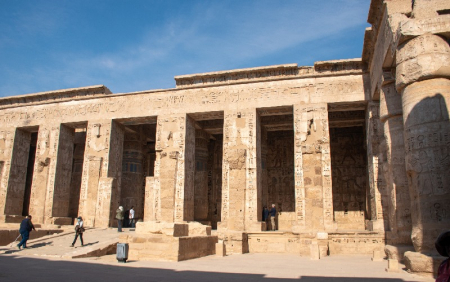
Explore Medinet Habu, Ramesses III’s temple, where history, religion, and artistry come alive on Luxor’s West Bank.
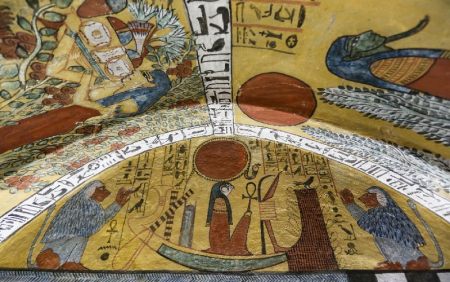
Deir el-Medina was home to the elite artisans who built and decorated Egypt’s royal tombs. Discover their homes, work, religion, and extraordinary daily life.
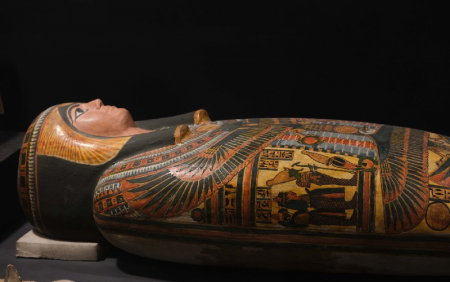
The Mummification Museum in Luxor showcases ancient Egyptian embalming, mummies, and artifacts, including Masaharta’s preserved remains and mummified animals.
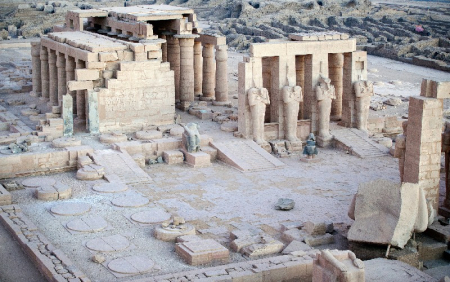
Discover the Mortuary Temple of Amenhotep III, once the largest in Thebes, famed for the Colossi of Memnon and ongoing restorations in Luxor.