Home
Home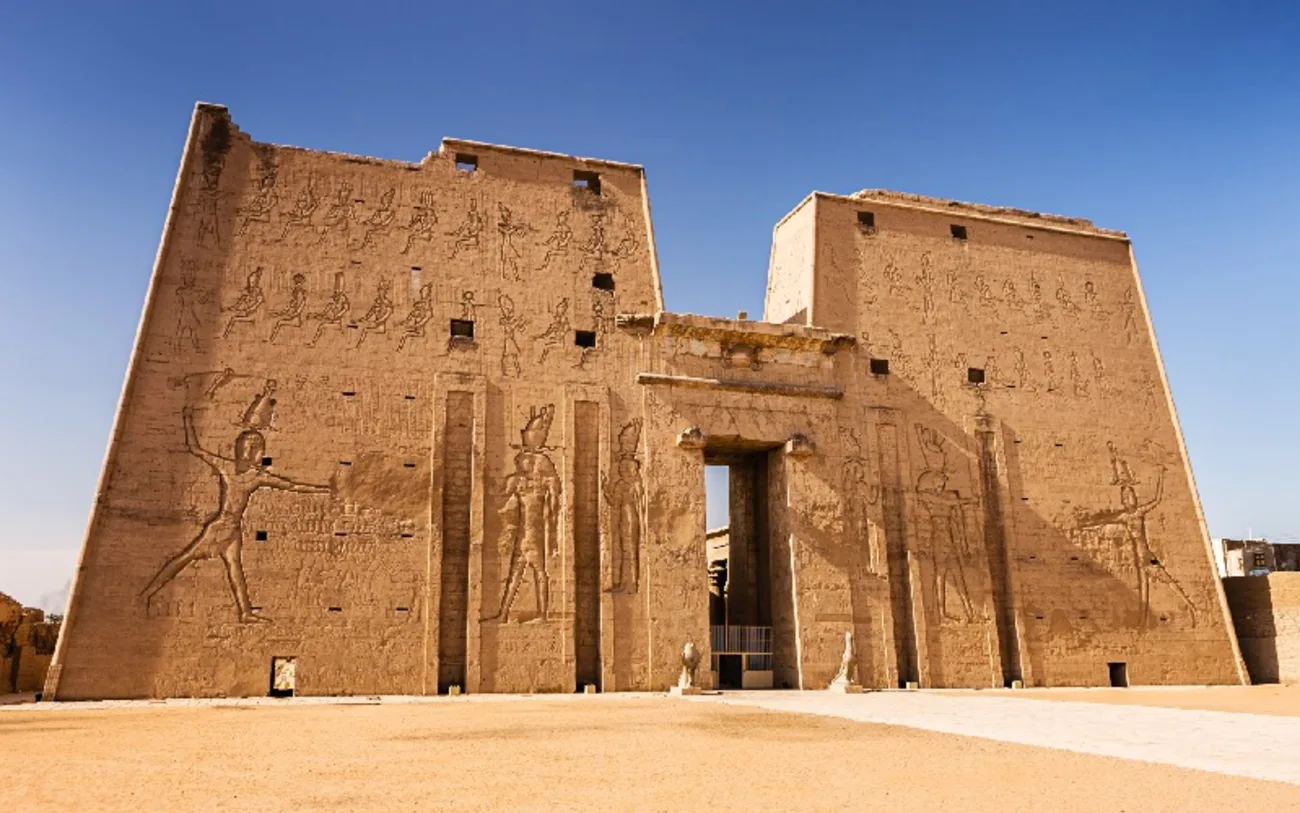
The Temple of Horus stands nearly intact on the west bank of the Nile in Edfu, Upper Egypt, making it one of the most incredibly well-preserved ancient monuments in Egypt. Built between 237 and 57 BC during the Ptolemaic Kingdom, this magnificent structure took an astonishing 180 years to complete.
The Temple of Horus in Egypt, also known as the Edfu Temple, was dedicated to one of Ancient Egypt's most important deities. Two hundred years ago, this archeological treasure lay buried beneath sand, rubble, and parts of the village of Edfu that had spread over its roof. Excavation began by Auguste Mariette in the mid-19th century, revealing what is now considered one of the best-preserved temples from this period. Its impressive architecture, detailed decorations, and historical significance have made it an important center for tourism and scholarly study of ancient Egyptian religious practices.
Origins and Construction of the Temple
Construction of the Temple of Horus began with a ceremonial foundation ritual on August 23, 237 BC. This massive architectural project would ultimately span almost two centuries before reaching completion.
Foundation under Ptolemy III in 237 BC
The initial phase of construction commenced under the reign of Ptolemy III Euergetes I. This first construction stage focused on establishing the temple's inner sanctuary, which included a pillared hall, two transverse halls, and the sacred barque sanctuary surrounded by chapels. The inner part of the structure was completed by 207 BC, marking the conclusion of the first major building phase.
Completion under Ptolemy XII in 57 BC
Political unrest in Upper Egypt significantly delayed construction progress, particularly during the reigns of Ptolemies IV and V. Nevertheless, work continued incrementally under subsequent rulers. The temple was formally dedicated on September 10, 142 BC, under Ptolemy VIII Euergetes II. In the following decades, builders added the hypostyle hall, which was finished by 122 BC. Finally, Ptolemy XII Auletes, father of the famous Cleopatra, oversaw completion of the outermost elements—the peristyle court and entrance pylons—bringing the project to conclusion in 57 BC. In total, the construction process spanned 180 years.
Built on earlier New Kingdom structures
Archeological evidence confirms that the Ptolemaic temple was not the first sacred structure at this location. The current temple was deliberately built atop an earlier shrine dedicated to Horus. Furthermore, excavations in the forecourt revealed a monumental entrance from the New Kingdom temple bearing inscriptions of Ramesside kings from Dynasty 19 and early Dynasty 20 (1295-1069 BCE). Interestingly, the previous temple was oriented east-west, whereas the Ptolemaic structure follows a north-south axis. Additional evidence of earlier sacred sites includes fragments bearing names of King Djehuty (possibly Dynasty 13, Middle Kingdom) and Psamtek II (Dynasty 26, Late Period).
Use of sandstone and traditional Egyptian design
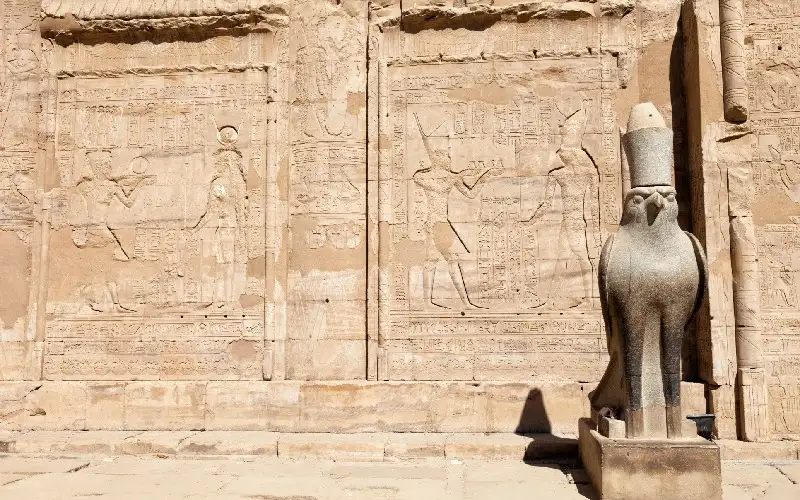
The Temple of Horus was primarily constructed from sandstone quarried in the region, chosen for its durability and carving potential. Despite being built during the Greek-ruled Ptolemaic period, the temple strictly adheres to traditional Egyptian architectural norms. This deliberate adherence to indigenous design principles represents the Ptolemies' attempt to legitimize their foreign rule by connecting with Egypt's ancient religious traditions. The temple features a massive entrance pylon covered with sunk relief carvings that were originally brightly painted.
The construction of the Temple of Horus at Edfu spanned an impressive 180 years, beginning in 237 BC under Ptolemy III and reaching completion in 57 BC during the reign of Ptolemy XII.
Religious Role and Significance
At Edfu, religious life centered around the veneration of Horus, making this sacred complex one of ancient Egypt's most spiritually significant sites. The grand temple served as both divine residence and ceremonial stage for elaborate rituals that connected the earthly and divine realms.
Horus as the central deity of Edfu
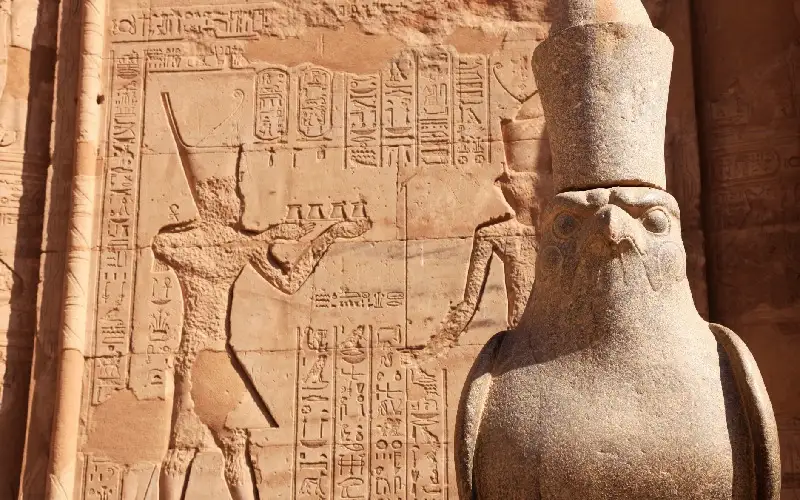
The Temple of Edfu stands as the largest temple dedicated to the falcon-god Horus in all of Egypt. Here, Horus was venerated primarily in the form of the sun disk and the falcon—a mighty warrior deity who defended the sun from its enemies. As the child of Isis and Osiris, Horus embodied pharaonic power itself, establishing a divine template to which all kings of Egypt were symbolically assimilated for three millennia. Two large granite statues of this falcon-headed god stood sentinel before the temple pylons, visually proclaiming his dominance over this sacred space.
Annual festivals and sacred marriage with Hathor
The most celebrated religious event at Edfu was the Beautiful Reunion festival, alternatively called the Feast of the Joyous Union, which commemorated the sacred marriage between Horus and his divine consort Hathor. This elaborate 15-day celebration began when Hathor's cult statue journeyed by boat from her temple at Dendera, a voyage taking approximately two weeks. Unlike many temple ceremonies, much of this festival occurred outside temple walls, allowing ordinary citizens to participate in the festivities that included:
- Feasting and drinking throughout Edfu
- Ritual visits to ancestral burial grounds across the desert
- Sacred ceremonies within the temple precinct
The Festival of the Living Falcon
Another crucial annual ceremony was the Festival of the Living Falcon, a unique Ptolemaic ritual where a living falcon was symbolically crowned as king. This ceremony began with the transportation of Horus's statue from the inner sanctuary to a separate temple where sacred falcons were raised. Through a divine oracle, one falcon was chosen as Horus's rightful heir and brought to the top of the monumental gateway between the two pylons. Subsequently, priests conducted the coronation ritual, effectively renewing royal power through the bird rather than requiring the human ruler's presence.
Role of the temple in local religious life
Beyond major festivals, the Temple of Horus functioned as a divine household where priests served as literal "servants of the god". Daily offerings, hymns, and processions connected worshippers to the divine realm, while the temple's innermost sanctuary served as Horus's bedroom and the Hall of Offerings as his dining room. This vibrant religious center attracted pilgrims nationwide until Emperor Theodosius I banned paganism in 391 AD.
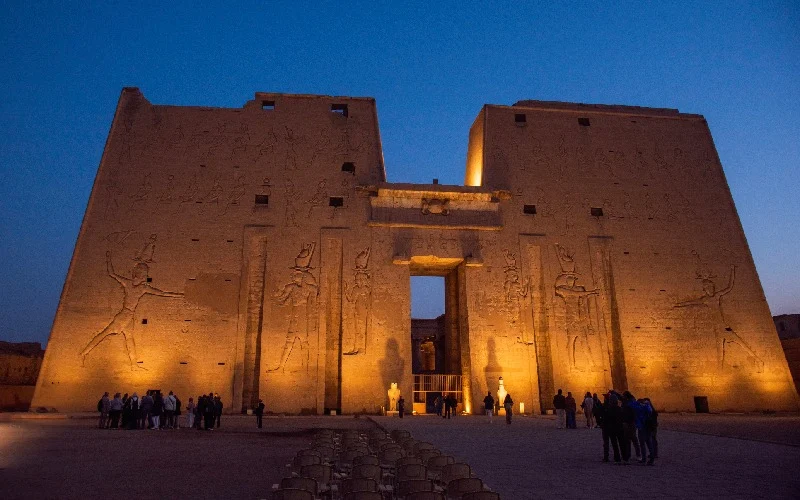
The Beautiful Reunion festival was a major 15-day celebration at Edfu that commemorated the sacred marriage between Horus and Hathor. It involved the transport of Hathor's statue from Dendera and included public festivities, feasts, and sacred ceremonies.
Customize Your Dream Vacation!
Get in touch with our local experts for an unforgettable journey.
Plan Your TripThe Creation Myth Depicted at Edfu
Inscribed on the inner walls of the Temple of Horus at Edfu is an ancient Egyptian creation myth detailing the cosmic origins of both the world and the temple itself.
The emergence of land from primeval waters
According to temple inscriptions, the world began as silent, inert chaos where water covered everything in darkness. From this primeval ocean, a small "Island of Creation" emerged, around which flotsam gradually accumulated. Two amorphous beings called "the Great One" and "the Distant One" appeared, picked up a stick from the flotsam, and stuck half of it into the ground at the water's edge.
Horus's arrival and the birth of the temple
Immediately after the stick was placed, Horus emerged as a falcon and perched upon it, bringing light to the chaotic darkness. A simple reed hut was built to shelter him, gradually expanding as the primeval waters receded. This first House of Horus became the model for all later Egyptian temples.
The battle with Apophis and divine protection
The creation was threatened by Apophis, a snake-like creature attempting to impede the world's formation. When Horus shuddered in fear, a harpoon—one form of the god Ptah—came to his rescue, defeating the enemy.
Design of the temple by Thoth and Seshat
Following creation, the gods Thoth and Seshat designed the first temple. Initially constructed of reeds rather than stone, the temple's foundation ritual involved the sacred "stretching-the-cord" ceremony. For protection, sixty gods formed a living wall around the sacred structure.
Preservation and Rediscovery
The magnificent Temple of Horus eventually faded from active worship after Emperor Theodosius banned pagan practices throughout the Roman Empire in 391 CE.
Burial under sand and silt over centuries
Over the ensuing centuries, the abandoned temple gradually disappeared beneath layers of desert sand and Nile silt. This natural burial process ultimately covered the structure to an astonishing depth of 12 meters (39 ft). Ironically, this concealment proved fortunate, as it protected the temple from weathering and deliberate destruction. Local inhabitants unknowingly built homes directly above the buried monument.
Rediscovery by French expedition in 1798
In 1798, a French expedition identified the temple site after noticing only the uppermost portions of the massive pylons protruding from the sand. This initial discovery, however, would remain largely unexplored for decades.
Excavation by Auguste Mariette in 1860
French Egyptologist Auguste Mariette began systematic excavation in 1860. His team removed thousands of tons of accumulated debris, necessitating the demolition of approximately one hundred houses that had been constructed above the temple grounds. This painstaking work ultimately revealed an exceptionally well-preserved ancient structure.
Modern efforts to preserve the Edfu Temple
Contemporary preservation efforts continue to safeguard this archeological treasure. In 2005, authorities improved visitor access with a new visitor center and paved parking area, followed by installation of a lighting system in 2006. Recent Egyptian-German restoration projects have focused on cleaning walls and removing centuries of accumulated dirt, revealing original colors and even traces of gold gilding.
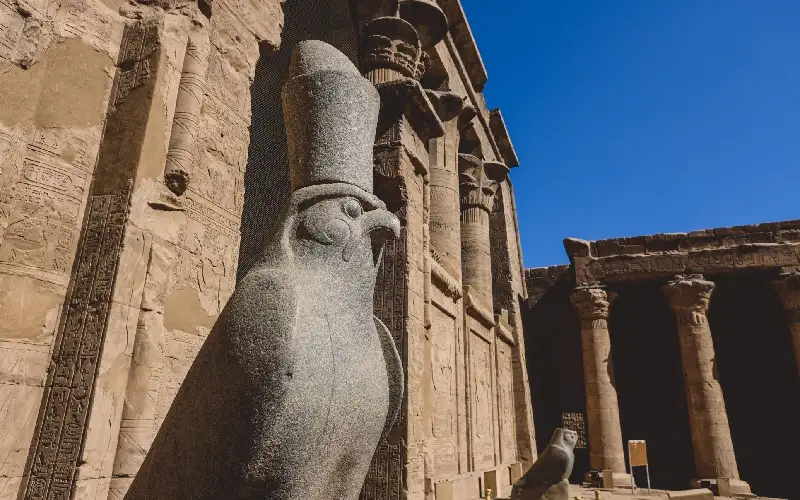
The temple was rediscovered in 1798 by a French expedition that noticed the tops of the massive pylons protruding from the sand. Systematic excavation began in 1860 under Auguste Mariette, revealing the well-preserved structure buried beneath 12 meters of sand and silt.
The Temple of Horus at Edfu stands as a remarkable testament to ancient Egyptian religious architecture and cultural continuity. Throughout its 180-year construction period, successive Ptolemaic rulers demonstrated their commitment to traditional Egyptian religious practices despite their Greek heritage. Consequently, this magnificent structure provides scholars with invaluable insights into both architectural techniques and religious rituals from the late period of ancient Egyptian civilization.
Undoubtedly, the temple's exceptional state of preservation makes it particularly significant. While many ancient structures suffered deliberate destruction or weathering, the Edfu temple remained protected beneath layers of sand until its rediscovery in the modern era. Therefore, visitors today can experience an authentic glimpse of Ptolemaic Egyptian temple architecture essentially as it appeared over two millennia ago.
Additionally, the religious activities once conducted within these walls—particularly the Beautiful Reunion festival and the Festival of the Living Falcon—reflect the complex theological system that governed Egyptian society. The sacred marriage between Horus and Hathor connected this temple to broader regional religious networks, specifically linking Edfu with Dendera through ritualized processions. Similarly, the creation myth depicted on the temple walls provides a window into ancient Egyptian cosmology, explaining both universal origins and the sacred purpose of temple construction itself.
Though abandoned after the 4th century CE due to imperial bans on pagan worship, the Temple of Horus eventually emerged from obscurity through archeological efforts beginning in the 19th century. After centuries hidden beneath sand and silt, this archeological treasure now serves as a crucial resource for understanding ancient Egyptian religious practices, architectural principles, and cultural traditions during the Ptolemaic period. The Temple of Horus thus represents not merely an impressive monument but a living connection to Egypt's ancient spiritual heritage.
During this annual Ptolemaic ritual, a living falcon was symbolically crowned as king. Priests selected a falcon through a divine oracle, conducted a coronation ceremony atop the temple gateway, effectively renewing royal power through the bird.
The temple's inner walls depict a creation myth where the world emerges from primeval waters, with Horus arriving as a falcon to bring light. The myth explains the origins of both the world and the temple itself, showcasing the complex theology of ancient Egypt.
Horus was one of ancient Egypt's most important gods, often depicted as a falcon or a man with a falcon head. He symbolized kingship, protection, and the sky. The Temple of Horus at Edfu was a major cult center where rituals celebrated his divine power and his role in protecting the pharaoh and Egypt.
The temple features massive pylons, a long processional courtyard, a hypostyle hall, and richly decorated sanctuaries. Its walls are adorned with detailed reliefs illustrating myths, rituals, and pharaohs offering to the gods. The temple’s preservation allows a full view of Ptolemaic temple design.
The Temple of Horus served as both a religious and political center. It legitimized the Ptolemaic rulers as divine kings through ceremonies, festivals, and rituals, reinforcing their authority while connecting them to ancient Egyptian traditions.
Its remarkable preservation is due to centuries of burial under sand, which shielded it from natural erosion and human interference. Excavations in the 19th century revealed intact reliefs, pylons, and interiors, making it one of the best-preserved temples of the Ptolemaic period.
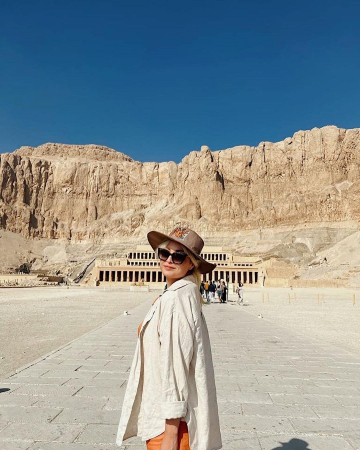

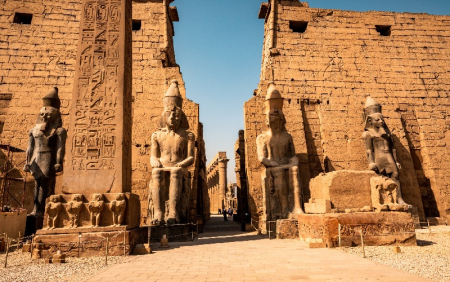
Luxor Temple, built by Amenhotep III and expanded by Ramses II, is a breathtaking New Kingdom monument dedicated to the renewal of kingship. Located on Luxor’s east bank, it stands as one of Egypt's most iconic sanctuaries, celebrated for its grand pylons, colossal statues, and deep religious significance.
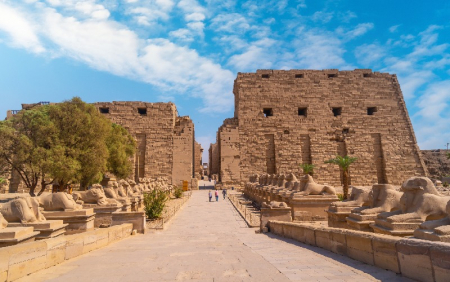
Karnak Temple in Luxor is an iconic ancient Egyptian complex, showcasing grand architecture, rich history, and the spiritual and political legacy of Thebes across nearly 2,000 years of construction.
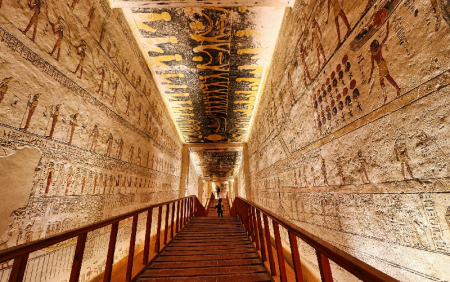
The Valley of the Kings is Egypt’s legendary royal necropolis, featuring 65 tombs of New Kingdom pharaohs, remarkable engineering, and world-famous discoveries like Tutankhamun’s burial.
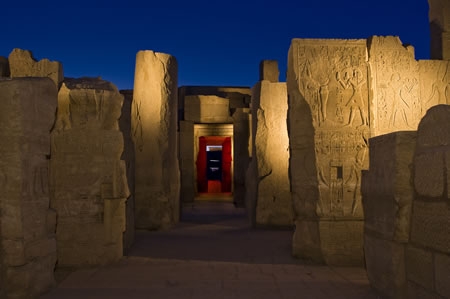
The Karnak Sound and Light Show transforms the vast temple complex into a magical nighttime spectacle, combining illuminated monuments, music, and storytelling to bring ancient Egyptian history vividly to life.
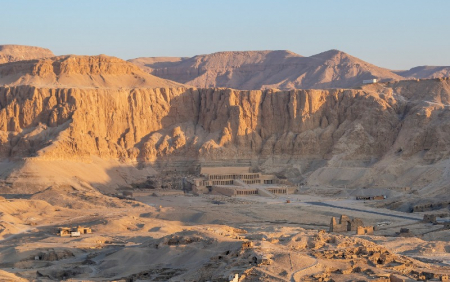
Discover the Valley of the Queens in Luxor, Egypt, with royal tombs, stunning art, and UNESCO heritage significance.
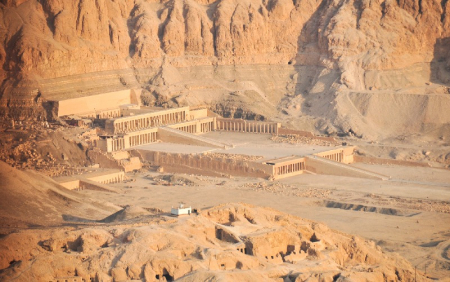
The Temple of Hatshepsut is a breathtaking 18th-Dynasty mortuary temple at Deir el-Bahari, famed for its grand terraces, cliffside design, and historical significance.
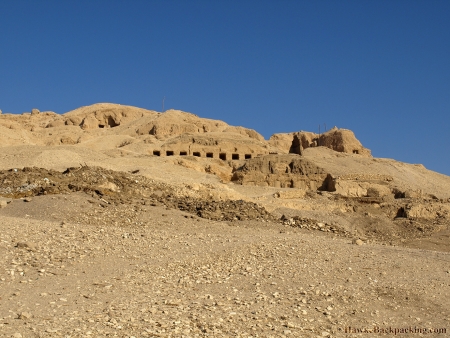
Explore the Valley of the Nobles in Luxor and learn how its 400+ tombs reveal vivid scenes of daily life and remarkable artistry from ancient Egypt’s New Kingdom.
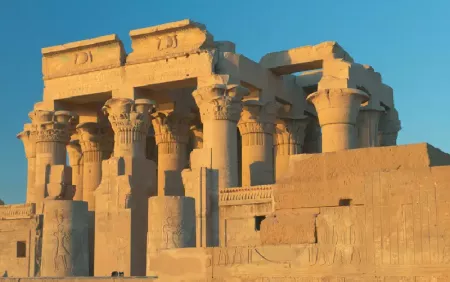
Kom Ombo Temple—Egypt’s remarkable twin sanctuary honoring Sobek and Haroeris, famed for its perfect symmetry and sacred crocodile traditions.
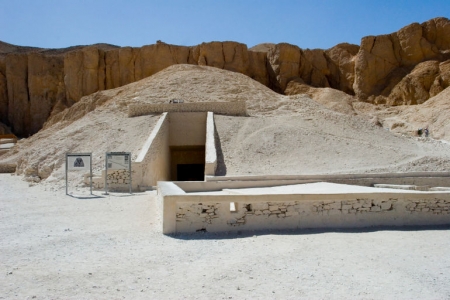
Tutankhamun’s tomb revealed over 5,000 stunning treasures, from gold chariots to the iconic mask, reshaping our understanding of ancient Egypt after its discovery in 1922.

Dendera Temple, 60km from Luxor, is Egypt's remarkably preserved healing sanctuary for Hathor. Explore vivid colors, hidden crypts & ancient astronomical knowledge.
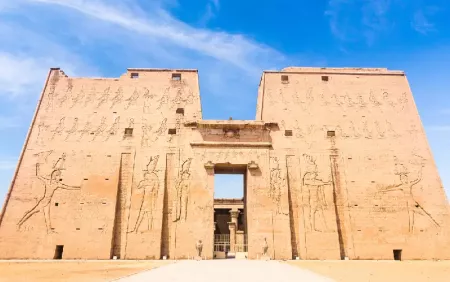
The Temple of Edfu, buried for centuries, is one of Egypt’s best-preserved temples—offering a vivid look into Ptolemaic religion, mythology, and architecture.
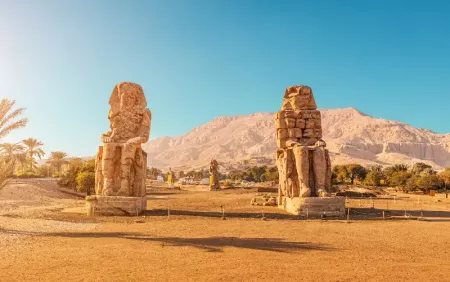
The Colossi of Memnon are 18-meter statues of Amenhotep III, once famed for their mysterious dawn “singing,” which captivated ancient visitors and inspired over a hundred inscriptions.
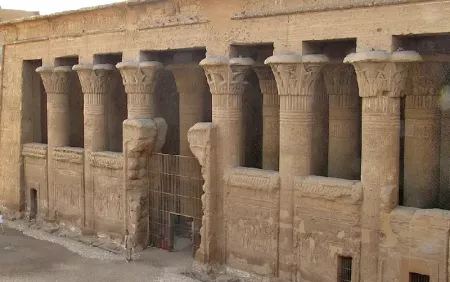
The Temple of Khnum at Esna, built from the Ptolemaic to Roman periods, features a stunning hypostyle hall with 24 ornate columns and reflects centuries of devotion to the creator god Khnum.
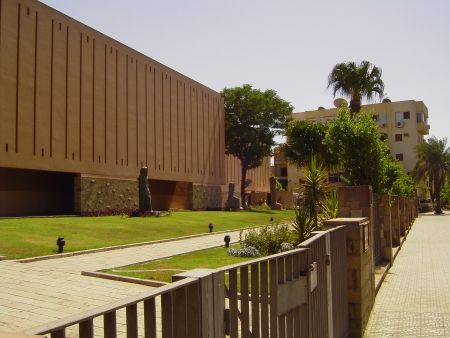
Luxor’s Mummification Museum offers an immersive look at ancient embalming methods, displaying tools, human and animal mummies, and the notable mummy of Masaharta.
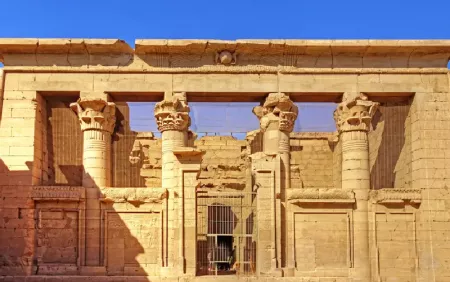
Kalabsha Temple, built under Emperor Augustus, was rescued from rising Nile waters in the 1960s and relocated block by block to New Kalabsha Island. Today, it remains a key UNESCO-recognized Nubian monument.

Soar above Luxor at sunrise in a hot air balloon and witness ancient temples, the Nile, and royal necropolises from the sky. This unforgettable experience offers breathtaking views and a unique perspective on Egypt’s timeless heritage.
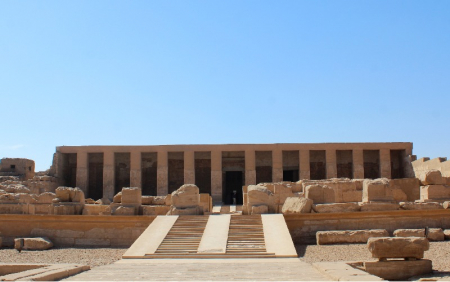
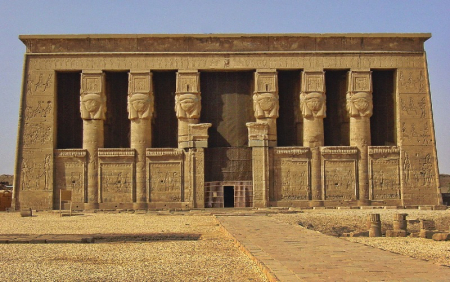
Explore the Temple of Hathor at Dendera, a remarkably preserved ancient Egyptian sanctuary dedicated to the goddess of love, music, and healing, renowned for its zodiac, vibrant reliefs, and astronomical ceilings.
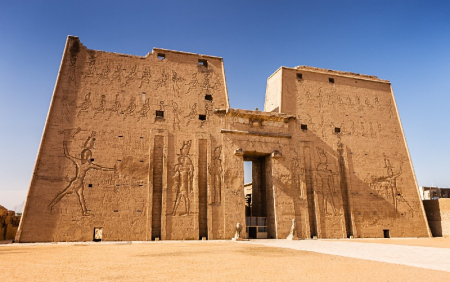
Visit the Temple of Horus at Edfu, a remarkably preserved Ptolemaic temple showcasing ancient Egyptian rituals, art, and architecture.
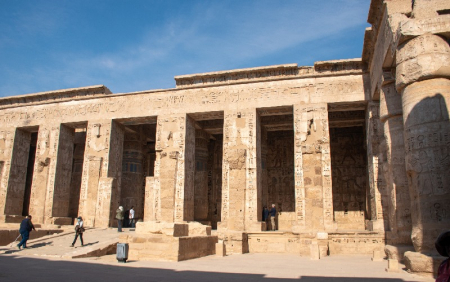
Explore Medinet Habu, Ramesses III’s temple, where history, religion, and artistry come alive on Luxor’s West Bank.
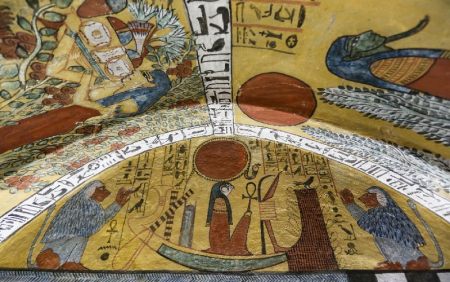
Deir el-Medina was home to the elite artisans who built and decorated Egypt’s royal tombs. Discover their homes, work, religion, and extraordinary daily life.
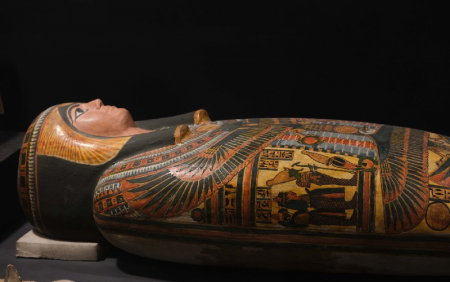
The Mummification Museum in Luxor showcases ancient Egyptian embalming, mummies, and artifacts, including Masaharta’s preserved remains and mummified animals.
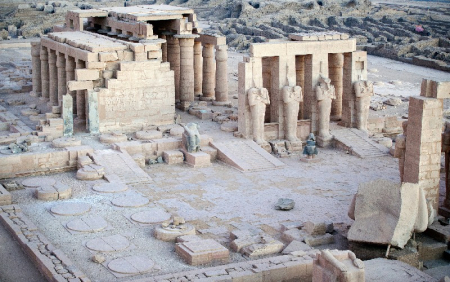
Discover the Mortuary Temple of Amenhotep III, once the largest in Thebes, famed for the Colossi of Memnon and ongoing restorations in Luxor.