Home
Home
Ancient Egypt reveals few monuments as captivating and remarkably preserved as the Temple of Seti I at Abydos. Commissioned by the 19th Dynasty pharaoh Seti I in the 13th century BC, this extraordinary limestone temple remained unfinished at the time of his death. What distinguishes it from most Egyptian temples is its unique L-shaped design, a deliberate architectural departure from the traditional rectangular plans that dominated ancient Egypt.
Abydos itself was among the most sacred landscapes in Egypt. Seti I selected untouched ground roughly half a mile south of earlier temples, emphasizing both renewal and continuity. The temple was designed with a dual purpose: to honor Egypt’s principal gods and to venerate royal ancestors. Within its walls lies the famed Abydos King List, carved on the west wall of the Hall of Ancestors, depicting Seti I and Ramesses II offering to seventy-six earlier pharaohs. Behind the main structure stands the enigmatic Osireion, a symbolic burial monument dedicated to Osiris, built from massive red granite and sandstone blocks.
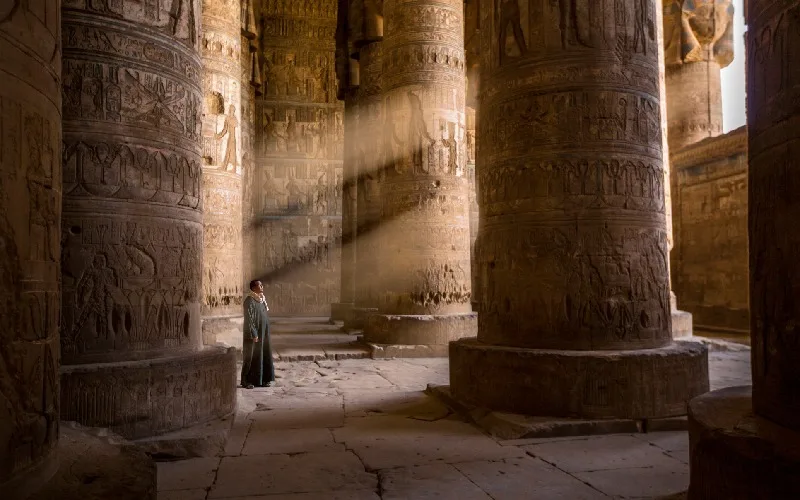
The Abydos Temple, also known as the Temple of Seti I, is one of the most complete and beautiful religious structures in ancient Egypt. It was built to honor earlier pharaohs and major Egyptian gods, serving as a center for the worship of Osiris and playing a crucial role in restoring traditional Egyptian polytheism after the Amarna Period.
The Origins and Purpose of Abydos Temple
Seti I’s ambitious project emerged during a period of recovery following Egypt’s religious upheaval. His reign (1290–1279 BCE) began only decades after the Amarna Period, making Abydos a powerful statement of restoration and legitimacy.
Seti I's vision and religious revival
After Akhenaten’s monotheistic reforms disrupted traditional worship, Egypt’s religious institutions required renewal. Seti I responded by reaffirming the ancient pantheon through seven dedicated chapels honoring Ptah, Re-Harakhte, Amun-Re, Osiris, Isis, Horus, and Seti himself in divine form.
This temple was not simply devotional—it was political. By restoring traditional gods and rituals, Seti reinforced royal authority and launched a cultural renaissance that defined the 19th Dynasty.
Ramesses II's role in completion
Seti I died before completing the temple, leaving outer courts and reliefs unfinished. His son Ramesses II completed the project, favoring sunk reliefs over his father’s raised style. He also built a neighboring temple and added courtyards, permanently marking the complex with his cartouches and transforming Abydos into a dynastic center.

Connection to the Cult of Osiris
Abydos had been sacred to Osiris, god of the afterlife, since the Old Kingdom. Egyptians believed burial near Abydos ensured participation in Osiris’s resurrection. The temple’s rituals reenacted Osiris’s death, rebirth, and Horus’s succession, forming the theological foundation of Egyptian beliefs about eternal life.
Annual festivals drew pilgrims from across Egypt. The Osireion served as the ritual heart of these ceremonies, symbolizing both Osiris’s tomb and cosmic rebirth.
Customize Your Dream Vacation!
Get in touch with our local experts for an unforgettable journey.
Plan Your TripArchitectural Layout and Key Structures
Constructed primarily of fine white limestone, the temple reflects some of the finest craftsmanship of the New Kingdom.
The L-shaped design and materials used
Inscriptions describe the temple as built of “beautiful white stone of Ayan,” with granite doorways, copper doors inlaid with electrum, and alabaster sanctuaries. The unusual L-shape likely accommodated specialized Osirian rituals rather than resulting from later modification.
First and second courts
An original pylon once marked the entrance. The first court displays reliefs by Ramesses II, including scenes from the Battle of Qadesh. A ramp leads to the second court, where carvings depict Ramesses interacting with the gods.
First and second hypostyle halls
The first hypostyle hall features twelve pairs of papyrus columns added by Ramesses II. The second hall reflects Seti I’s vision, with thirty-six columns and ceiling reliefs portraying sacred rituals before major deities.
The chapels and their symbolic alignment
Seven barque chapels form the temple’s spiritual core. Three honor Abydos’s local deities, while the others represent Egypt’s major religious centers—Thebes, Heliopolis, and Memphis—uniting the kingdom symbolically within one sanctuary.
The Osiris Fetish and solar imagery
The south wall of the Osiris Chapel depicts the Osiris Fetish, combining solar and Osirian symbolism. Lions represent the god Aker, guardian of horizons, reinforcing themes of rebirth and cosmic balance.
The Abydos Temple features an unusual L-shaped design, unlike the typical rectangular layout of Egyptian temples. It is primarily constructed of fine-quality white limestone and includes seven chapels dedicated to different deities, two hypostyle halls, and the Osireion, a symbolic tomb of Osiris located behind the main temple.
The Abydos King List and Ritual Practices
The Gallery of Ancestors preserves one of Egypt’s most important historical records.
What the King List includes and omits
The list traces rulers from Menes to Seti I but omits foreign rulers, female pharaohs, and Amarna kings such as Akhenaten and Tutankhamun. Despite its selectivity, it preserves the only known names of several obscure dynasties.
The Gallery of Ancestors and its function
Seti I appears offering incense, while young Ramesses II holds a scroll. Priests used the gallery to invoke royal ancestors before ceremonies, ensuring continuity between past and present kingship.
Slaughterhouse and ritual offerings
The nearby slaughterhouse featured skylights, water storage, and screening walls to preserve ritual purity while preparing offerings essential to temple worship.
Barque processions and temple festivals
During the Osiris Mysteries, divine images traveled in ceremonial barques through the temple. Pilgrims believed witnessing these rituals guaranteed eternal rebirth.

The Abydos King List is a chronological compilation of 76 royal cartouches carved on the west wall of the Gallery of Ancestors in the temple. It provides a valuable historical record of Egypt's royal lineage, starting from Menes of the First Dynasty and ending with Seti I. The list is particularly important as it's the sole historical source for many Seventh and Eighth Dynasty kings' names.
The Osireion and Later Use of the Temple
Behind the temple lies the mysterious Osireion, a subterranean monument with massive granite pillars weighing up to 100 tons.
Symbolic tomb of Osiris and its design
The Osireion features a central stone island surrounded by water channels, functioning as a cenotaph for Osiris or Seti I as the resurrected god. Seventeen chambers encircle the central platform.
Use of water and resurrection symbolism
Constant water symbolizes the primordial flood and eternal regeneration. The submerged design reinforces Osirian concepts of death and rebirth.
Graffiti from Greek, Roman, and Coptic periods
Greek, Roman, and Coptic inscriptions—including those by monastic women—demonstrate the site’s lasting sacred importance long after pharaonic worship ended.
Dorothy Eady and modern mysticism
In the 20th century, Dorothy Eady (Omm Sety) revived interest in the site. Claiming past-life memories, she maintained Osirian rituals and attributed healing powers to the Osireion’s waters.
The Temple of Seti I at Abydos stands as one of ancient Egypt’s greatest spiritual and architectural achievements. Its innovative design, refined reliefs, and powerful symbolism reflect a decisive return to tradition after religious turmoil. Through the King List, Osireion, and sacred rituals, the temple preserves Egypt’s vision of divine kingship and eternal life.
Ramesses II, son of Seti I, completed the construction of the Abydos Temple after his father's death. He added his own distinctive touch, including the outer courtyards and certain relief sections. Ramesses II's contributions can be distinguished by his use of a coarser sunk-relief technique, in contrast to Seti I's delicate raised reliefs.
The Osireion is a unique subterranean structure located behind the main temple, believed to be the symbolic tomb of Osiris. It features massive granite pillars and water channels symbolizing the primordial waters of creation and Osiris's resurrection. The Osireion served as a cenotaph for either Osiris or Seti I himself as Osiris and played a significant role in ancient Egyptian religious rituals and beliefs about the afterlife.
The Abydos Temple was commissioned by Pharaoh Seti I of the 19th Dynasty around 1290–1279 BCE. Construction continued under his son, Ramesses II, who completed parts of the temple, including the outer courtyards and relief sections.
Abydos hosted the annual Osiris Mysteries, a major religious festival that reenacted the death, resurrection, and triumph of Osiris. Pilgrims from across Egypt attended these ceremonies, believing participation ensured their own rebirth in the afterlife.
The L-shaped layout is unique in Egyptian architecture, allowing specialized ritual spaces, such as multiple chapels for different deities and the Osireion. It creates a deliberate flow for processions and ceremonial practices distinct from conventional temple designs.
Yes, the temple is adorned with elaborate carvings, including scenes of Seti I and Ramesses II offering to gods, depictions of Osiris mythology, and detailed reliefs of historical battles like the Battle of Qadesh. Many inscriptions also commemorate pharaohs listed in the Abydos King List.
Yes, the Osireion is accessible to visitors, though its underground chambers are partially restricted for preservation reasons. The site remains a focal point for understanding Abydos Temple’s religious significance and architectural ingenuity.

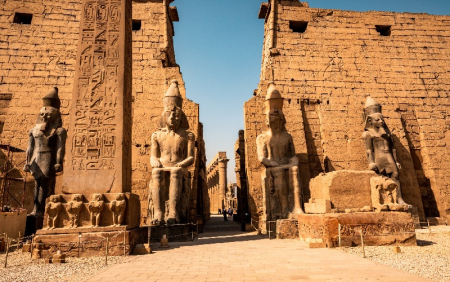
Luxor Temple, built by Amenhotep III and expanded by Ramses II, is a breathtaking New Kingdom monument dedicated to the renewal of kingship. Located on Luxor’s east bank, it stands as one of Egypt's most iconic sanctuaries, celebrated for its grand pylons, colossal statues, and deep religious significance.
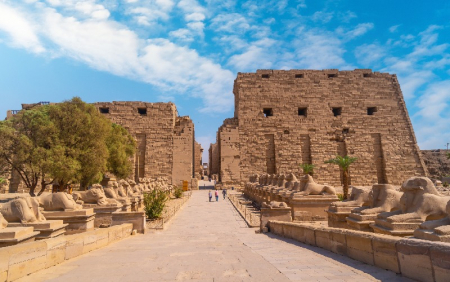
Karnak Temple in Luxor is an iconic ancient Egyptian complex, showcasing grand architecture, rich history, and the spiritual and political legacy of Thebes across nearly 2,000 years of construction.
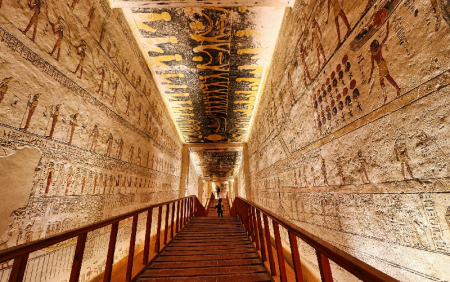
The Valley of the Kings is Egypt’s legendary royal necropolis, featuring 65 tombs of New Kingdom pharaohs, remarkable engineering, and world-famous discoveries like Tutankhamun’s burial.
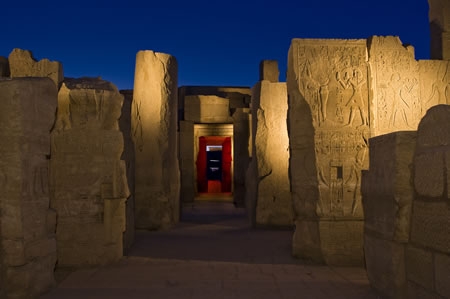
The Karnak Sound and Light Show transforms the vast temple complex into a magical nighttime spectacle, combining illuminated monuments, music, and storytelling to bring ancient Egyptian history vividly to life.
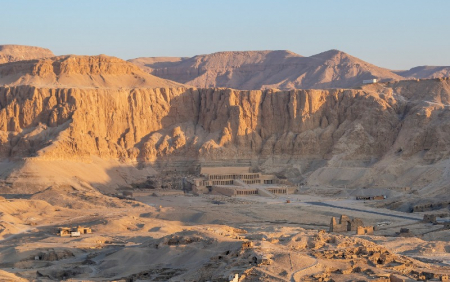
Discover the Valley of the Queens in Luxor, Egypt, with royal tombs, stunning art, and UNESCO heritage significance.
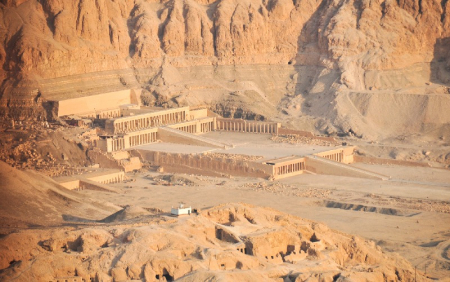
The Temple of Hatshepsut is a breathtaking 18th-Dynasty mortuary temple at Deir el-Bahari, famed for its grand terraces, cliffside design, and historical significance.
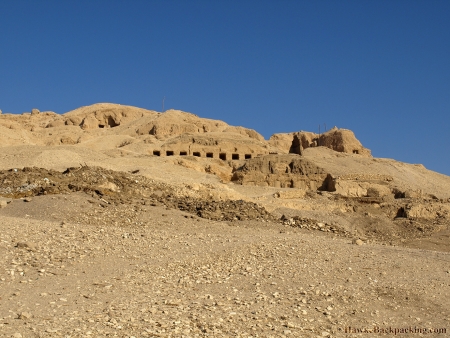
Explore the Valley of the Nobles in Luxor and learn how its 400+ tombs reveal vivid scenes of daily life and remarkable artistry from ancient Egypt’s New Kingdom.
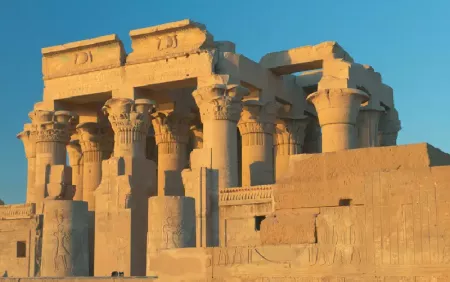
Kom Ombo Temple—Egypt’s remarkable twin sanctuary honoring Sobek and Haroeris, famed for its perfect symmetry and sacred crocodile traditions.
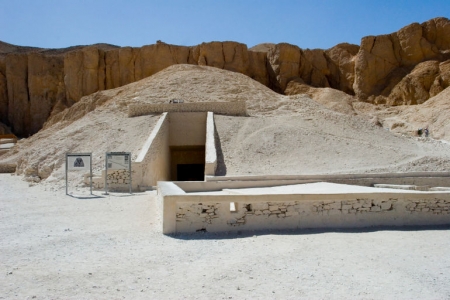
Tutankhamun’s tomb revealed over 5,000 stunning treasures, from gold chariots to the iconic mask, reshaping our understanding of ancient Egypt after its discovery in 1922.

Dendera Temple, 60km from Luxor, is Egypt's remarkably preserved healing sanctuary for Hathor. Explore vivid colors, hidden crypts & ancient astronomical knowledge.
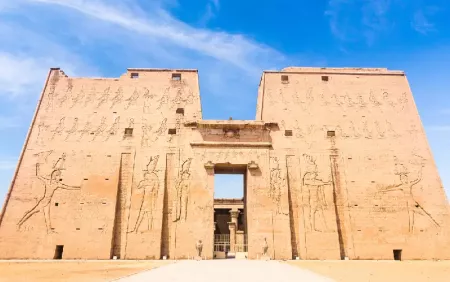
The Temple of Edfu, buried for centuries, is one of Egypt’s best-preserved temples—offering a vivid look into Ptolemaic religion, mythology, and architecture.
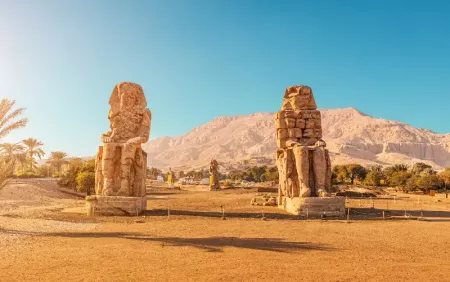
The Colossi of Memnon are 18-meter statues of Amenhotep III, once famed for their mysterious dawn “singing,” which captivated ancient visitors and inspired over a hundred inscriptions.
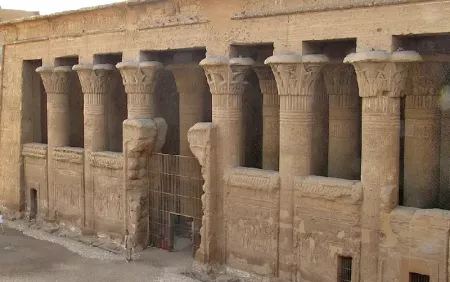
The Temple of Khnum at Esna, built from the Ptolemaic to Roman periods, features a stunning hypostyle hall with 24 ornate columns and reflects centuries of devotion to the creator god Khnum.
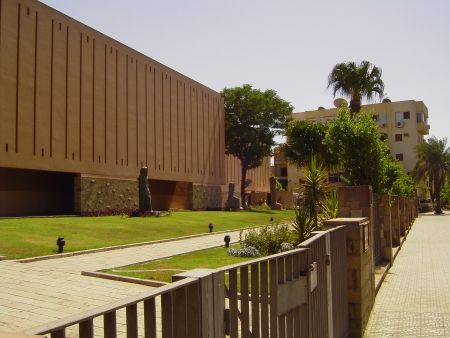
Luxor’s Mummification Museum offers an immersive look at ancient embalming methods, displaying tools, human and animal mummies, and the notable mummy of Masaharta.
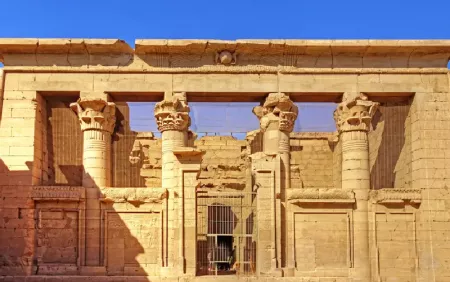
Kalabsha Temple, built under Emperor Augustus, was rescued from rising Nile waters in the 1960s and relocated block by block to New Kalabsha Island. Today, it remains a key UNESCO-recognized Nubian monument.
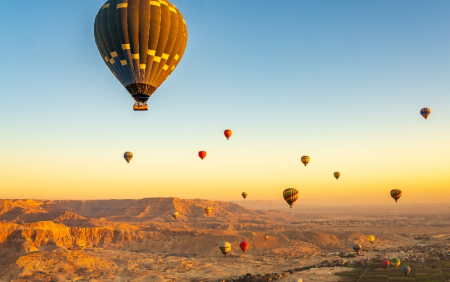
Soar above Luxor at sunrise in a hot air balloon and witness ancient temples, the Nile, and royal necropolises from the sky. This unforgettable experience offers breathtaking views and a unique perspective on Egypt’s timeless heritage.
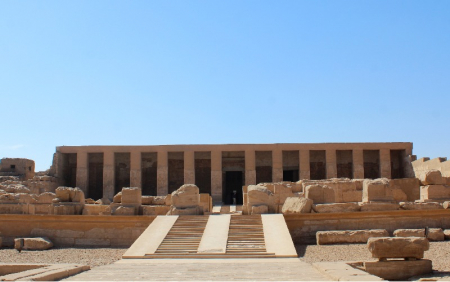
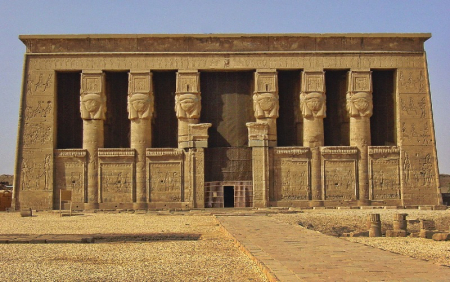
Explore the Temple of Hathor at Dendera, a remarkably preserved ancient Egyptian sanctuary dedicated to the goddess of love, music, and healing, renowned for its zodiac, vibrant reliefs, and astronomical ceilings.
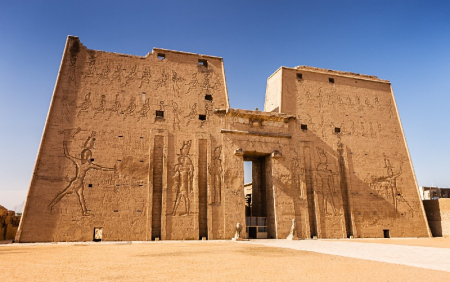
Visit the Temple of Horus at Edfu, a remarkably preserved Ptolemaic temple showcasing ancient Egyptian rituals, art, and architecture.
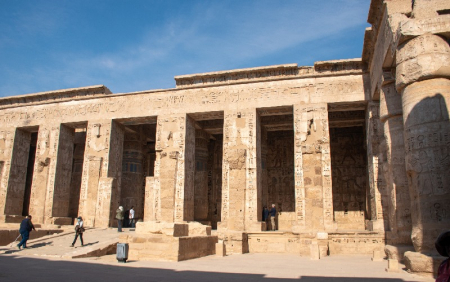
Explore Medinet Habu, Ramesses III’s temple, where history, religion, and artistry come alive on Luxor’s West Bank.
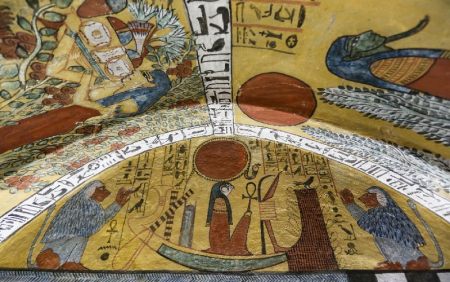
Deir el-Medina was home to the elite artisans who built and decorated Egypt’s royal tombs. Discover their homes, work, religion, and extraordinary daily life.
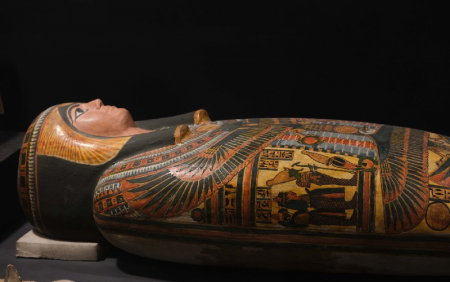
The Mummification Museum in Luxor showcases ancient Egyptian embalming, mummies, and artifacts, including Masaharta’s preserved remains and mummified animals.
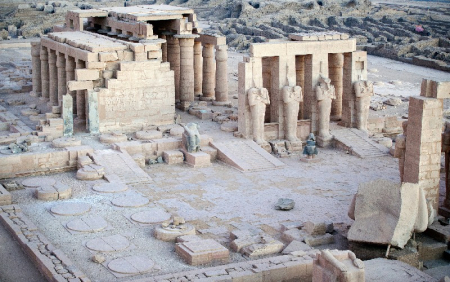
Discover the Mortuary Temple of Amenhotep III, once the largest in Thebes, famed for the Colossi of Memnon and ongoing restorations in Luxor.