
 Home
Home
Al-Azhar Mosque, founded between 970 and 972 CE by the Fatimids, was the first major religious monument in their new capital, Cairo. Over the centuries, it evolved from a Shi’ite establishment into the leading center of Sunni Islamic scholarship. Today, Al-Azhar University—located within the mosque complex—is considered the world’s second-oldest continuously operating university and the foremost institution of Islamic learning.
The mosque spans 15,600 square meters and can host up to 20,000 worshippers. Named in honor of Fatimah al-Zahra, it symbolizes religious heritage, intellectual excellence, and cultural dialogue. UNESCO recognized its global significance in 1979.
Origins and Symbolism of Al-Azhar
Delving into Al-Azhar Mosque's etymological roots reveals fascinating layers of linguistic artistry and spiritual significance. The sacred structure's nomenclature opens windows into cultural heritage that shaped its foundational identity and enduring legacy.
Meaning of the name 'Al-Azhar'
Arabic linguistic traditions bestow profound meaning upon "Al-Azhar," which emerges as "The Most Resplendent" or "splendid" from ancient etymological foundations. This superlative adjective embodies concepts of elevation and distinction, implying that individuals connected to it "always hold their head high". Scholars trace "Azhar" to its masculine form of "zahrāʾ," itself carrying connotations of splendor and luminous beauty. Historical records indicate the mosque received this distinguished name during the period spanning al-Mu'izz's caliphate through al-Aziz Billah's reign (975–996). Professor Salama Dawood offers a particularly poetic interpretation, describing the name as containing "the beauty of blossoming flowers that open to reveal knowledge".
Connection to Fatimah al-Zahra
Historical consensus points to Al-Azhar's nomenclature as a deliberate homage to Fatimah al-Zahra, Prophet Muhammad's cherished daughter. Fatimah herself carried the epithet "al-Zahrāʾ," meaning "the shining one" or "the luminous". Such nomenclature held special resonance for the Fatimid dynasty, whose rulers proclaimed direct lineage from Fatimah and her husband Ali ibn Abi Talib. This naming choice functioned simultaneously as memorial tribute and dynastic legitimacy statement. Records emphasize that mosque planners selected this designation "out of love for her and in commemoration of her high esteem".
Founding under the Fatimid dynasty
Egypt's conquest in 969 CE set the stage for Al-Azhar's remarkable genesis. Jawhar al-Siqilli, serving as trusted general to Caliph al-Mu'izz li-Din Allah, initiated mosque construction on April 4, 970. Completion arrived in 972, marked by inaugural Friday prayers on June 22 during that year's Ramadan observance. Originally, architects conceived the structure as the primary congregational facility for al-Qahira (Cairo), the dynasty's freshly established capital.
Religious worship represented merely one dimension of Al-Azhar's intended purpose. Fatimid leaders strategically designed the mosque to disseminate Ismaili Shi'ite doctrine throughout their territories, establishing Cairo as both intellectual beacon and spiritual center within the broader Islamic world. This vision materialized rapidly, transforming Al-Azhar into a learning hub where previously concealed Isma'ili teachings gained public accessibility.
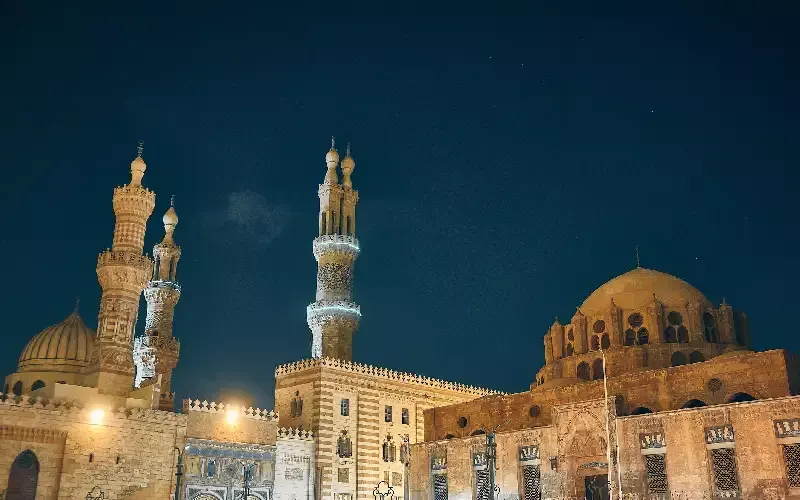
The name "Al-Azhar" means "The Most Resplendent" in Arabic. It is believed to honor Fatimah al-Zahra, the daughter of Prophet Muhammad. The name also symbolizes the beauty of knowledge, likened to blossoming flowers that open to reveal wisdom.
Historical Milestones in Mosque Development
Across ten centuries, Al-Azhar Mosque has witnessed dramatic transformations that echo Egypt's shifting political landscapes and cultural awakenings.
Fatimid foundation and early use
Ramadan 14, 359 AH (970 CE) marks a sacred date when Al-Azhar's cornerstone found its place in history. Jawhar al-Saqli, executing the vision of Fatimid Caliph al-Muizz Li Din Allah, orchestrated the construction using limestone extracted from the Mokattam Formation. The completed structure welcomed its first Friday congregation on June 22, 972 CE.
Al-Muizz elevated the mosque's status in 973, designating it as Cairo's principal congregational space. The institution's scholarly destiny crystallized under Yaqub ibn Killis, the first official Fatimid vizier, who established Islamic law instruction at Al-Azhar in 988. Forty-five scholars joined the faculty the following year, planting seeds for what would flourish into Islam's premier university.
Caliph al-Hafiz initiated substantial renovations in 1138, crafting the distinctive keel-shaped arches and intricate stucco decorations that grace the courtyard today.
Mamluk period: architectural and scholarly growth
The Mamluk dynasty ushered in Al-Azhar's golden age. Sultan Baibars breathed new life into the mosque by resuming congregational prayers in 1266, ending years of Ayyubid neglect. The first khutbah since al-Hakim's era resonated through the halls on January 16, 1266, delivered from a newly crafted pulpit.
Earthquake devastation in 1302 prompted army commander Sayf al-Din Salar to oversee extensive reconstruction. Two prestigious madrasas emerged during this flourishing period: Madrasa al-Aqbughawiyya (1309) adorning the northwest wall and Madrasa al-Taybarsiyya (completed 1339-1340). These scholarly additions magnetized students from distant Islamic territories, establishing Al-Azhar's reputation across continents.
Ottoman era: structural expansion and influence
Sultan Selim I demonstrated remarkable respect for Al-Azhar following the Ottoman conquest in 1517, participating in Friday prayers during his final Egyptian week. However, direct imperial patronage waned as Ottoman officials attended services regularly while contributing minimal maintenance funds.
The 18th century witnessed a renaissance of Mamluk patronage. Al-Qazdughli sponsored several additions in 1735, notably including specialized accommodations for blind students. Abd al-Rahman Katkhuda, appointed head of the Janissaries in 1749, orchestrated the most ambitious renovations since the Mamluk Sultanate:
- Three magnificent gates: Bab al-Muzayinīn (serving as the primary entrance), Bab al-Sa'ayida, and Bab al-Shurba
- An expansive southern prayer hall that doubled worship capacity
- Complete restoration of multiple riwaqs encircling the mosque
Katkhuda earned the rare honor of interment within the mosque grounds in 1776, becoming the first person granted this privilege since 1588.
Customize Your Dream Vacation!
Get in touch with our local experts for an unforgettable journey.
Plan Your TripArchitectural Identity of Al-Azhar Mosque
Al-Azhar Mosque unfolds as a magnificent architectural chronicle, each stone bearing witness to ten centuries of Islamic artistic evolution.
White courtyard and arcades
The mosque's central courtyard captivates visitors with its profound tranquility and luminous beauty. Three porticoes originally embraced this sacred space until Caliph al-Hafiz expanded the design in 1138, introducing the fourth arcade that graces the complex today. His architectural vision brought forth the distinctive keel-shaped arches and intricate roundels that define the courtyard's character. Polished white marble floors catch and scatter sunlight, bathing the entire space in a radiant glow that seems to emanate from within. This Fatimid-era sanctuary weathered numerous renovations across the centuries, though it suffered unfortunate damage in 1798 during Bonaparte's bombardment, a consequence of student resistance movements.
Madrasas: Aqbugha, Al-Taybarsiyya, Gawhariyya
Three exceptional Mamluk madrasas contribute distinct architectural personalities to Al-Azhar's identity. The Taybarsiyya, constructed in 1309, reveals sophisticated design through its dual iwans serving different Islamic jurisprudential schools, while its early Bahri Mamluk mihrab demonstrates masterful craftsmanship through glass mosaic interwoven with polychrome marble inlay. The Aqbughawiyya followed in 1340, distinguished by its stunning portal where red and black marble inlay creates striking visual drama. The Gawhariyya, completed in 1440, stands as a architectural milestone with its four-iwan layout and holds particular significance for featuring Cairo's earliest example of arabesque foliage carving executed on a stone dome.
Minarets of Qaytbay and Al-Ghuri
Al-Azhar's five minarets tell stories of later architectural patronage, none tracing back to the original Fatimid construction. Sultan Qaytbay's minaret, erected in 1469, and Sultan al-Ghuri's distinctive double-finial minaret from 1510 represent the most celebrated examples. These soaring towers display extraordinary geometric patterns and ornamental calligraphy, serving dual purposes as calls to prayer and monuments to their royal benefactors' legacy.
Integration of diverse artistic styles
Al-Azhar achieves remarkable harmony through its fusion of Fatimid, Mamluk, and Ottoman artistic traditions. Fatimid influences manifest through elegant scrolling vines adorned with half palmettes and tree motifs, elements that reveal eastern artistic connections. The mosque's T-plan configuration, featuring a central nave that intersects the prayer hall aisles, draws inspiration from North African mosque architecture.
Al-Azhar showcases a blend of architectural influences added over centuries, including Fatimid arches, Mamluk minarets, and Ottoman renovations. Each era contributed distinct elements, making the mosque a living architectural timeline of Islamic Cairo.
Al-Azhar as a Beacon of Knowledge and Authority
Beyond its architectural magnificence lies Al-Azhar's most enduring legacy—a scholarly tradition that has illuminated minds across centuries, establishing itself as Islam's premier educational powerhouse since the late 10th century.
Oldest functioning Islamic university
The year 988 marked a pivotal transformation when Fatimid vizier Yaqub ibn Killis assembled 35 distinguished scholars, formally launching Al-Azhar's academic mission. This initiative birthed what scholars recognize today as the world's second-oldest continuously operating university. While official university designation arrived only in 1961, the institution's educational heartbeat has pulsed uninterrupted for over a millennium.
Curriculum diversity: law, medicine, philosophy
Early academic foundations centered on Islamic jurisprudence, theological studies, and Arabic linguistic mastery. Yet Al-Azhar's intellectual appetite proved far more expansive—students delved into Quranic studies, legal theory, logic, grammar, rhetoric, mathematics, and astronomical sciences. The institution's academic horizon broadened dramatically in 1961, embracing secular disciplines including business administration, economics, natural sciences, pharmacy, medical studies, engineering, and agricultural sciences.
Global reach and student body
Academic magnetism draws approximately 500,000 students to Al-Azhar's halls, creating an extraordinary international scholarly community. Students arrive from 107 nations, fostering unprecedented cultural exchange within the institution's 79 faculties—47 dedicated to male students, 32 to female scholars. This global educational tradition spans five centuries, establishing Al-Azhar as Islam's most internationally diverse center of learning.
Cultural and political relevance in modern Egypt
Al-Azhar's influence extends far beyond classroom walls. The Grand Imam commands profound respect as Sunni Islam's foremost theological authority. The institution's educational network encompasses approximately 4,000 facilities throughout Egypt, nurturing nearly two million students. Modern challenges find Al-Azhar actively engaged in countering extremist ideologies through specialized research centers and educational programs.
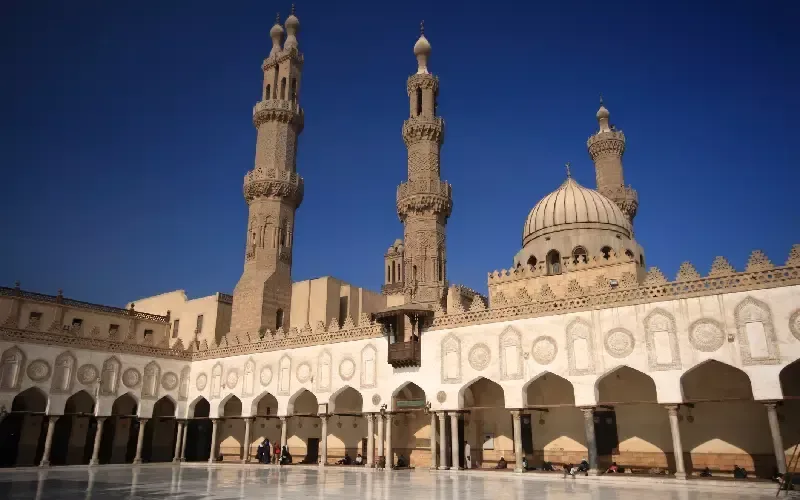
Al-Azhar Mosque was founded between 970 and 972 AD during the Fatimid era. The associated university began its educational activities in 988 CE, making it over a thousand years old. It is recognized as the second-oldest continuously operating university in the world and the oldest functioning Islamic university.
Al-Azhar Mosque emerges from our exploration as far more than a single architectural achievement—it represents a living chronicle of Islamic civilization spanning over ten centuries. The Fatimid visionaries who commissioned this structure between 970-972 CE could scarcely have imagined how their Ismaili center would eventually become Sunni Islam's most respected scholarly authority. The mosque's designation as "The Most Resplendent" proved prophetic, honoring both Fatimah al-Zahra's luminous legacy and the institution's destined brilliance.
Each stone and archway tells stories of artistic mastery across successive dynasties. The white marble courtyard, with its graceful keel-shaped arches, bears witness to centuries of architectural refinement, while the distinguished madrasas—Aqbughawiyya, Taybarsiyya, and Gawhariyya—demonstrate how educational spaces became integral to the mosque's identity. The soaring minarets of Qaytbay and Al-Ghuri continue punctuating Cairo's horizon, silent testimony to their patrons' enduring vision.
Perhaps most remarkable remains Al-Azhar's uninterrupted educational mission. Since 988 CE, when Fatimid vizier Yaqub ibn Killis first assembled 35 scholars within these walls, the institution has maintained its scholarly pulse across political upheavals, natural disasters, and changing dynasties. What began with Islamic jurisprudence and theology eventually embraced mathematics, astronomy, medicine, and engineering—a testament to intellectual adaptability rarely witnessed in medieval institutions.
Today, Al-Azhar's influence radiates far beyond Egypt's borders through its extraordinary international community of 500,000 students representing 107 nations. The institution functions simultaneously as custodian of classical Islamic learning and dynamic voice addressing contemporary global challenges. This dual role—preserving tradition while embracing modernity—ensures Al-Azhar Mosque remains not merely a historical monument but a vibrant force actively shaping Islamic scholarship, cultural dialogue, and educational excellence across the modern world.
Al-Azhar Mosque is renowned for being one of the oldest and most significant Islamic landmarks in Cairo. It houses the world's second-oldest continuously operating university and serves as a leading center of Sunni Islamic thought and education. The mosque's architectural beauty, blending Fatimid, Mamluk, and Ottoman styles, along with its historical and cultural importance, makes it a must-visit site in Egypt.
Initially focused on Islamic law, theology, and Arabic language, Al-Azhar's curriculum has greatly expanded over the centuries. In its early years, it included subjects like the Quran, logic, grammar, rhetoric, mathematics, and astronomy. In 1961, the institution formally added secular subjects such as business, economics, science, pharmacy, medicine, engineering, and agriculture, broadening its educational scope significantly.
Al-Azhar plays a crucial role in modern Egypt and the global Islamic community. It oversees about 4,000 educational facilities in Egypt and educates approximately 500,000 students from 107 countries. The Grand Imam of Al-Azhar is widely recognized as Sunni Islam's leading theological voice. The institution also actively works to counter extremism and provides guidance on contemporary issues, maintaining its relevance in the modern world while preserving Islamic scholarship.
Yes, non-Muslim visitors may enter Al-Azhar Mosque outside prayer times, as long as they follow modest dress guidelines and respect mosque etiquette. The site welcomes tourists who wish to appreciate its architecture and historical significance.
Yes. The mosque regularly hosts Friday sermons, Ramadan activities, scholarly lectures, and Quranic recitations. During major Islamic festivals, it becomes a central gathering place for worshippers from across Cairo.
Absolutely. While Al-Azhar University occupies modern buildings, the mosque still holds traditional study circles, where students learn Quran, Hadith, jurisprudence, and Arabic under qualified scholars—preserving centuries-old teaching methods.
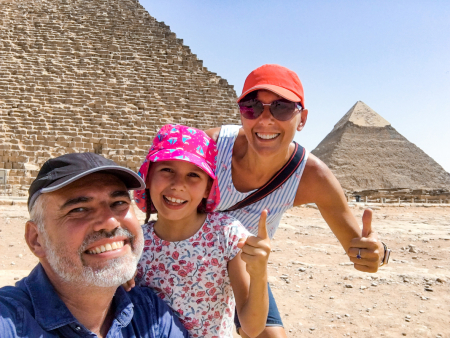

The Great Pyramids of Giza, Egypt’s iconic monuments, showcase ancient engineering brilliance and remain the last wonder of the ancient world, continuing to fascinate visitors and researchers alike.

The Egyptian Museum in Cairo houses over 170,000 ancient artifacts, including Tutankhamun's complete collection and golden death mask. Opened in 1902, it's the world's largest repository of Egyptian antiquities.

Khan el-Khalili is Cairo’s legendary medieval bazaar, where centuries-old Islamic architecture, vibrant trade, and timeless cafés create a living cultural landmark.

The Great Sphinx of Giza, with its lion body and pharaoh head, represents ancient Egyptian artistry, symbolic power, and enduring cultural fascination.

Tanoura is a traditional Egyptian Sufi dance known for its colorful spinning skirts, spiritual rhythm, and deep roots in ancient mystic traditions.

Saqqara, Egypt's ancient necropolis, features Djoser's Step Pyramid—the world's oldest. Spanning 3,000 years, it preserves royal tombs and sacred animal burials.

The Valley Temple at Giza, built 2570 BCE by Khafre, features 16 granite columns and hosted sacred afterlife rituals. Explore Fourth Dynasty architecture.

The Citadel of Cairo is a historic medieval fortress and royal complex, showcasing centuries of Egyptian power, Mamluk architecture, and Islamic heritage, now preserved as a UNESCO World Heritage Site.

Khufu's Solar Boat is a 142-foot cedar vessel discovered 1954 near the Great Pyramid. Built without nails 4,500 years ago, it's now at Grand Egyptian Museum.

St. George Church in Old Cairo, founded 684 AD, features unique circular design, sacred healing relics & underground chapel linked to the Holy Family's refuge.

Pyramids Sound and Light Show transforms Giza into open-air theater with 50 minutes of narration, music & lighting bringing ancient Egyptian history alive.

The Djoser Pyramid at Saqqara is Egypt's first pyramid, built 2600 BCE by architect Imhotep. Standing 62.5m tall, it reopened to visitors in 2020.

The Hanging Church in Old Cairo is a 1,300-year-old Coptic sanctuary built on Babylon Fortress. Free entry, open daily 9 AM-5 PM, dress modestly required.

The Bent Pyramid at Dahshur features a rare bent profile created by ancient construction adjustments, offering insight into Egypt’s earliest attempts at smooth-sided pyramids.

Coptic Cairo features 4th-century churches and recent tomb discoveries revealing early Christian heritage. Explore the Hanging Church, Abu Serga & sacred sites.
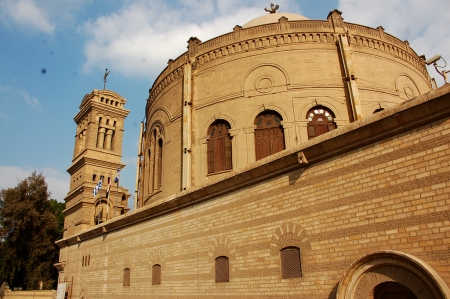
Saint Barbara’s Church in Coptic Cairo is one of Egypt’s oldest Christian monuments, dating back to the 5th–6th century. Known for housing the relics of Saint Barbara, the church reflects centuries of Coptic heritage, architectural evolution, and deep spiritual significance.

Explore the Fortress of Babylon, a major Roman fort in Old Cairo known for its strategic location, massive towers, and enduring historical significance.
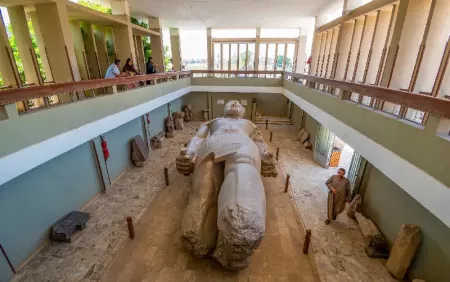
Memphis Necropolis is Egypt’s ancient royal burial site, home to pyramids, tombs, and monuments that reflect the early development of pharaonic civilization.
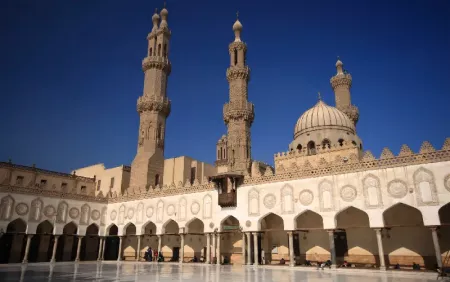
Al-Azhar Mosque is a landmark of Islamic scholarship and Fatimid architecture, home to the world’s second-oldest university and a symbol of Cairo’s spiritual heritage.
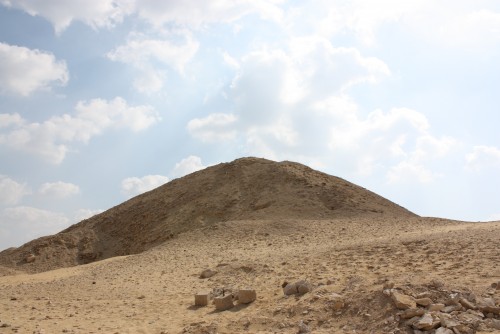
Teti’s Pyramid in Saqqara is an Old Kingdom monument built for the first king of the Sixth Dynasty. Known for its Pyramid Texts and unique mortuary chapel, it remains one of Egypt’s most historically important royal tombs.
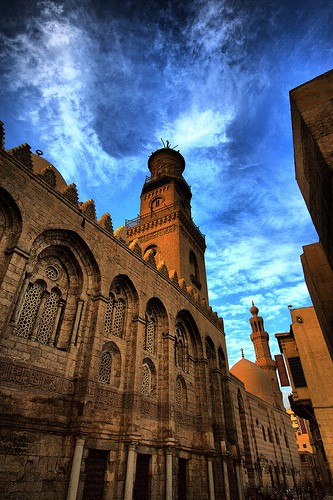
Al Muizz Street is one of Cairo’s oldest and most vibrant historic avenues, showcasing centuries of Islamic architecture. Lined with mosques, palaces, and bustling markets, it offers a captivating walk through Egypt’s medieval past.
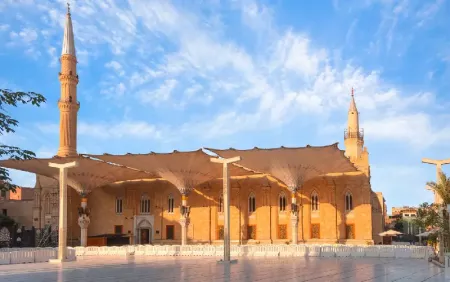
Al-Hussein Mosque is one of Cairo’s most sacred Islamic landmarks, built in 1154 and revered for housing the head of Imam Hussein. Located by Khan El-Khalili, it blends centuries of architectural heritage and remains a major pilgrimage site.
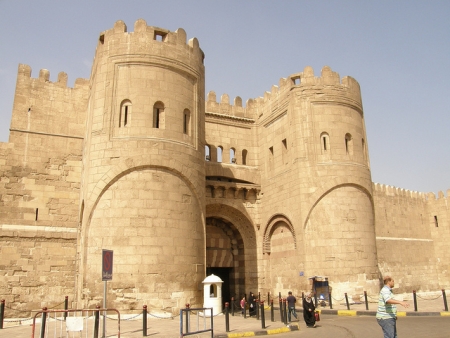
Bab al-Futuh is an 11th-century Fatimid gate in Old Cairo, famous for its massive round towers and strategic role in the city’s medieval fortifications.
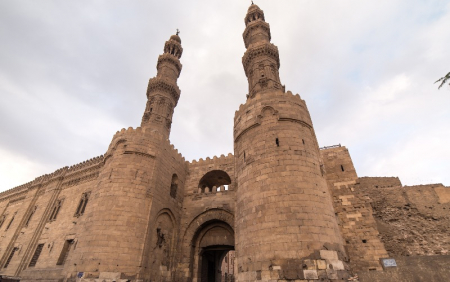
Bab Zuweila is one of Cairo’s last surviving medieval gates, built in 1092 CE by the Fatimid vizier Badr al-Jamali. Famous for its towering twin bastions, massive wooden doors, and later Mamluk minarets, it served as a defensive stronghold, execution site, and ceremonial gateway. Today, it stands as one of Cairo’s most iconic historic monuments.
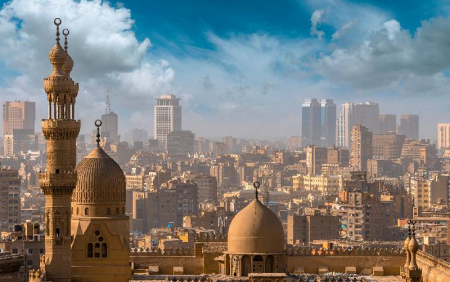
Al Rifai Mosque in Cairo blends Neo-Mamluk architecture with royal history. Completed in 1912, it serves as both a majestic mosque and mausoleum for Muhammad Ali’s family.
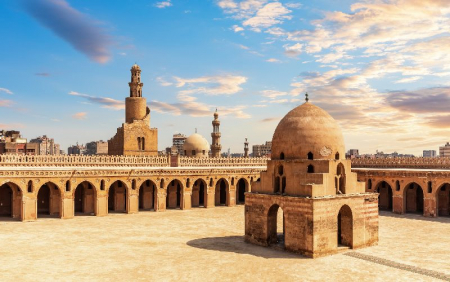
The Ibn Tulun Mosque, Cairo’s oldest well-preserved mosque, dates back to 879 CE. Famous for its vast square layout, intricate arches, and 128 ornate stucco windows, it remains a pinnacle of early Islamic architecture and a must-visit historical landmark.
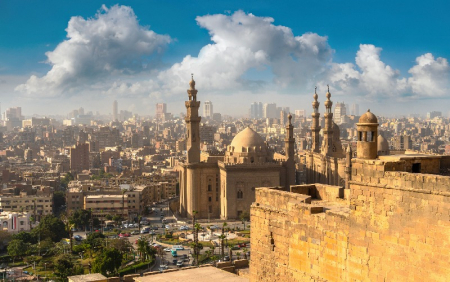
The Sultan Hassan Mosque, built in the 14th century, is a Bahri Mamluk architectural marvel in Cairo, renowned for its grand portal, extensive madrasas, and historic significance.

The Suez Canal, Egypt’s iconic waterway, connects Africa and Asia, handling thousands of ships yearly and shaping international trade.
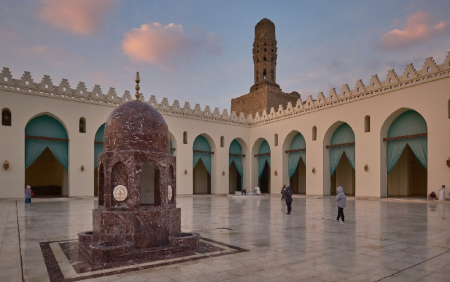
Al-Hakim Mosque, Cairo, is a stunning Fatimid-era mosque built between 990–1013 CE. Famous for its grand courtyard, distinctive minarets, and rich history, it remains a key cultural and religious landmark.
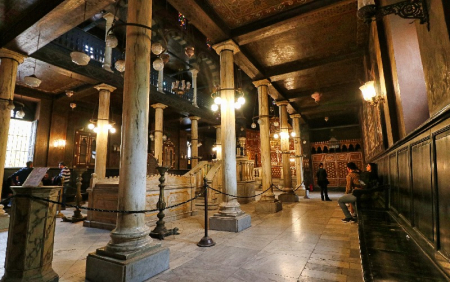
The Ben Ezra Synagogue, founded in the 11th century in Old Cairo, is Egypt’s oldest Jewish monument and the discovery site of the renowned Cairo Geniza.