Home
Home
Furthermore, Al Rifai Mosque Cairo Egypt showcases the Neo-Mamluk architectural style that was particularly fashionable in Cairo during its construction period. Beyond its religious function, the mosque also serves as the royal mausoleum for Muhammad Ali's family, thus combining spiritual significance with historical importance. The present structure that visitors see today was meticulously developed in two distinct phases, resulting in a harmonious blend of traditional Islamic design elements with the artistic sensibilities of the early 20th century.
The Origins and Historical Evolution of Al Rifai Mosque
From Fatimid mosque to Sufi zawiya
The role of Ali Abu Shubbak in its transformation
Commission by Hoshiyar Qadin and early construction
Architectural pause and later completion under Abbas II
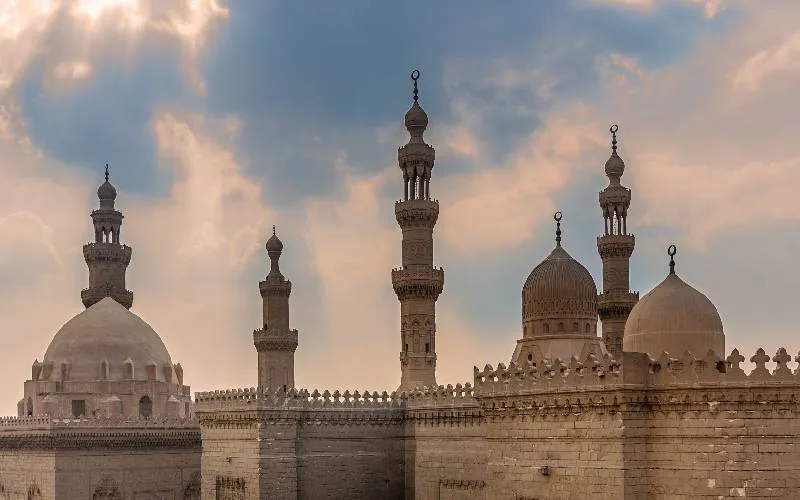
The construction of Al Rifai Mosque took place in two main phases. It began in 1869 and was finally completed in 1912, spanning a period of over four decades.
Architectural Features and Design Influences
The architectural design of Al Rifai Mosque represents a significant achievement in Egyptian Islamic architecture. Conceived in the Neo-Mamluk style that gained prominence in late 19th century Cairo, the mosque exemplifies a conscious revival of historic Mamluk forms while incorporating modern elements.
Adoption of Neo-Mamluk style
The Neo-Mamluk design of Al Rifai Mosque reflects the Khedival era's quest to merge Islamic architectural heritage with contemporary techniques. Despite featuring eclectic surface decorations characteristic of traditional Mamluk buildings, the mosque's spaces were notably influenced by 19th century Beaux-Arts classical revival. Moreover, the structure marked a significant transition to modern construction methods as the first Egyptian Islamic monument to utilize cement.
Comparison with Sultan Hassan Mosque
When developing Al Rifai's design, architects deliberately attempted to match the grandeur and height of the adjacent 14th-century Sultan Hassan Mosque. This architectural dialog between the two monumental structures creates an impressive visual harmony in Citadel Square. Indeed, both mosques feature similar elements such as twin minarets built on circular bases.
Interior layout and spatial divisions
The interior encompasses approximately 6,500 square meters, with 1,767 square meters designated for prayer while the remaining space accommodates the zawiya shrine and royal mausoleum. The prayer hall follows a basilican style with three riwaqs (arcades) supported by marble piers holding pointed arches beneath a ceiling adorned with golden wooden decorations.
Use of marble, domes, and minarets
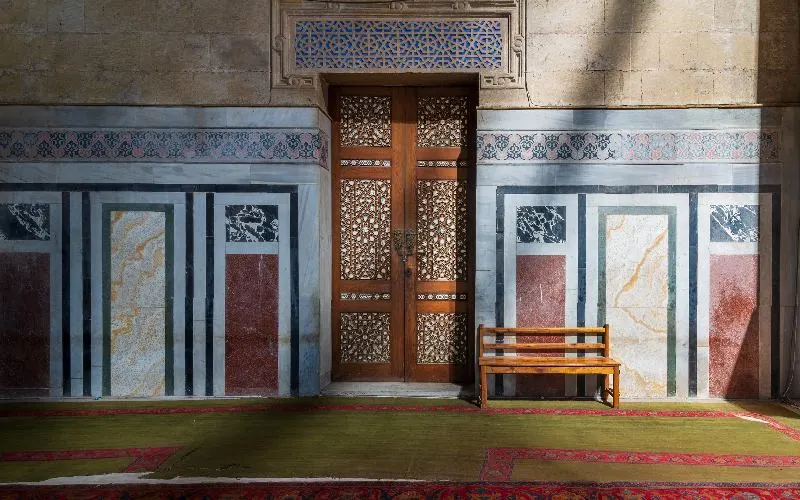
Throughout the mosque, imported Italian marble embellishes columns and structural elements. The entrances feature towering doorways surrounded by stone and marble columns with ornate Arabic capitals, decorated lintels, and gilded arches. Additionally, the mosque houses three domes and two slender minarets that enhance its imposing silhouette.
Design challenges and Max Herz's intervention
The project faced architectural difficulties that drew criticism from contemporary archeologists. Subsequently, Hungarian architect Max Herz, head of the Committee for the Conservation of the Monuments of Cairo, was appointed to supervise completion. With assistance from Italian architect Carlo Virgilio Silvagni and guidance from Egyptian official Ali Pasha Mubarak, Herz successfully resolved these challenges, ensuring the mosque's structural integrity and historical authenticity.
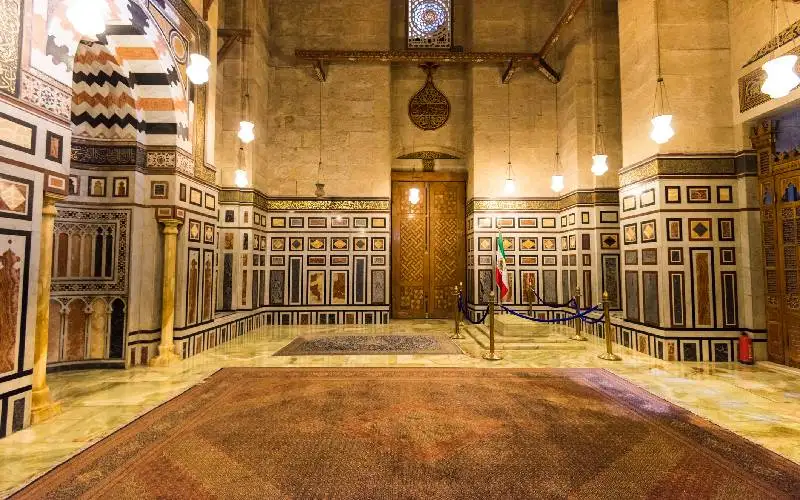
Al Rifai Mosque is a prime example of the Neo-Mamluk architectural style, which was popular in Cairo during the late 19th and early 20th centuries. It combines traditional Islamic design elements with modern construction techniques.
The Mosque’s Role as a Royal Mausoleum
Beyond its religious significance, Al Rifai Mosque serves a crucial function as the final resting place for Egypt's royal lineage. Throughout its existence, this sacred structure has housed the remains of numerous historical figures, giving it a dual identity as both a place of worship and a repository of national memory.
Burial site for Muhammad Ali dynasty members
The mosque was specifically designed to function as the royal mausoleum for the Muhammad Ali dynasty that ruled Egypt from 1805 to 1953. Khedive Ismail's mother, Hoshiyar Qadin, originally commissioned the structure in 1869 with this dual purpose in mind. Over time, the mosque became the eternal home for several prominent members of this influential family, including King Farouk, Egypt's last ruling monarch before the 1952 revolution.
Designated tombs and their placements
Within Al Rifai Mosque Cairo, the royal tombs occupy a dedicated section separate from the prayer hall. The ornate mausoleums feature intricate marble work, decorative elements, and inscriptions honoring the deceased. Interestingly, the mosque also became the burial site for the last Shah of Iran, Mohammad Reza Pahlavi, who died in exile in 1980, as well as other members of the Iranian royal family.
Symbolism of royal burials in Islamic Cairo
The practice of royal entombment within Al Rifai Mosque Cairo Egypt represents a fascinating intersection of religious devotion and political authority. By placing the dynasty's remains in this sacred space, Egypt's rulers symbolically aligned themselves with Islamic traditions and legitimized their governance through religious association. This connection between spiritual and temporal power remains a defining characteristic of the mosque's historical legacy.
Al Rifai Mosque serves as the final resting place for several prominent figures, including members of the Muhammad Ali dynasty such as Khedive Ismail, King Fuad I, and King Farouk. Interestingly, it also houses the tomb of Mohammad Reza Pahlavi, the last Shah of Iran.
Customize Your Dream Vacation!
Get in touch with our local experts for an unforgettable journey.
Plan Your TripSpiritual and Political Significance Over Time
The spiritual legacy of Al Rifai Mosque Cairo extends far beyond its architectural grandeur. Throughout centuries, this sacred space has functioned as a nexus of religious devotion, political symbolism, and international relations.
Importance to the Rifa'i Sufi order
Al Rifai Mosque serves as the primary center in Cairo for the Rifa'i order, a prominent Sufi brotherhood founded by Ahmad al-Rifa'i in the 12th century. Although Ahmad al-Rifa'i himself was never buried there, the mosque hosts joyous annual celebrations commemorating his birth.
These mawlid festivals transform the surrounding area into vibrant gathering grounds where dhikr ceremonies—rhythmic devotional recitations often incorporating physical movements—take place. The patronage of the mosque by the Khedival family symbolized a mutually beneficial relationship: rulers gained religious legitimacy through association with the revered Sufi lineage, since the order received financial resources and protected status.
Pilgrimage site for followers of Ahl al-Bayt
The mosque is distinguished as the burial place of Ali Abu Shubbak al-Rifa'i, a revered figure regarded as one of the Ahl al-Bayt (family of the Prophet Muhammad), making it an important pilgrimage destination. Visitors seek baraka (spiritual blessing) at his tomb, often performing circumambulation as part of their devotional practices.
Temporary and permanent burials of the Pahlavi dynasty
In a fascinating historical connection, Al Rifai Mosque temporarily housed the remains of Reza Shah Pahlavi, founder of Iran's Pahlavi dynasty, who died in exile in South Africa in 1944. His body remained there until after World War II when it was repatriated to Iran. Ironically, his son Mohammad Reza Pahlavi, the last Shah of Iran who died in Cairo in 1980 following the 1979 Iranian Revolution, found his permanent resting place in the same chamber that once held his father.
The mosque holds great importance for the Rifa'i Sufi order and serves as a pilgrimage site for followers of Ahl al-Bayt. It hosts annual celebrations and is known for its spiritual blessings associated with the tomb of Ali Abu Shubbak al-Rifa'i.
Al Rifai Mosque therefore stands as a remarkable testament to Egypt's rich religious and royal heritage. The structure's evolution from a modest Fatimid-era mosque to one of Cairo's most magnificent religious monuments reflects centuries of cultural and spiritual transformation. Through its Neo-Mamluk architectural style, the mosque beautifully blends traditional Islamic elements with early 20th-century artistic sensibilities, while its strategic placement creates a harmonious visual dialog with the adjacent Sultan Hassan Mosque.
Equally important, this architectural marvel serves dual purposes that few other structures can claim. The mosque functions simultaneously as a vibrant center for Islamic worship and as the final resting place for Egypt's Muhammad Ali dynasty members. Additionally, its unexpected role as burial ground for international figures like Mohammad Reza Pahlavi further cements its significance beyond Egyptian borders.
The spiritual legacy of Al Rifai Mosque remains undeniably powerful. Sufism thrives within its walls through the continued devotional practices of the Rifa'i order, while pilgrims seeking connections to Ahl al-Bayt find profound meaning at the tomb of Ali Abu Shubbak al-Rifa'i. This spiritual significance, coupled with the royal prestige embedded in its very stones, positions Al Rifai Mosque as a physical embodiment of how religious devotion and political authority have intertwined throughout Egyptian history.
Four decades of challenging construction ultimately yielded a monument that transcends time. The mosque's towering minarets, ornate domes, and expansive prayer halls continue to inspire awe, much as they did when first completed in 1912. Al Rifai Mosque thus represents not merely a historical artifact but a living symbol of Cairo's enduring religious and cultural identity.
Al Rifai Mosque was deliberately designed to match the grandeur of the adjacent 14th-century Sultan Hassan Mosque. Both structures feature similar elements such as twin minarets, creating an impressive visual harmony in Citadel Square.
The mosque’s interior boasts intricate marble floors, stained glass windows, gilded ceilings, and finely carved woodwork. Visitors can also admire the grand central dome and elaborately decorated mihrab.
Yes, visitors can access certain tomb areas, including those of the Muhammad Ali dynasty, though some royal tombs may be restricted. Guided tours often provide historical context.
The mosque was built using a combination of limestone, marble, and reinforced concrete, reflecting both traditional craftsmanship and modern construction techniques of the early 20th century.
The mosque hosts religious ceremonies, particularly for the Rifa’i Sufi order, as well as national commemorations and special prayers during Islamic holidays.
The mosque has undergone periodic restoration efforts to maintain its structural integrity, preserve decorative elements, and ensure it remains a functioning place of worship and cultural heritage site.

The Great Pyramids of Giza, Egypt’s iconic monuments, showcase ancient engineering brilliance and remain the last wonder of the ancient world, continuing to fascinate visitors and researchers alike.

The Egyptian Museum in Cairo houses over 170,000 ancient artifacts, including Tutankhamun's complete collection and golden death mask. Opened in 1902, it's the world's largest repository of Egyptian antiquities.

Khan el-Khalili is Cairo’s legendary medieval bazaar, where centuries-old Islamic architecture, vibrant trade, and timeless cafés create a living cultural landmark.

The Great Sphinx of Giza, with its lion body and pharaoh head, represents ancient Egyptian artistry, symbolic power, and enduring cultural fascination.

Tanoura is a traditional Egyptian Sufi dance known for its colorful spinning skirts, spiritual rhythm, and deep roots in ancient mystic traditions.

Saqqara, Egypt's ancient necropolis, features Djoser's Step Pyramid—the world's oldest. Spanning 3,000 years, it preserves royal tombs and sacred animal burials.

The Valley Temple at Giza, built 2570 BCE by Khafre, features 16 granite columns and hosted sacred afterlife rituals. Explore Fourth Dynasty architecture.

The Citadel of Cairo is a historic medieval fortress and royal complex, showcasing centuries of Egyptian power, Mamluk architecture, and Islamic heritage, now preserved as a UNESCO World Heritage Site.

Khufu's Solar Boat is a 142-foot cedar vessel discovered 1954 near the Great Pyramid. Built without nails 4,500 years ago, it's now at Grand Egyptian Museum.

St. George Church in Old Cairo, founded 684 AD, features unique circular design, sacred healing relics & underground chapel linked to the Holy Family's refuge.

Pyramids Sound and Light Show transforms Giza into open-air theater with 50 minutes of narration, music & lighting bringing ancient Egyptian history alive.

The Djoser Pyramid at Saqqara is Egypt's first pyramid, built 2600 BCE by architect Imhotep. Standing 62.5m tall, it reopened to visitors in 2020.

The Hanging Church in Old Cairo is a 1,300-year-old Coptic sanctuary built on Babylon Fortress. Free entry, open daily 9 AM-5 PM, dress modestly required.
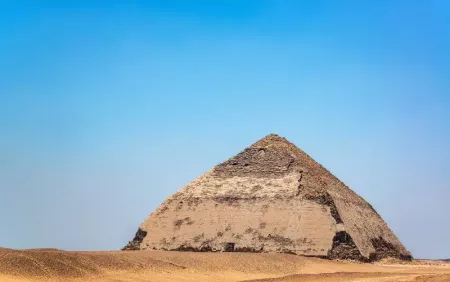
The Bent Pyramid at Dahshur features a rare bent profile created by ancient construction adjustments, offering insight into Egypt’s earliest attempts at smooth-sided pyramids.

Coptic Cairo features 4th-century churches and recent tomb discoveries revealing early Christian heritage. Explore the Hanging Church, Abu Serga & sacred sites.
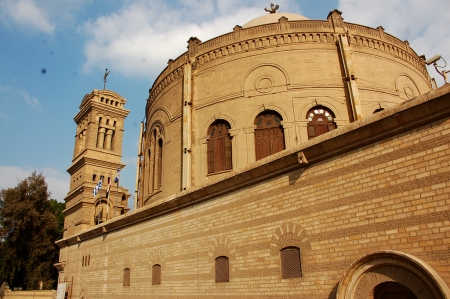
Saint Barbara’s Church in Coptic Cairo is one of Egypt’s oldest Christian monuments, dating back to the 5th–6th century. Known for housing the relics of Saint Barbara, the church reflects centuries of Coptic heritage, architectural evolution, and deep spiritual significance.

Explore the Fortress of Babylon, a major Roman fort in Old Cairo known for its strategic location, massive towers, and enduring historical significance.
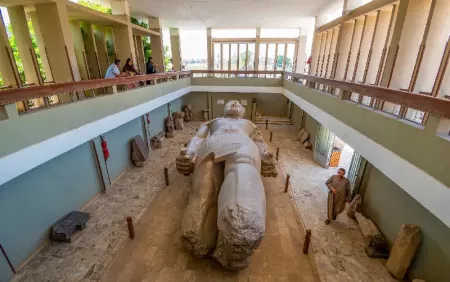
Memphis Necropolis is Egypt’s ancient royal burial site, home to pyramids, tombs, and monuments that reflect the early development of pharaonic civilization.
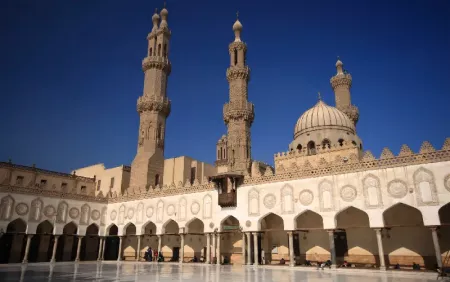
Al-Azhar Mosque is a landmark of Islamic scholarship and Fatimid architecture, home to the world’s second-oldest university and a symbol of Cairo’s spiritual heritage.
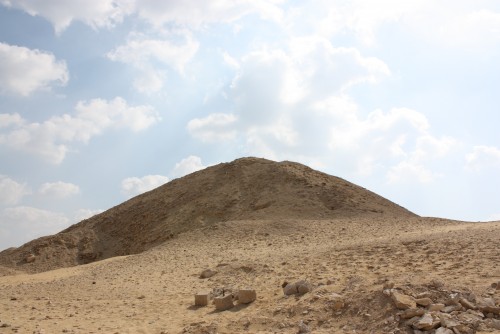
Teti’s Pyramid in Saqqara is an Old Kingdom monument built for the first king of the Sixth Dynasty. Known for its Pyramid Texts and unique mortuary chapel, it remains one of Egypt’s most historically important royal tombs.
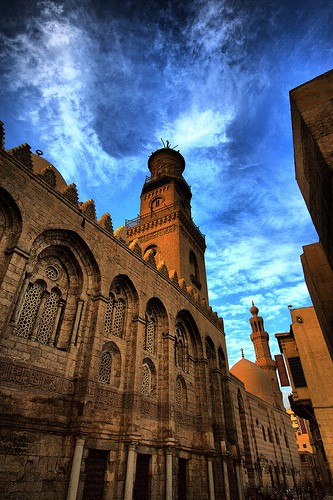
Al Muizz Street is one of Cairo’s oldest and most vibrant historic avenues, showcasing centuries of Islamic architecture. Lined with mosques, palaces, and bustling markets, it offers a captivating walk through Egypt’s medieval past.
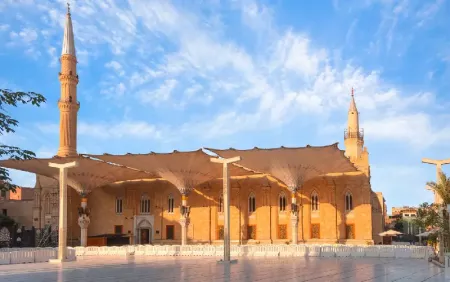
Al-Hussein Mosque is one of Cairo’s most sacred Islamic landmarks, built in 1154 and revered for housing the head of Imam Hussein. Located by Khan El-Khalili, it blends centuries of architectural heritage and remains a major pilgrimage site.
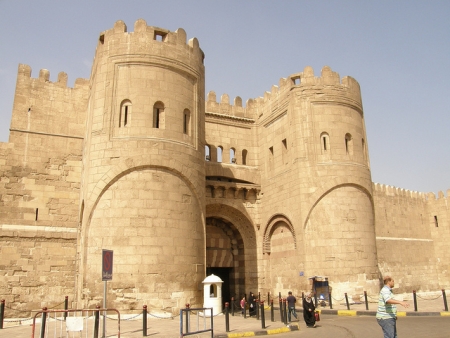
Bab al-Futuh is an 11th-century Fatimid gate in Old Cairo, famous for its massive round towers and strategic role in the city’s medieval fortifications.
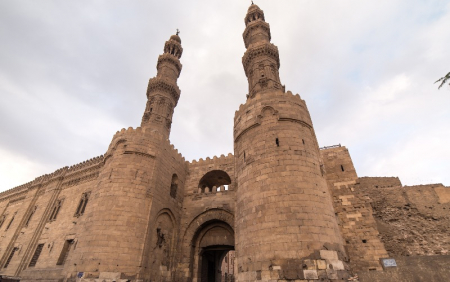
Bab Zuweila is one of Cairo’s last surviving medieval gates, built in 1092 CE by the Fatimid vizier Badr al-Jamali. Famous for its towering twin bastions, massive wooden doors, and later Mamluk minarets, it served as a defensive stronghold, execution site, and ceremonial gateway. Today, it stands as one of Cairo’s most iconic historic monuments.
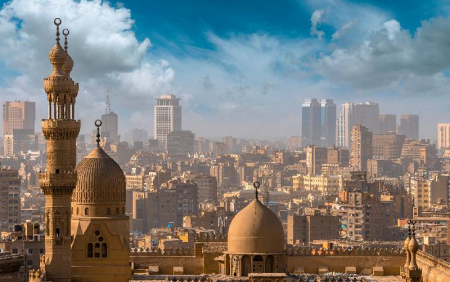
Al Rifai Mosque in Cairo blends Neo-Mamluk architecture with royal history. Completed in 1912, it serves as both a majestic mosque and mausoleum for Muhammad Ali’s family.
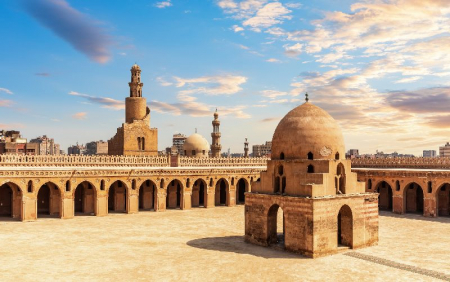
The Ibn Tulun Mosque, Cairo’s oldest well-preserved mosque, dates back to 879 CE. Famous for its vast square layout, intricate arches, and 128 ornate stucco windows, it remains a pinnacle of early Islamic architecture and a must-visit historical landmark.
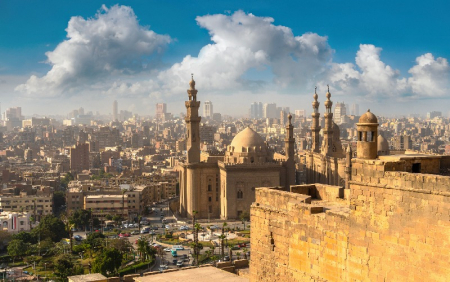
The Sultan Hassan Mosque, built in the 14th century, is a Bahri Mamluk architectural marvel in Cairo, renowned for its grand portal, extensive madrasas, and historic significance.

The Suez Canal, Egypt’s iconic waterway, connects Africa and Asia, handling thousands of ships yearly and shaping international trade.
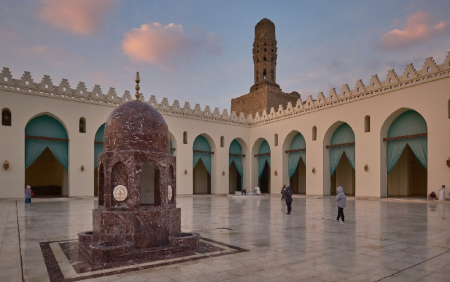
Al-Hakim Mosque, Cairo, is a stunning Fatimid-era mosque built between 990–1013 CE. Famous for its grand courtyard, distinctive minarets, and rich history, it remains a key cultural and religious landmark.
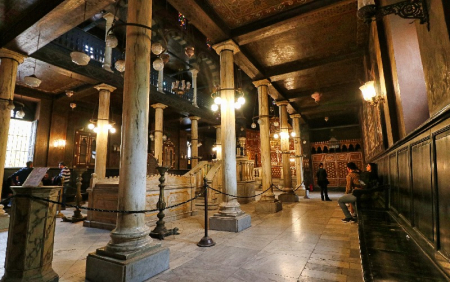
The Ben Ezra Synagogue, founded in the 11th century in Old Cairo, is Egypt’s oldest Jewish monument and the discovery site of the renowned Cairo Geniza.