Home
Home
The Fortress of Babylon in Old Cairo is one of Egypt’s most important Roman-era structures, built around 300 AD by Emperor Diocletian. Strategically located on the eastern bank of the Nile, it guarded the entrance to a key canal connecting the Nile to the Red Sea and controlled river traffic between Lower and Middle Egypt. Known for its exceptionally strong fortifications, the fortress featured massive round towers and thick walls that highlighted its military importance. Over the centuries, it passed through the hands of several ruling powers yet remained a landmark of defense. Today, it forms the heart of Coptic Cairo, surrounded by historic sites such as the Hanging Church and the Coptic Museum, though its origins were entirely military.
The Fortress of Babylon is an ancient Roman fortification located in Old Cairo, Egypt. It was built around 300 AD by Emperor Diocletian on the eastern bank of the Nile Delta, at the boundary between Lower and Middle Egypt.
The origin and naming of the Fortress of Babylon
The origins of the name "Fortress of Babylon" have long fascinated historians, with multiple theories attempting to explain its etymology. The mystery surrounding this ancient fortification's name reveals a complex tapestry of cultural influences that shaped Egypt's history.
Ancient Egyptian names: Kheriaha and Perhabinon
Before acquiring its more famous designation, the site was known to ancient Egyptians as "Kheriaha," which appropriately means "battleground." This name referenced one of Egypt's oldest traditions documented in the Pyramid Texts, which situated an episode of the struggle between Horus and Seth at this location.
Egyptologists have also identified another ancient name - "Perhabinon" - from which some scholars believe the modern name "Babylon" evolved. Alternatively, this name appears in slightly different form as "Per-hapi-n-On," meaning "House of the Nile of On," referring to the site's relationship with what was previously called Roda Island and its connection to Heliopolis (On).
Nebuchadnezzar II and the Babylonian connection
The most widely circulated explanation for the fortress's name comes from the 7th-century writer John of Nikiu, who attributed it to Nebuchadnezzar II, king of Babylon. According to this account, Nebuchadnezzar named the fortress after his Mesopotamian home city during his military campaign in Egypt around 568 BCE. John of Nikiu further claimed that Nebuchadnezzar himself founded the initial fortress.
A contrasting theory presented by Diodorus Siculus suggests the name dates back to the 19th century BCE, during the reign of Pharaoh Sesostris of the 12th dynasty. After defeating the Babylonians, Sesostris allegedly brought prisoners to Egypt who later rebelled and built fortifications in the area, subsequently naming it after their homeland.
Coptic and Arabic interpretations of the name
Throughout its history, the name evolved through various linguistic traditions. In Coptic sources, it appears as "Pabilōn" or "Babylōn," directly adapting the earlier designation. Following the Muslim conquest of Egypt in 641 CE, the fortress acquired additional Arabic names, including "Qaṣr al-Shamʿah" (Castle of the Candle or Wax Castle), reflecting the practice of illuminating its towers with candles to announce each new lunar month.
Another medieval Arabic designation, "Qaṣr al-Rūm" (Roman Castle), emphasized the fortress's pre-Islamic Roman origins. Despite these variations, the name "Babylon" endured through centuries, highlighting the enduring legacy of this strategic site at the heart of Cairo's ancient district.
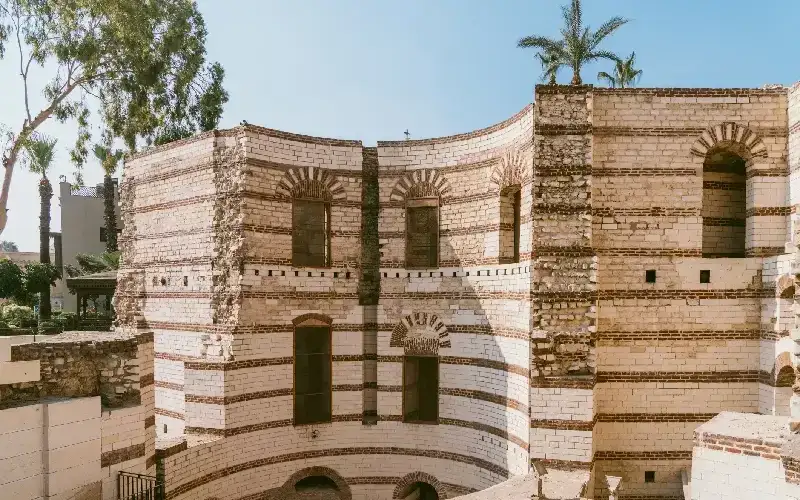
Strategic location and early significance
The strategic value of the Fortress of Babylon stemmed primarily from its exceptional geographical placement at a critical juncture in ancient Egypt. This Roman stronghold commanded respect not merely for its imposing architecture but for the economic and military advantages its location provided.
Position between Lower and Middle Egypt
Situated precisely at the boundary between Lower and Middle Egypt on the eastern bank of the Nile, the fortress of Babylon occupied a position of unmatched importance. This location allowed Roman forces to effectively control movement between the two major regions of Egypt. Consequently, the fortress functioned as a crucial military checkpoint that facilitated Roman dominance over both the northern delta and southern territories. The site was specifically chosen to place the fortress in the middle of Egypt, connecting the tribal side with the seaside, thereby enabling Romans to suppress any rebellion whether from north or south.
Control over Nile-Red Sea canal trade
The fortress guarded a vital waterway—an ancient canal linking the Nile with the Red Sea. Initially attempted during the twenty-sixth Pharaonic dynasty with limited success, this canal gained prominence under Persian rule between 521 and 486 BCE. Emperor Trajan later rebuilt this strategic waterway, enhancing its importance for trade. The canal's significance extended beyond Egypt's borders, facilitating commerce between the Mediterranean and Red Sea, which made the fortress a linchpin in the regional trade network.
Toll collection and military checkpoint
As vessels traveled up or down the Nile, they paid obligatory tolls at the Babylon fortress, generating substantial revenue for the Roman administration. This economic function transformed the site into a crucial income source while simultaneously allowing monitoring of goods moving throughout Egypt. By 335 CE, the Romans had redirected shipping routes from Alexandria to the Babylon fortress, further cementing its commercial significance. At its height, the fortress boasted impressive defenses—a military harbor, forty-foot outer walls, and a moat—which secured both toll collection and military operations, effectively making it "an invincible fortress against enemies".
The fortress held significant strategic value due to its location. It controlled movement between Lower and Middle Egypt, guarded a vital canal linking the Nile with the Red Sea, and served as a toll collection point for vessels traveling up or down the Nile.
Customize Your Dream Vacation!
Get in touch with our local experts for an unforgettable journey.
Plan Your TripConstruction and Roman influence
The physical evolution of the Fortress of Babylon occurred primarily under two Roman emperors, marking significant phases in its development.
Trajan's canal and harbor development
Emperor Trajan (98-117 AD) made the first major Roman contribution by reopening an ancient canal linking the Nile with the Red Sea. He relocated its mouth to what is now Old Cairo, where he established a fortified harbor. This stone harbor featured a massive embankment that provided foundation for future expansion.
Diocletian's expansion and fortification
Notably, Emperor Diocletian (285-305 AD) transformed the site around 300 AD into a substantial military installation. His expansion represented a direct response to the Crisis of the Third Century that had threatened the Roman Empire's stability. Diocletian's fortress enclosed approximately three hectares within a five-sided perimeter, with the canal forming its median line.
Architectural features: towers, walls, and layout
The fortress walls combined five layers of limestone alternating with three layers of red brick, creating structures of remarkable durability that have survived seventeen centuries. Its impressive round towers reached 10 meters in height with diameters of 31 meters. Walls measured approximately 3 meters thick, with floors situated 6 meters below modern street level.
Comparison with other Roman fortresses in Egypt
Significantly, Babylon's fortifications were more substantial than other Diocletianic fortresses throughout Egypt. Unlike typical Roman fortresses, Babylon featured massive circular towers flanking the harbor entrance. Wall heights ranged from 4 meters at Nag el-Hagar to 11 meters at Babylon, reflecting its paramount strategic importance.
Initially a military stronghold, the fortress later became a religious center. It housed important churches like the Hanging Church and the Church of St. George, and was the seat of a Christian bishopric. After the Arab conquest in 641 CE, it transformed into a predominantly Christian quarter under Islamic rule.
Religious and political role through centuries
Beyond its military importance, the fortress of Babylon evolved into a significant religious center throughout its history. The town became the seat of a Christian bishopric sometime before the first half of the 5th century, as evidenced by Bishop Cyrus of Babylon's attendance at the Council of Ephesus in 449 AD.
Christian bishopric and the Council of Chalcedon
After the Council of Chalcedon in 451, the bishopric experienced a profound split. Most recorded bishops rejected the council's decisions, embracing the monophysite doctrine that became central to Coptic Christianity. Eventually, Babylon ceased being a residential bishopric but remained listed as a titular see by both Eastern Orthodox and Catholic Churches.
The Hanging Church and Church of St. George
The fortress area houses several important churches. The Hanging Church, dedicated to the Virgin Mary, gained prominence in the 11th century when it became the official residence of the Coptic Pope. Meanwhile, the Church of St. George, built over a fortress tower in the 10th century, became the seat of the Greek Orthodox Patriarch of Alexandria in the 15th century.
Siege during the Arab conquest of Egypt
In 640, the fortress withstood a seven-month siege by Arab forces under general 'Amr ibn al-'As. The Byzantine defenders finally surrendered on Easter Monday, April 9, 641, marking a pivotal moment in Egyptian history.
Transformation under Byzantine and Islamic rule
After the conquest, the fortress area gradually transformed into a primarily Christian quarter. The Arabs named it "Qasr ash-Sham'a" (Wax Castle). Under Islamic rule, Christians were permitted to build churches within the fortress walls, establishing what would later become known as "Coptic Cairo".
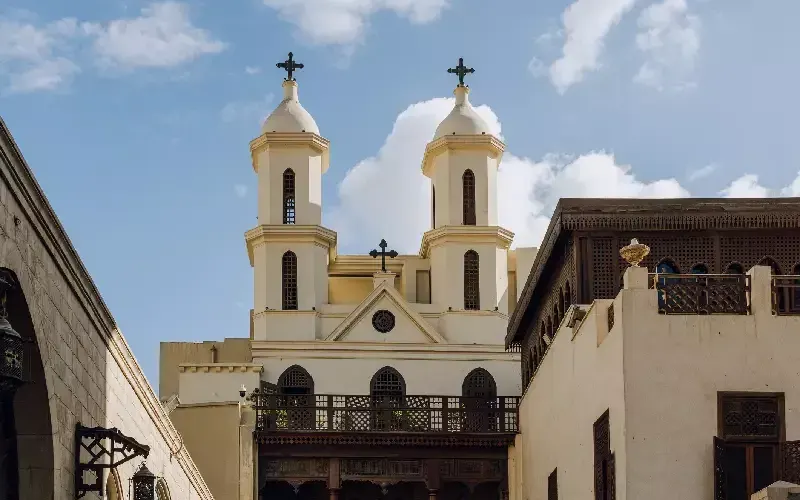
The fortress features impressive round towers reaching 10 meters in height with diameters of 31 meters. Its walls, approximately 3 meters thick, combine five layers of limestone alternating with three layers of red brick, demonstrating remarkable durability over seventeen centuries.
The Fortress of Babylon stands as a remarkable testament to Egypt's layered history, connecting ancient Roman military engineering with subsequent religious developments. Throughout the centuries, this structure evolved from its initial purpose as a strategic military checkpoint to become the heart of what we now recognize as Coptic Cairo. Significantly, the fortress withstood the test of time through multiple ruling powers—Roman, Byzantine, and Islamic—each adding distinctive elements to its historical narrative.
Emperor Diocletian's exceptional fortification techniques resulted in a structure far more substantial than typical Roman fortresses in Egypt. Therefore, much of the original construction still survives today, despite seventeen centuries of weather, conflict, and urban development. The fortress walls, combining limestone and red brick layers, exemplify Roman architectural innovation adapted specifically for this strategically vital location.
Beyond its architectural significance, the fortress served multiple crucial functions throughout history. Initially, it controlled movement between Lower and Middle Egypt while supervising toll collection from vessels navigating the Nile. After that, it transformed into a religious center following the spread of Christianity, eventually housing important churches like the Hanging Church and the Church of St. George. The seven-month siege during the Arab conquest in 640-641 CE marked another pivotal moment in the fortress's history, after which it became predominantly a Christian quarter under Islamic rule.
The fortress remains a unique historical monument where visitors can simultaneously witness Roman military engineering, early Christian development, and the peaceful coexistence of different faiths under subsequent Islamic governance. Undoubtedly, the Fortress of Babylon represents one of the most historically complex and culturally rich archeological sites in Egypt, embodying centuries of political, military, and religious history within its ancient walls.
Yes, the Fortress of Babylon is open to visitors daily. It's part of the area known as Coptic Cairo, which includes several other historical sites and churches. Visitors can explore the ancient fortifications and learn about its rich history spanning Roman, Byzantine, and Islamic periods.
Some theories suggest an early foundation during the New Kingdom or even earlier, but the Roman reconstruction under Emperor Diocletian in the 3rd century AD is the best-documented phase.
During the Arab conquest in 641 CE, the fortress became a key battleground. After its surrender, it marked an important administrative and cultural transition as Arab rule spread through Egypt.
Yes. The area around the fortress includes the Coptic Museum, which houses one of the world’s largest collections of Coptic art, manuscripts, and artifacts linked to Egypt's Christian heritage.
The fortress area contains several historic churches and monasteries, including the Hanging Church, the Church of St. Sergius and Bacchus, and the Ben Ezra Synagogue, making it a major spiritual center.
Visitors can access the fortress via the Mar Girgis Metro Station, which stops directly in Coptic Cairo, making it one of the most convenient historical sites to reach in Cairo.
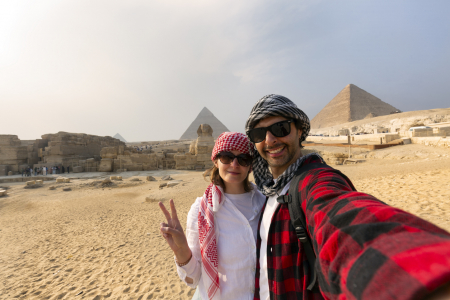
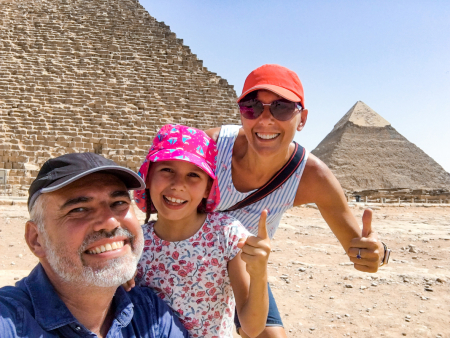

The Great Pyramids of Giza, Egypt’s iconic monuments, showcase ancient engineering brilliance and remain the last wonder of the ancient world, continuing to fascinate visitors and researchers alike.

The Egyptian Museum in Cairo houses over 170,000 ancient artifacts, including Tutankhamun's complete collection and golden death mask. Opened in 1902, it's the world's largest repository of Egyptian antiquities.

Khan el-Khalili is Cairo’s legendary medieval bazaar, where centuries-old Islamic architecture, vibrant trade, and timeless cafés create a living cultural landmark.

The Great Sphinx of Giza, with its lion body and pharaoh head, represents ancient Egyptian artistry, symbolic power, and enduring cultural fascination.

Tanoura is a traditional Egyptian Sufi dance known for its colorful spinning skirts, spiritual rhythm, and deep roots in ancient mystic traditions.

Saqqara, Egypt's ancient necropolis, features Djoser's Step Pyramid—the world's oldest. Spanning 3,000 years, it preserves royal tombs and sacred animal burials.

The Valley Temple at Giza, built 2570 BCE by Khafre, features 16 granite columns and hosted sacred afterlife rituals. Explore Fourth Dynasty architecture.

The Citadel of Cairo is a historic medieval fortress and royal complex, showcasing centuries of Egyptian power, Mamluk architecture, and Islamic heritage, now preserved as a UNESCO World Heritage Site.

Khufu's Solar Boat is a 142-foot cedar vessel discovered 1954 near the Great Pyramid. Built without nails 4,500 years ago, it's now at Grand Egyptian Museum.

St. George Church in Old Cairo, founded 684 AD, features unique circular design, sacred healing relics & underground chapel linked to the Holy Family's refuge.

Pyramids Sound and Light Show transforms Giza into open-air theater with 50 minutes of narration, music & lighting bringing ancient Egyptian history alive.

The Djoser Pyramid at Saqqara is Egypt's first pyramid, built 2600 BCE by architect Imhotep. Standing 62.5m tall, it reopened to visitors in 2020.

The Hanging Church in Old Cairo is a 1,300-year-old Coptic sanctuary built on Babylon Fortress. Free entry, open daily 9 AM-5 PM, dress modestly required.
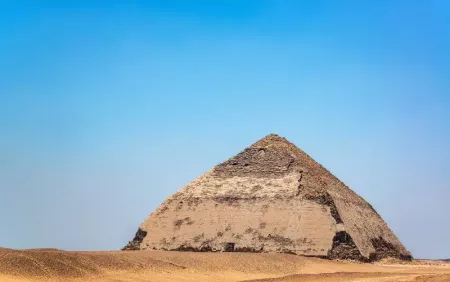
The Bent Pyramid at Dahshur features a rare bent profile created by ancient construction adjustments, offering insight into Egypt’s earliest attempts at smooth-sided pyramids.

Coptic Cairo features 4th-century churches and recent tomb discoveries revealing early Christian heritage. Explore the Hanging Church, Abu Serga & sacred sites.
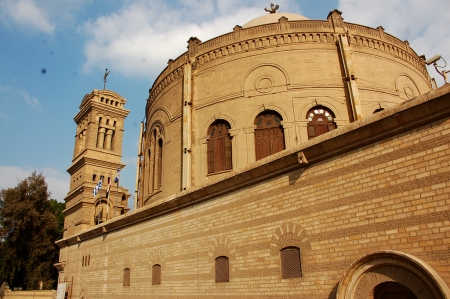
Saint Barbara’s Church in Coptic Cairo is one of Egypt’s oldest Christian monuments, dating back to the 5th–6th century. Known for housing the relics of Saint Barbara, the church reflects centuries of Coptic heritage, architectural evolution, and deep spiritual significance.

Explore the Fortress of Babylon, a major Roman fort in Old Cairo known for its strategic location, massive towers, and enduring historical significance.
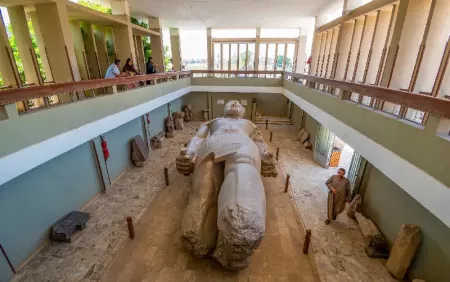
Memphis Necropolis is Egypt’s ancient royal burial site, home to pyramids, tombs, and monuments that reflect the early development of pharaonic civilization.
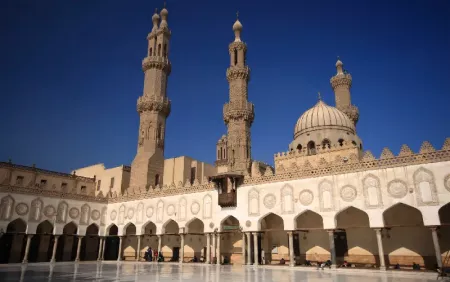
Al-Azhar Mosque is a landmark of Islamic scholarship and Fatimid architecture, home to the world’s second-oldest university and a symbol of Cairo’s spiritual heritage.
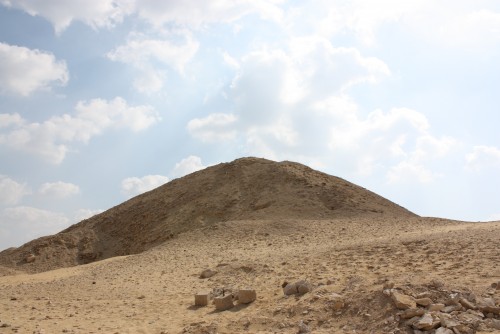
Teti’s Pyramid in Saqqara is an Old Kingdom monument built for the first king of the Sixth Dynasty. Known for its Pyramid Texts and unique mortuary chapel, it remains one of Egypt’s most historically important royal tombs.
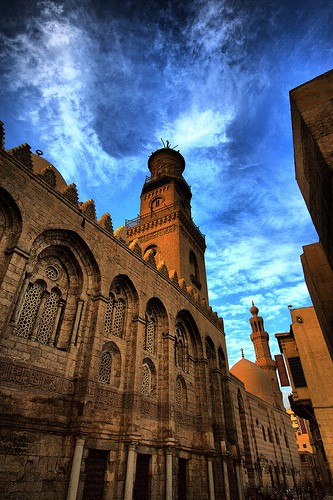
Al Muizz Street is one of Cairo’s oldest and most vibrant historic avenues, showcasing centuries of Islamic architecture. Lined with mosques, palaces, and bustling markets, it offers a captivating walk through Egypt’s medieval past.
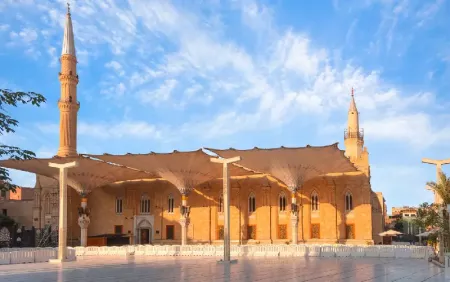
Al-Hussein Mosque is one of Cairo’s most sacred Islamic landmarks, built in 1154 and revered for housing the head of Imam Hussein. Located by Khan El-Khalili, it blends centuries of architectural heritage and remains a major pilgrimage site.
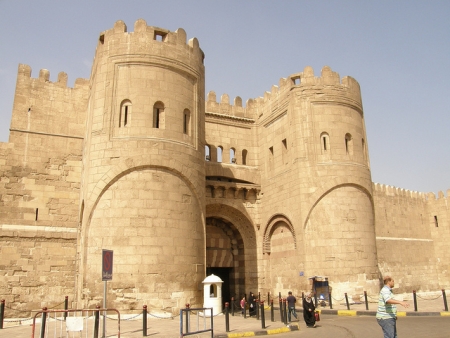
Bab al-Futuh is an 11th-century Fatimid gate in Old Cairo, famous for its massive round towers and strategic role in the city’s medieval fortifications.
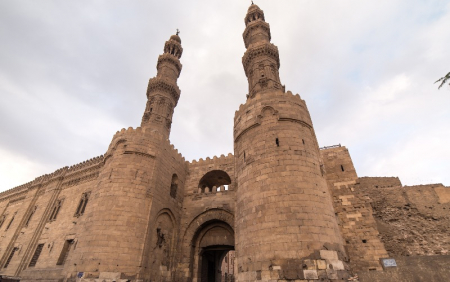
Bab Zuweila is one of Cairo’s last surviving medieval gates, built in 1092 CE by the Fatimid vizier Badr al-Jamali. Famous for its towering twin bastions, massive wooden doors, and later Mamluk minarets, it served as a defensive stronghold, execution site, and ceremonial gateway. Today, it stands as one of Cairo’s most iconic historic monuments.
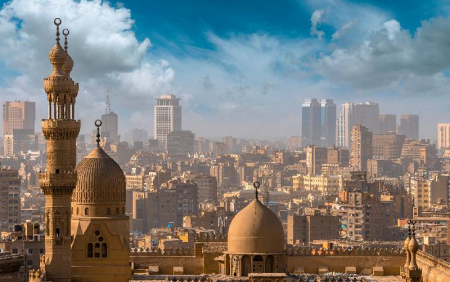
Al Rifai Mosque in Cairo blends Neo-Mamluk architecture with royal history. Completed in 1912, it serves as both a majestic mosque and mausoleum for Muhammad Ali’s family.
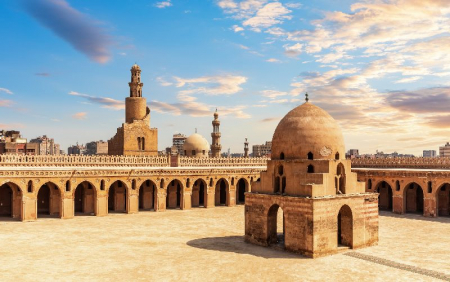
The Ibn Tulun Mosque, Cairo’s oldest well-preserved mosque, dates back to 879 CE. Famous for its vast square layout, intricate arches, and 128 ornate stucco windows, it remains a pinnacle of early Islamic architecture and a must-visit historical landmark.
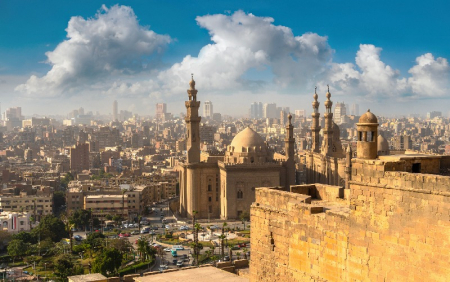
The Sultan Hassan Mosque, built in the 14th century, is a Bahri Mamluk architectural marvel in Cairo, renowned for its grand portal, extensive madrasas, and historic significance.

The Suez Canal, Egypt’s iconic waterway, connects Africa and Asia, handling thousands of ships yearly and shaping international trade.
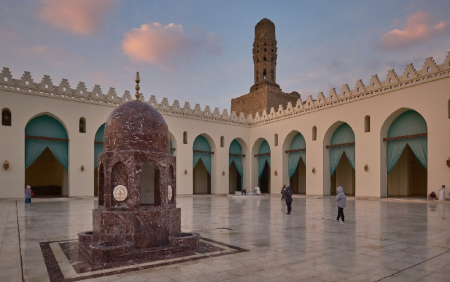
Al-Hakim Mosque, Cairo, is a stunning Fatimid-era mosque built between 990–1013 CE. Famous for its grand courtyard, distinctive minarets, and rich history, it remains a key cultural and religious landmark.
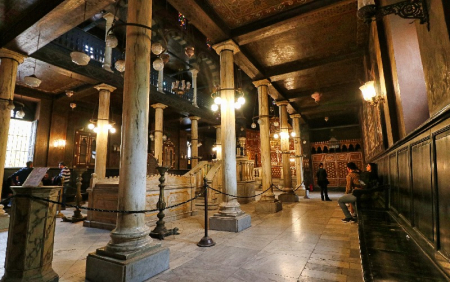
The Ben Ezra Synagogue, founded in the 11th century in Old Cairo, is Egypt’s oldest Jewish monument and the discovery site of the renowned Cairo Geniza.