Home
Home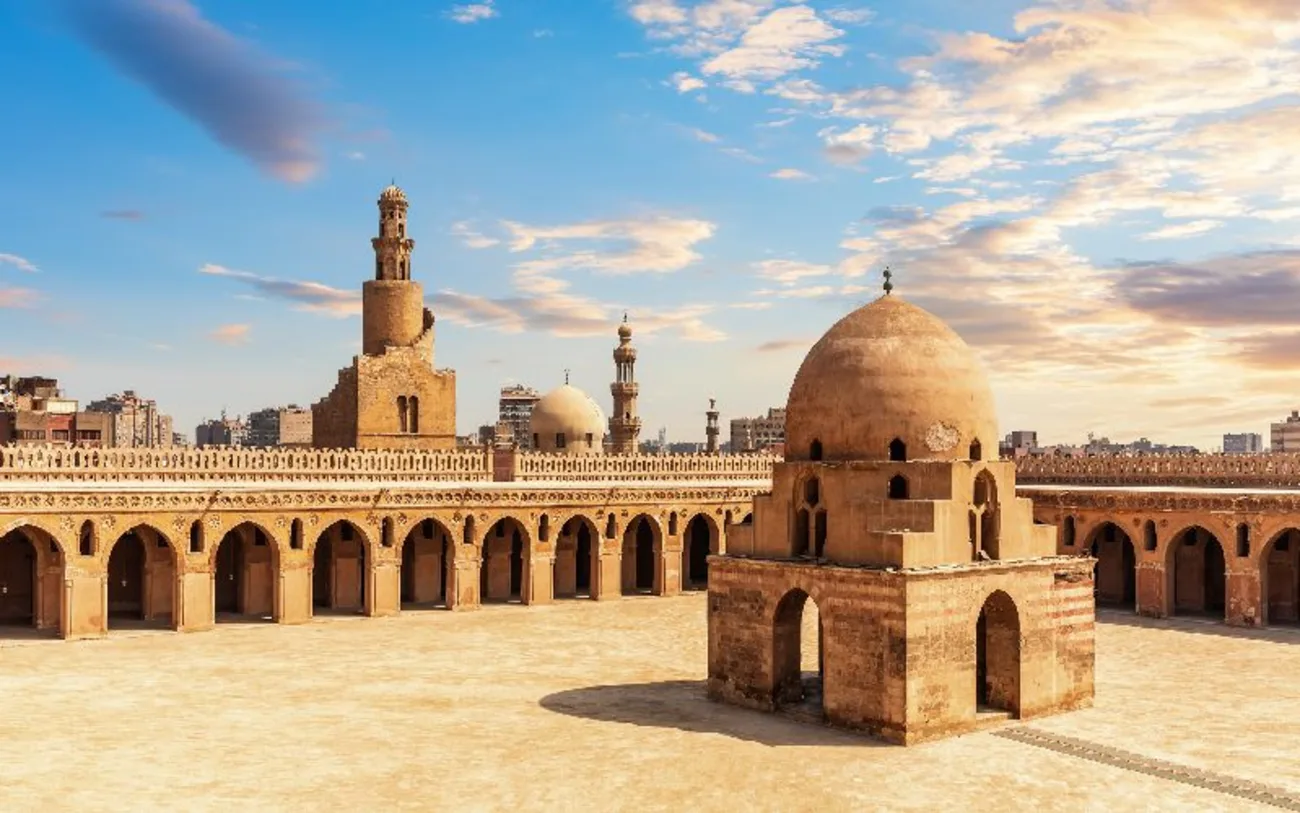
The Ibn Tulun Mosque in Cairo, built between 876–879 CE by Ahmad ibn Tulun, is Egypt’s oldest well-preserved mosque and one of the largest in the city, covering 26,318 m². Its square layout features a vast open courtyard, roofed arcades with pointed arches, 128 intricately decorated stucco windows, and 42 doors, half original. This architectural masterpiece remains a remarkable testament to early Islamic design and engineering, captivating visitors and scholars alike.
The Founding of the Ibn Tulun Mosque
Ahmad ibn Tulun, a Turkish military officer who served as the Abbasid governor of Egypt from 868 to 884 CE, established de facto autonomous rule over Egypt and parts of the Levant during his tenure. His ambition led to the creation of a new administrative capital called al-Qata'i in 870 CE, located northeast of the existing settlements of Fustat and al-'Askar.
Ahmad ibn Tulun and the rise of al-Qata'i
Al-Qata'i was designed as a model city inspired by Samarra, the Abbasid capital in Iraq. The city stretched westward for about two kilometers and featured administrative buildings, markets, a hospital, and even a hippodrome. At the heart of this new urban development stood Ibn Tulun's grand mosque, directly connected to his palace through a private door—symbolizing the close relationship between religious and political authority.
Construction timeline: 876–879 CE
According to the medieval historian al-Maqrizi, construction of the mosque began in 876 CE. The original inscription slab discovered in the mosque identifies the completion date as Ramadan 265 AH, corresponding to April-May 879 CE. This rapid three-year construction project was overseen directly by Ibn Tulun to meet the needs of his expanding capital. The architect was reportedly a non-Muslim named al-Nasrani, possibly Christian, who had previously designed the Aqueduct of Basatin.
The legend of Gebel Yashkur and Noah's Ark
The mosque was constructed on a small hill called Gebel Yashkur, meaning 'The Hill of Thanksgiving'. Local legend holds that this hill was where Noah's Ark came to rest after the Great Flood, rather than at Mount Ararat. Ibn Tulun deliberately leveled the hilltop to create a solid foundation for his grand project, building the mosque into the living rock. This strategic location offered protection from Nile floods and earthquakes.
The mosque's original purpose and location
The Ibn Tulun Mosque was built to serve as al-Qata'i's central congregational mosque, becoming the third such mosque in what is now Cairo. It facilitated Friday prayers and communal gatherings for the growing population. The historian al-Maqrizi reported that a new mosque had to be built because the existing ceremonial mosque in Fustat could not accommodate Ibn Tulun's personal regiment during Friday prayers. Ibn Tulun's administrative palace, the Dar al-Imara, adjoined the mosque directly on its southeastern side, and a private doorway allowed him direct entry to the mosque.
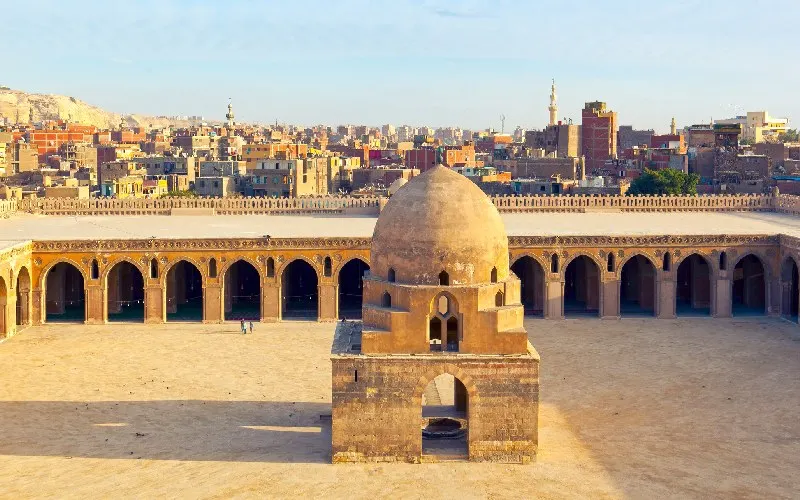
The Ibn Tulun Mosque was built between 876 and 879 CE by Ahmad ibn Tulun, the Turkish governor of Egypt and Syria at that time.
Architectural Design and Layout
The architectural magnificence of the Ibn Tulun Mosque lies in its distinctive design elements and innovative use of materials, covering an impressive area of 26,318 square meters (6.5 acres). Unlike most Egyptian religious buildings of its time, which primarily used stone, this monumental structure was constructed following Abbasid-Samarran traditions.
Use of brick and stucco in construction
Built entirely of well-fired red brick faced with carved stucco, the Ibn Tulun Mosque represents a significant departure from traditional Egyptian construction methods. This architectural choice deliberately evoked the styles of Samarra, Ibn Tulun's homeland. The mosque's walls, which appear light coffee-colored today, are crowned with unique crenellations known as 'arais, resembling abstract human shapes. These distinctive decorative elements extend throughout the structure, especially visible in the elaborate stucco carvings that adorn the arches.
The hypostyle prayer hall and courtyard
The mosque follows a classic hypostyle plan with a spacious central courtyard (sahn) measuring approximately 92 meters square. This open courtyard is surrounded by arcades supported by square brick piers instead of columns—an innovation in Egypt directly imported from Samarra. The prayer hall on the qibla (southeastern) side features five parallel aisles with thirteen pointed arches each, while the other three sides contain two arcades each. The systematic use of pointed arches spanning between piers promotes better ventilation and light distribution throughout the expansive interior.
The ziyada: outer enclosure and its function
One of the mosque's most distinctive features is its ziyada, a wide outer enclosure (approximately 19 meters wide) surrounding the structure on three sides. This buffer zone served multiple purposes: separating sacred space from surrounding urban activities, housing ablution facilities and toilets, and accommodating Friday markets. The inclusion of this ziyada brings the mosque's total dimensions to nearly a perfect square.
The 128 windows and their decorative grilles
The mosque walls contain 128 windows pierced with intricate stucco grilles, each featuring a unique geometric pattern. These windows create remarkable lighting effects as sunlight filters through, projecting geometric patterns onto the interior surfaces throughout the day. While only three or four grilles remain original from Ibn Tulun's time, the others represent various periods of restoration.
The role of the dikka and minbar
The prayer hall contains a dikka (raised platform) positioned between two piers, which served as a place for Quran recitation. Nearby stands an ornate wooden minbar (pulpit) featuring geometric inlays characteristic of Mamluk craftsmanship. Both elements, added during the Mamluk period restoration by Sultan Lajin in 1296, blend harmoniously with the mosque's original Abbasid foundations.
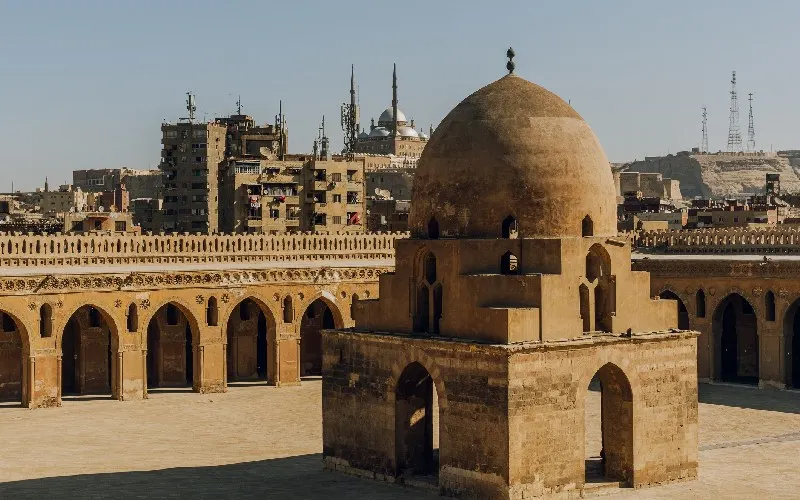
The mosque features a large open courtyard, 128 pierced stucco windows with intricate designs, a spiral minaret, and a wide outer enclosure called ziyada. It's also notable for its use of brick and stucco instead of stone in its construction.
Key Features and Artistic Elements
The Ibn Tulun Mosque houses exceptional artistic elements that showcase the Abbasid craftsmanship of the 9th century. These features remain remarkably preserved despite numerous renovations throughout history.
The main and secondary mihrabs
Six mihrabs grace the mosque, with the main concave niche positioned centrally on the qibla wall. This principal mihrab features Tulunid-era stucco decoration and Coptic-style marble columns on each side. The other five mihrabs are flat and represent different periods—Tulunid, Fatimid, and Mamluk—each with distinctive decorative elements. Notably, the westernmost mihrab, installed by al-Afdal Shahanshah, displays Persian influences with ornate decorations.
Stucco decoration and Kufic inscriptions
The mosque houses Egypt's oldest and richest collection of stucco decoration. Intricate geometric and floral patterns adorn the arches, soffits, and window frames. These designs draw heavily from Samarra styles A and B, yet also incorporate Roman and Byzantine influences. Running around the upper walls are wooden friezes with Kufic calligraphy, including the Shahada (Muslim declaration of faith).
The domed fountain and its Mamluk origins
At the courtyard center stands an octagonal fountain (fisqiya) covered by a dome. This structure dates from Sultan Lajin's 1296 restoration, replacing the original Tulunid fountain that burned down in the late 10th century.
The spiral minaret: design and debates
The mosque's iconic minaret features a rectangular base transitioning to a cylindrical section with an external spiral staircase. While clearly inspired by Samarra's Malwiya minaret, scholarly debate continues about whether the current structure dates entirely from Lajin's 1296 restoration or incorporates elements from the original Tulunid construction.
Influence of Samarra and Abbasid style
Throughout the mosque, Abbasid influences from Samarra are evident. The stucco decoration techniques, minaret design, and architectural elements all reflect Ibn Tulun's childhood in Samarra. These Samarran influences, consequently merged with Egyptian craftsmanship, created a unique artistic legacy that influenced later Islamic and even Gothic architecture.
The mosque was built on a small hill called Gebel Yashkur, which according to local legend, was where Noah's Ark came to rest after the Great Flood. This strategic location offered protection from Nile floods and earthquakes.
Customize Your Dream Vacation!
Get in touch with our local experts for an unforgettable journey.
Plan Your TripHistorical Transformations and Restorations
Throughout the centuries, the Ibn Tulun Mosque underwent significant transformations as successive rulers modified its structure.
Fatimid and Mamluk interventions
The Fatimid period saw the mosque used for ceremonial purposes, particularly during Ramadan. In 995, Caliph al-'Aziz rebuilt the original fountain that had previously burned down. Subsequently, Badr al-Jamali restored the mosque and placed an inscription above what remains the main entrance today. His son, al-Afdal Shahinshah, added a flat stucco mihrab to one of the prayer hall's piers in 1094.
The 1296 restoration by Sultan Lajin
After hiding in the deserted mosque to escape punishment for his role in assassinating Sultan al-Ashraf Khalil, Sultan Lajin vowed to restore the structure if he survived. Upon becoming sultan, he fulfilled this pledge in 1296. His comprehensive renovation included rebuilding the minaret, reconstructing the fountain with a domed cover, renovating the mihrab's decoration, and adding a new wooden minbar.
19th-century decline and alternate uses
Under Muhammad Ali's rule, the mosque served variously as a military hospital, salt warehouse, and blacksmith workshop. In 1846, Clot Bey converted it into a mental asylum before it eventually became a poorhouse. This repurposing led to structural damage, including the collapse of prayer hall arches in 1877.
20th-century conservation efforts
Julius Franz Pasha, heading the Comité de Conservation des Monuments de l'Art Arabe, closed the building in 1880 and evicted its inhabitants. Major reconstructions occurred in 1927-29, focusing on the ceiling and damaged arches.
Controversies in modern restoration
The 2000-2005 restoration project, costing 2.5 million USD, stirred debate among preservation experts. The courtyard paving with stone caused humidity problems along the walls. Critics questioned whether some interventions prioritized visual appeal over historical authenticity.
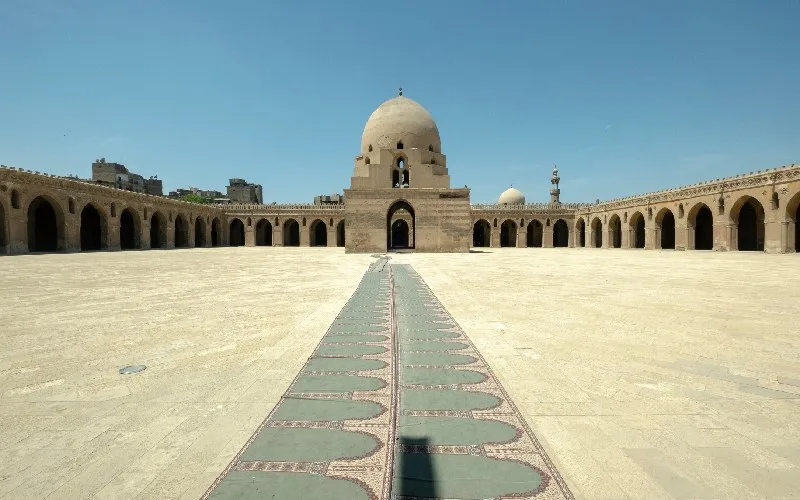
The mosque has undergone several restorations, most notably by Sultan Lajin in 1296. In the 20th century, major reconstruction efforts were made, and a controversial restoration project was carried out between 2000-2005, costing 2.5 million USD.
The Ibn Tulun Mosque stands as a remarkable testament to early Islamic architecture, bridging Abbasid-Samarran traditions with Egyptian craftsmanship. Throughout its 1,100-year history, this monumental structure has witnessed the rise and fall of numerous dynasties while retaining much of its original character. Ahmad ibn Tulun's ambitious vision materialized in this architectural masterpiece, which notably introduced several innovations to Egyptian mosque design, including the use of brick and stucco rather than stone, pointed arches, and the distinctive ziyada enclosure.
Subsequent rulers left their marks on the mosque as well. Fatimid caliphs utilized it for ceremonial purposes, while Sultan Lajin's comprehensive 1296 restoration saved the structure from potential ruin. Despite periods of neglect during the 19th century when the building served various non-religious functions, the mosque's fundamental architectural integrity survived.
The mosque's artistic elements reflect a fascinating cultural synthesis. The stucco decorations showcase Samarran influences blended with local Egyptian traditions, while later Mamluk additions such as the minbar and fountain demonstrate how the structure evolved aesthetically across centuries. The iconic spiral minaret remains one of the most recognizable features of Cairo's historic skyline.
Conservation efforts beginning in the late 19th century ultimately preserved this architectural treasure for future generations. Though restoration approaches have sparked debates among preservationists, these controversies nevertheless underscore the mosque's immense historical and cultural significance.
The Ibn Tulun Mosque represents not merely a religious building but a physical chronicle of Egyptian Islamic history. Its architecture, from the expansive courtyard to the intricate stucco window grilles, reveals how artistic traditions flowed between regions of the medieval Islamic world. Visitors keen to explore Cairo's Islamic heritage further can experience the city's most iconic mosques, medieval streets, and living traditions on an Islamic Cairo and Egyptian Show tour. Those looking to discover Cairo more broadly — from the Pyramids to Coptic Cairo and Khan El Khalili — will find everything covered in a Cairo City Tour, one of the finest ways to experience the full depth of this extraordinary city. Undoubtedly, this magnificent structure will continue to stand as an enduring monument to the rich architectural heritage of Islamic civilization.
While primarily serving as a mosque, it has also been used as a military hospital, salt warehouse, blacksmith workshop, mental asylum, and poorhouse during different periods in the 19th century.
The Ibn Tulun Mosque follows a traditional hypostyle plan with a central open courtyard, surrounded by arcaded prayer halls, and an outer enclosure (ziyada) that provides additional space for worshippers.
The mosque features a unique spiral minaret inspired by the Great Mosque of Samarra in Iraq, making it one of the most distinctive Islamic architectural elements in Cairo.
The mosque showcases early Islamic architecture through its use of brick construction, geometric and vegetal stucco decorations, pointed arches, and the hypostyle prayer hall layout.
The mosque has long been a center of worship and scholarship in Cairo, hosting daily prayers, Friday sermons, and religious education for the surrounding community.
Its well-preserved state, monumental size, historic significance, and unique architectural features, including the spiral minaret and intricately decorated windows, draw visitors, historians, and architecture enthusiasts from around the world.
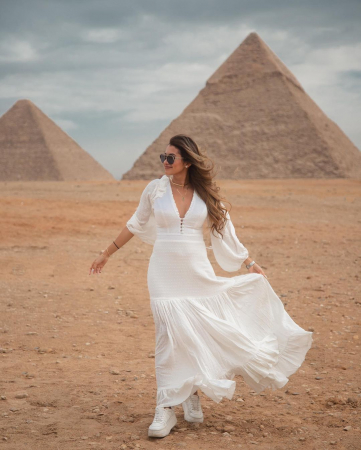
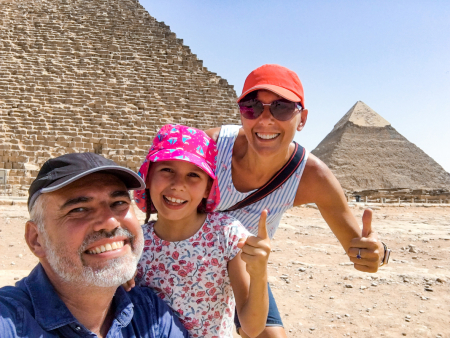

The Great Pyramids of Giza, Egypt’s iconic monuments, showcase ancient engineering brilliance and remain the last wonder of the ancient world, continuing to fascinate visitors and researchers alike.

The Egyptian Museum in Cairo houses over 170,000 ancient artifacts, including Tutankhamun's complete collection and golden death mask. Opened in 1902, it's the world's largest repository of Egyptian antiquities.

Khan el-Khalili is Cairo’s legendary medieval bazaar, where centuries-old Islamic architecture, vibrant trade, and timeless cafés create a living cultural landmark.

The Great Sphinx of Giza, with its lion body and pharaoh head, represents ancient Egyptian artistry, symbolic power, and enduring cultural fascination.

Tanoura is a traditional Egyptian Sufi dance known for its colorful spinning skirts, spiritual rhythm, and deep roots in ancient mystic traditions.

Saqqara, Egypt's ancient necropolis, features Djoser's Step Pyramid—the world's oldest. Spanning 3,000 years, it preserves royal tombs and sacred animal burials.

The Valley Temple at Giza, built 2570 BCE by Khafre, features 16 granite columns and hosted sacred afterlife rituals. Explore Fourth Dynasty architecture.

The Citadel of Cairo is a historic medieval fortress and royal complex, showcasing centuries of Egyptian power, Mamluk architecture, and Islamic heritage, now preserved as a UNESCO World Heritage Site.

Khufu's Solar Boat is a 142-foot cedar vessel discovered 1954 near the Great Pyramid. Built without nails 4,500 years ago, it's now at Grand Egyptian Museum.

St. George Church in Old Cairo, founded 684 AD, features unique circular design, sacred healing relics & underground chapel linked to the Holy Family's refuge.

Pyramids Sound and Light Show transforms Giza into open-air theater with 50 minutes of narration, music & lighting bringing ancient Egyptian history alive.

The Djoser Pyramid at Saqqara is Egypt's first pyramid, built 2600 BCE by architect Imhotep. Standing 62.5m tall, it reopened to visitors in 2020.

The Hanging Church in Old Cairo is a 1,300-year-old Coptic sanctuary built on Babylon Fortress. Free entry, open daily 9 AM-5 PM, dress modestly required.
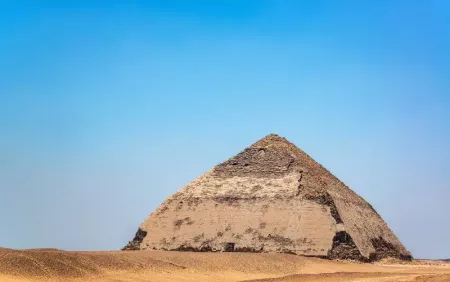
The Bent Pyramid at Dahshur features a rare bent profile created by ancient construction adjustments, offering insight into Egypt’s earliest attempts at smooth-sided pyramids.

Coptic Cairo features 4th-century churches and recent tomb discoveries revealing early Christian heritage. Explore the Hanging Church, Abu Serga & sacred sites.
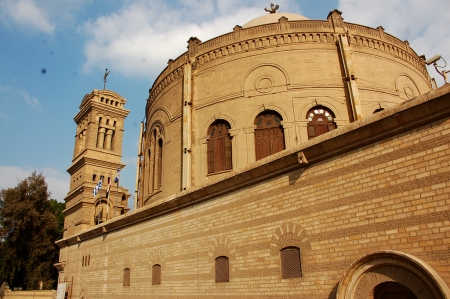
Saint Barbara’s Church in Coptic Cairo is one of Egypt’s oldest Christian monuments, dating back to the 5th–6th century. Known for housing the relics of Saint Barbara, the church reflects centuries of Coptic heritage, architectural evolution, and deep spiritual significance.

Explore the Fortress of Babylon, a major Roman fort in Old Cairo known for its strategic location, massive towers, and enduring historical significance.
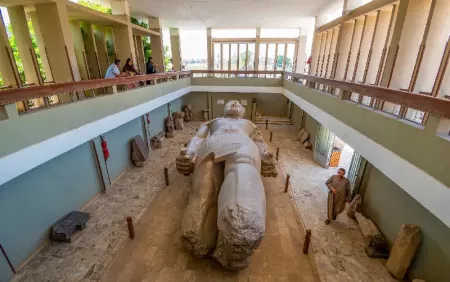
Memphis Necropolis is Egypt’s ancient royal burial site, home to pyramids, tombs, and monuments that reflect the early development of pharaonic civilization.
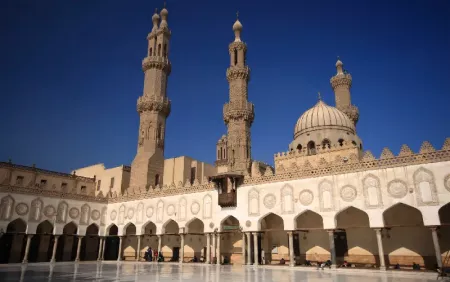
Al-Azhar Mosque is a landmark of Islamic scholarship and Fatimid architecture, home to the world’s second-oldest university and a symbol of Cairo’s spiritual heritage.
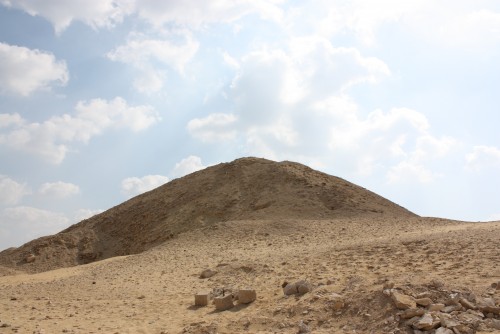
Teti’s Pyramid in Saqqara is an Old Kingdom monument built for the first king of the Sixth Dynasty. Known for its Pyramid Texts and unique mortuary chapel, it remains one of Egypt’s most historically important royal tombs.
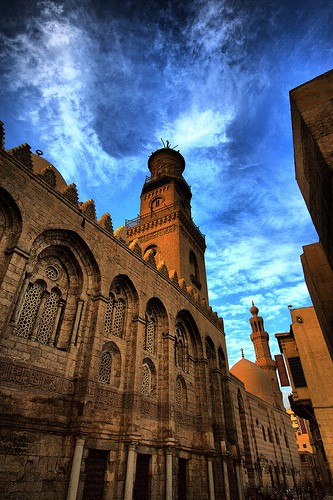
Al Muizz Street is one of Cairo’s oldest and most vibrant historic avenues, showcasing centuries of Islamic architecture. Lined with mosques, palaces, and bustling markets, it offers a captivating walk through Egypt’s medieval past.
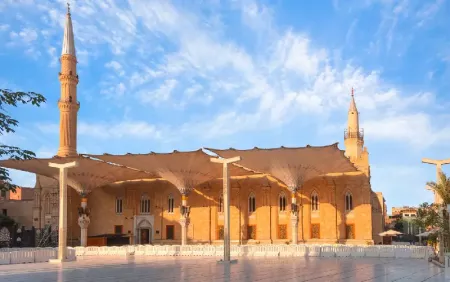
Al-Hussein Mosque is one of Cairo’s most sacred Islamic landmarks, built in 1154 and revered for housing the head of Imam Hussein. Located by Khan El-Khalili, it blends centuries of architectural heritage and remains a major pilgrimage site.
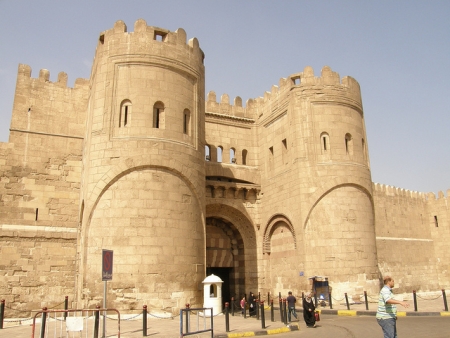
Bab al-Futuh is an 11th-century Fatimid gate in Old Cairo, famous for its massive round towers and strategic role in the city’s medieval fortifications.
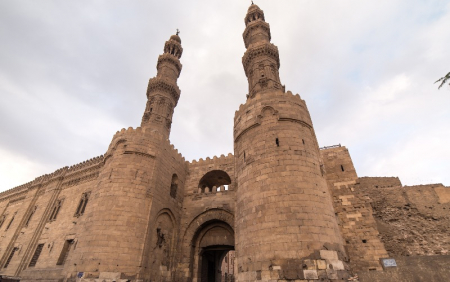
Bab Zuweila is one of Cairo’s last surviving medieval gates, built in 1092 CE by the Fatimid vizier Badr al-Jamali. Famous for its towering twin bastions, massive wooden doors, and later Mamluk minarets, it served as a defensive stronghold, execution site, and ceremonial gateway. Today, it stands as one of Cairo’s most iconic historic monuments.
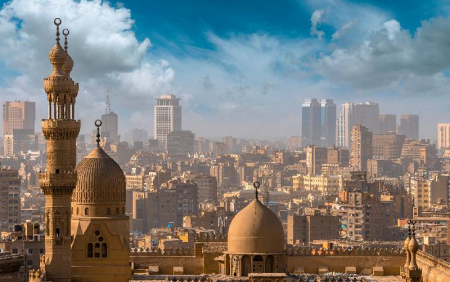
Al Rifai Mosque in Cairo blends Neo-Mamluk architecture with royal history. Completed in 1912, it serves as both a majestic mosque and mausoleum for Muhammad Ali’s family.
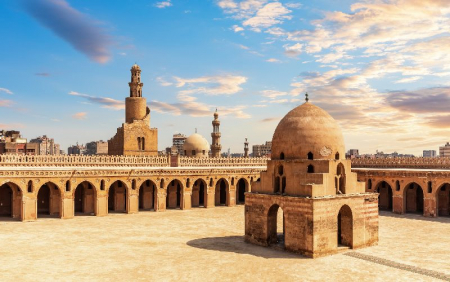
The Ibn Tulun Mosque, Cairo’s oldest well-preserved mosque, dates back to 879 CE. Famous for its vast square layout, intricate arches, and 128 ornate stucco windows, it remains a pinnacle of early Islamic architecture and a must-visit historical landmark.
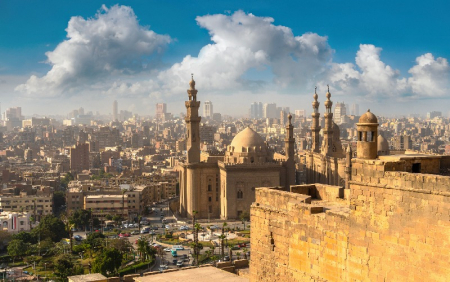
The Sultan Hassan Mosque, built in the 14th century, is a Bahri Mamluk architectural marvel in Cairo, renowned for its grand portal, extensive madrasas, and historic significance.

The Suez Canal, Egypt’s iconic waterway, connects Africa and Asia, handling thousands of ships yearly and shaping international trade.
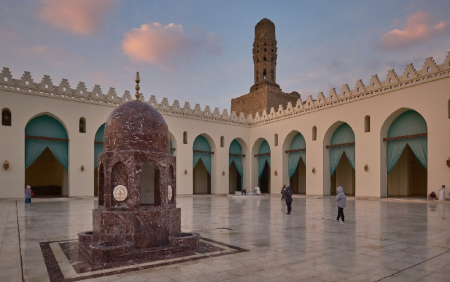
Al-Hakim Mosque, Cairo, is a stunning Fatimid-era mosque built between 990–1013 CE. Famous for its grand courtyard, distinctive minarets, and rich history, it remains a key cultural and religious landmark.
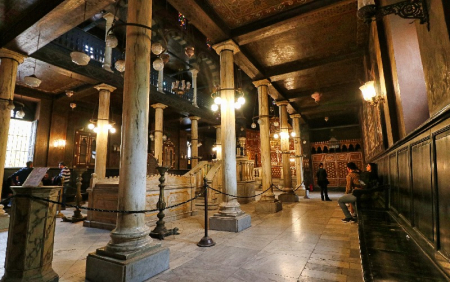
The Ben Ezra Synagogue, founded in the 11th century in Old Cairo, is Egypt’s oldest Jewish monument and the discovery site of the renowned Cairo Geniza.