Home
Home
Hidden beneath centuries of desert sand, Saqqara remains one of the greatest archaeological treasures on Earth. Even today, nearly seventy percent of this vast necropolis is still buried, quietly waiting to reveal new discoveries that continue to reshape what we know about ancient Egypt.
Stretching across a long limestone plateau southwest of modern Cairo, Saqqara served as the main burial ground for Memphis, Egypt’s ancient capital. Dominating the landscape is the Step Pyramid of Djoser, rising dramatically above the desert as the world’s oldest surviving pyramid. More than just a monument, it represents the moment when Egyptian architecture transformed forever—when mudbrick gave way to stone, and temporary structures became eternal.
Recognized by UNESCO as part of the Memphis necropolis World Heritage Site, Saqqara holds an unmatched concentration of tombs, temples, and ritual spaces spanning more than 3,000 years. From the earliest dynasties to the Roman period, generations of Egyptians chose this sacred ground as their gateway to eternity.
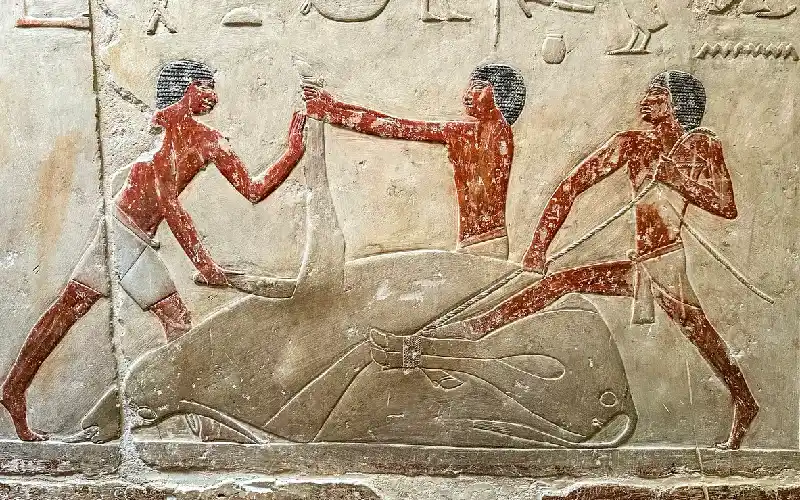
Saqqara is one of the most significant archaeological sites in the world. It shows the full development of ancient Egyptian burial practices and architecture over thousands of years, including the earliest pyramid ever built.
The Origins of Saqqara
Saqqara’s story begins at the dawn of Egyptian civilization. As early as 3050 BCE, during the First Dynasty, the plateau was already being used as a cemetery for elite officials connected to Memphis. These early burials reflect a society in the process of defining kingship, religion, and the afterlife.
Early Tombs and Mastabas
The earliest tombs at Saqqara were mastabas—rectangular, flat-roofed structures built from mudbrick and stone. Their bench-like shape gave them their name, and beneath each one lay burial chambers cut deep into the bedrock.
At first, scholars believed many of these tombs belonged to early kings. Later research revealed they were instead the final resting places of powerful officials, administrators, and nobles who served the pharaoh. Over time, these mastabas became more complex, with decorated walls, underground chambers, and early temple elements that reflected growing beliefs about the afterlife.
Why Saqqara Became Memphis’s Necropolis
Memphis was Egypt’s political and administrative heart, and it required a burial ground worthy of its status. Saqqara’s elevated position made it ideal - it was safely above Nile floodwaters and visible from great distances, reinforcing its sacred importance.
The city and the necropolis were deeply connected. Memphis provided power, wealth, and religious authority, while Saqqara offered eternal rest for the people who governed the kingdom. Together, they formed a single cultural and spiritual landscape.
The God Behind the Name
The name “Saqqara” is believed to come from Sokar, an ancient god associated with death, rebirth, and the underworld. Worshipped especially in the Memphis region, Sokar was closely linked to burial rituals and the passage of the soul into the afterlife.
Festivals held in his honor were among the most important religious events in ancient Egypt.
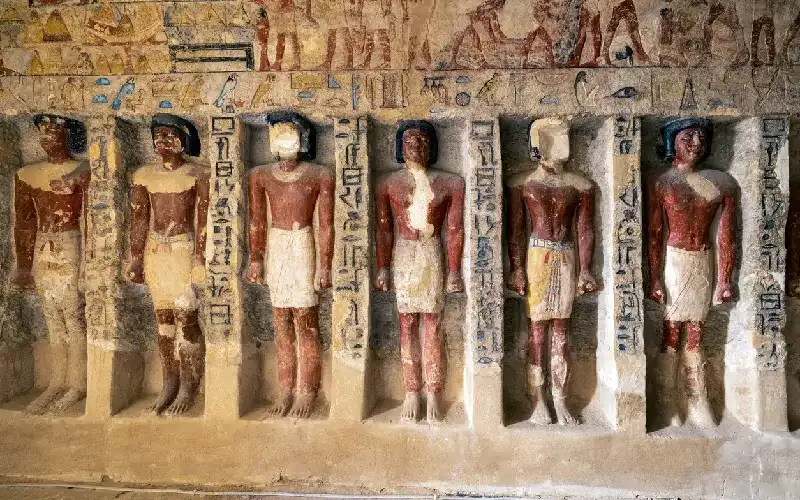
The name "Saqqara" is believed to derive from Sokar, an ancient god associated with death, rebirth, and the underworld. Worshipped especially in the Memphis region, Sokar was closely linked to burial rituals and the soul's passage into the afterlife.
The Step Pyramid of Djoser
Rising from the desert plateau, the Step Pyramid of Djoser marks one of the most revolutionary moments in human history. It was the first large-scale stone building ever constructed and forever changed how monuments were designed.
Who Was Djoser?
Pharaoh Djoser ruled Egypt during the Third Dynasty and oversaw a period of stability and innovation. His decision to build an unprecedented tomb complex in stone signaled a new era—the beginning of the Old Kingdom and the age of pyramids.
Rather than a simple mastaba, Djoser’s tomb evolved into a six-tiered pyramid that symbolized royal power, divine authority, and eternal life.
Imhotep: The Genius Behind the Vision
The mastermind behind this transformation was Imhotep, Djoser’s chief architect, engineer, and advisor. Imhotep took the familiar mastaba design and stacked it upward, creating a stepped form that reached toward the heavens.
He translated wooden columns, reed bundles, and mudbrick walls into limestone, preserving familiar shapes while making them permanent. His work unified temples, courtyards, and burial spaces into one carefully planned complex—a concept never attempted before.
Imhotep’s brilliance was so extraordinary that his name was carved alongside the king’s, an honor never before granted to a non-royal figure.
Inside the Pyramid Complex
The Step Pyramid complex is surrounded by a massive stone wall and contains ceremonial courtyards, chapels, shrines, and ritual spaces used during royal festivals. Beneath the pyramid lies a vast underground network of tunnels and chambers stretching for kilometers.
The burial chambers are lined with thousands of blue faience tiles arranged to resemble woven reeds. Their color symbolized rebirth and eternal renewal, turning the underground space into a vision of the afterlife itself.
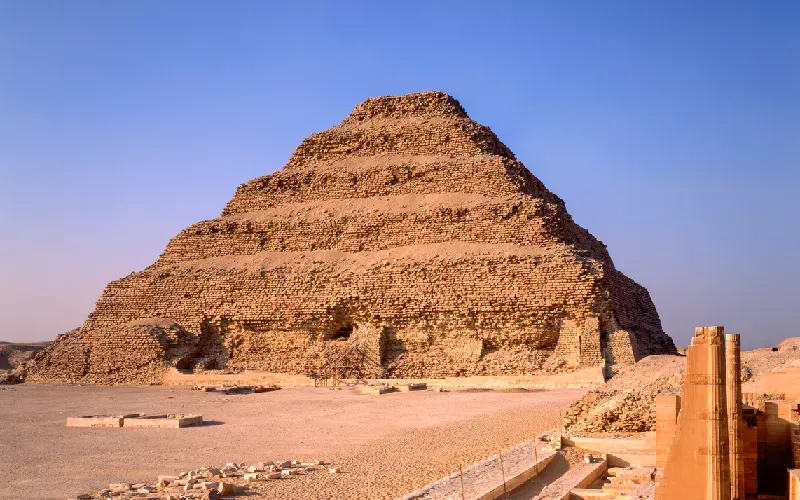
Imhotep was the architect of the Step Pyramid and one of the most influential figures in ancient history. His innovations changed architecture forever, and he was later worshipped as a god.
Customize Your Dream Vacation!
Get in touch with our local experts for an unforgettable journey.
Plan Your TripTombs and Temples Through the Ages
Saqqara was never abandoned. Instead, it evolved continuously, reflecting changes in religion, politics, and artistic style across centuries.
Old Kingdom Pyramids
Several later pharaohs built pyramids at Saqqara, including Unas, Teti, and Pepi I. Though smaller than the Geat pyramids of Giza, these monuments introduced profound religious innovations.
Unas’s pyramid was the first to include Pyramid Texts—sacred spells carved into stone walls to guide the king safely through the afterlife. These texts became a cornerstone of Egyptian funerary belief.
Tombs of Powerful Officials
Surrounding the royal pyramids are vast mastabas belonging to high-ranking officials. Among the most impressive is the tomb of Mereruka, a vizier whose burial complex contains dozens of chambers decorated with scenes of daily life, craftsmanship, hunting, and religious rituals.
Nearby tombs, such as those of Ti and Kagemni, provide incredibly detailed glimpses into ancient Egyptian society, from agriculture and trade to family life and religious practice.
New Kingdom Burials
During the New Kingdom, Saqqara regained prominence as a burial place for elite officials. Generals, priests, and royal administrators built elaborate tombs here, including Horemheb, who later became pharaoh, and Maya, the treasurer of Tutankhamun.
These tombs reflect a blend of Old Kingdom traditions and New Kingdom artistic styles, showing Saqqara's lasting prestige — and today, Saqqara can be explored as part of Egypt tours that combine it with the Pyramids of Giza for a complete picture of ancient Egyptian funerary architecture.
The Serapeum and Sacred Bulls
One of Saqqara’s most mysterious monuments is the Serapeum, an underground burial complex for the sacred Apis bulls. These animals were believed to be living manifestations of the god Ptah and were honored with elaborate funerals.
Over centuries, dozens of bulls were buried in enormous stone sarcophagi, some weighing more than sixty tons. The scale of this complex reflects the extraordinary religious importance of animal worship in ancient Egypt.
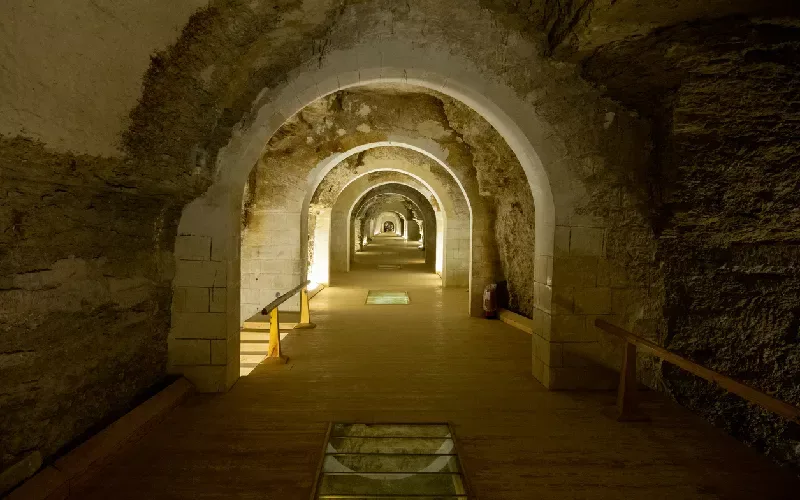
The Serapeum is an underground burial complex at Saqqara dedicated to sacred Apis bulls, believed to be living manifestations of the god Ptah. Over centuries, dozens of bulls were buried in enormous stone sarcophagi, some weighing more than sixty tons, reflecting the extraordinary importance of animal worship.
Modern Discoveries Beneath the Sand
Saqqara continues to surprise the world. In recent years, archaeologists have uncovered remarkably preserved tombs filled with colorful reliefs, statues, and inscriptions that look almost newly carved.
The tomb of Wahtye revealed vivid scenes of daily life painted over 4,000 years ago. Other discoveries include high-ranking officials buried with unusual architectural features, mummification workshops, and underground networks used for religious rituals.
Perhaps most astonishing are the animal catacombs, which contain millions of mummified animals—dogs, cats, birds, and more—offered to the gods by worshippers seeking divine favor.
Yes. Excavations continue every year, uncovering tombs, statues, mummies, and workshops that deepen our understanding of ancient Egypt.
A Living Archaeological Landscape
One of Saqqara’s greatest mysteries is how much remains hidden. Vast areas of the plateau have never been excavated, and each new discovery challenges long-held assumptions about ancient Egyptian life, death, and belief.
Saqqara is not just a cemetery—it is a living archive of human history. Every tomb, inscription, and artifact adds a new voice to the story of a civilization obsessed with memory, eternity, and the afterlife.
Saqqara stands as one of humanity’s most extraordinary archaeological landscapes, a place where the story of ancient Egypt unfolds layer by layer beneath the desert sands. For more than three thousand years, this sacred plateau served as the final resting place for kings, officials, priests, and sacred animals, preserving the evolution of Egyptian beliefs about death, rebirth, and eternity.
From the groundbreaking vision of Imhotep and the Step Pyramid of Djoser to the richly decorated tombs of powerful officials and the mysterious underground catacombs, Saqqara reveals how architecture, religion, and daily life were deeply intertwined. Each dynasty left its mark here, transforming the necropolis into a living archive of artistic innovation, political authority, and spiritual devotion.
What makes Saqqara truly unique is that it is not a closed chapter of history. Ongoing excavations continue to uncover vibrant tombs, mummification workshops, and ritual spaces that challenge long-held assumptions about ancient Egyptian society. With much of the site still unexcavated, Saqqara remains a place of discovery, where the past constantly reshapes our understanding of civilization’s beginnings.
More than a burial ground, Saqqara is a bridge between the ancient and modern worlds. It reminds us that history is not static - it is waiting, patiently, beneath the sand, ready to speak again.
Essential Saqqara Facts
- Saqqara served as Egypt’s main necropolis for over 3,000 years, from the earliest dynasties to Roman times.
- It is home to the world’s oldest pyramid and the first large-scale stone building, designed by Imhotep for Pharaoh Djoser.
- The site preserves royal pyramids, elite tombs, sacred animal burials, and underground ritual complexes.
- Recent discoveries include intact tombs with vibrant artwork and millions of animal mummies.
- With much of the site still unexplored, Saqqara continues to reshape our understanding of ancient Egyptian civilization.
Saqqara contains more than thirty pyramids, ranging from early step pyramids to later royal monuments and queens’ pyramids.
Saqqara is located on a limestone plateau southwest of modern Cairo, Egypt. It served as the main burial ground for Memphis, ancient Egypt's capital, and stretches across a vast archaeological landscape that remains largely unexcavated.
Saqqara's use as a cemetery began as early as 3050 BCE during the First Dynasty. The plateau was initially used for elite officials connected to Memphis, and it continued to serve as a burial ground for over three millennia.
Mastabas are rectangular, flat-roofed structures with bench-like shapes built from mudbrick and stone. These early tombs featured burial chambers cut deep into the bedrock and became increasingly complex over time with decorated walls and underground chambers reflecting evolving afterlife beliefs.
Several pharaohs built pyramids at Saqqara, including Djoser (the Step Pyramid), Unas, Teti, and Pepi I. While smaller than Giza's pyramids, these monuments introduced profound religious innovations, particularly the Pyramid Texts found in Unas's pyramid.
The animal catacombs are underground networks containing millions of mummified animals—including dogs, cats, birds, and more—offered by worshippers seeking divine favor. These discoveries reveal the extraordinary scale of animal worship in ancient Egyptian religion.
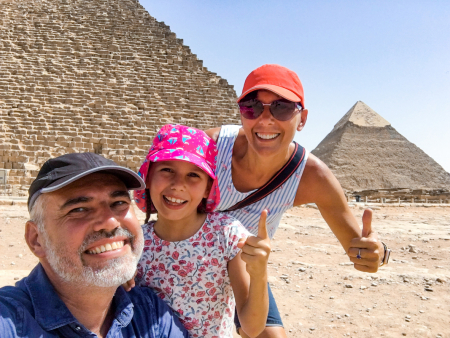

The Great Pyramids of Giza, Egypt’s iconic monuments, showcase ancient engineering brilliance and remain the last wonder of the ancient world, continuing to fascinate visitors and researchers alike.

The Egyptian Museum in Cairo houses over 170,000 ancient artifacts, including Tutankhamun's complete collection and golden death mask. Opened in 1902, it's the world's largest repository of Egyptian antiquities.

Khan el-Khalili is Cairo’s legendary medieval bazaar, where centuries-old Islamic architecture, vibrant trade, and timeless cafés create a living cultural landmark.

The Great Sphinx of Giza, with its lion body and pharaoh head, represents ancient Egyptian artistry, symbolic power, and enduring cultural fascination.

Tanoura is a traditional Egyptian Sufi dance known for its colorful spinning skirts, spiritual rhythm, and deep roots in ancient mystic traditions.

Saqqara, Egypt's ancient necropolis, features Djoser's Step Pyramid—the world's oldest. Spanning 3,000 years, it preserves royal tombs and sacred animal burials.

The Valley Temple at Giza, built 2570 BCE by Khafre, features 16 granite columns and hosted sacred afterlife rituals. Explore Fourth Dynasty architecture.

The Citadel of Cairo is a historic medieval fortress and royal complex, showcasing centuries of Egyptian power, Mamluk architecture, and Islamic heritage, now preserved as a UNESCO World Heritage Site.

Khufu's Solar Boat is a 142-foot cedar vessel discovered 1954 near the Great Pyramid. Built without nails 4,500 years ago, it's now at Grand Egyptian Museum.

St. George Church in Old Cairo, founded 684 AD, features unique circular design, sacred healing relics & underground chapel linked to the Holy Family's refuge.

Pyramids Sound and Light Show transforms Giza into open-air theater with 50 minutes of narration, music & lighting bringing ancient Egyptian history alive.

The Djoser Pyramid at Saqqara is Egypt's first pyramid, built 2600 BCE by architect Imhotep. Standing 62.5m tall, it reopened to visitors in 2020.

The Hanging Church in Old Cairo is a 1,300-year-old Coptic sanctuary built on Babylon Fortress. Free entry, open daily 9 AM-5 PM, dress modestly required.
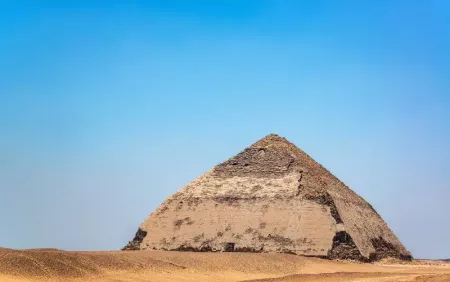
The Bent Pyramid at Dahshur features a rare bent profile created by ancient construction adjustments, offering insight into Egypt’s earliest attempts at smooth-sided pyramids.

Coptic Cairo features 4th-century churches and recent tomb discoveries revealing early Christian heritage. Explore the Hanging Church, Abu Serga & sacred sites.
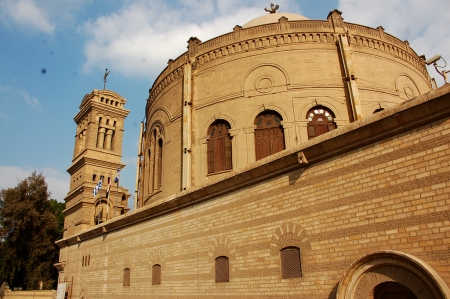
Saint Barbara’s Church in Coptic Cairo is one of Egypt’s oldest Christian monuments, dating back to the 5th–6th century. Known for housing the relics of Saint Barbara, the church reflects centuries of Coptic heritage, architectural evolution, and deep spiritual significance.

Explore the Fortress of Babylon, a major Roman fort in Old Cairo known for its strategic location, massive towers, and enduring historical significance.
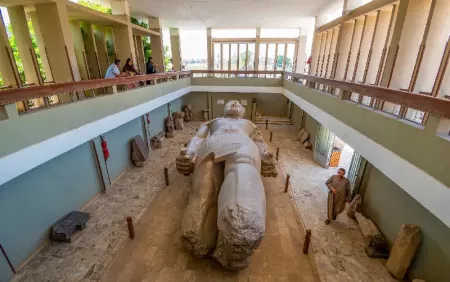
Memphis Necropolis is Egypt’s ancient royal burial site, home to pyramids, tombs, and monuments that reflect the early development of pharaonic civilization.
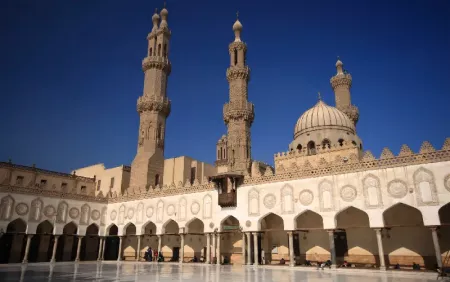
Al-Azhar Mosque is a landmark of Islamic scholarship and Fatimid architecture, home to the world’s second-oldest university and a symbol of Cairo’s spiritual heritage.
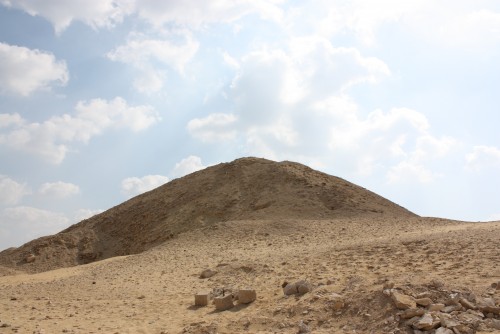
Teti’s Pyramid in Saqqara is an Old Kingdom monument built for the first king of the Sixth Dynasty. Known for its Pyramid Texts and unique mortuary chapel, it remains one of Egypt’s most historically important royal tombs.
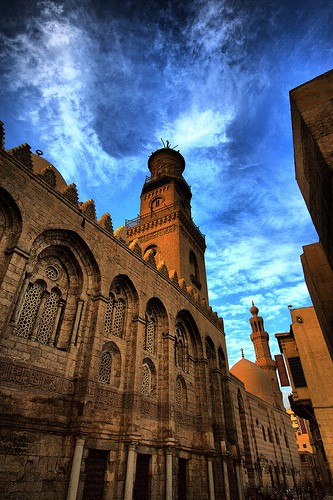
Al Muizz Street is one of Cairo’s oldest and most vibrant historic avenues, showcasing centuries of Islamic architecture. Lined with mosques, palaces, and bustling markets, it offers a captivating walk through Egypt’s medieval past.
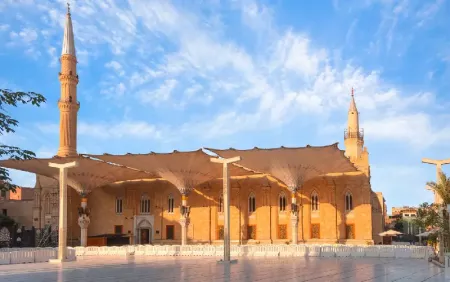
Al-Hussein Mosque is one of Cairo’s most sacred Islamic landmarks, built in 1154 and revered for housing the head of Imam Hussein. Located by Khan El-Khalili, it blends centuries of architectural heritage and remains a major pilgrimage site.
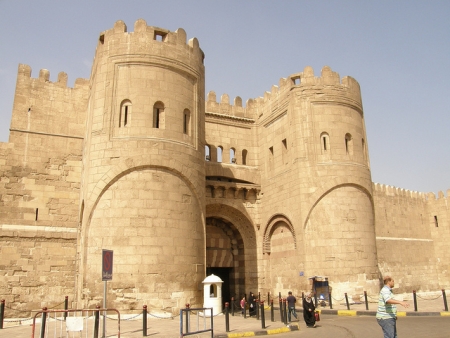
Bab al-Futuh is an 11th-century Fatimid gate in Old Cairo, famous for its massive round towers and strategic role in the city’s medieval fortifications.
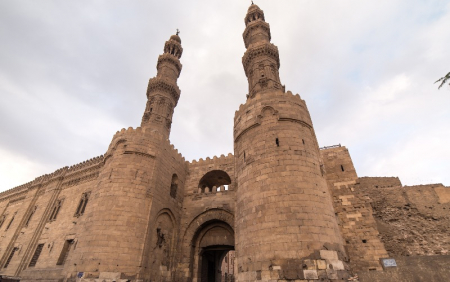
Bab Zuweila is one of Cairo’s last surviving medieval gates, built in 1092 CE by the Fatimid vizier Badr al-Jamali. Famous for its towering twin bastions, massive wooden doors, and later Mamluk minarets, it served as a defensive stronghold, execution site, and ceremonial gateway. Today, it stands as one of Cairo’s most iconic historic monuments.
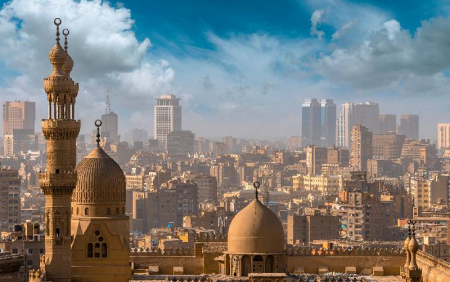
Al Rifai Mosque in Cairo blends Neo-Mamluk architecture with royal history. Completed in 1912, it serves as both a majestic mosque and mausoleum for Muhammad Ali’s family.
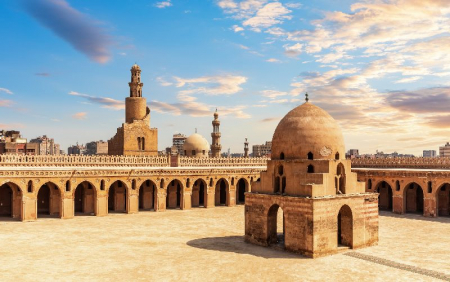
The Ibn Tulun Mosque, Cairo’s oldest well-preserved mosque, dates back to 879 CE. Famous for its vast square layout, intricate arches, and 128 ornate stucco windows, it remains a pinnacle of early Islamic architecture and a must-visit historical landmark.
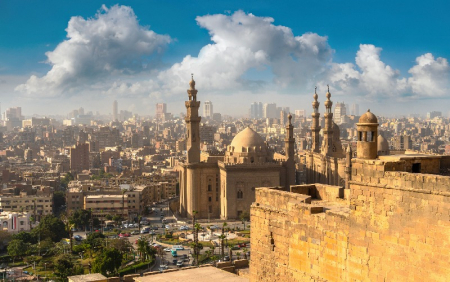
The Sultan Hassan Mosque, built in the 14th century, is a Bahri Mamluk architectural marvel in Cairo, renowned for its grand portal, extensive madrasas, and historic significance.

The Suez Canal, Egypt’s iconic waterway, connects Africa and Asia, handling thousands of ships yearly and shaping international trade.
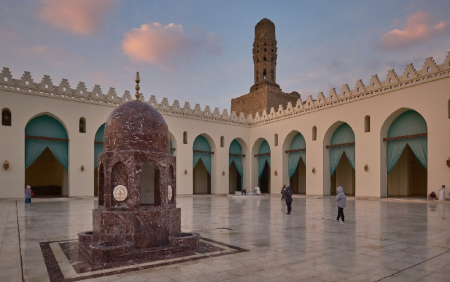
Al-Hakim Mosque, Cairo, is a stunning Fatimid-era mosque built between 990–1013 CE. Famous for its grand courtyard, distinctive minarets, and rich history, it remains a key cultural and religious landmark.
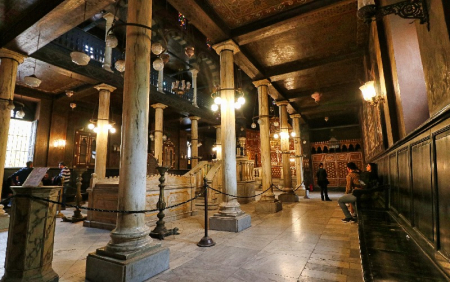
The Ben Ezra Synagogue, founded in the 11th century in Old Cairo, is Egypt’s oldest Jewish monument and the discovery site of the renowned Cairo Geniza.