Home
Home
Just a short journey from Aswan, Nubian villages offer one of Egypt’s most authentic cultural experiences. These riverside communities are celebrated by travelers for their warmth, color, and living traditions, consistently ranking among the top attractions in the region. A visit here is not about monuments or museums—it is about people, heritage, and a way of life that has survived for thousands of years.
Crossing the Nile feels like stepping into another world. Within minutes, the city fades behind you and a vibrant cultural landscape unfolds—brightly painted homes, the scent of spices and incense, and the unmistakable rhythm of Nubian life. This is a living heritage, shaped by the Nile and preserved through generations.
A Civilization Rooted in the Nile
Nubian heritage stretches back more than 8,000 years, making it one of Africa’s oldest continuous cultures. Long before modern borders existed, Nubians settled along the fertile banks of the Nile, developing advanced farming techniques, trade networks, and distinctive artistic traditions. Their civilization flourished independently for centuries and even ruled Egypt during the powerful Kushite era.
Today’s Nubian villagers are the direct descendants of this ancient civilization. Despite displacement caused by the construction of the Aswan High Dam in the 20th century, Nubians have preserved their language, customs, and communal values—transforming challenge into cultural resilience.
Reaching the Nubian Villages
The journey begins along Aswan’s Corniche, following Nile routes that have been used since antiquity.
Traditional Felucca or Motorboat?
- Motorboats offer a fast and reliable crossing, usually taking 20–30 minutes and operating independently of wind conditions.
- Feluccas, with their iconic triangular sails, provide a slower, more romantic experience that mirrors ancient river travel, ideal for sunset returns.
For tight schedules or early starts, motorboats are the practical choice. For relaxed afternoons and photography, a felucca adds timeless charm to the journey.
Best Time to Go
Late afternoon visits are ideal, when golden sunlight enhances the colorful houses and temperatures become more comfortable. Early mornings are also suitable during warmer months. The most pleasant season overall is from October to March, when Aswan’s climate is mild.
Motorboats are the fastest and most reliable option, while traditional feluccas provide a slower, scenic experience ideal for sunset trips.
Late afternoon is ideal for cooler temperatures and beautiful light. The best months overall are from October to March.
Customize Your Dream Vacation!
Get in touch with our local experts for an unforgettable journey.
Plan Your TripFirst Impressions: Color, Symbols, and Architecture
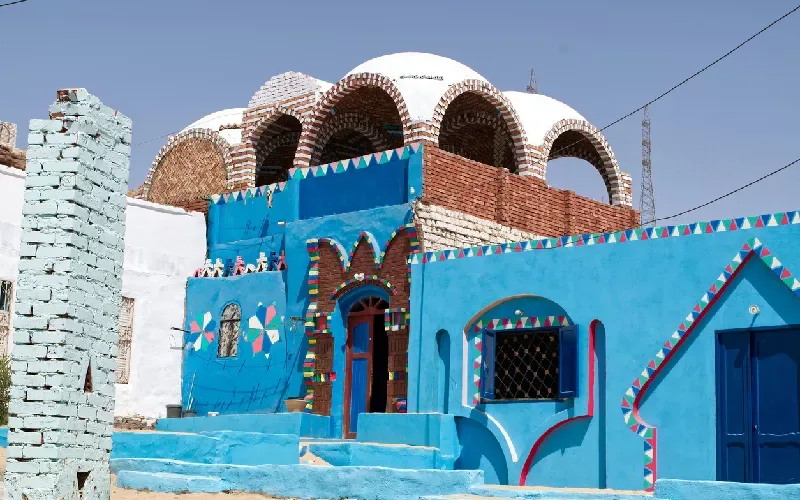
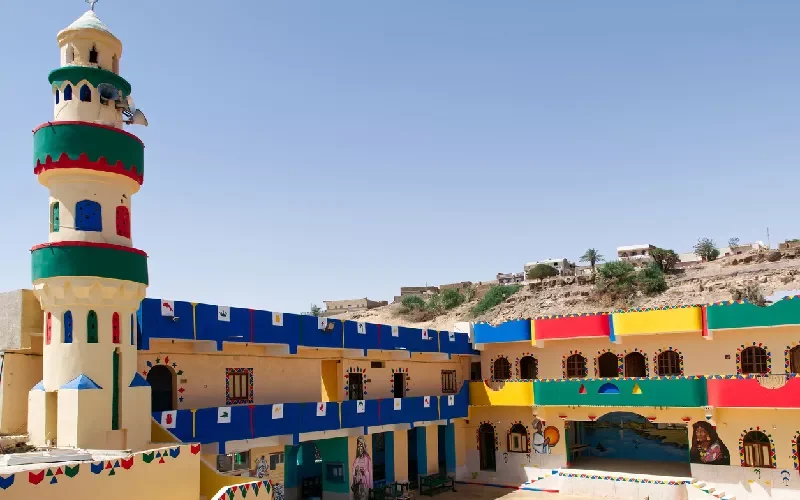
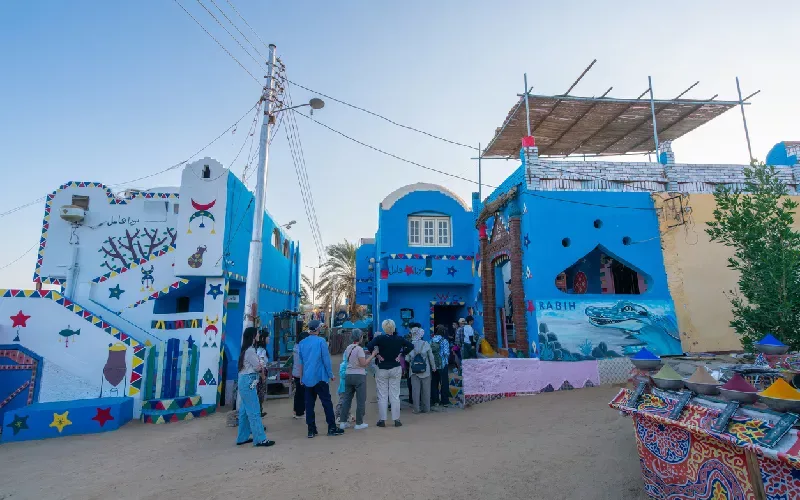
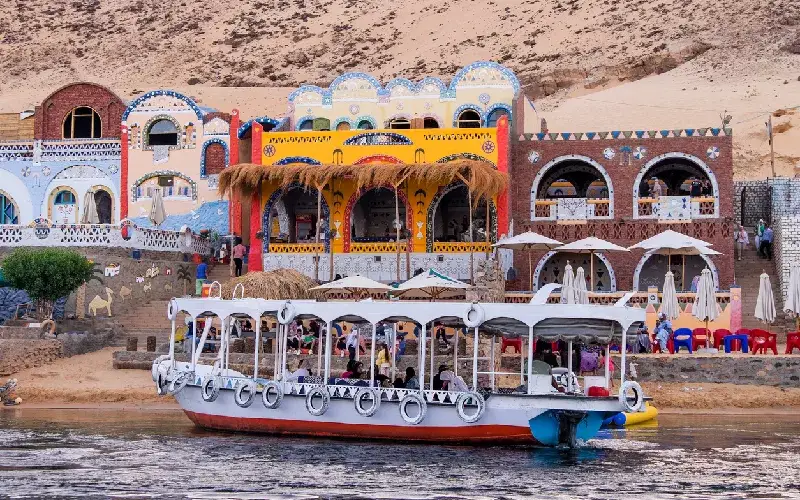
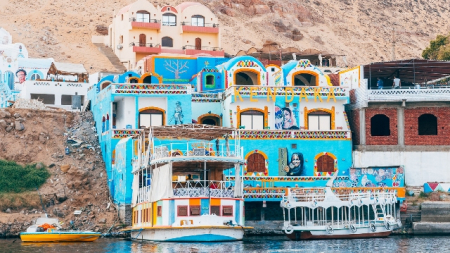
Nubian houses are instantly recognizable. Built from traditional mud brick, they are painted in vivid blues, yellows, greens, and oranges - colors chosen not only for beauty but also for symbolism and spiritual protection.
Walls are decorated with meaningful motifs such as the protective eye, the hamsa hand, geometric patterns, animals, and scenes from daily life. Modern symbols like boats or airplanes often appear alongside ancient designs, visually narrating the community’s journey through time.
Hospitality as a Way of Life
Hospitality is central to Nubian culture. Visitors are often greeted warmly and invited into homes to share mint tea or local dishes. These encounters are genuine, not staged, and reflect deeply rooted traditions of generosity and community.
Families live in close-knit networks where support extends beyond relatives to neighbors and guests alike. This sense of belonging is one of the most memorable aspects of visiting a Nubian village.
Nubian Cuisine and Daily Rituals
Food and drink play a vital role in Nubian identity. Traditional mint tea is prepared with care and poured from a height to create a frothy top—a small ritual that turns hospitality into an art.
Local dishes include:
- Tamiya (Nubian-style falafel)
- Molokhia made with local greens
- Kisra, a fermented flatbread with ancient roots
- Basara and dokka, reflecting long-standing agricultural knowledge
Each meal tells a story of the Nile, the land, and the people who have depended on both for millennia.
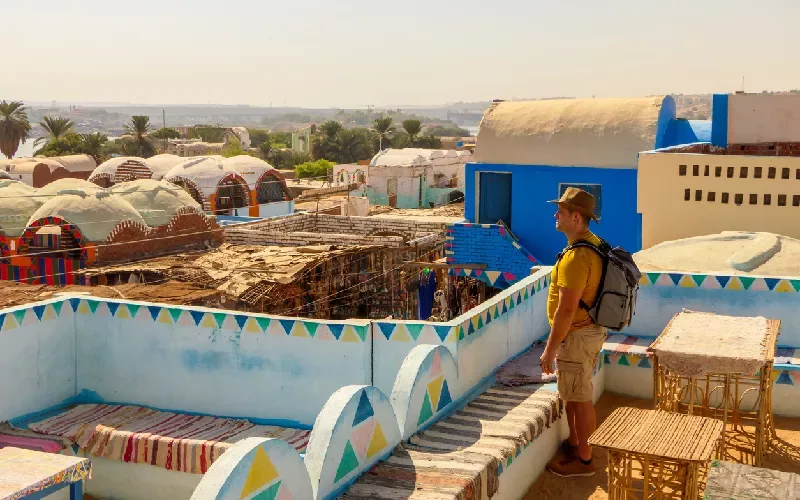
Nubian houses are painted in vivid blues, yellows, greens, and oranges—colors chosen for both beauty and spiritual protection. Walls feature meaningful motifs including the protective eye, hamsa hand, geometric patterns, and animals, with modern symbols appearing alongside ancient designs.
Traditional Nubian dishes include tamiya (Nubian-style falafel), molokhia made with local greens, kisra (fermented flatbread with ancient roots), basara, and dokka. Traditional mint tea is prepared with care and poured from a height to create a frothy top.
Living Traditions and Cultural Experiences
Language and Identity
Efforts to revive the Nubian language are gaining momentum through local schools, community initiatives, and modern teaching tools. Visitors may witness lessons that preserve ancient scripts and spoken traditions once at risk of disappearing.
Henna Art
Henna application is a cherished Nubian tradition practiced mainly by women. Using natural ingredients, artisans create symbolic designs inspired by Nubian and ancient Egyptian motifs. These temporary artworks are meaningful souvenirs and a direct way to support local craftsmanship.
Crocodile Traditions
One of the most distinctive practices is the keeping of young crocodiles, a custom rooted in ancient beliefs of protection and prosperity. While surprising to many visitors, this tradition highlights the deep spiritual continuity between Nubian life and ancient Nile cultures.
The Nubian Eco Village
The Eco Village serves as a living museum, showcasing traditional homes, crafts, music, and sustainable tourism practices. It offers immersive activities such as cooking demonstrations, musical performances, and hands-on cultural workshops that directly benefit local families.
Keeping young crocodiles is a distinctive Nubian custom rooted in ancient beliefs of protection and prosperity. This tradition highlights the deep spiritual continuity between Nubian life and ancient Nile cultures, though it often surprises modern visitors.
Why Nubian Villages Matter
Nubian villages are more than colorful photo stops—they are living archives of African history. They represent resilience in the face of displacement, continuity despite change, and cultural pride passed from generation to generation.
Responsible visits contribute to preserving this heritage, supporting language revival, traditional crafts, and sustainable community tourism — and those inspired to experience it can explore Egypt tours that include an authentic Nubian village visit as part of a wider Nile journey.
Visiting a Nubian village is an encounter with living history. Beyond the vibrant houses and scenic Nile crossings lies a deeply rooted civilization that continues to thrive through tradition, hospitality, and cultural strength.
This experience offers more than sightseeing - it fosters understanding, respect, and meaningful exchange. In a world of fast tourism, Nubian villages remind us that true travel is about connection, learning, and preserving the stories that define humanity.
Essential Nubian Village Information
- Visiting a Nubian Village near Aswan offers an authentic cultural experience rooted in one of Africa’s oldest living civilizations.
- The villages are easily reached by boat, with motorboats providing fast transfers and traditional feluccas offering a scenic, historic journey.
- Late afternoon visits, especially between October and March, provide the most comfortable weather and best lighting for photography.
- Meaningful experiences include sharing mint tea with locals, learning about Nubian language revival, receiving traditional henna art, and exploring the Nubian Eco Village.
- Responsible tourism directly supports Nubian communities, helping preserve their language, traditions, architecture, and way of life after displacement caused by the Aswan High Dam
Nubian villages are about 30–45 minutes from Aswan by boat, depending on the type of vessel used.
Yes. Nubian hospitality is genuine, and invitations are offered sincerely. Respectful behavior and cultural sensitivity are always appreciated.
Your visit supports local families, traditional crafts, language preservation, and sustainable tourism initiatives that help protect Nubian heritage for future generations.
The Nubian villages are located just a short journey from Aswan, across the Nile River. They can be reached by traditional felucca sailboat or motorboat from Aswan's Corniche, offering visitors an authentic cultural experience away from the city.
The construction of the Aswan High Dam in the 20th century caused displacement of Nubian communities as their ancestral lands were submerged. Despite this challenge, Nubians have preserved their language, customs, and communal values, transforming displacement into cultural resilience.
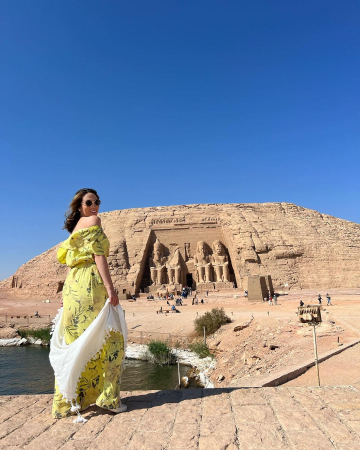
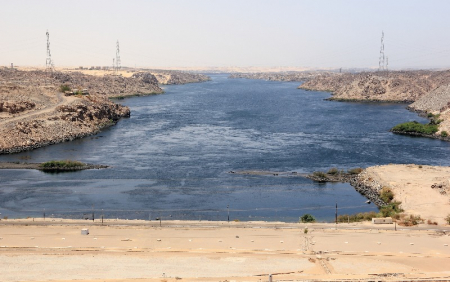
Lake Nasser, Egypt’s vast artificial reservoir, reshaped the Nile, boosted agriculture and fishing, and preserved historic sites like Abu Simbel.
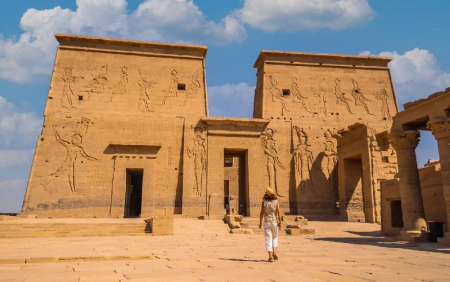
Philae Temple, dedicated to Isis, was relocated to Agilkia Island to preserve its ancient Ptolemaic structures and remains a UNESCO World Heritage site.
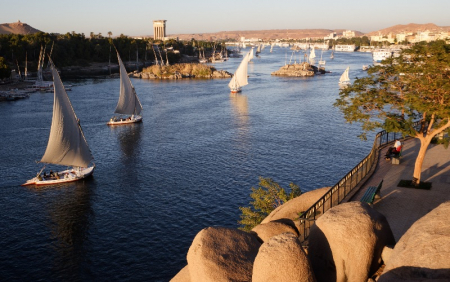
Aswan is one of the world’s oldest cities, marking ancient Egypt’s southern frontier. Rich in history, science, trade, and UNESCO-listed monuments, it remains a living link between past and present.

Aswan High Dam, completed 1970, transformed Egypt through Lake Nasser reservoir, hydroelectric power & year-round irrigation while displacing 100,000+ Nubians.
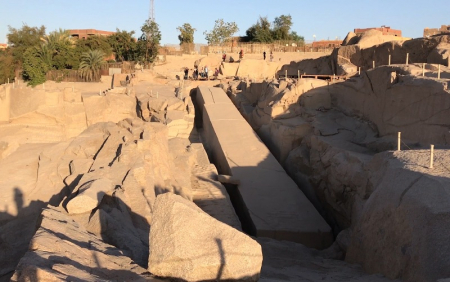
The Unfinished Obelisk in Aswan reveals ancient Egyptian quarrying techniques and ambitions, offering a rare glimpse into their engineering mastery.
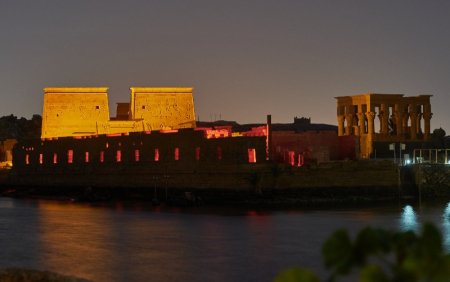
Discover the magic of Philae Temple after dark with a Sound & Light Show that brings the myths of Isis to life amid the beautifully preserved island sanctuary.
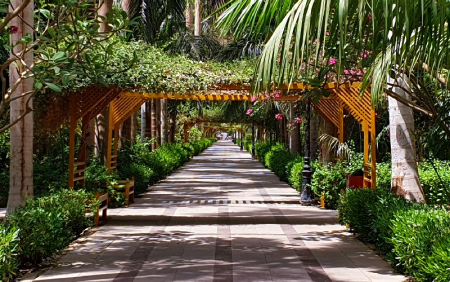
Explore El Nabatat Island, Aswan’s historic botanical garden featuring exotic plants, towering palms, and a sanctuary for birds along the Nile.

Nubian Museum Aswan features 3,000+ artifacts showcasing ancient Nubian heritage. Discover jewelry, statues & cultural displays in this 1997-opened institution.

Nubian Village near Aswan offers authentic culture with vibrant homes, traditional hospitality & henna art. Experience 8,000 years of living Nile heritage.
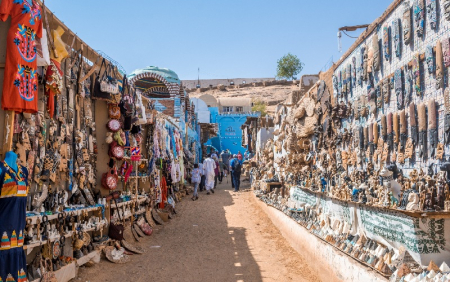
Aswan Old Souk offers a colorful, aromatic shopping experience along the Nile, featuring local crafts, spices, textiles, and souvenirs in Egypt’s southernmost city.
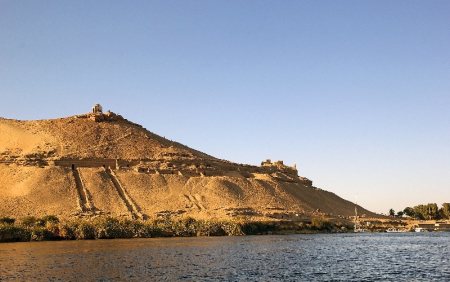
Elephantine Island in Aswan is a 5,000-year-old UNESCO site, once Egypt’s southern gateway, famed for its temples, Nilometers, and living Nubian heritage.
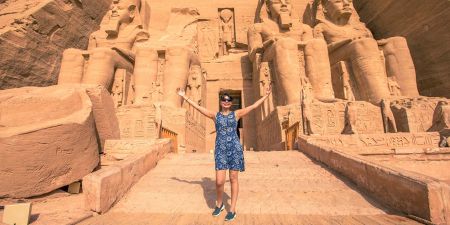
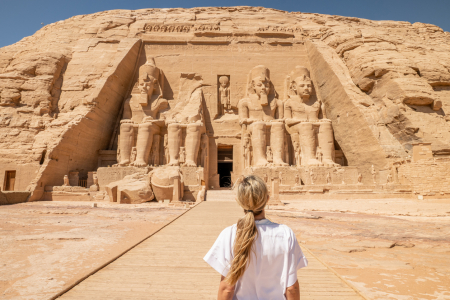
Discover Abu Simbel, Ramses II’s rock-cut temples famed for colossal statues, solar alignment, and an epic UNESCO rescue that saved them from Lake Nasser.