
 Home
Home
Siwa Oasis stands as one of Egypt's most remarkable geographical wonders, nestled within a deep depression that plunges 19 meters below sea level. Situated between the Qattara Depression and the Great Sand Sea in the Western Desert, this urban oasis lies just 50 kilometers east of the Egypt-Libya border and 560 kilometers from Cairo.
In fact, what makes Siwa particularly extraordinary is its abundance of natural resources amid the harsh desert landscape. The oasis features approximately 200 natural springs, creating a lush environment that spans 6 miles in length and 4-5 miles in width. Additionally, the area contains freshwater lakes and extensive date palm plantations that stretch into the distance, creating a striking contrast to the surrounding arid terrain. Historically significant, Siwa's ancient Egyptian name was "Sekht-am," meaning "palm land", and it gained fame through its oracle temple of Amon, which was consulted by Alexander the Great. Despite its remote location, Siwa is home to a thriving community of 25,031 people as of 2021, primarily consisting of Berber-speaking Sudanic peoples who maintain their distinctive cultural heritage.
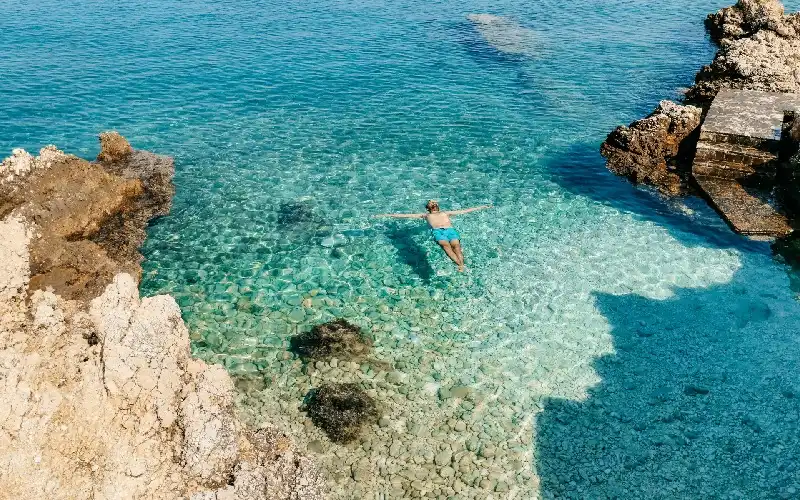
Siwa Oasis is a remarkable geographical wonder, situated in a depression 19 meters below sea level. It features about 200 natural springs, freshwater lakes, and extensive date palm plantations, creating a lush environment amidst the harsh Western Desert.
Geographical and Environmental Setting of Siwa Oasis
Located in the Maṭrūḥ governorate of western Egypt, Siwa Oasis represents one of Egypt's most isolated yet ecologically significant areas. This geographical wonder serves as a striking example of nature's resilience in the harshest of environments.
Location within Egypt's Western Desert
The oasis sits within a geological depression that plunges approximately 19 meters below sea level, creating a unique topographical feature in Egypt's Western Desert. Surrounded by diverse terrains—stone outcrops and hills to the north, the vast sand sea of dunes to the south, rocky desert extending to the Qattara depression in the east, and the Libyan border to the west—Siwa presents a varied landscape within its compact borders. The width of the oasis varies between 5 and 27 kilometers and covers a total area of 1088 square kilometers. Moreover, ten miles northeast lies the small oasis of Al-Zaytūn, while westward, a chain of little oases and small salty pools extends for about 50 miles (80 km).
Natural springs and salt lakes
Water is a defining feature of Siwa, with approximately 200 natural springs fed by artesian wells that have sustained life in this remote region for millennia. Among these, Cleopatra's Bath stands out as a famous hot spring that has become a popular attraction. Consequently, the oasis contains two main salt lakes—Birket Siwa and Birket Zeitun—whose striking turquoise waters contrast dramatically with the white salt crusts surrounding them. These hyper-saline bodies of water allow visitors to float effortlessly, much like the Dead Sea. Furthermore, these lakes are expanding at an alarming rate, having increased by 58% between 1990 and 2021, posing challenges to the agricultural landscape.
Climate and ecological features
Siwa experiences a hot desert climate with extreme seasonal variations. Summers are intensely hot, with temperatures often exceeding 40°C from May through September. In contrast, winters (December to February) bring milder conditions ranging from 15°C to 25°C during daylight hours. Rainfall is exceptionally scarce, with the oasis receiving merely 9 mm of precipitation annually, primarily during winter months.
Nevertheless, this seemingly inhospitable environment supports remarkable biodiversity, including approximately 300,000 palm trees and 70,000 olive trees, alongside 46 crop species. The animal kingdom is likewise well-represented, with at least two species of amphibians, 28 mammals, 32 reptiles, 52 insects, and 92 soil fauna varieties. Without human agricultural intervention and water management, however, the oasis would largely resemble the surrounding desert.

The oasis's isolation has preserved unique Berber traditions distinct from mainstream Egyptian society. Siwans speak Siwi, an endangered Berber language that remains the primary means of communication among 15,000-20,000 residents, despite increasing Arabic influence.
Historical Timeline of Siwa Oasis
The historical roots of Siwa Oasis stretch back to prehistoric times, with scientific research indicating settlement as early as the 10th millennium BCE. The ancient inhabitants shared cultural traits with those of Libya, North Africa, and the Nile valley.
Prehistoric and Ancient Egyptian presence
Initially, evidence connecting Siwa to Ancient Egypt appeared only during the 26th Dynasty (circa 525 BCE), when a necropolis was established at what is now known as Gebel el-Mawta. Throughout this period, the oasis was crucial for trade caravans crossing between the Nile valley and Libyan Mediterranean harbors. The name "Siwa" derived from the indigenous Ti-Swa tribe.
Greek and Roman influence
The Oracle of Amun at Siwa gained prominence after Greek settlers in Cyrene made contact around the 7th century BCE. This temple became one of the seven most revered oracles of ancient times and the only non-Greek oracle. Notably, Alexander the Great's visit in 331 BCE marked a pivotal moment in Siwa's history—after consulting the oracle, he claimed divine status as the son of Zeus Amun. During the Ptolemaic period, Siwa was known as "sḫ.t-ỉm3w" (Field of Trees). Subsequently, Augustus sent political prisoners to Siwa during the Roman era, making it a place of banishment.
Islamic and Ottoman periods
Islam reached Siwa around 708 AD but faced strong resistance. The Siwans withdrew to their fortress and successfully repelled invading armies. By 1203 AD, following Bedouin attacks, the population declined to merely 40 men from seven families. These survivors established a new fortified settlement called Shali (meaning "town"). Throughout this era, Siwa maintained relative independence until Muhammad Ali of Egypt annexed it in 1820.
Modern Egyptian integration
Egyptian authority was firmly asserted when Muhammad Ali sent between 1,300-2,000 troops to Siwa. After subduing resistance, government control gradually strengthened. Abbas II became the first Egyptian ruler to visit Siwa in 1904, followed by King Fuad in 1928, who sought to align Siwan behavior with Egyptian morals. Throughout both World Wars, Siwa gained strategic importance—serving as a base for the British Army's Long Range Desert Group while also being occupied three times by Rommel's Afrika Korps.
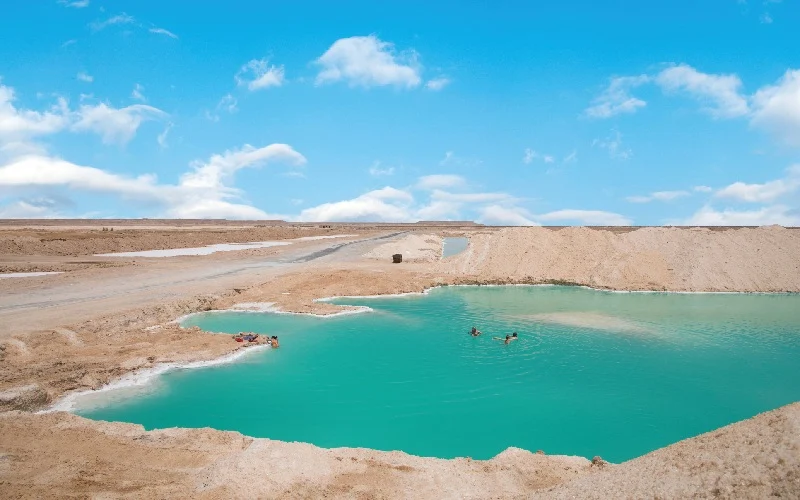
The Oracle of Amun at Siwa was one of the seven most revered oracles of ancient times and the only non-Greek oracle. It gained international fame after Alexander the Great's visit in 331 BCE, where he reportedly received confirmation of his divine status.
Customize Your Dream Vacation!
Get in touch with our local experts for an unforgettable journey.
Plan Your TripCultural Identity and Social Structure
The cultural identity of Siwa Oasis emerges from its isolation, which has preserved unique Berber traditions distinct from mainstream Egyptian society.
Siwi Berber language and traditions
The Siwans identify as Imazighen ("noble and free men") and speak Siwi (Jlan n isiwan), the easternmost Berber language and the only one indigenous to Egypt. Though classified as "definitely endangered" by UNESCO, this language remains the primary means of communication among 15,000-20,000 residents. Siwi features a rich oral tradition encompassing songs, fairy tales, riddles, and proverbs. Essentially, the language faces challenges from increasing Arabic influence, prompting preservation efforts by local organizations.
Tribal organization and endogamy
Siwan society operates through a tribal system divided into two main groups—Eastern and Western tribes—comprising ten smaller communities. Each tribe is led by an Amazigh Agleed (Sheik) who heads a family council of respected elders. Primarily, Siwans practice endogamy, marrying within their own tribes, with no intermarriage between Eastern and Western families. This practice preserves community integrity but occasionally results in genetic complications.
Role of women in Siwan society
Women traditionally hold significant authority in Siwan households, often controlling financial decisions. Furthermore, they bear responsibility for raising children and maintaining the Siwi language. Girls historically could be promised in marriage as young as five years old, typically marrying around age fourteen. Indeed, women's distinctive dress—particularly the blue-and-white tarfottet shawl with intricate embroidery—remains a visible marker of Siwan feminine identity.
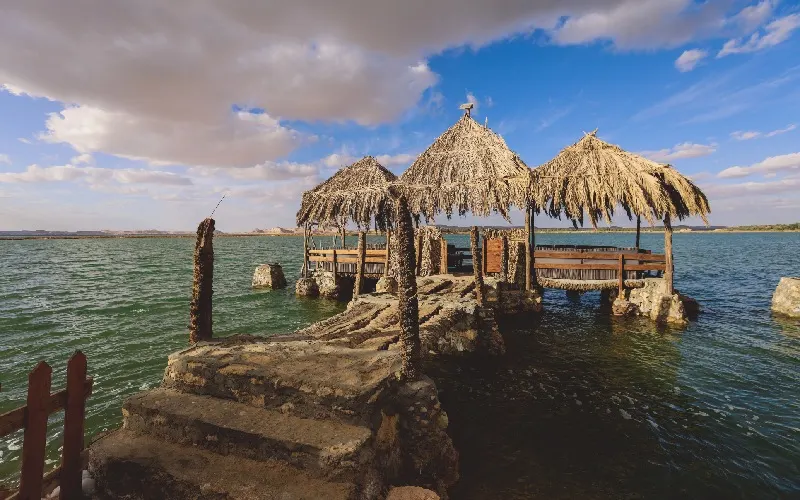
Siwan society operates through a tribal system divided into Eastern and Western tribes, comprising ten smaller communities. Each tribe is led by an Amazigh Agleed (Sheik) who heads a family council of respected elders. Endogamy is commonly practiced, with marriages typically occurring within tribes.
Religious and Mythological Significance
At the heart of Siwa's historical importance lies its profound religious significance, primarily through its connection to ancient Egyptian theology and later influences.
The Oracle of Amun and Alexander the Great
The Oracle of Amun at Siwa ranked among the seven most revered oracles of ancient times and stood as the only non-Greek oracle. Its reputation spread across the Mediterranean world as it was perceived as less politically influenced than other oracles. The site gained international fame after Alexander the Great's pivotal visit in 331 BCE. Upon entering the inner sanctum, the priest reportedly greeted Alexander as "son of a god" before he even spoke. Alexander later claimed the oracle confirmed his divine status as son of Zeus-Amun and his destiny to rule the world.
Temples of Aghurmi and Umm Ubayd
Two temples dedicated to Amun exist in Siwa: the Temple of the Oracle at Aghurmi and the Temple of Umm Ubayd. The fragmentary remains of the Oracle temple contain inscriptions dating from the 4th century BCE. The Umm Ubayd temple, originally connected to the Temple of the Oracle by a causeway, served as an integral part of oracle rituals. Notable in its ruins are inscriptions of the Rite of the Opening of the Mouth, typically found in burial contexts.
Spiritual festivals and local beliefs
The Siyaha Festival (Eid El Solh), honoring the town's patron saint Sidi Sulayman, dates back over 160 years. This three-day celebration on Gabal Al-Dakrour mountain involves communal meals, reconciliation, and prayers. Men gather to eat together and sing chants thanking God, while women remain in the village celebrating with dancing and drums. This tradition began as a peace initiative between conflicting tribal groups.
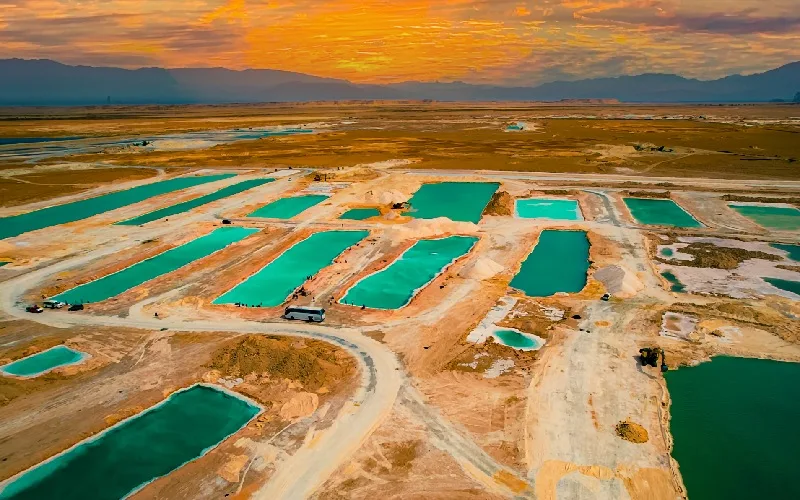
Siwa Oasis is a unique fusion of geography, history, and culture, sustained by its natural springs and lakes amid Egypt’s Western Desert. From prehistoric settlement to the famed Oracle of Amun visited by Alexander the Great, Siwa has long been a center of spiritual and human activity.
Its isolated location helped preserve the Berber-speaking Siwi community, maintaining language, tribal structures, and traditions like the Siyaha Festival despite centuries of foreign rule. Today, Siwa remains a living testament to human adaptation in extreme environments, where cultural heritage, historical significance, and natural beauty continue to thrive side by side.
Siwa faces environmental challenges, including expanding salt lakes that threaten agricultural land. The oasis is also working to preserve its endangered Siwi language and unique cultural traditions in the face of increasing external influences and modernization.
Siwa’s economy is primarily based on agriculture, with date palms, olives, and vegetables forming the backbone. Tourism also plays a growing role, with visitors attracted to its natural springs, salt lakes, and cultural heritage. Traditional handicrafts, such as weaving and silverwork, provide additional income for local families.
The most notable is the Siyaha Festival, held annually to celebrate the oasis’s agricultural abundance and tribal traditions. It includes music, dance, camel racing, and rituals honoring ancestors, helping to preserve Siwa’s unique cultural identity.
Tourists typically explore Siwa by 4x4 desert tours, bicycles, or on foot. Popular attractions include Cleopatra’s Bath, the Mountain of the Dead, Shali Fortress, and the Temple of the Oracle. Guided tours often combine natural, historical, and cultural sites for a comprehensive experience.
Siwa’s ecosystem supports desert-adapted wildlife, including migratory birds, foxes, and reptiles. Freshwater springs and lakes sustain amphibians and fish species, while date palm groves provide shelter for various bird species.
Siwa’s strategic location and its Oracle of Amun influenced major historical events, most famously Alexander the Great’s campaign. The oasis also served as a cultural and trade crossroads between Egypt, Libya, and other Saharan regions, leaving a legacy of enduring Berber traditions that continue to attract scholars and travelers.

As a UK passport holder, you'll discover that obtaining an Egyptian visa is a straightforward process, with multiple options designed to accommodate various travel purposes and durations.

El Fayoum, located one hour south of Cairo, is considered one of Egypt's most peaceful places and one of the most greenish oases in Egypt's desert

Bahariya is one of the more appealing of the desert circuit oasis, and it's also the easiest to access, being just 365 kilometers from Cairo.

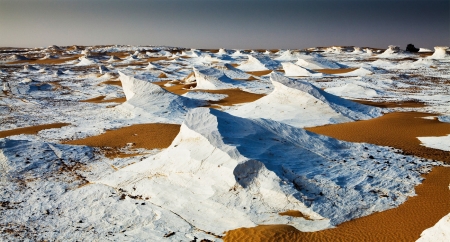
Farafra Oasis showcases the White Desert's dramatic chalk formations, therapeutic hot springs, and volcanic Black Desert. This remote Egyptian oasis, 627 km from Cairo, offers authentic Bedouin culture and stunning desert landscapes.

Dakhla Oasis spans 2,000 km² in Egypt's Western Desert, 350 km from the Nile. This UNESCO-listed site showcases Pharaonic heritage and traditional communities with 75,000 residents.

Kharga Oasis, Egypt's largest desert oasis, spans 160 km west of the Nile. This UNESCO nominee features the Temple of Hibis and preserves ancient caravan route heritage as the most modernized western oasis with 87,482 residents.


Siwa Oasis is a lush desert oasis below sea level, known for its natural springs, palm groves, ancient oracle, and preserved Berber culture.

Egypt’s Black Desert is a striking natural wonder marked by black volcanic hills, basalt formations, and surreal landscapes shaped by ancient volcanic activity and millions of years of erosion.

The White Desert is a protected natural area in Egypt near Farafra Oasis, known for its white limestone formations created by erosion over millions of years.

Crystal Mountain Egypt is a breathtaking natural landmark located between Bahariya and Farafra oases in the White Desert. Known as the “Jewel of the Desert,” it features clusters of sparkling quartz crystals formed over millions of years, making it one of the rarest geological formations in the world.