Home
Home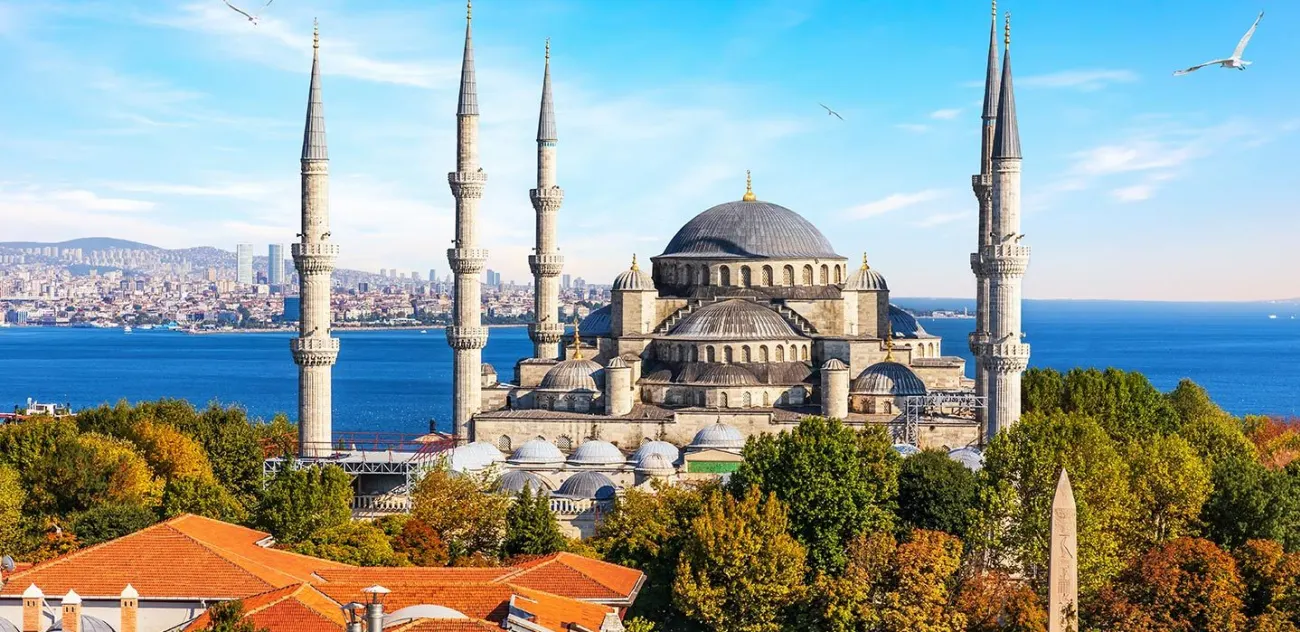
Location and the reason behind its name
The Sultan Ahmed Mosque, popularly known as The Blue Mosque, is located in Istanbul, Turkey. The mosque is often referred to as the “blue mosque” because of the unique blue tiles and interior decoration that intensifies the beauty of the internal design of the mosque. This very beautiful and unique mosque is one of the most visited places in Western Asia, even though it is an Islamic place of worship, it is often flooded by both Islamic and non-Islamic tourists from all over the world. In this article, we shall be talking about all the things you need to know about this wonderful place, starting from its history, its amazing architecture, and lots more.
History of The Blue Mosque
The Blue Mosque was built by the Ottoman Sultan Ahmed I between the years 1609 to 1616. At this time, it was a common practice for sultans to build mosques to show their appreciation to God and also name them after themselves. This was what Sultan Ahmed the first also had in mind when he decided to build a mosque of the utmost beauty and significance. To complete the mosque, the sultan employed the services of Sedefkar Mehemet Aga, who was one of the greatest architects who were alive at that time. The emperor chose the Ayse Sultan Palace as the perfect place for the magnificent mosque to be built because that particular location overlooked the sea, and the surroundings were not too crowded. The construction of the wonderful mosque took a total of 7 years, 5 months, and some days. After the total construction, the building was opened to a fascinating ceremony on Friday, June 12, 1616. The Blue Mosque has served as a major place of worship and tourism ever since.
Explore the marvels of Turkey and the tranquillity of The Blue Mosque with our Turkey Tour Packages and Turkey & Greece Tours.
The architecture of The Blue Mosque
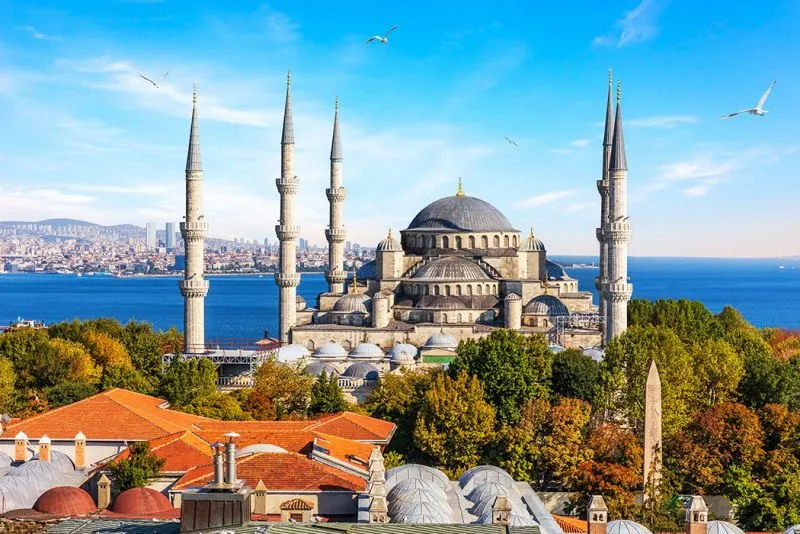
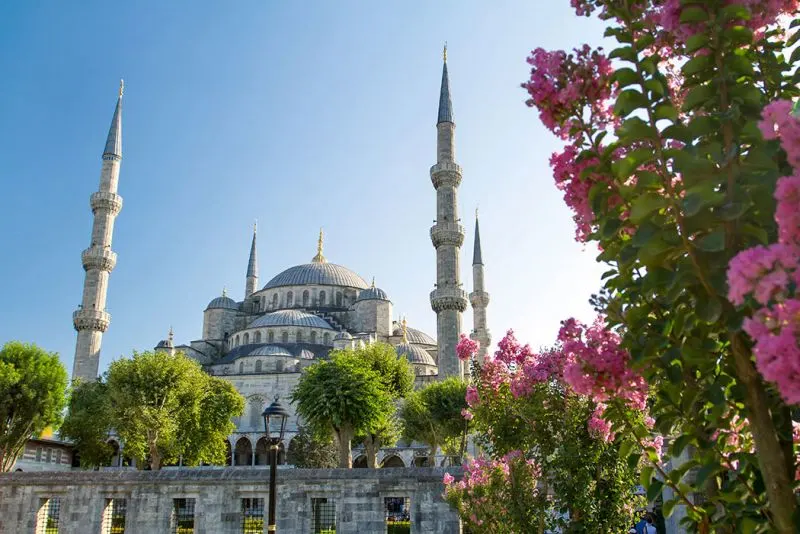
The Blue Mosque is a unique masterpiece, blending two centuries of Ottoman design with elements from traditional Islamic and neighboring Byzantine architecture. Designed by Sedefkâr Mehmet Ağa to achieve overwhelming size and splendor in the style of his master, Sinan, it is celebrated as the last great mosque of the classical period. Its one-of-a-kind structure features a majestic cascade of domes, six slender minarets, and an interior famously adorned with thousands of blue İznik tiles, setting it apart from any other building in the world.
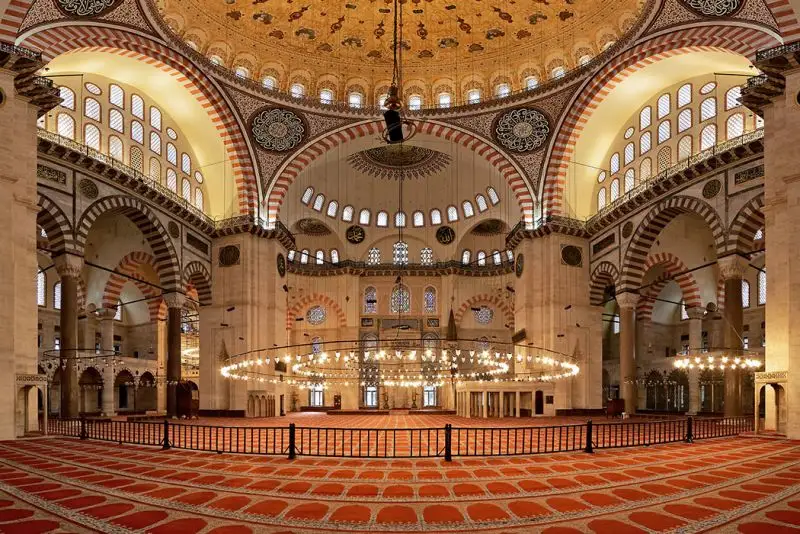
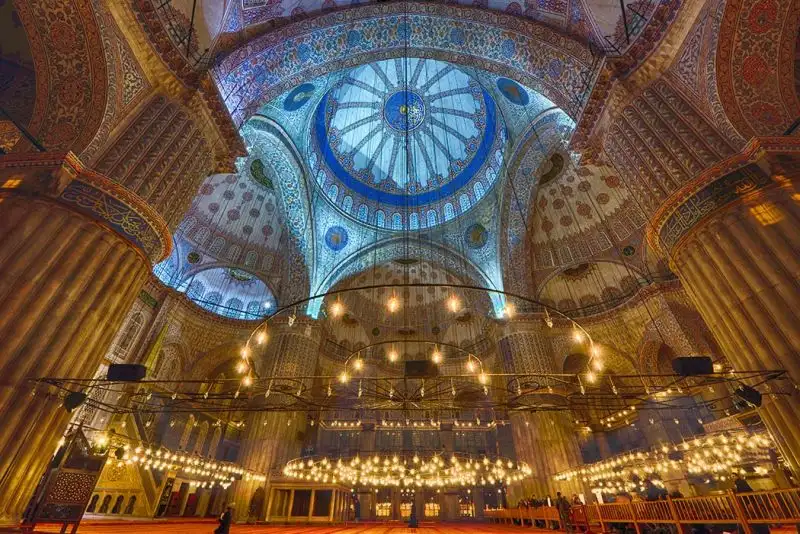
The interior is famous for its blue Iznik tile work, the central dome reaching 43 meters in height, and more than 200 stained-glass windows that illuminate the main prayer space.
The exterior of Sultan Ahmed Mosque
The façade of the forecourt was designed in the same way as the forecourt of the famous Suleymaniye Mosque was designed by the great architect Mimar Sinan, who was Sedefkar’s teacher. It is decorated with rectangular zinc tile window lunettes with the addition of turrets on the corner domes.
The Grand Courtyard
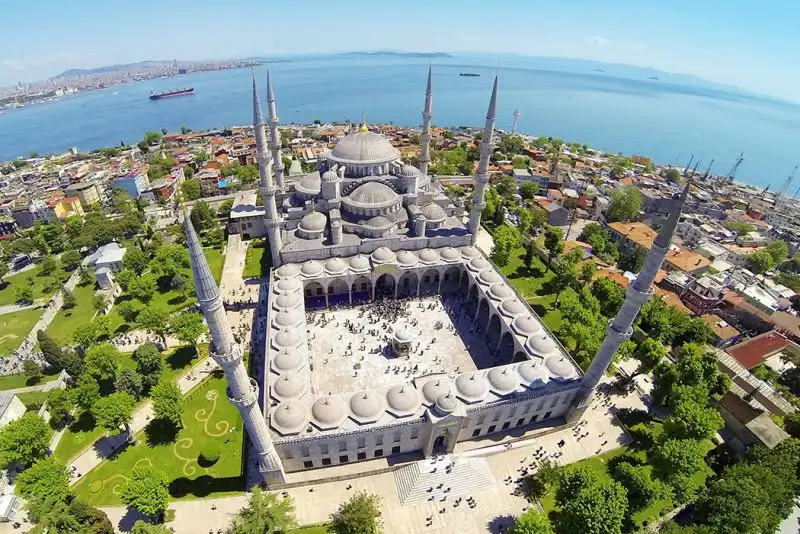
The entrance to the Blue Mosque is through a massive, beautiful courtyard almost as big as the mosque itself. It’s surrounded by arched walkways and has a stunning hexagonal fountain at its center. Above the main western gate, you’ll spot a heavy iron chain. This was hung low for a very specific reason: even the Sultan had to lower his head when entering on horseback, a powerful reminder of humility before God.
The Famous Minarets
The Blue Mosque is instantly recognizable by its six slender minarets, which were a truly daring and unique feature when it was built. Traditionally, the call to prayer was made from these towers. While today's calls are broadcast by speakers, the six minarets still stand as a bold symbol of the mosque's grandeur and ambition.
Customize Your Dream Vacation!
Get in touch with our local experts for an unforgettable journey.
Plan Your Trip
Interior of The Blue Mosque
Once you step into the interior of the mosque, you can easily see where the blue mosque gets its name from. The interior of The Blue Mosque is decorated with up to 20,000 handmade brilliant ceramic blue tiles made at Iznik in more than fifty different tulip designs. The lower tiles hold simple traditional designs, while the upper tiles hold more flamboyant representations of nature, such as beautiful flowers, fruits, birds, and more.
At the upper level of the interior, there are up to 200 stained glass windows with amazing decorations to support natural light. Also, on the chandeliers, there are ostrich eggs that are believed to help repel spiders and prevent cobwebs in the mosque.
Finally, the most important part of The Blue Mosque interior is the Mihrab, which is made from finely carved and sculptured marble, with a stalactite niche. The double inscriptive panel above it is surrounded by many windows, and the adjacent walls are sheathed with tiles, thus creating a very beautiful and perfect scenery.
Why is The Blue Mosque Famous?
Although there are a lot of reasons for the fame of The Blue Mosque, the major reason for the fame of this mosque is its unique structures and beautiful designs that the mosque has. The six Minarets, the unique interior blue designs, and the amazing chandeliers are some of the few fascinating things that contribute to its fame.
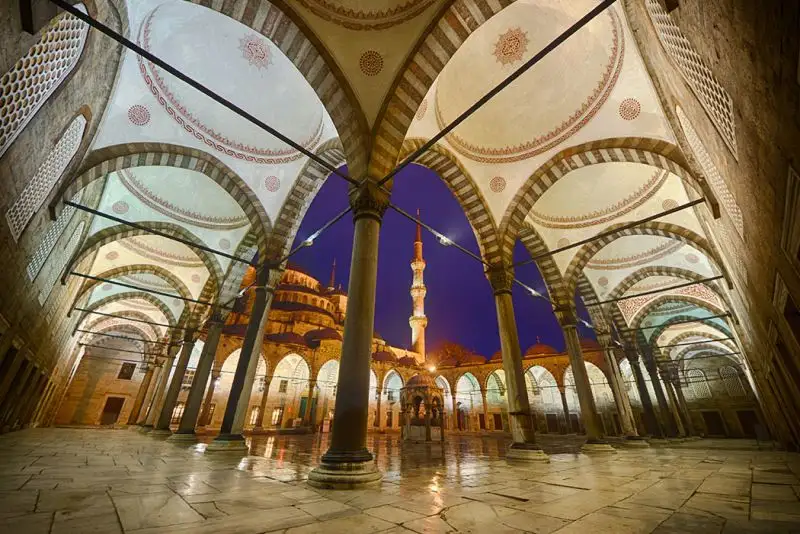
The building's official name is the Sultanahmet Mosque, built between 1609 and 1616 during the rule of Ahmed I. It is a defining monument of Ottoman architecture, renowned for its six minarets and majestic central dome.
The mosque is open to visitors every day but closes for 90 minutes during each of the five prayer times. There is no entrance fee, but donations are accepted.
Is The Blue Mosque the Same as the Hagia Sophia?
The Blue Mosque is not the same as the Hagia Sophia. Although both are very popular and are considered national treasures, the Blue Mosque is a beautiful and unique mosque that is still being used as a mosque even today, while the Hagia Sophia, on the other hand, is a treasure from the Ottoman and Byzantine empires. It once served as a church, later on, a mosque, and finally a museum.
Visitors must dress modestly, covering their shoulders and knees. Headscarves are provided for free at the entrance for women. All visitors are required to remove their shoes, with plastic bags provided.
Get your fill of Tukey & customize your trip to The Blue Mosque here.
When is the Best Time to Visit The Blue Mosque?
If you are planning to visit The Blue Mosque, then here are some things you should know about the best time for you to visit this wonderful place.
First of all, you should know the mosque still serves as a religious site, so unless you are visiting for a religious purpose, do not visit on religious days or on days close to any major Islamic festival. Also, the mosque is always full on Fridays, so you might as well pick another day to make your visit.
Finally, the mosque is always closed five times a day when the worshipers say their daily prayers, so be prepared for a little delay, although it doesn’t take more than 30 minutes per time.
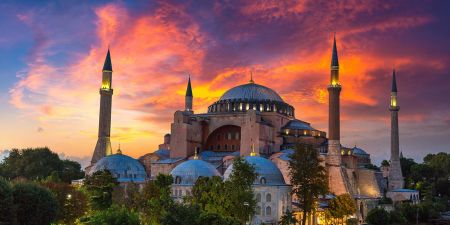
Declared by UNESCO a World Heritage, the Hagia Sophia is a symbol of coexistence, harmony & ancient Marvel. Accompany us through a journey in time & discover the history of this loved attraction.
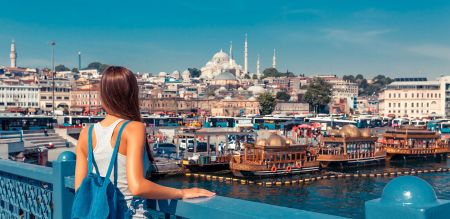
Dividing the modern life of the West from the Orient of the East, the Bosphorus Strait is more than just a body of water; it’s a heritage and an essential piece of history for you to discover through our article.
Here is your best Turkey Travel Advisor including on it the tips and the information needed for your trip which would help you to enjoy it to the max in Turkey.
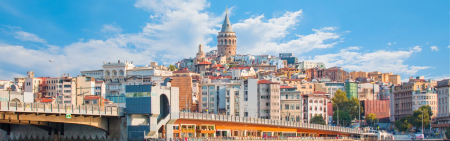
Galata Tower is without a doubt one of the most recognizable landmarks on the peninsula, Until 1749, Galata Tower was Istanbul's highest structure in Istanbul.
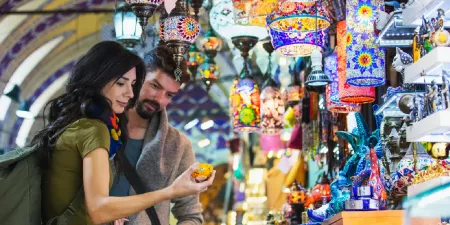
Welcome to Turkey's most well-known market, the Grand Bazaar in Istanbul. One of the oldest and biggest covered marketplaces in the world is this crowded bazaar.

People travel from all over the world to the House of the Virgin Marry to receive her blessing and to fulfill their wishes and make them true as it was believed that this was the last place she was in when she passed away.
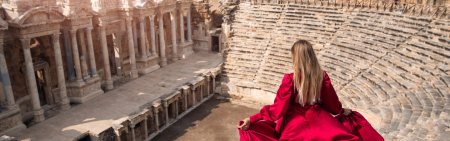
Pamukkale in Turkey is known as the Cotton Castle or Cotton Palace city which is admired for its stunning beauty that will raise your eyebrows as it is the city of beauty and wonder located in southwestern Turkey with its natural landscapes, ancient ruins, and thermal pools.
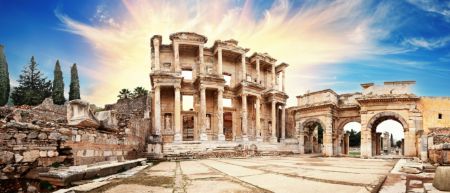
Kusadasi in Turkey is known as the paradise of the country that lies on the Aegean Sea and is also well known for its magnificent beaches, exciting nightlife, and historical monuments.
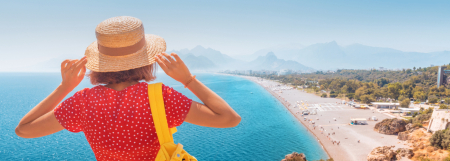
Check this Antalya Turkey Travel Guide to craft your perfect Turkish adventure! Read more!
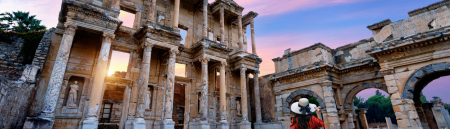
Ephesus is not just a site; it is a magical journey through history that leaves visitors awe-struck and inspired, read the following exclusive guide to know more!
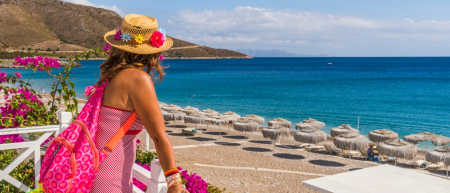
Bodrum, a sun-kissed jewel on Turkey's southern peninsula, weaves together azure bays, golden beaches, and ancient tales, inviting you to lose yourself in a Mediterranean dream where history whispers from every cobblestone and the sea beckons with its siren song. Read More!
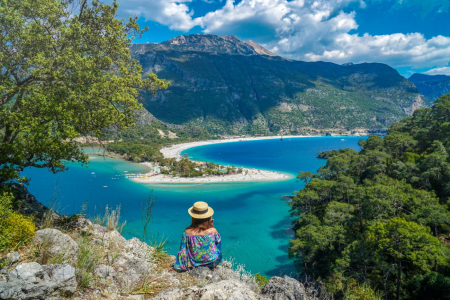
Fethiye stands as one of the most captivating cruise ports along the Turquoise Coast, where golden sands meet azure waters against a backdrop of forested mountains. This hidden paradise has captured our imagination perfectly blending natural beauty and ancient history. Read More!
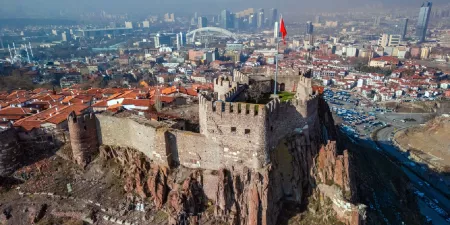
Ankara, the capital of Turkey, blends deep-rooted history with modern governance. From ancient ruins to bustling markets and official institutions, it’s a hub of culture, politics, and national identity.

Located at the Dardanelles Strait, Çanakkale in Turkey offers rich history, from ancient Troy to Gallipoli, plus coastal cuisine, museums, and scenic views across Asia and Europe.
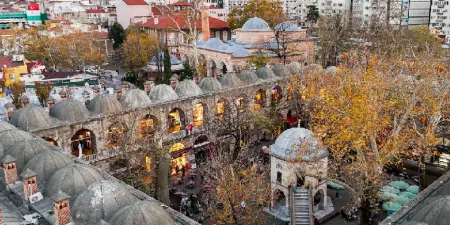
Explore Bursa city, where Ottoman heritage meets natural beauty. Discover it`s top attractions, historic mosques, and vibrant local markets.
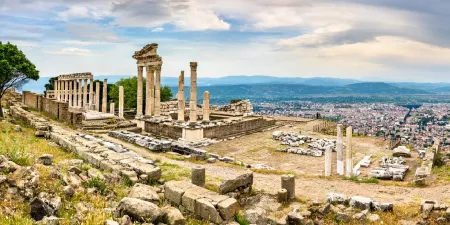
Explore Pergamon in Turkey, an ancient hilltop city known for its dramatic theater, healing center of Asclepius, and rich layers of Hellenistic and Roman heritage.
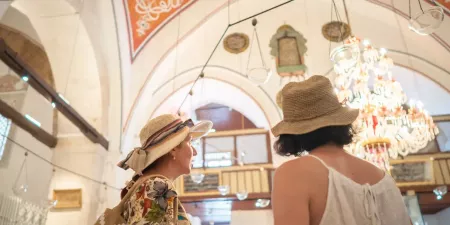
Explore Konya in Turkey, home to Rumi, Seljuk heritage, and iconic Konya attractions like the Mevlana Museum and whirling dervishes.

Marmaris blends beaches, history, and nightlife, making it a top Aegean getaway for sunseekers and culture lovers alike. Discover more about it!
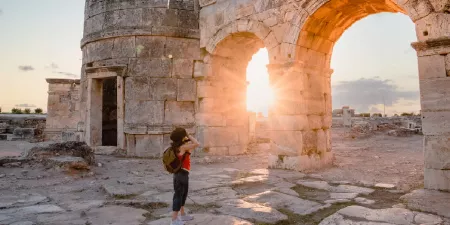
Discover Hierapolis, an ancient Roman city in Turkey, famous for its well-preserved ruins, sacred sites, and views over Pamukkale’s travertine terraces.
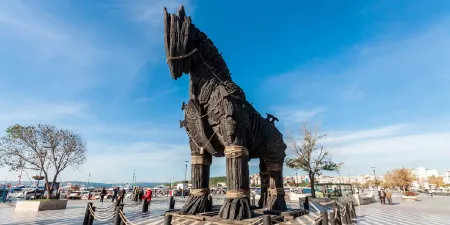
Explore the fascinating story of Ancient Troy, from myth to archaeology. Discover the real Troy, its epic war, legendary heroes, and historical ruins.
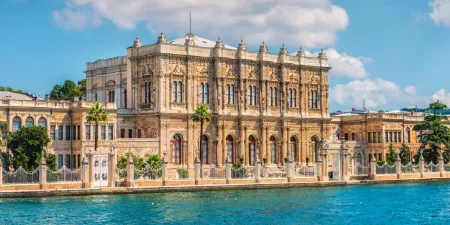
Explore Dolmabahçe Palace, a symbol of Ottoman luxury and European elegance on the Bosphorus, with rich history and breathtaking interiors.

Visit Side in Turkey for ancient wonders, beach escapes, and culture. Discover the best things to do in Side for an unforgettable trip.

Çeşme, Turkey offers sandy beaches, thermal springs, historic castles, and lively Alaçatı—perfect for relaxation and adventure.

From river cruises to mud baths, Dalyan offers endless charm. Discover history, beaches, and top-rated activities in things to do in Dalyan.

Aspendos in Turkey features the legendary Aspendos Theater, a stunning Roman-era structure known for its perfect acoustics and preservation.

Perge in Turkey offers a deep dive into ancient Roman life, with well-preserved ruins and monuments in one of the region’s most iconic cities.

Sumela Monastery is a stunning cliffside monastery near Trabzon, offering rich history, breathtaking views, and a unique spiritual atmosphere.

Explore the ruins of the Mausoleum at Halicarnassus, the iconic Bodrum Mausoleum built for Mausolus and once among the Seven Wonders.

Uludağ mountain is a popular mountain retreat in Turkey, famous for its ski resorts, lush forests, and year-round outdoor activities.

Beyoğlu, Istanbul’s lively district, offers historic landmarks, bustling streets, cultural venues, and endless things to do for every traveler.

Derinkuyu, Cappadocia’s largest underground city, reveals a labyrinth of tunnels and chambers that once sheltered thousands in ancient times.

Kars in Turkey is a historic city known for Ani’s ruins, Kars Castle, and unique local cuisine. Explore top attractions and the best things to do in Kars.
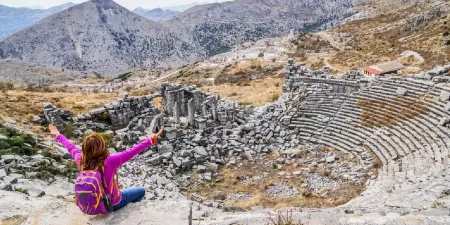
Sagalassos in Turkey is an ancient Pisidian city with Roman ruins, a famous fountain, and breathtaking mountain views.
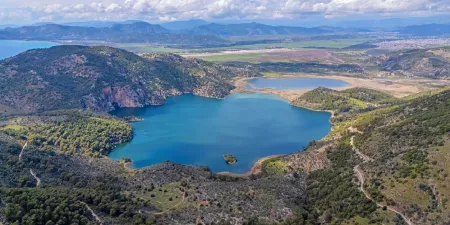
Dalaman in Turkey offers stunning beaches, nature, and history. Check out the best things to do in Dalaman for your next adventure.
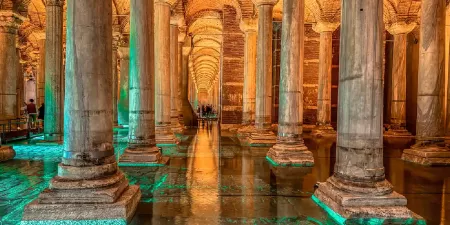
Discover the Basilica Cistern, Istanbul’s hidden underground gem, built by Emperor Justinian with 336 columns and timeless history.
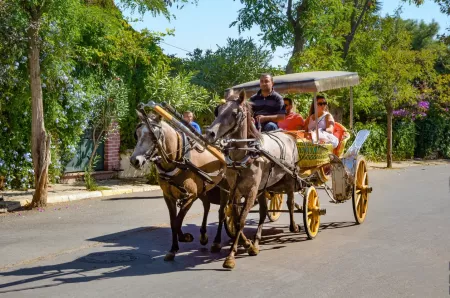
Discover the Princes' Islands in Turkey for a tranquil day of Victorian charm, pine forests, and beaches just a ferry ride from Istanbul! Read More!
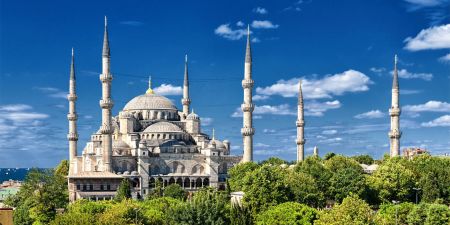
Still figuring out what to do, where to go, when to visit & what sites to see in the mesmerizing city of Istanbul. Then check out our Istanbul Travel Guide for a trip down the discovery lane.
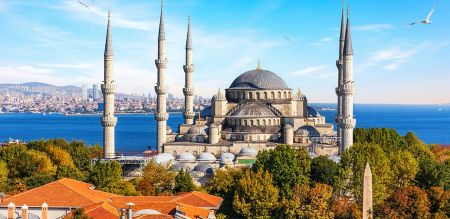
Famous for its sky-blue tiles, The Blue Mosque of Turkey is more than an ancient architectural beauty, it’s a magnificent piece of history. Read on & Discover some of that history & more.
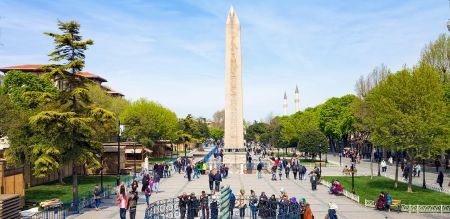
Built by the Romans in AD 203, the Hippodrome of Constantinople is exploding with both Roman & Ottoman history. Read on & Discover more about this magnificent Roman relic in the heart of Turkey.
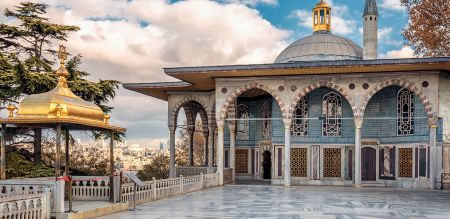
Discover what secrets roam the halls of once the administrative center of the Ottoman sultanate & a majestic palace/ museum, Topkapi Palace check out our article and unravel the marvel of Topkapi Palace.

Cappadocia in Turkey is a city referenced by ancient scriptures and beloved by its inhabitants and visitors alike is a truly spectacular place. Discover the runes, caverns, sites, and the adventure awaiting you in Cappadocia.