
 Home
Home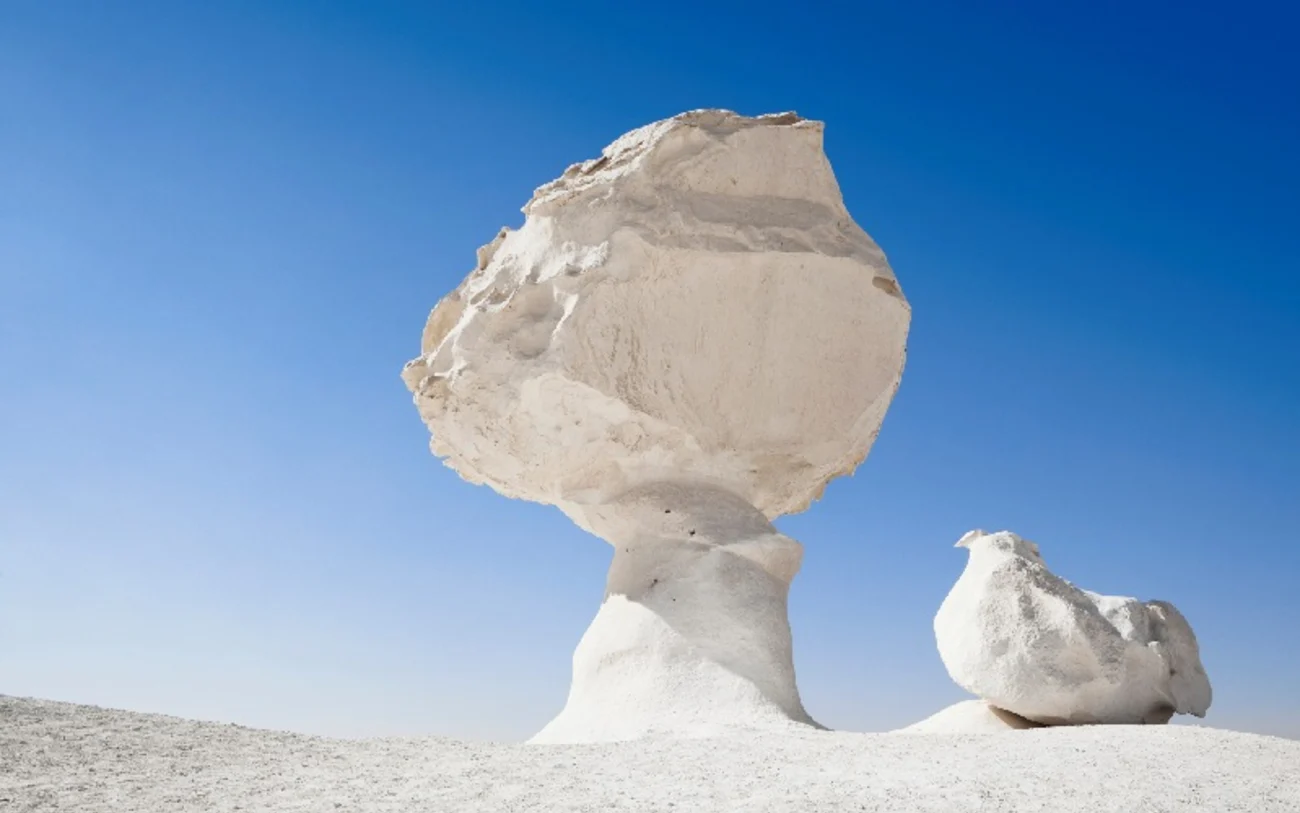
The White Desert in Egypt is a surreal natural landscape covering about 300 km² in the Western Desert, famous for its white chalk and limestone formations sculpted by wind erosion. Set against golden sands, these unique rock shapes create one of Egypt’s most photogenic environments. Beyond its visual appeal, the desert is an important wildlife refuge, supporting endangered species such as the rhim and dorcas gazelles, as well as foxes, sand cats, and Barbary sheep. With elevations ranging from low desert valleys to limestone plateaus, the White Desert combines geological wonder, ecological value, and striking beauty, making it one of Egypt’s most remarkable protected areas.
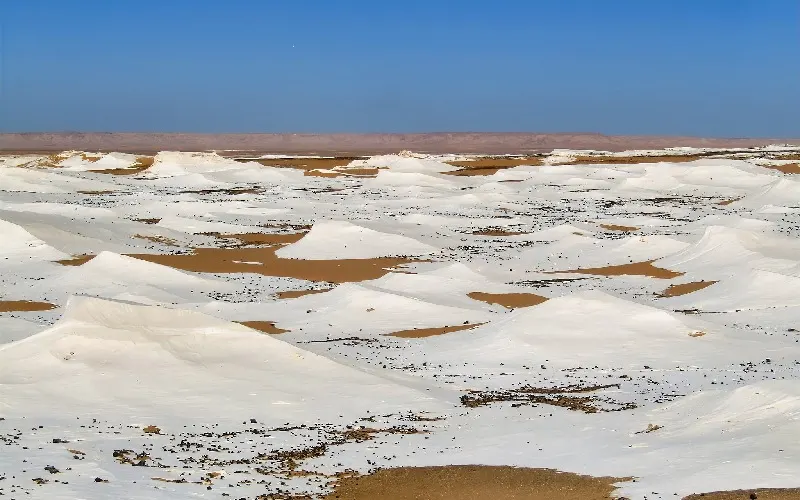
The White Desert is primarily composed of white chalk and limestone formations. These rocks are rich in calcium carbonate, originating from the remains of marine organisms that inhabited ancient seas millions of years ago.
The geological origins of the White Desert
The geological story of Egypt's White Desert began millions of years ago during the Cretaceous period (145-66 million years ago), when the region lay beneath the ancient Tethys Ocean. This prehistoric sea deposited massive layers of sedimentary rock that would eventually form the foundation of this remarkable landscape.
How the Farafra Depression was formed
The White Desert lies within the Farafra Depression, the second-largest depression in Egypt, spanning approximately 380 square miles (980 sq km). Its formation resulted from complex tectonic processes that occurred over millions of years. As the ancient seas retreated, the exposed seabed underwent significant geological changes. The plateau subsequently collapsed, revealing layers of sedimentary rock that had accumulated over eons. This tectonic activity, coupled with the recession of water, created the depression that now houses the White Desert National Park. Throughout this period, the region experienced multiple phases of uplift, further shaping its distinctive topography.
Role of wind and sand erosion
Perhaps most remarkable about the White Desert's formation is the profound effect of erosion on the landscape. Over many millions of years, powerful winds carrying abrasive sand particles have acted as natural sandblasting agents through a process known as ventifacting. These persistent forces gradually sculpted the soft chalk formations into the mesmerizing shapes visible today. The park's elevation varies dramatically, with its highest point at El Qess Abu Said reaching 353 m (1,158 ft) above sea level and its lowest point at Wadi Hennis descending to 32 m (105 ft).
Interestingly, the rock formations show evidence of both wind and water erosion. The lower portions of many formations appear rounded and smooth due to ancient water action, while the upper sections display more angular, erratic shapes created by wind. This dual erosion pattern offers visual evidence of past water levels in the region.
Chalk and limestone composition
The White Desert's distinctive coloration comes primarily from its geological composition. The rock formations consist mainly of:
- Calcium carbonate (calcite) - the primary mineral in the chalk and limestone
- Silica deposits throughout the formations
- Occasional iron oxide, creating subtle reddish hues in some areas
These white rocks originated from the remains of marine organisms that inhabited the ancient seas. As these creatures died, their calcium-rich shells and skeletons accumulated on the seafloor, eventually compacting into the soft, porous chalk that characterizes the region today. The high calcium content gives the desert its distinctive white appearance, contrasting dramatically with surrounding landscapes.
Unique rock formations and their significance
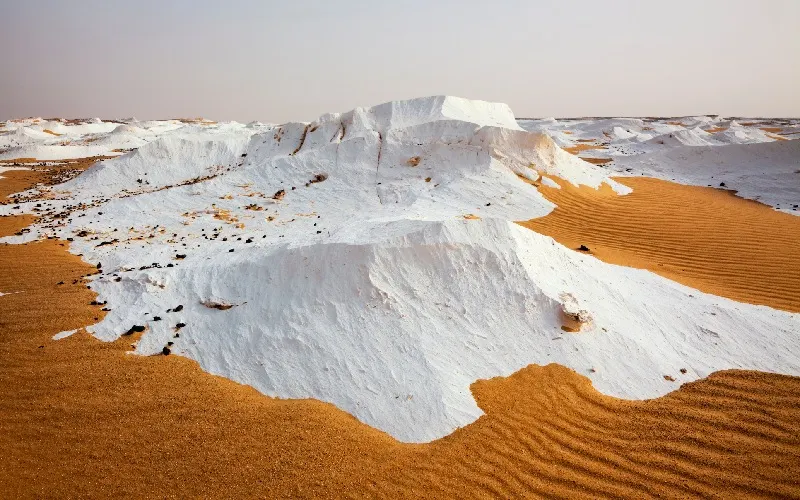
Throughout the White Desert, centuries of wind and sand erosion have sculpted extraordinary chalk rock formations that resemble familiar objects, creating a surreal landscape unlike anywhere else on Earth.
Mushroom and chicken rocks
Among the White Desert's most iconic features are the mushroom-shaped formations, towering 3-4.5 meters tall with broad caps atop narrow bases. These natural sculptures stand as testament to the power of differential erosion, where softer rock erodes faster than harder material.
Notably, the "Chicken Rock" has become a popular landmark, named for its uncanny resemblance to a sitting chicken. Other formations have inspired names like "ice cream cone," "the Monolith," and "Inselberg". Perhaps most distinctive is the "chicken and tree" set, alternatively called "chicken and mushroom" or "chicken and atomic bomb". These formations, estimated to be around 30 million years old, showcase nature's artistic capability to create magnificent artifacts through weathering processes.
Crystal Mountain and its mineral makeup
Crystal Mountain, situated between Bahariya Oasis and Farafra Oasis approximately 120 km from Farafra, presents another geological marvel. Despite common misconceptions, the mountain consists primarily of barite (BaSO₄) and calcite (CaCO₃) crystals rather than quartz. Essentially, it forms a small arch within eroded chalk limestone, with crystals that developed from hydrovolcanic solutions. The formation process resembles that of desert roses, as hot solutions highly concentrated with dissolved minerals penetrated cavities and crystallized upon cooling. Currently protected to preserve its unique structure, the mountain sparkles impressively when sunlight strikes its surface.
The Black Desert vs. White Desert contrast
Conversely, the Black Desert creates a striking counterpoint to the White Desert's pale landscape. Located between Bahariya Oasis and the White Desert, this area features dark volcanic hills covered with black basalt rocks scattered across golden sands. The distinctive dark coloration results from high iron concentration in the granite. This dramatic juxtaposition of landscapes – the bright white chalk formations against dark volcanic terrain – offers visual evidence of the region's complex geological history. The Black Desert presents a more rugged, almost lunar appearance compared to its white counterpart.

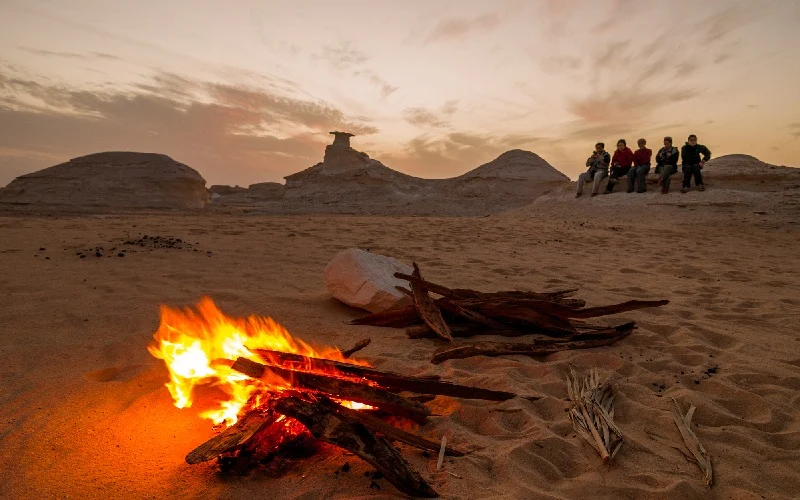
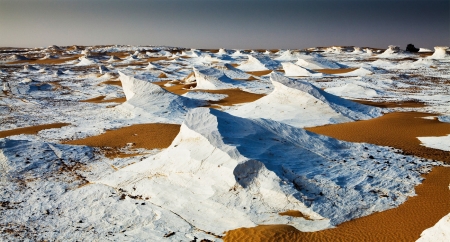
The White Desert is renowned for its surreal, wind-carved rock formations that resemble familiar objects like mushrooms and chickens. These striking white chalk sculptures, set against the orange sandy landscape, create an otherworldly scenery that attracts visitors from around the globe.
Customize Your Dream Vacation!
Get in touch with our local experts for an unforgettable journey.
Plan Your TripEcological importance and wildlife
The White Desert serves as a crucial sanctuary for numerous species specially adapted to harsh desert conditions. Designated as a protected area, it safeguards biodiversity amid challenging environmental conditions.
Endangered species in the region
The national park provides refuge for several endangered animals, most notably the rhim gazelle and the vulnerable dorcas gazelle. Moreover, the protected landscape houses various other mammals including Barbary sheep, jackals, Rüppell's foxes, red foxes, fennec foxes, and the elusive sand cat. Migratory birds also find temporary shelter in this region during specific seasons. The Barbary sheep, classified as vulnerable by the IUCN, faces threats primarily from poaching and competition with livestock for increasingly scarce resources.
Adaptations of desert animals
Desert dwellers have evolved remarkable survival mechanisms for this challenging environment. Generally, these adaptations include:
- Nocturnality to avoid daytime heat
- Specialized features like long eyelashes and thick eyebrows to keep sand out
- Ability to extract water from food rather than drinking
- Thick skin or exoskeletons to prevent water loss
Fennec foxes, for instance, possess distinctively large ears that help dissipate heat, whereas the kangaroo rat can survive exclusively on moisture extracted from seeds and insects.
Conservation efforts since 2002
Since being declared a natural reserve through Prime Minister's Decree No. 1220 of 2002, conservation initiatives have focused on protecting both the unique geological formations and threatened wildlife. The White Desert National Park now encompasses 300 km² (120 mi²), although challenges remain from hunting, habitat degradation, and human activities. The protected status primarily aims to preserve rare animals threatened with extinction while simultaneously providing economic opportunities for local populations.
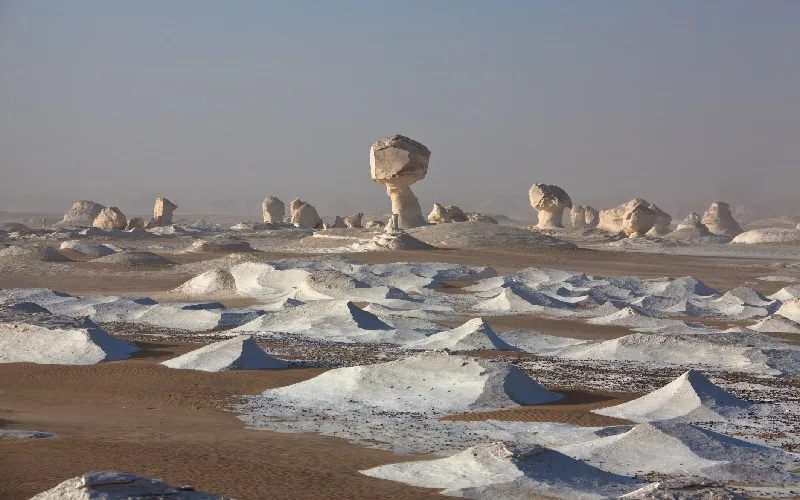
The White Desert serves as a sanctuary for several endangered species, including the rhim gazelle and dorcas gazelle. Other wildlife in the area includes Barbary sheep, jackals, various fox species, and sand cats, all of which have adapted to survive in the harsh desert environment.
Historical and cultural relevance
The White Desert in ancient trade routes
Throughout history, the White Desert served as a vital passage for ancient trade caravans. Located between the oases of Bahariya and Farafra, this region functioned as an important corridor connecting the Nile Valley with distant lands. Historically, merchants utilized these desert pathways to transport goods between Egypt, Sudan, and Libya, carrying valuable commodities like spices, salt, and ivory. First of all, evidence suggests that Farafra oasis experienced human habitation since prehistoric times, with historians noting three distinct phases marked by periods of heavy rainfall. After the Arab conquest of Egypt, trade in dates and olives flourished between Farafra and the Nile Valley.
Modern recognition as a protected area
In January 2002, Prime Minister's Decree No. 1220 established the White Desert as a protected national park. Consequently, this designation by the Egyptian government helped preserve both its geological wonders and endangered wildlife. In fact, the White Desert National Park spans approximately 3,000 square kilometers and is classified according to the International Union for Conservation of Nature standards. Besides its ecological value, the park represents an important source of income for local oasis communities.
Appearances in media and pop culture
The distinctive landscape has attracted numerous filmmakers and musicians. Notably, British band Klaxons filmed their music video "Echoes" amidst the desert's unique chalk formations. Major brands including Nikon and Samsung have also conducted commercial shoots in this striking setting. Furthermore, parts of the Bollywood song "Suraj Hua Madhyam" from "Kabhi Khushi Kabhi Gam" were filmed here. The White Desert even appeared in the 2019 Civilization VI video game as one of the featured Natural Wonders.
The White Desert was formed over millions of years through a combination of geological processes. It began as a seabed during the Cretaceous period, later exposed by tectonic activity. Wind and sand erosion then sculpted the soft chalk and limestone into the unique formations visible today.
The White Desert is a striking example of how time, geology, and erosion can transform an ancient seabed into a landscape of extraordinary beauty. Shaped over millions of years, its white chalk formations stand as natural sculptures carved by wind and sand, reflecting the region’s deep geological past. Beyond its visual appeal, the desert plays a vital ecological role, offering protected habitat for rare and endangered species adapted to extreme conditions. Its historical importance as a trade corridor and its influence on modern culture further enrich its significance. Together, these layers of natural, ecological, and cultural value make the White Desert one of Egypt’s most distinctive and compelling landscapes.
While the White Desert is a popular tourist destination, it's recommended to visit with a licensed tour company for safety reasons. Travelers should remain vigilant due to potential security concerns in the region and follow local guidelines and travel advisories.
The ideal time to visit is between October and April, when temperatures are milder. Summers can be extremely hot, making daytime exploration challenging. Early mornings and late afternoons are perfect for photography and sightseeing.
Yes, camping is a popular way to experience the desert. Licensed tour operators provide guided overnight trips, complete with tents, meals, and stargazing opportunities under the desert’s remarkably clear skies.
The White Desert is approximately 500 km (310 miles) southwest of Cairo. It is usually reached via the Bahariya Oasis, with tours often combining transportation, guided excursions, and multi-day desert adventures.
Yes, nearby oases like Bahariya and Farafra contain archaeological remains, including prehistoric settlements and evidence of ancient trade routes. These areas also preserve traditional Berber and Nubian cultural heritage.
While not officially a UNESCO World Heritage Site yet, the White Desert is globally recognized for its geological significance, unique erosion-formed landscapes, and its role as a protected habitat for endangered species, highlighting its natural and ecological value.


As a UK passport holder, you'll discover that obtaining an Egyptian visa is a straightforward process, with multiple options designed to accommodate various travel purposes and durations.

El Fayoum, located one hour south of Cairo, is considered one of Egypt's most peaceful places and one of the most greenish oases in Egypt's desert

Bahariya is one of the more appealing of the desert circuit oasis, and it's also the easiest to access, being just 365 kilometers from Cairo.

Farafra Oasis showcases the White Desert's dramatic chalk formations, therapeutic hot springs, and volcanic Black Desert. This remote Egyptian oasis, 627 km from Cairo, offers authentic Bedouin culture and stunning desert landscapes.

Dakhla Oasis spans 2,000 km² in Egypt's Western Desert, 350 km from the Nile. This UNESCO-listed site showcases Pharaonic heritage and traditional communities with 75,000 residents.

Kharga Oasis, Egypt's largest desert oasis, spans 160 km west of the Nile. This UNESCO nominee features the Temple of Hibis and preserves ancient caravan route heritage as the most modernized western oasis with 87,482 residents.


Siwa Oasis is a lush desert oasis below sea level, known for its natural springs, palm groves, ancient oracle, and preserved Berber culture.

Egypt’s Black Desert is a striking natural wonder marked by black volcanic hills, basalt formations, and surreal landscapes shaped by ancient volcanic activity and millions of years of erosion.

The White Desert is a protected natural area in Egypt near Farafra Oasis, known for its white limestone formations created by erosion over millions of years.

Crystal Mountain Egypt is a breathtaking natural landmark located between Bahariya and Farafra oases in the White Desert. Known as the “Jewel of the Desert,” it features clusters of sparkling quartz crystals formed over millions of years, making it one of the rarest geological formations in the world.