Table of contents:
#Eid al Fitr 2026 in Morocco: Key Dates and Religious Significance
#How Moroccans Celebrate Eid: From Dawn to Dusk
#Traditional Eid Customs and Cultural Practices
#Experiencing Eid Food Culture and Moroccan Hospitality
#Travel Guide: Experiencing Morocco During Eid al-Fitr 2026
#Conclusion
Morocco's most cherished religious celebration, Eid al-Fitr, stands as a testament to centuries-old traditions that unite millions across the kingdom each year. Expected to commence around March 20, 2026, this sacred holiday marks the triumphant conclusion of Ramadan's month-long period of fasting and spiritual reflection. Cities from Casablanca to Marrakech, along with countless rural villages nestled in the Atlas Mountains, come alive with the melodious sounds of communal prayers, the aromatic essence of traditional feasts, and the warmth of multigenerational family reunions.
The celebration represents far more than a religious observance; it embodies the very soul of Moroccan hospitality and cultural identity. Families gather around elaborately prepared tables, sharing recipes that grandmothers have perfected over decades, while children receive carefully chosen gifts that spark joy and strengthen family bonds. These time-honored customs, preserved through generations of Moroccan families, reflect the nation's deep respect for tradition and community solidarity.
Travelers who find themselves in Morocco during this extraordinary period witness authentic cultural expressions rarely experienced by casual visitors. Understanding the intricate customs, precise timing determined by lunar calculations, and the profound cultural significance woven into each ritual will allow you to appreciate the depth and beauty of this remarkable celebration that defines Morocco's spiritual and social landscape.
Expected Start Date for Eid Celebrations
The Islamic calendar's lunar basis creates an inherent element of anticipation surrounding the precise arrival of Eid al-Fitr. Current projections place the 2026 celebration on either Friday, March 20, or Saturday, March 21, with Friday emerging as the most probable date. The celebration's official commencement occurs at sunset on the preceding evening, establishing that a successful moon sighting on Thursday night would initiate observances from that moment forward. This carefully calculated timing positions Eid al-Fitr on Shawwal 1, which represents the inaugural day of the Islamic calendar's tenth month. The lunar calendar's natural progression ensures that each year's corresponding Gregorian date shifts approximately eleven days earlier than the previous year.
This temporal uncertainty reflects centuries of Islamic tradition rather than modern scheduling challenges. Final confirmation rests entirely upon moon sighting conditions, which fluctuate according to atmospheric clarity and regional geographic factors. Certain calculations suggest the celebration might span from Thursday evening's sunset on March 19 through Friday's sunset on March 20. Such flexibility demonstrates Morocco's adherence to traditional methods for determining Islamic holidays that prioritize religious authenticity over administrative convenience.
Moon Sighting and Official Announcements
Morocco's Ministry of Islamic Affairs orchestrates the official lunar observation process through carefully appointed religious committees positioned across the kingdom. These dedicated committees collaborate with specialized units from the Royal Armed Forces, conducting systematic observations of the crescent moon during the anticipated evening to determine whether Eid commences the following day. Prominent Moroccan astronomer Ibrahim Akhiam articulates the delicate balance between modern science and religious tradition, noting that while astronomical calculations provide valuable scientific groundwork for predictions, Morocco's officially recognized methodology remains the authentic visual sighting confirmed by designated religious authorities.
Regional religious leaders evaluate moon visibility according to their specific geographic coordinates and prevailing atmospheric conditions. Cloud cover or excessive brightness in the western sky during moonset can necessitate postponing the holiday by one full day. This natural variation occasionally results in different regions observing Eid on separate days, a phenomenon recognized as an accepted characteristic of the Islamic calendar system. Various Arab nations may celebrate the feast on different dates than Morocco, each following their independent sighting confirmations.
The Ministry's final announcement arrives mere hours before celebrations begin. Religious authorities typically issue their official declaration following the evening moon sighting ceremony, providing families with limited time to complete their final preparations.
Why Eid Marks the End of Ramadan in Morocco
Moroccans affectionately call Eid al-Fitr "Eid Sghir" (the Little Eid), distinguishing it from the later Eid al-Adha while emphasizing its beloved status among the nation's most eagerly awaited celebrations. This joyous occasion commemorates the successful completion of Ramadan's intensive month of fasting and spiritual discipline, while simultaneously heralding the arrival of Shawwal. Faithful Muslims express profound gratitude to Allah for bestowing upon them the divine guidance and inner strength necessary to maintain disciplined restraint throughout Ramadan's demanding spiritual journey.
Historical records trace the first Eid al-Fitr observance to 624 CE, when Prophet Muhammad and his devoted followers celebrated following their decisive victory at the Battle of Jang-e-Badar, a pivotal moment in Muhammad's early struggle against the Quraish tribe in Mecca. This foundational event imbues the celebration with profound spiritual significance that resonates through contemporary observances.
Islamic law explicitly prohibits fasting on Eid day itself. This religious mandate emphasizes the holiday's fundamental purpose as a time for joyful celebration and abundant feasting rather than continued self-denial. The day emphasizes personal accountability and sincere spiritual effort while redirecting focus toward expressions of gratitude, humility, and strengthened social bonds. Eid celebrations in Morocco masterfully weave together the sacred and the communal, producing an atmosphere where religious devotion and festive joy coexist harmoniously.
Experience authentic Eid celebrations with expert-guided Morocco tour packages. Cultural immersion, family feast access, premium accommodation, and Marrakech-Fez itineraries during 2026 festivities.
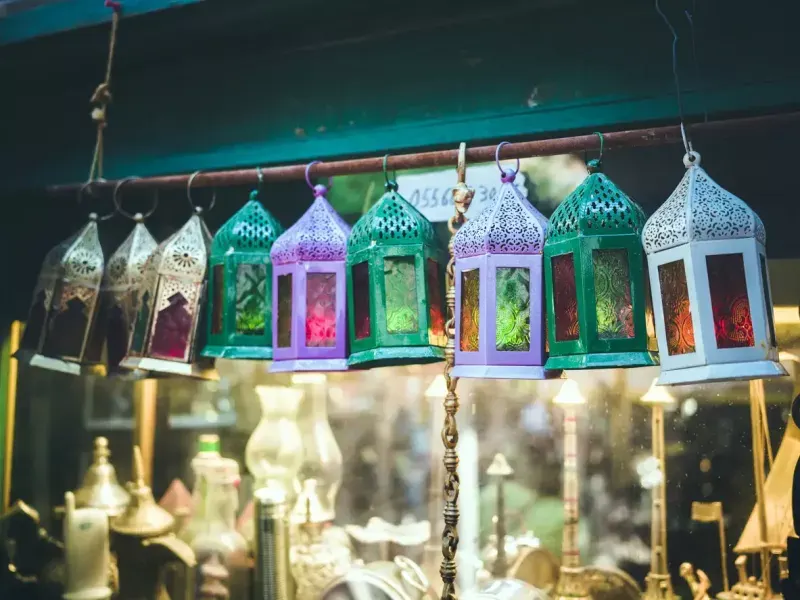
Ramadan Kareem
The Sacred Morning Ritual
Households across Morocco stir to life while darkness still cloaks the kingdom, families beginning elaborate preparations that honor traditions spanning centuries. The ritual purification known as ghusl marks the spiritual transition from Ramadan's contemplative period to Eid's joyous celebration, while family members select their most treasured garments, pristine white djellabas or vibrant traditional robes that shimmer with intricate embroidery. Men carefully apply precious drops of oud and musk, fragrances that will mingle with incense drifting from neighborhood mosques as communities prepare for collective worship.
Salat al-Eid, the distinctive Eid prayer, unfolds approximately one to two hours after dawn breaks over Morocco's diverse landscapes. This extraordinary communal worship differs fundamentally from daily prayers, requiring group participation that transforms individual devotion into collective spiritual expression. Municipal authorities designate vast open-air fields where thousands of faithful converge, each person carrying personal prayer mats that create colorful tapestries across these sacred gathering spaces. Morocco's architectural treasures, the majestic Hassan II Mosque overlooking Casablanca's Atlantic coastline, Marrakech's towering Koutoubia Minaret, and Tangier's historic Grande Mosque serve as focal points for these massive congregations, though men and women observe the prayer in traditionally separated areas.
The charged atmosphere resonates with voices united in takbir, the repeated declaration "Allahu Akbar" that echoes through neighborhoods like spiritual thunder. Imams deliver sermons through loudspeakers, their words carrying across prayer grounds for approximately forty-five minutes of collective worship that binds communities in shared gratitude. The ceremony concludes with genuine warmth as strangers exchange embraces and heartfelt greetings: "Eid Mubarak," "Eid Said," or the profound "Taqabbal Allah minna wa minkum" May Allah accept our devotion from all of us.
Honoring Family Bonds Through Sacred Visits
The return home unveils breakfast tables that bear little resemblance to ordinary morning meals. Families showcase fresh-baked bread accompanied by golden honey, creamy butter, succulent dates, and traditional pancakes like the spongy msemen or delicate baghrir, alongside specially prepared Eid cookies crafted during Ramadan's final days. Aromatic mint tea, Morocco's liquid hospitality, flows continuously throughout these intimate gatherings.
Eid al-Fitr's heart beats through the ancient concept of "Silat Ar-Rahim," the sacred maintenance of family connections that defines Moroccan social structure. Cultural protocol dictates a precise visiting pattern where younger generations pay respects to their elders first, demonstrating the deep reverence for family hierarchy that characterizes Moroccan society. Families spend entire days moving from household to household, embracing parents, grandparents, aunts, uncles, and cherished neighbors in carefully orchestrated social choreography. Each destination offers tea, homemade sweets, or complete meals, while children anticipate the treasured "Eidiya" crisp dirham notes that elders present with beaming smiles.
Community Unity and Amazigh Hospitality
Eid's celebration extends beyond family circles to embrace entire communities through generous feasting and neighborly sharing. Morocco's southeastern Amazigh communities exemplify extraordinary hospitality, literally opening their homes to any passerby, including strangers seeking refreshment. This remarkable tradition allows visitors to enter any dwelling for tea and sweets without prior introduction, reflecting hospitality customs that predate written history. Village squares transform into community forums where neighbors discuss local matters, organize assistance for those facing hardships, and resolve disputes through collective wisdom.
Twilight Celebrations and Cultural Expression
Evening hours bring leisurely neighborhood strolls as markets extend their hours and shops illuminate the darkening streets. Thoroughfares fill with families savoring the festive atmosphere while street vendors display colorful arrays of treats, children's toys, and various merchandise that adds commercial vibrancy to the spiritual celebration. Historic medinas in Marrakech and Fez pulse with energy as performers, food stalls, and families claim spaces in ancient squares, creating spontaneous entertainment under Morocco's clear evening skies.
Traditional cafés experience their busiest hours as friends gather around small tables for endless rounds of mint tea or robust coffee. Conversations stretch deep into the night, creating the relaxed, joyful atmosphere that defines Eid's social dimension. Regional celebrations feature traditional music performances, art exhibitions, and street festivals that showcase Morocco's cultural diversity. The mesmerizing Amazigh dance known as Ahidous fills certain areas with hypnotic rhythms as men and women create intricate patterns of clapping and chanting beneath star-filled skies.
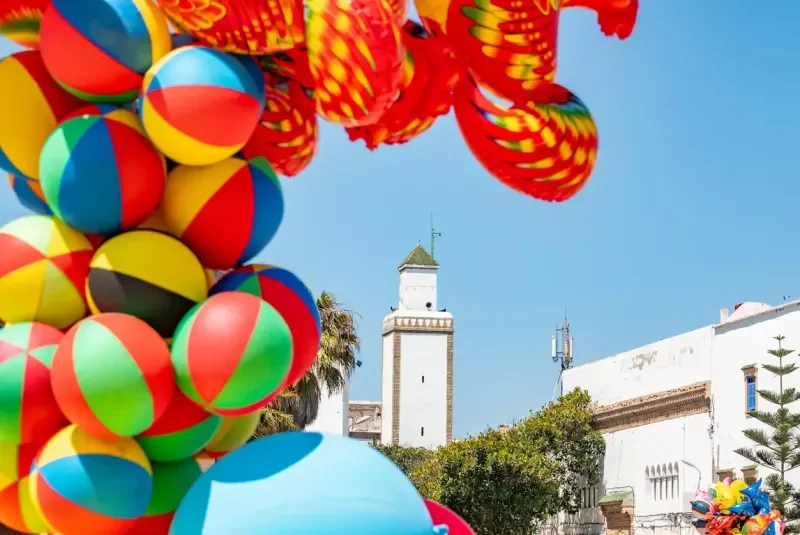
Mosque Ben Youssef at Essaouira in Marrakesh-Safi, Morocco
Customize Your Dream Vacation!
Get in touch with our local experts for an unforgettable journey.
Plan Your Trip
Morocco's Eid celebrations extend far beyond the public displays of prayer and feasting, encompassing a sophisticated network of customs that have defined the kingdom's social fabric for generations. These deeply rooted practices embody the fundamental Islamic values of charity, familial respect, and community solidarity that distinguish Moroccan society from other Muslim nations.
Zakat al-Fitr and Charitable Giving
The sacred obligation of Zakat al-Fitr stands as one of Islam's most profound expressions of social responsibility, requiring completion before the commencement of Eid prayers. Morocco's Supreme Scientific Council establishes this charitable requirement at MAD 23 per person, representing approximately 2.5 kilograms of grain or flour. Each household head assumes responsibility for fulfilling this obligation on behalf of all family members residing under their care, including children.
Moroccan families traditionally settle this charitable duty two to three days before Eid al-Fitr, ensuring adequate time for distribution to those requiring assistance. While historical practice involved donating staple foods such as wheat, barley, or dates, contemporary Moroccans frequently contribute equivalent monetary amounts to local mosques or charitable organizations. The council notes that exceeding the minimum requirement demonstrates enhanced generosity and attracts additional divine blessings.
This religious obligation fulfills two essential functions: purifying those who fast from any inappropriate speech or behavior during Ramadan, while guaranteeing that even Morocco's most economically disadvantaged citizens can participate meaningfully in Eid celebrations.
New Clothes and Personal Grooming
The tradition of donning new or finest garments represents one of Eid's most visually striking customs across Morocco. Demand for traditional clothing experiences a significant increase as Ramadan concludes, particularly following Laylat al-Qadr. Moroccan men traditionally select djellabas or jellabas complemented by traditional balgha shoes. Women opt for kaftans, djellabas, or elegant takchitas, frequently showcasing intricate embroidery and enhanced with carefully selected jewelry.
These garments embody significance beyond mere fashion statements. Moroccan women frequently explain that wearing traditional clothing for Eid al-Fitr honors teachings transmitted across generations. Families invest in new outfits for each member, spanning from grandparents to the youngest children. When financial constraints prevent new clothing purchases, individuals proudly wear their finest existing garments.
Visiting the Graves of Loved Ones
Islamic tradition permits and encourages visiting deceased relatives' graves, serving as spiritual reminders of the Hereafter. However, scholarly interpretations differ regarding optimal timing. Many Islamic authorities suggest scheduling cemetery visits before or after Eid celebrations rather than during the holiday itself[123]. This recommendation aims to preserve Eid's celebratory atmosphere rather than introducing sorrowful reflections during what should remain a joyous occasion.
Families choosing to visit graves during the Eid period focus on honoring loved ones through prayers and Quranic recitations rather than engaging in excessive mourning.
Children's Traditions and Activities
Moroccan children receive particular attention throughout Eid celebrations. Elder family members traditionally present younger relatives with new clothing, sweets, and monetary gifts called "Eidiya". These offerings, though often representing modest gestures between immediate family members, generate tremendous excitement among children who eagerly await their crisp dirham bills from relatives.
The gift-giving tradition extends beyond individual families. The broader community spirit ensures generous treatment of all children, guaranteeing that every young person experiences the celebration's joy regardless of their family's economic circumstances.
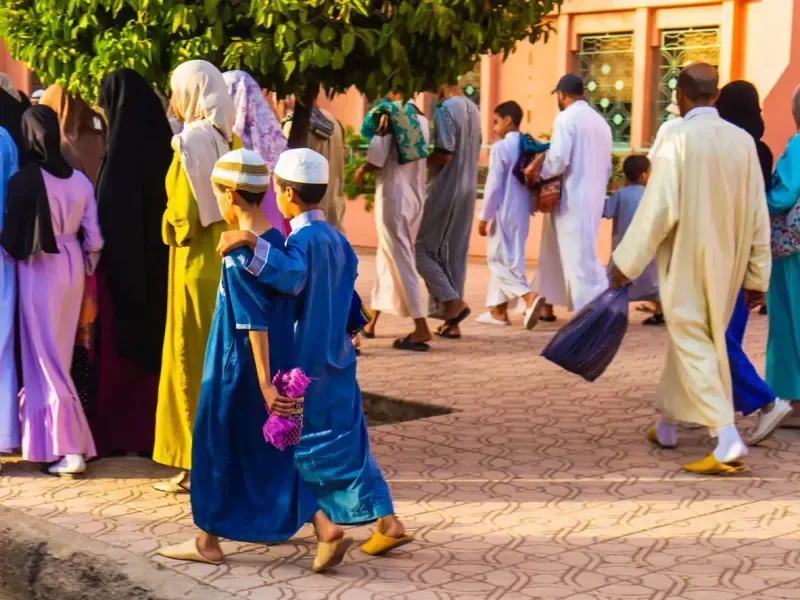
Two kids going to the prayer of Aid Al Adha in Marrakech, Morocco
The culinary landscape of Eid al-Fitr reveals Morocco's most treasured gastronomic heritage, where ancient recipes meet contemporary family kitchens in a celebration of flavors that has remained unchanged for centuries. Each dish carries historical significance, regional identity, and the accumulated wisdom of countless Moroccan matriarchs who have perfected these preparations across generations.
Signature Eid Dishes and Recipes
Moroccan confectionery reaches its pinnacle during Eid celebrations through meticulously crafted sweets that require days of preparation. Chebakiya, the iconic honey-drenched pastries with their distinctive flower-like appearance and sesame coating, represent the artistic pinnacle of Moroccan pastry-making. Kaak, those perfectly formed ring-shaped cookies that dominate northern Moroccan tables, showcase the regional variations that make each province's Eid unique. Sellou, a nutritious blend of roasted flour, almonds, and honey, provides sustained energy while satisfying the sweet cravings that follow a month of fasting.
The centerpiece Eid lunch gathering transforms ordinary dining rooms into grand banquet halls where extended families reconnect over elaborate spreads. Regional specialties reflect Morocco's diverse culinary geography: elaborate couscous preparations crowned with seasonal vegetables, succulent tajines featuring chicken paired with sweet prunes, and the ceremonial Mrouzia, a complex lamb dish enriched with raisins, honey, and carefully balanced spices that embody the sophistication of Moroccan cuisine. Certain regions honor tradition with Rfissa, an intricate composition of hand-shredded msemen pastry layered with tender chicken, lentils, and the distinctive flavor of fenugreek. Seffa presents the perfect marriage of sweet and savory elements, featuring delicate couscous grains adorned with cinnamon, powdered sugar, and toasted almonds.
How Families Prepare for the Feast
The preparation ritual begins several days before Eid, when Moroccan kitchens become workshops of culinary artistry where women gather to create the intricate pastries that define the celebration. Households undergo thorough transformations with freshly pressed linens, polished brass serving pieces, and the finest china reserved exclusively for such occasions. Professional bakers experience their busiest season as families order traditional sweets, though many households maintain the practice of preparing signature dishes from scratch on Eid morning itself.
Street Food and Market Activity
Evening markets during Eid pulse with renewed energy as vendors extend their hours to accommodate families enjoying leisurely neighborhood walks. Street commerce flourishes with specialty vendors offering traditional toys for children, seasonal treats, and unique items that appear only during religious celebrations. Traditional coffeehouses reach capacity as groups of friends gather over steaming glasses of mint tea, their animated conversations creating the soundtrack of Eid evenings that stretch well past midnight.
Being Invited to a Moroccan Home
Receiving an invitation to share Eid festivities with a Moroccan family represents one of the highest honors extended to visitors. Proper etiquette requires bringing thoughtful gifts such as premium pastries or seasonal fruit as tokens of appreciation. Modest, formal attire demonstrates respect for the occasion's significance. Generous participation in the meal shows appreciation, as declining food offerings may inadvertently offend your gracious hosts. Traditional dining involves sharing communal dishes, with the right hand used exclusively for taking food from shared platters. Hosts will warmly insist with repeated encouragements of "Kul, kul!" (Eat, eat!) throughout the meal. Greeting family members with "Eid Mubarak" demonstrates cultural awareness and will be warmly received. The meal concludes with aromatic tea or coffee service, signaling the gentle transition toward departure.
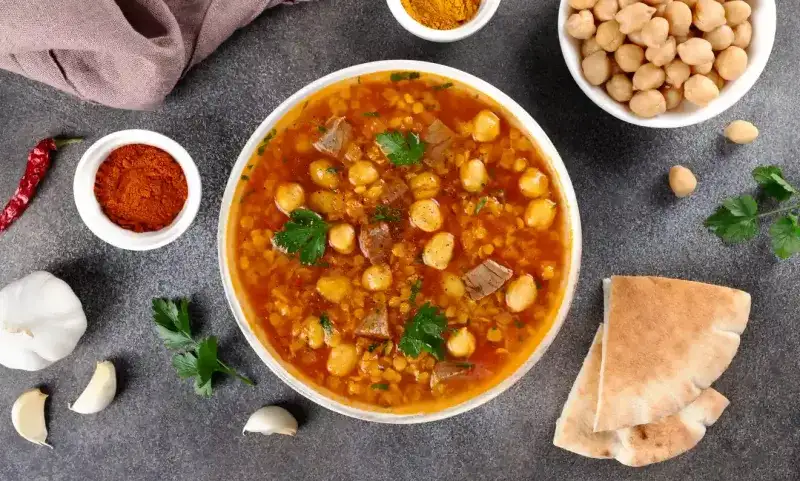
Moroccan harira soup with ingredients, spices and arabic bread on grey background. Ramadan iftar food.
Morocco's sacred celebration fundamentally alters the kingdom's daily operations, creating unique opportunities and challenges for international visitors. Understanding these shifts allows travelers to appreciate authentic cultural expressions while managing practical considerations effectively.
Essential Services and Business Operations
Religious observance takes precedence over commercial activity during Eid's opening day, particularly during morning hours when Muslims gather for special prayers and family celebrations. Financial institutions, postal services, and government offices suspend operations throughout the holiday period. Restaurant establishments and traditional cafés frequently close their doors, especially during morning hours, though some proprietors reopen their venues by afternoon or evening. Major retail chains such as Marjane and Carrefour resume operations after midday. Tourist services encounter notable restrictions since local guides and transport operators prioritize religious obligations and family gatherings during morning hours, with professional services potentially resuming by afternoon.
Accommodation and Culinary Access
International hotels and traditional riads maintain comprehensive services throughout the Eid period, ensuring consistent meal service for their guests. Securing dinner reservations at your accommodation represents a prudent strategy, particularly for the celebration's inaugural evening. Select restaurants catering to international visitors in major metropolitan areas continue operations, though availability fluctuates considerably.
Security Considerations and Movement Patterns
The kingdom maintains its reputation for traveler safety, with violent incidents involving international visitors remaining exceptionally uncommon. Public transportation systems operate on reduced schedules while experiencing increased passenger volumes as Moroccan families journey across the country for reunions. Urban exploration requires planning, though pedestrian exploration offers immersive access to the festive atmosphere permeating local neighborhoods. Crowded environments present elevated risks for petty theft, necessitating secure storage of valuables and consideration of anti-theft travel accessories.
Optimal Destinations for Cultural Immersion
Marrakech and Fez present dynamic historical medinas where centuries-old traditions unfold amid bustling street life, creating unforgettable cultural encounters. Atlantic coastal destinations such as Essaouira and Asilah offer tranquil settings for observing local celebrations. The mountain town of Chefchaouen provides a serene environment enhanced by its distinctive blue-painted architecture. Smaller regional centers like Taroudant deliver authentic traditional observances without metropolitan crowds.
Strategic Preparation Guidelines
Accommodation reservations require early attention as lodging facilities experience rapid booking during this period. Transportation arrangements demand planning since airline services, railway connections, and bus networks encounter significant demand. Cash availability becomes crucial as automated banking services face limitations and local merchants favor cash transactions during holiday periods.
Morocco during Eid al-Fitr presents travelers with an extraordinary window into the kingdom's most sacred traditions, offering cultural immersion that extends far beyond typical tourist experiences. This remarkable celebration seamlessly weaves together profound religious devotion, elaborate culinary artistry, and the legendary Moroccan hospitality that has welcomed visitors for centuries. The holiday reveals Morocco's authentic character through intimate family gatherings, ancient rituals, and community bonds that have remained unchanged for generations.
Successful travel during this period requires thoughtful preparation and cultural sensitivity. Early accommodation reservations become essential as hotels reach capacity, while maintaining adequate cash reserves ensures smooth transactions when many services operate on limited schedules. The initial day of celebration particularly demands patience, as religious observances and family commitments take precedence over commercial activities.
The true reward lies in embracing Morocco's unhurried rhythm during these sacred days. Street celebrations, spontaneous invitations to share traditional meals, and witnessing centuries-old customs practiced with unwavering devotion create memories that standard itineraries cannot provide. Eid al-Fitr showcases Morocco's remarkable ability to preserve ancient traditions while extending genuine warmth to respectful visitors, revealing a nation where spiritual depth and cultural richness continue to flourish in their most authentic form.
Is there Eid in Morocco?
Yes, Morocco celebrates both major Eids: Eid al-Fitr (after Ramadan) and Eid al-Adha (Festival of Sacrifice). These are national holidays with family gatherings, prayers, and feasts across Marrakech, Fez, Casablanca, and all Moroccan cities. Dates change yearly based on the Islamic lunar calendar. Eid al-Adha is bigger with animal sacrifices and multi-day celebrations. Many shops and restaurants close during Eid.
Why is Eid different in Morocco?
Morocco's Eid dates sometimes differ by one day from those of other Muslim countries because Morocco follows its own moon sighting committee, not Saudi Arabia's announcement. Morocco's Supreme Ulema Council independently observes the crescent moon to determine Islamic dates. This means Eid might start a day earlier or later than in Egypt, Saudi Arabia, or other countries. Many Muslim countries use local sighting methods.
Why did Morocco cancel Eid?
Morocco has never canceled Eid; this is a misunderstanding. Morocco occasionally announces Eid dates one day different from Saudi Arabia due to independent moon sighting. During COVID-19 (2020-2021), Morocco restricted public prayers and large gatherings but didn't cancel the holiday itself. Families still celebrated at home. Eid is constitutionally protected in Morocco and cannot be canceled.
Is Eid al-Adha on the day of Hajj?
No, Eid al-Adha begins the day after Hajj's main ritual. Eid al-Adha falls on 10th Dhul Hijjah, while the Day of Arafah (Hajj's most important day) is 9th Dhul Hijjah. Pilgrims perform Hajj on the 8th-9th, then Eid celebrations begin on the 10th. Muslims worldwide celebrate Eid al-Adha simultaneously with pilgrims completing Hajj in Mecca.
What does "Eid" mean?
"Eid" (عيد) is Arabic for "festival" or "celebration." In Islam, it refers to two major holidays: Eid al-Fitr (after Ramadan) and Eid al-Adha (Festival of Sacrifice). The word signifies joyous occasions for worship, family gatherings, feasting, and charity. Muslims greet each other with "Eid Mubarak" (Blessed Eid) during these festivals.
Can non-Muslims celebrate Eid?
Yes, non-Muslims can participate when invited by Muslim friends or family. Many Muslims welcome non-Muslim guests to share Eid meals and festivities. It's respectful to accept invitations and try traditional foods. Mosque prayers are generally for Muslims only. In Morocco, Egypt, Turkey, and other Muslim countries, tourists often experience Eid hospitality. Be respectful and dress modestly.