
 Home
Home
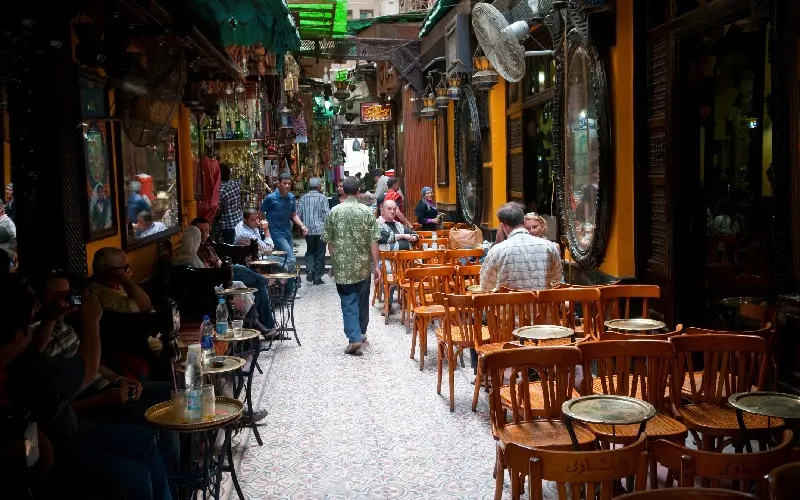
Khan el-Khalili is one of the Middle East’s oldest and most iconic bazaars, founded in the late 14th century during the Mamluk era. Built over an ancient mausoleum, it has functioned continuously as a center of trade for more than 600 years. Today, its narrow alleys blend Islamic architectural beauty with lively commerce, where local traditions meet global goods. The bazaar’s timeless spirit is perfectly embodied by El Fishawi Café, which has operated nonstop since the 18th century, symbolizing Khan el-Khalili’s enduring cultural vitality.
The Fatimid Foundations of Cairo
The story of Khan el-Khalili begins nearly four centuries before its actual construction, rooted in the ambitious vision of the Fatimid dynasty. When these North African rulers conquered Egypt in 969 CE, Caliph al-Mu'izz and his military commander Jawhar al-Siqilli laid the cornerstone for what would eventually house one of the world's great marketplaces. Their new capital, christened al-Qahira—"The Victorious"—emerged as a bold architectural statement.
Cairo as a palace-city
This original Cairo bore little resemblance to the bustling metropolis we know today. The Fatimids conceived their capital as an exclusive rectangular enclave, its precise geometry running parallel to the life-giving Nile canal. Two imposing palaces dominated this carefully planned cityscape: the grand Eastern Palace (al-Qasr al-Kabir) and its companion, the Western Palace (Qasr al-Saghir al-Gharbi), separated by a magnificent ceremonial plaza called Bayn al-Qasrayn—"Between the Two Palaces". This central courtyard spanned an impressive 105 by 255 meters, encompassing more than 2.5 hectares of meticulously maintained space where the Fatimid court staged elaborate ceremonies and state functions.
The exclusivity of this royal domain defined its character completely. Ordinary Egyptians found themselves barred from entry, as only the caliph's immediate family, government officials, military units, and essential court personnel enjoyed residential privileges within the fortified walls. This deliberate segregation reflected the Fatimids' distinctive philosophy of governance, where the caliph embodied both temporal authority and divine spiritual leadership.
The Saffron Tomb and royal necropolis
Hidden beneath the bustling lanes of today's Khan el-Khalili lies a tale of royal grandeur and eventual desecration. The southern terminus of the Eastern Palace—precisely where merchants now hawk their wares—once housed the sacred Turbat al-Za'faraan, known as "The Saffron Tomb". This royal necropolis served as the eternal resting place for successive Fatimid caliphs. Such was the reverence accorded this burial ground that when the dynasty relocated from Tunisia to Egypt, even the mortal remains of previously interred rulers underwent the arduous journey across the Mediterranean to find their final rest in this hallowed Cairo sanctuary.
The sanctity of these royal tombs endured for centuries until Emir Jaharkas al-Khalili's practical ambitions swept aside religious sentiment. Historical chronicles record his startling disregard for the Fatimid legacy—the emir reportedly scattered the bones of Cairo's former rulers into refuse piles east of the city before commencing construction of his commercial venture.
Early trade and the Dar al-Wikala
Commerce initially found no welcome within the Fatimid palace-city's sacred precincts. However, powerful viziers gradually introduced mercantile activities during the dynasty's later period. Vizier Badr al-Jamali pioneered this transformation between 1087 and 1092, expanding the city's boundaries with substantial stone fortifications—portions of which visitors can still observe today—while temporarily permitting common citizens access to previously forbidden quarters.
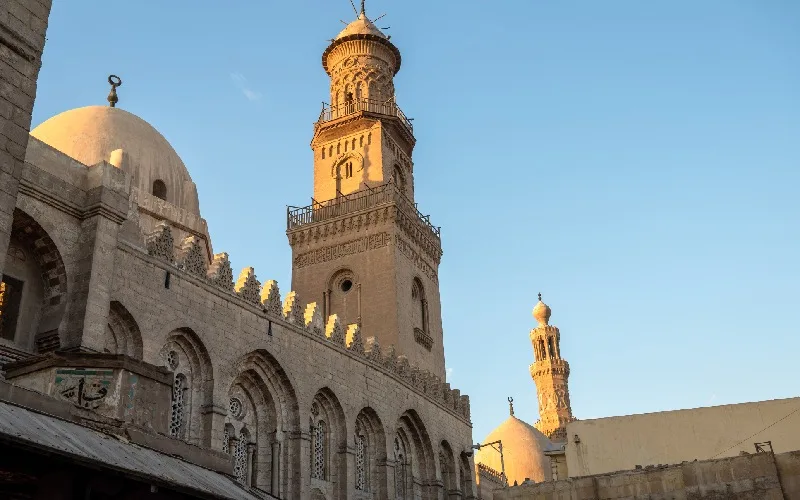
The most significant commercial breakthrough materialized between 1121 and 1125 under Vizier al-Ma'mun al-Bata'ihi's administration. His establishment of both a mint (Dar al-Darb) and an innovative customs facility known as the Dar al-Wikala marked the birth of international trade within Cairo's heart. This pioneering institution operated simultaneously as an urban inn, secure warehouse, and active trading post, accommodating merchants engaged in wholesale, retail, and export ventures. Positioned near what would later become the site of the 15th-century Madrasa of al-Ashraf Barsbay, the Dar al-Wikala represented the first successful integration of foreign commerce into the capital's urban core.
Cairo's Transformation into a Trade Hub
The year 1171 witnessed a seismic shift that would forever alter the character of Cairo. Saladin's victory over the Fatimid Caliphate ushered in the Ayyubid era, and with it came the dismantling of centuries-old exclusivity that had defined the palace-city. Where once stood an insular royal enclave, Saladin envisioned something entirely different—a thriving metropolis open to all.
Saladin's reforms and urban opening
Saladin's first decisive action involved breaking down the barriers that had separated the elite palace-city from the broader population. The rigid segregation that kept ordinary Egyptians beyond the walls vanished as the new ruler integrated al-Qahira with its southern neighbor, al-Fustat. The grand Fatimid palaces found new purposes: the Eastern Palace became the seat of administration, while Saladin claimed the Western Palace as his residence. Most significantly, the ceremonial plaza of Bayn al-Qasrayn opened its gates to merchants and traders, transforming from an exclusive royal courtyard into Cairo's first commercial corridor.
The rise of al-Muizz Street
The Ayyubid period (1171-1250) witnessed the birth of what would become Cairo's commercial spine. Bayn al-Qasrayn, once reserved for royal processions, evolved into al-Muizz Street—a bustling 1.2-kilometer thoroughfare connecting the northern Bab al-Futuh gate to the southern Bab Zuweila. Merchants quickly recognized the potential of this strategic route and established permanent shops and workshops along its length. Wealthy benefactors soon followed, commissioning religious monuments and commercial structures that lined the street. This crucial artery would eventually anchor the entire Khan el-Khalili district.
Waqf institutions and commercial funding
The genius of Islamic commercial development lay not merely in location but in financing. The waqf system provided an elegant solution that merged spiritual devotion with economic necessity. Wealthy patrons could dedicate property for charitable purposes while generating steady income streams through commercial ventures. Caravanserais, warehouses, and bazaars arose throughout the Khan el-Khalili area using this mechanism, their profits flowing to support mosques, schools, and hospitals. This remarkable fusion of commerce and charity created a self-sustaining economic ecosystem that would define the area's character for centuries. When the Mamluk era arrived, it would inherit not just physical infrastructure but a proven model for commercial and religious coexistence.
Customize Your Dream Vacation!
Get in touch with our local experts for an unforgettable journey.
Plan Your TripThe Birth and Growth of Khan el-Khalili
The late 14th century witnessed a remarkable architectural undertaking that would forever alter Cairo's commercial destiny. Despite the lingering devastation of the Black Death, the city pulsed with renewed economic vigor, setting the stage for what would become one of the Islamic world's most enduring marketplaces.
Jaharkas al-Khalili and the original khan
Sultan Barquq's Master of Stables, Jaharkas al-Khalili, seized upon this period of recovery to establish his lasting legacy between 1382 and 1389. The emir's ambitious project required the complete demolition of the sacred Fatimid Saffron Tomb (Turbat az-Za'faraan), and historical chronicles reveal the shocking disregard shown for the royal remains during this process. The resulting caravanserai embodied the essential elements of medieval Islamic commerce—a secure fortress where traveling merchants could safeguard their valuable goods, find respite from arduous journeys, and establish profitable trading relationships.
The architectural blueprint followed time-tested principles: a central courtyard anchored the design, while storage facilities occupied the ground level and residential quarters filled the upper stories. Though initially designated Souq al-Juma (Friday Market), the establishment swiftly adopted its founder's name, becoming known throughout the region as Khan al-Khalili.
Mamluk architecture and urban planning
The Mamluk period ushered in a fundamental shift in Cairo's commercial architecture. Temporary wooden stalls gave way to imposing stone edifices, a transformation driven partly by governmental desires to enhance taxation and regulation of mercantile activities. Mamluk builders perfected a sophisticated urban formula: multi-level structures featuring street-level commerce topped by residential spaces, all organized around protective interior courtyards. This ingenious design addressed Cairo's growing population pressures while maximizing revenue potential from limited urban real estate.
The khan's integration into al-Muizz Street's expanding commercial corridor proved seamless, as Sultan Qaytbay and other influential patrons commissioned additional khans and wikalas throughout the district.
Sultan al-Ghuri's redevelopment
The year 1511 marked a watershed moment when Sultan al-Ghuri, the Mamluk dynasty's final effective ruler (1501-1516), orchestrated a complete reconstruction of the original marketplace. His sweeping urban renewal initiative razed Jaharkas's structure entirely, replacing it with an expanded complex initially christened Khan al-Fisqiya ('Khan of the Fountain'), later renamed Wikala al-Qutn ('Wikala of Cotton'). This ambitious undertaking formed part of al-Ghuri's extensive architectural program, which included his own magnificent religious and funerary monuments in the immediate vicinity. The sultan's grand design emphasized systematic organization and enhanced architectural sophistication, reflecting his determination to modernize Cairo's commercial infrastructure for a new era.
The Suq al-Nabulsi and Ottoman influence
Al-Ghuri's architectural vision extended to the creation of the adjacent Suq al-Nabulsi, distinguished by its commanding stone entrance gates. His master plan introduced an unprecedented regularity to the district's street pattern, closely resembling the organized commercial complexes known as bedestens found throughout Ottoman territories. Scholars propose that al-Ghuri's design deliberately emulated architectural models from prominent Ottoman cities, perhaps acknowledging the growing presence of Turkish merchants and the Ottoman Empire's rising influence as Egypt's principal regional competitor. This innovative commercial complex, featuring covered passages and nightly security closures, represented a sophisticated evolution in urban commercial planning that would continue to influence Khan el-Khalili's development for centuries to follow.
Modern Shifts and Cultural Legacy
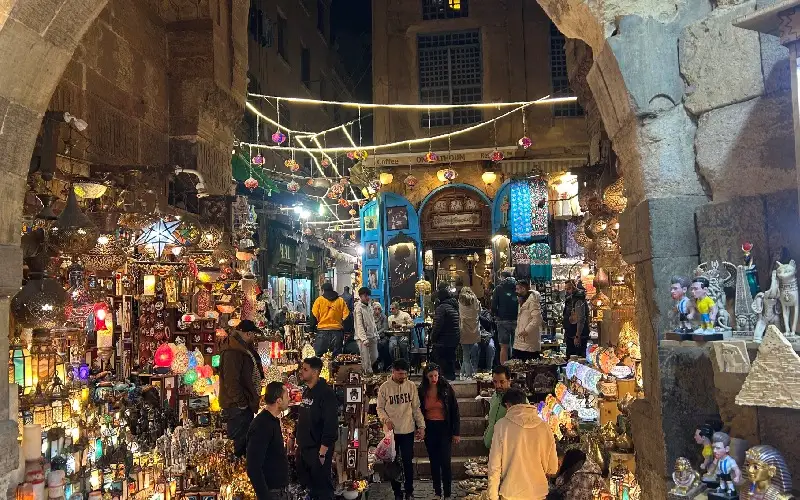
The centuries following Sultan al-Ghuri's ambitious reconstruction witnessed Khan el-Khalili's evolution into something far more complex than its original caravanserai design. Major urban developments during the 19th and 20th centuries fundamentally altered both the physical structure and social function of this historic marketplace. The construction of al-Muski Street created a vital east-west arterial route connecting al-Hussein Square to 'Ataba Square in downtown Cairo, cutting perpendicular across the traditional north-south flow of al-Muizz Street. Princess Shawikar's urban development project during the late 1930s introduced approximately two dozen residential blocks featuring ground-level commercial spaces throughout the eastern sector—these same structures now form a significant draw for international visitors.
19th and 20th century urban changes
Muhammad Ali Pasha's modernization program introduced technological innovations that fundamentally reshaped Khan el-Khalili's accessibility and commercial potential. Enhanced transportation networks brought unprecedented numbers of visitors, while new infrastructure systems supported expanded commercial activities. Cairo's westward expansion created interesting spatial dynamics—the historic bazaar area became increasingly valuable as one of the few districts where additional commercial construction remained feasible.
Integration with Islamic Cairo
The boundaries of Khan el-Khalili blur organically into the surrounding historic quarter, creating an interconnected commercial ecosystem that extends well beyond formal marketplace limits. The northern perimeter remains deliberately fluid, allowing the bazaar's influence to spread naturally into adjacent neighborhoods. Al-Muski street functions as a parallel commercial artery, primarily serving local Egyptian shoppers rather than international tourists. This proximity to landmarks including the Mosque and shrine of al-Hussein, Al-Azhar University, and Al-Azhar Mosque creates a unique urban environment where sacred and secular activities coexist within walking distance.
Khan el-Khalili in literature and media
Nobel laureate Naguib Mahfouz captured the district's wartime atmosphere in his 1946 novel "Khan al-Khalili," documenting life between September 1941 and August 1942. The story follows the Akif family's relocation to the neighborhood seeking refuge from German air raids. Mahfouz's narrative explores fundamental questions about cultural preservation and change, asking whether modernization inevitably destroys traditional ways of life.
Preservation and UNESCO designation
UNESCO and the Cairo Governorate recently completed a three-year preservation initiative focused specifically on safeguarding traditional craftsmanship techniques. This remarkable project trained 46 local artisans, systematically documented 30 distinct handicraft traditions that represent Cairo's living cultural heritage, and established protocols for inclusion in Egypt's national inventory of intangible cultural assets. Such efforts ensure that Khan el-Khalili continues to function as a working repository of traditional skills rather than merely a tourist destination.
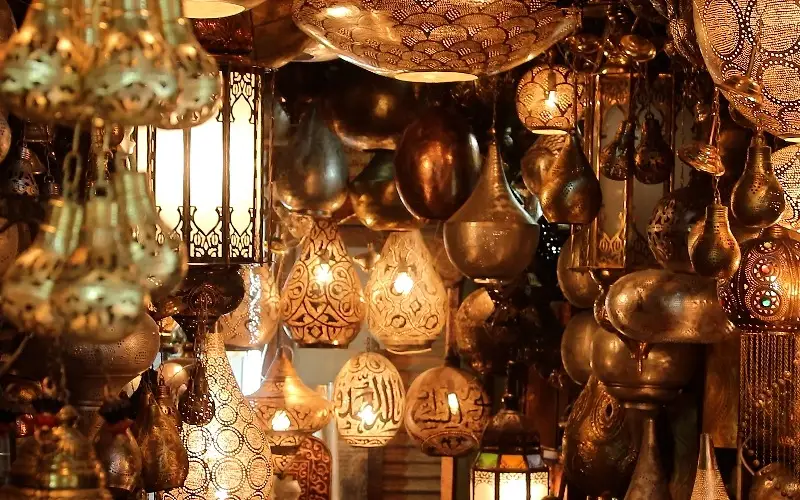
Khan el-Khalili stands as a living testament to nearly seven centuries of Cairo’s commercial, architectural, and cultural evolution. Shaped by successive Islamic dynasties—from Fatimid beginnings to Mamluk and Ottoman refinements—the bazaar reflects the layered history of the city itself. Despite Cairo’s modern expansion, Khan el-Khalili preserved its original purpose by adapting rather than fading, maintaining its role as the capital’s historic commercial heart. More than a marketplace, it is a vibrant cultural bridge where traditional craftsmanship, social life, and medieval urban design continue to thrive, ensuring its place as both a heritage landmark and an active part of Cairo’s daily life.
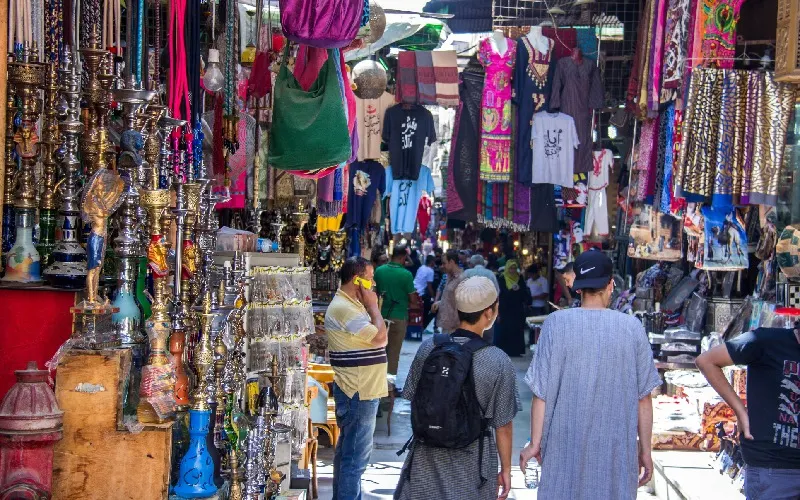
Khan el-Khalili offers a wide variety of traditional Egyptian goods, including handcrafted jewelry, spices, textiles, copper and brassware, leather goods, and intricate woodwork. Visitors can also find souvenirs, perfumes, and local handicrafts.
Khan el-Khalili is renowned for its rich history dating back over 600 years. It's not just a marketplace but a cultural icon, featuring stunning Islamic architecture, traditional craftsmanship, and a vibrant atmosphere that attracts millions of tourists annually.
Absolutely! Khan el-Khalili offers a unique cultural experience beyond shopping. Its lively ambiance, historic charm, and maze-like alleys provide visitors with an authentic glimpse into Cairo's traditional market life, making it a must-visit destination.
Khan el-Khalili is situated in the heart of Islamic Cairo, adjacent to Al-Azhar Mosque and Al-Hussein Square. Its central location makes it easily accessible and convenient to combine with visits to other nearby historical landmarks.
Khan el-Khalili has transformed from a 14th-century caravanserai to a sprawling bazaar. It has undergone significant architectural changes, including Sultan al-Ghuri's 16th-century redevelopment and modern urban modifications. Today, it stands as a UNESCO World Heritage site, blending centuries of history with contemporary commerce.
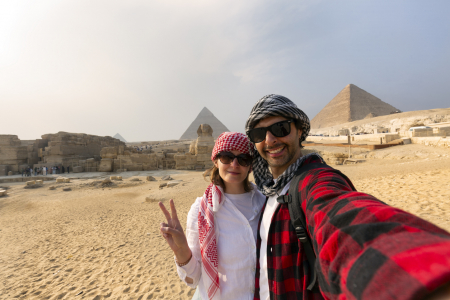

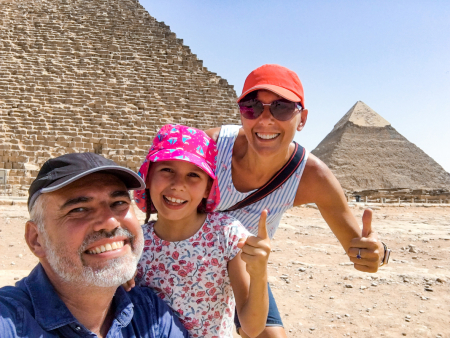
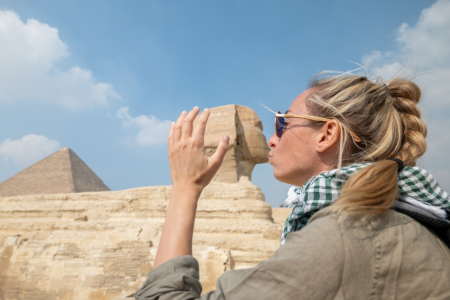
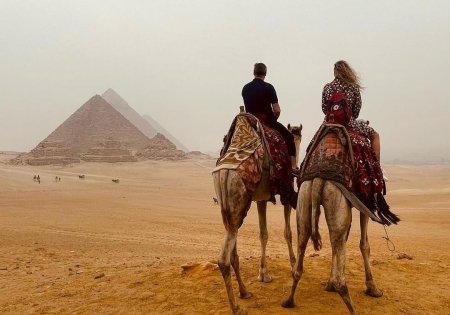
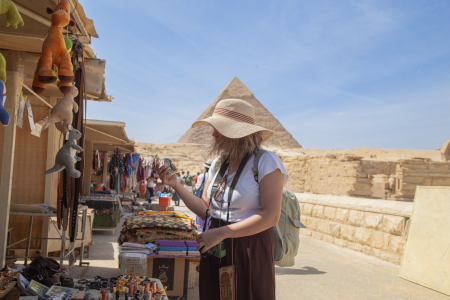
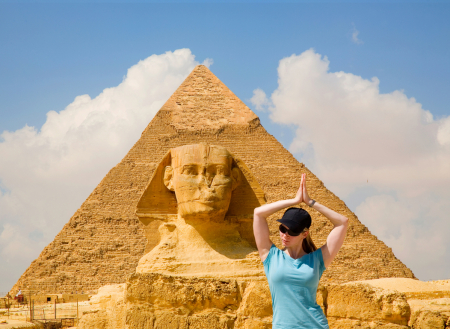

The Great Pyramids of Giza, Egypt’s iconic monuments, showcase ancient engineering brilliance and remain the last wonder of the ancient world, continuing to fascinate visitors and researchers alike.

The Egyptian Museum in Cairo houses over 170,000 ancient artifacts, including Tutankhamun's complete collection and golden death mask. Opened in 1902, it's the world's largest repository of Egyptian antiquities.

Khan el-Khalili is Cairo’s legendary medieval bazaar, where centuries-old Islamic architecture, vibrant trade, and timeless cafés create a living cultural landmark.

The Great Sphinx of Giza, with its lion body and pharaoh head, represents ancient Egyptian artistry, symbolic power, and enduring cultural fascination.

Tanoura is a traditional Egyptian Sufi dance known for its colorful spinning skirts, spiritual rhythm, and deep roots in ancient mystic traditions.

Saqqara, Egypt's ancient necropolis, features Djoser's Step Pyramid—the world's oldest. Spanning 3,000 years, it preserves royal tombs and sacred animal burials.

The Valley Temple at Giza, built 2570 BCE by Khafre, features 16 granite columns and hosted sacred afterlife rituals. Explore Fourth Dynasty architecture.

The Citadel of Cairo is a historic medieval fortress and royal complex, showcasing centuries of Egyptian power, Mamluk architecture, and Islamic heritage, now preserved as a UNESCO World Heritage Site.

Khufu's Solar Boat is a 142-foot cedar vessel discovered 1954 near the Great Pyramid. Built without nails 4,500 years ago, it's now at Grand Egyptian Museum.

St. George Church in Old Cairo, founded 684 AD, features unique circular design, sacred healing relics & underground chapel linked to the Holy Family's refuge.

Pyramids Sound and Light Show transforms Giza into open-air theater with 50 minutes of narration, music & lighting bringing ancient Egyptian history alive.

The Djoser Pyramid at Saqqara is Egypt's first pyramid, built 2600 BCE by architect Imhotep. Standing 62.5m tall, it reopened to visitors in 2020.

The Hanging Church in Old Cairo is a 1,300-year-old Coptic sanctuary built on Babylon Fortress. Free entry, open daily 9 AM-5 PM, dress modestly required.
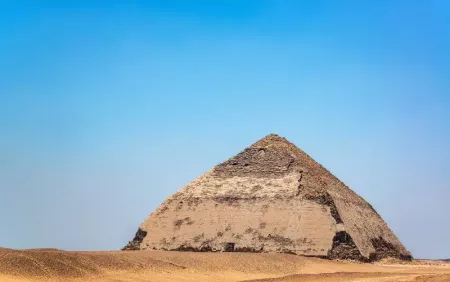
The Bent Pyramid at Dahshur features a rare bent profile created by ancient construction adjustments, offering insight into Egypt’s earliest attempts at smooth-sided pyramids.

Coptic Cairo features 4th-century churches and recent tomb discoveries revealing early Christian heritage. Explore the Hanging Church, Abu Serga & sacred sites.
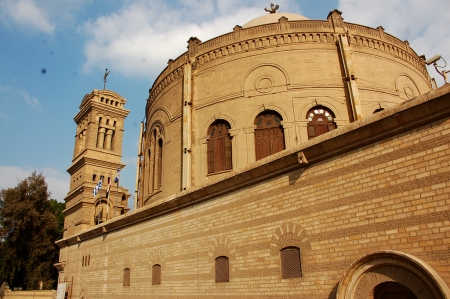
Saint Barbara’s Church in Coptic Cairo is one of Egypt’s oldest Christian monuments, dating back to the 5th–6th century. Known for housing the relics of Saint Barbara, the church reflects centuries of Coptic heritage, architectural evolution, and deep spiritual significance.

Explore the Fortress of Babylon, a major Roman fort in Old Cairo known for its strategic location, massive towers, and enduring historical significance.
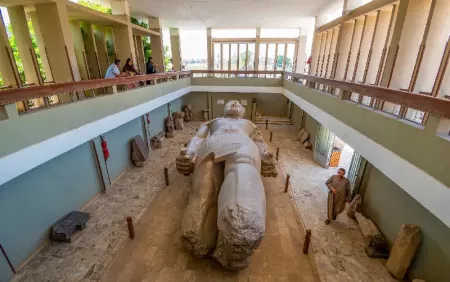
Memphis Necropolis is Egypt’s ancient royal burial site, home to pyramids, tombs, and monuments that reflect the early development of pharaonic civilization.
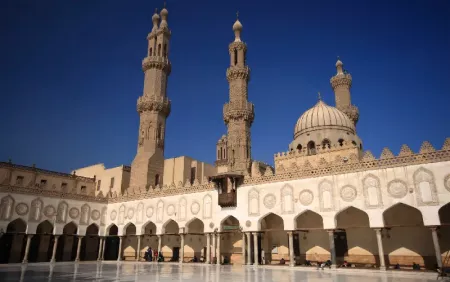
Al-Azhar Mosque is a landmark of Islamic scholarship and Fatimid architecture, home to the world’s second-oldest university and a symbol of Cairo’s spiritual heritage.
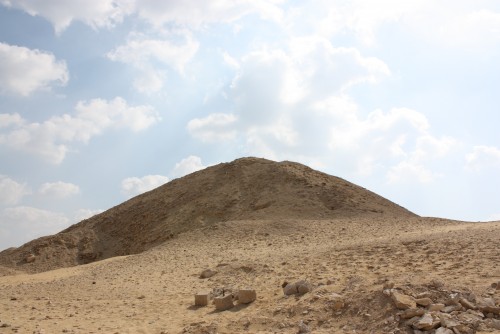
Teti’s Pyramid in Saqqara is an Old Kingdom monument built for the first king of the Sixth Dynasty. Known for its Pyramid Texts and unique mortuary chapel, it remains one of Egypt’s most historically important royal tombs.
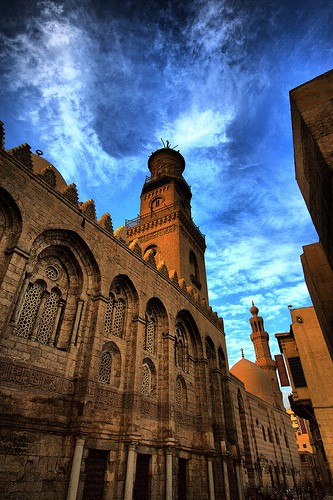
Al Muizz Street is one of Cairo’s oldest and most vibrant historic avenues, showcasing centuries of Islamic architecture. Lined with mosques, palaces, and bustling markets, it offers a captivating walk through Egypt’s medieval past.
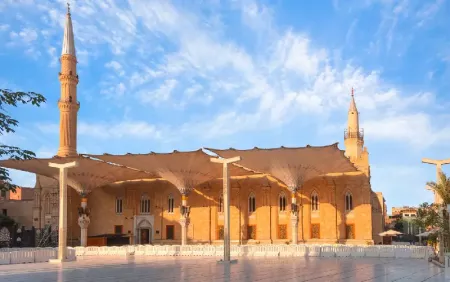
Al-Hussein Mosque is one of Cairo’s most sacred Islamic landmarks, built in 1154 and revered for housing the head of Imam Hussein. Located by Khan El-Khalili, it blends centuries of architectural heritage and remains a major pilgrimage site.
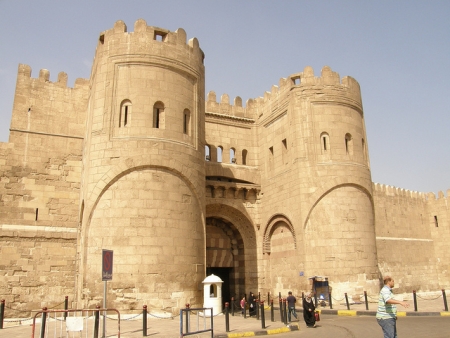
Bab al-Futuh is an 11th-century Fatimid gate in Old Cairo, famous for its massive round towers and strategic role in the city’s medieval fortifications.
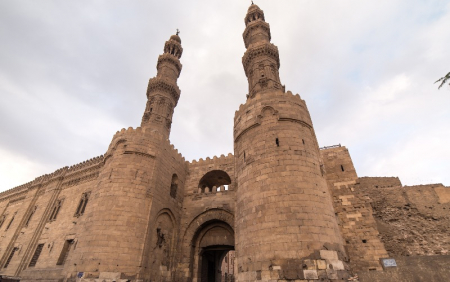
Bab Zuweila is one of Cairo’s last surviving medieval gates, built in 1092 CE by the Fatimid vizier Badr al-Jamali. Famous for its towering twin bastions, massive wooden doors, and later Mamluk minarets, it served as a defensive stronghold, execution site, and ceremonial gateway. Today, it stands as one of Cairo’s most iconic historic monuments.
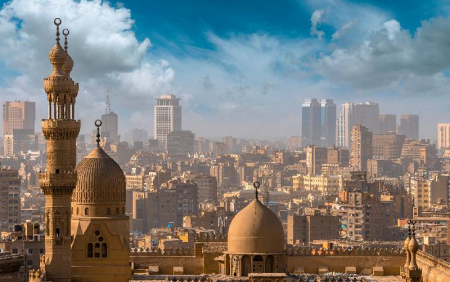
Al Rifai Mosque in Cairo blends Neo-Mamluk architecture with royal history. Completed in 1912, it serves as both a majestic mosque and mausoleum for Muhammad Ali’s family.
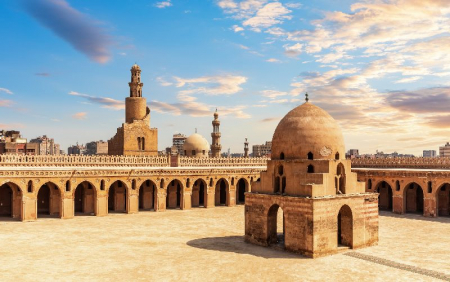
The Ibn Tulun Mosque, Cairo’s oldest well-preserved mosque, dates back to 879 CE. Famous for its vast square layout, intricate arches, and 128 ornate stucco windows, it remains a pinnacle of early Islamic architecture and a must-visit historical landmark.
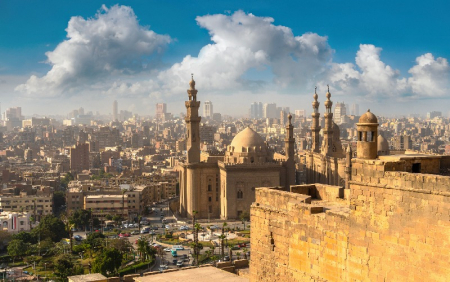
The Sultan Hassan Mosque, built in the 14th century, is a Bahri Mamluk architectural marvel in Cairo, renowned for its grand portal, extensive madrasas, and historic significance.
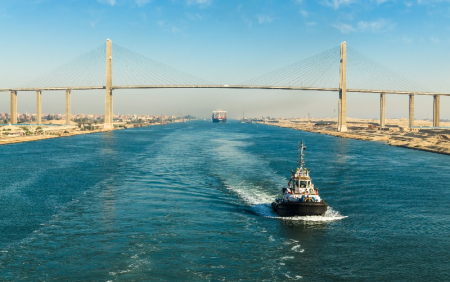
The Suez Canal, Egypt’s iconic waterway, connects Africa and Asia, handling thousands of ships yearly and shaping international trade.
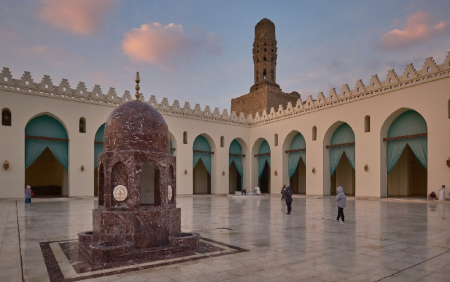
Al-Hakim Mosque, Cairo, is a stunning Fatimid-era mosque built between 990–1013 CE. Famous for its grand courtyard, distinctive minarets, and rich history, it remains a key cultural and religious landmark.
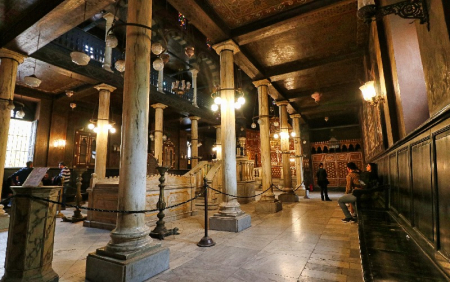
The Ben Ezra Synagogue, founded in the 11th century in Old Cairo, is Egypt’s oldest Jewish monument and the discovery site of the renowned Cairo Geniza.