
 Home
Home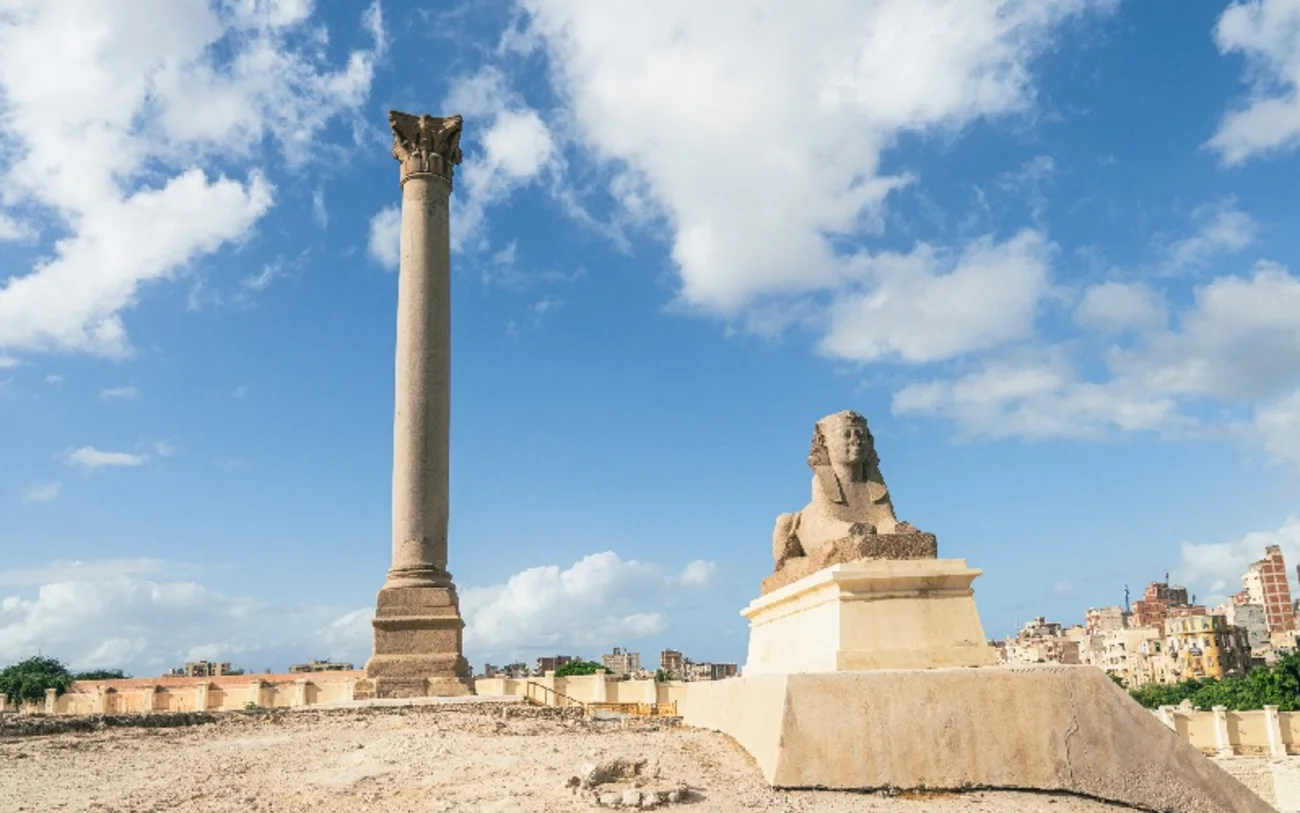
Pompey's Pillar in Alexandria is a towering Roman triumphal column, standing 26.85 meters tall and originally topped with a statue of Emperor Diocletian. Despite its name, it has no connection to the Roman general Pompey; the misattribution arose during the Crusades. Located near the Serapeum ruins, this monolithic column is one of the largest of its kind, with a single shaft weighing around 285 tonnes and measuring 2.71 meters in diameter at its base. A Greek inscription confirms its dedication to Diocletian, highlighting the grandeur of Roman architecture in ancient Alexandria.
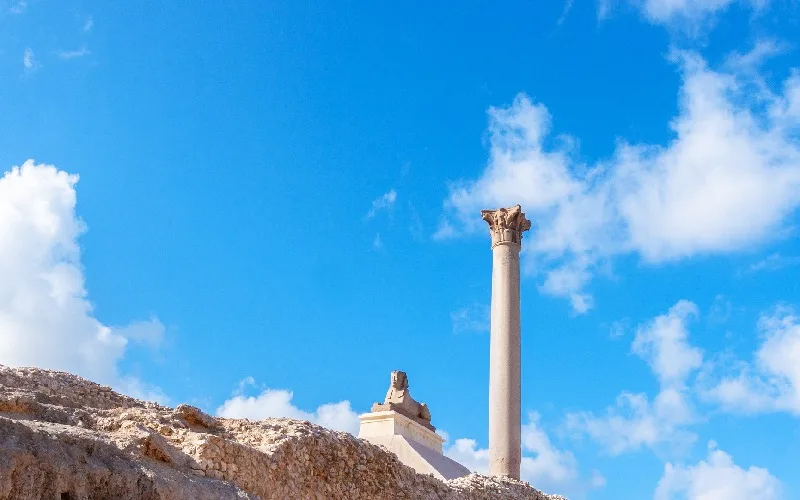
Pompey's Pillar is a Roman triumphal column in Alexandria, Egypt. It was erected in 298 AD to commemorate Emperor Diocletian's successful suppression of an Alexandrian revolt and his efforts to relieve famine conditions in the city.
The entire monument stands at 26.85 meters (88.1 feet) tall, including its base and capital. It is made of a single piece of red granite quarried from Aswan, with the monolithic shaft alone measuring 20.46 meters (67.1 feet) in height.
Historical context of Pompey's Pillar
The Roman Empire faced significant challenges in the late 3rd century, particularly in Egypt where social tensions and economic problems created fertile ground for rebellion. The historical events surrounding Pompey's Pillar Alexandria Egypt reveal the complex relationship between Rome and one of its most valuable provinces.
Diocletian's campaign in Egypt
Emperor Diocletian, who became Augustus in 284 CE, was forced to turn his attention to Egypt when political instability threatened Roman control of this vital grain-producing region. Initially, Diocletian had faced smaller rebellions, including unrest in Coptos and Busiris in Upper Egypt around 292 CE. However, a more serious crisis emerged in 297 when Domitius Domitianus declared himself Augustus in July or August, with much of Egypt, including Alexandria, recognizing his rule.
Diocletian personally led the military response, first suppressing rebels in the Thebaid region during autumn of 297. Subsequently, he marched his forces toward Alexandria to confront the usurper. By December 297, Domitianus had died, yet the rebellion continued under his former corrector, Aurelius Achilleus, who organized Alexandria's defense.
The Alexandrian revolt and famine
The siege of Alexandria began in late 297 and continued for approximately eight months, finally ending around March 298 when Diocletian captured the city and executed Achilleus. Following his victory, Diocletian dealt harshly with the defeated Egyptians, implementing severe punishments described by contemporary sources as "cruel" with "severe proscriptions and massacres" throughout Egypt.
Apart from the political rebellion, economic challenges plagued Egypt during this period. The emperor's attempts to align Egyptian taxation with Imperial standards had created discontent among the population. Additionally, food security had become a critical issue. To address these problems, Diocletian returned to Alexandria in 302 and inaugurated a state grain supply system, effectively acknowledging the famine conditions that had exacerbated tensions.
Why the monument was commissioned
Pompey's Pillar was erected later in 298 specifically to commemorate Diocletian's successful suppression of the Alexandrian revolt. The monument expressed gratitude not only for ending the rebellion but also for Diocletian's measures to relieve famine conditions and his decision to exempt Alexandrians from certain taxes.
The Greek inscription on the column notably describes Diocletian as "polioúchos" (πολιοῦχον Ἀλεξανδρείας), meaning "city-guardian-god of Alexandria". This divine attribution underscores the monument's purpose as both political propaganda and religious dedication.
The column was strategically placed within the Serapeum, a sanctuary complex dedicated to the Greco-Egyptian god Serapis. Originally built under Ptolemy III Euergetes in the third century BCE, this religious site had been rebuilt during the Roman period, likely between the late 2nd and early 3rd centuries CE. By positioning Pompey's Pillar within this sacred precinct, the monument connected Roman imperial authority with established religious traditions, reinforcing Diocletian's legitimacy after the recent conflict.
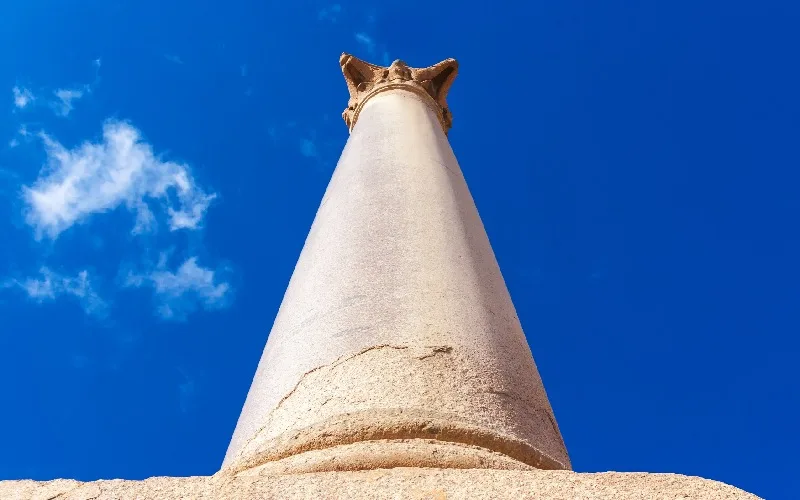
The name is a historical misunderstanding. Crusaders in the Middle Ages mistakenly believed it contained the remains of the Roman general Pompey. This confusion arose from a similarity in Greek spellings between the name of the governor who dedicated the monument (Publius) and Pompey.
Design and construction details
A marvel of ancient engineering, Pompey's Pillar exemplifies Roman architectural mastery through its impressive scale and exceptional craftsmanship. This monumental structure continues to captivate visitors with its remarkable construction techniques and historical significance.
Granite source and transportation from Aswan
The column consists of a single massive piece of red granite quarried from Aswan, located approximately 800 kilometers south of Alexandria. Transporting such an enormous stone block across this distance represented an extraordinary achievement in ancient logistics. Ancient engineers utilized large ships and sophisticated lifting mechanisms to move the colossal granite piece, demonstrating their advanced technical capabilities and resourcefulness in overcoming geographical challenges.
Column dimensions and monolithic nature
Pompey's Pillar stands as the only known monolithic column in Roman Egypt, distinguishing it from typical Roman columns constructed from multiple drum sections. The entire monument reaches 26.85 meters (88.1 feet) in height including its base and capital. The monolithic shaft alone measures 20.46 meters (67.1 feet) tall with a diameter of 2.71 meters (8 feet 11 inches) at its base. The socle itself exceeds 6 meters (20 feet) in height, while the column shaft weighs approximately 285 tons (314 short tons). Both the column and its socle were crafted from lapis syenites, a pink granite, whereas the pseudo-Corinthian capital features gray granite.
The Greek inscription and its message
On the column's socle, four surviving lines of Greek inscription remain legible. The text indicates that a Praefectus Aegypti (Eparch of Egypt) named Publius dedicated this monument to honor Emperor Diocletian. The western face bears this dedication, contributing to our understanding of the column's original purpose.
The missing statue and its estimated size
Originally, Pompey's Pillar supported a colossal statue estimated at 7 meters (23 feet) tall. This porphyry statue depicted Emperor Diocletian in armor, as evidenced by large fragments discovered at the column's foot during the eighteenth century. Researchers calculated the original statue's height based on a 1.6-meter fragment representing the emperor's thighs.
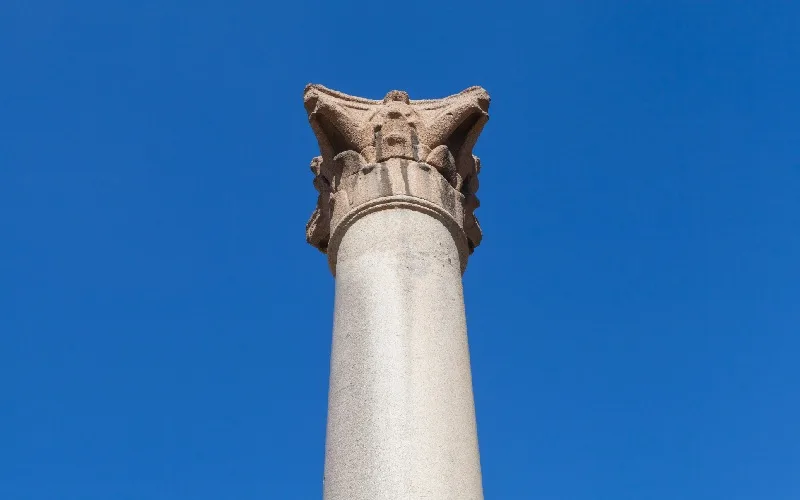
Originally, the pillar supported a colossal statue of Emperor Diocletian in armor, estimated to be about 7 meters (23 feet) tall. Large fragments of this porphyry statue were discovered at the column's base in the 18th century.
Customize Your Dream Vacation!
Get in touch with our local experts for an unforgettable journey.
Plan Your TripReligious and cultural backdrop
The religious environment surrounding Pompey's Pillar Alexandria Egypt reveals a complex period of cultural transformation in late antiquity. Understanding this backdrop illuminates why the column's location held such significance.
The Serapeum and its significance
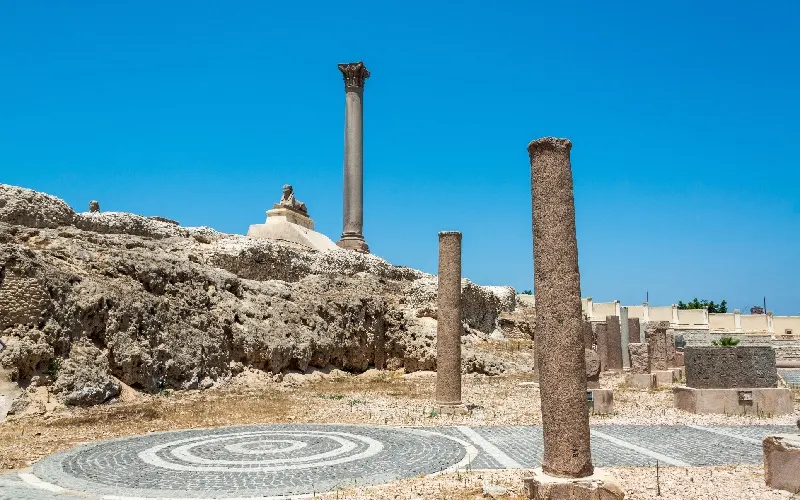
The Serapeum, where Pompey's Pillar still stands, was a magnificent sanctuary complex dedicated to Serapis, a syncretic deity combining Egyptian and Greek elements. Originally built under Ptolemy III Euergetes in the third century BCE, the temple complex was later rebuilt during the Roman era, likely in the late 2nd to early 3rd century CE. According to fourth-century historian Ammianus Marcellinus, this sanctuary rivaled even Rome's temple to Jupiter on the Capitoline Hill.
Transition from paganism to Christianity
As Christianity spread through Egypt, Alexandria emerged as a stronghold for the new faith. Gradually, the dominance of traditional pagan gods diminished. The Serapeum, with its association to Alexandria's patron deity, increasingly represented a conflict between ancient traditions and the rising Christian influence.
Destruction of Serapis temples in 391 AD
Eventually, in 391 AD, Emperor Theodosius I issued edicts prohibiting pagan worship. Consequently, Theophilus, patriarch of Alexandria, led Christian mobs against the Serapeum. After Christians destroyed the statue of Serapis—carrying its head through the city while the remainder burned—the temple itself was razed. Crosses replaced pagan symbols throughout Alexandria, marking Christianity's triumph over traditional Egyptian religions.
Legends and misinterpretations over time
Historical misunderstandings have shrouded Pompey's Pillar Alexandria Egypt for centuries, creating fascinating layers of myth around this ancient monument.
The Crusader myth of Pompey's burial
Throughout the Middle Ages, a persistent legend circulated among European Crusaders claiming the pillar contained the remains of Roman general Pompey. This fundamental misunderstanding gained traction as travelers spread the tale that Pompey's head or ashes were enclosed in a pot atop the column. Yet this belief ignored an obvious chronological impossibility—Pompey died in 48 BC, almost 340 years before the column's construction in 297 AD.
Confusion due to Greek spelling similarities
The naming error originated from a linguistic misinterpretation. Scholars discovered that the Greek dedicatory inscription on the monument's base contained the governor's name ΠΟΥΠΛΙΟΣ (Pouplios/Publius), which was confused with ΠΟΜΠΗΙΟΣ (Pompeios)—the Greek spelling of Pompey. This simple phonetic similarity created a centuries-long case of mistaken identity that persisted through generations.
Modern cultural references and nicknames
In contemporary culture, this historical confusion extends beyond Egypt. Interestingly, one etymology suggests that Portsmouth's nickname "Pompey" for both the city and its football team originated from sailors who scaled the pillar becoming known as "Pompey's boys". Though other unrelated origins exist, this connection illustrates how the monument's mistaken identity continues to echo through modern cultural references.
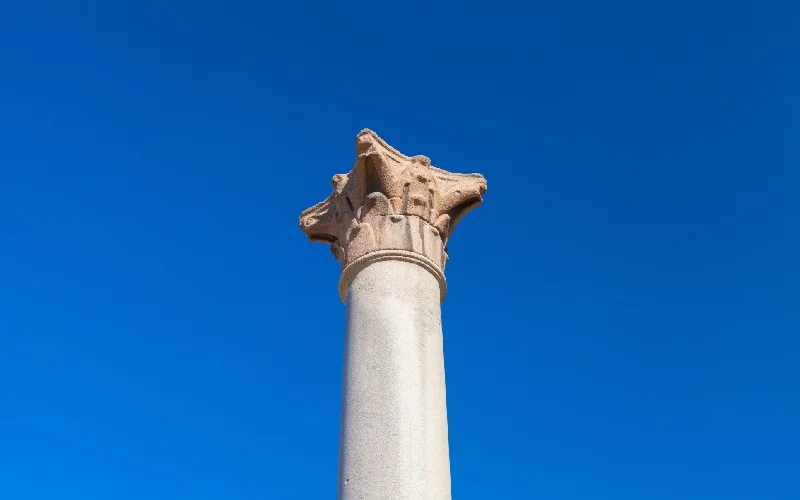
Pompey’s Pillar in Alexandria is a striking testament to Roman engineering and imperial authority, commemorating Emperor Diocletian’s victory rather than the Roman general Pompey. Standing within the Serapeum complex, this monolithic granite column reflects both political and religious significance during late Roman Egypt, marking the transition from traditional Egyptian practices to the rise of Christianity. Despite the loss of the statue of Diocletian that once crowned it, the pillar’s impressive construction—quarried and transported from Aswan—has allowed it to endure while surrounding structures were destroyed or deteriorated. The Greek inscription confirms its true origin, and the monument continues to provide insights into Roman Egypt’s architectural, religious, and historical legacy, illustrating how centuries of misinterpretation can shape historical narratives.
Pompey's Pillar stands at the site of the ancient Serapeum, a significant temple complex dedicated to the Greco-Egyptian god Serapis. This location reflects the religious and cultural transitions in late Roman Egypt, including the shift from paganism to Christianity in the 4th century AD.
Yes, Pompey’s Pillar is considered the tallest surviving ancient monument in Alexandria. It also holds the distinction of being the only major ancient monument in the city that still stands in its original location.
No, climbing Pompey’s Pillar is not permitted. However, visitors can walk around the monument, explore the surrounding Serapeum ruins, and view underground chambers and tunnels nearby.
Roman engineers transported the granite shaft from Aswan using river barges along the Nile, then maneuvered it to Alexandria. The column was raised using complex systems of ramps, pulleys, and manpower—an extraordinary feat of ancient engineering.
The Serapeum was largely destroyed in 391 AD during conflicts between pagan and Christian communities under Roman rule. Pompey’s Pillar survived due to its solid construction and because it was not directly associated with pagan worship.
Pompey’s Pillar provides valuable insight into Roman imperial propaganda, engineering capabilities, and religious transformation in late antiquity. Its inscription helps historians accurately date the monument and understand Diocletian’s role in stabilizing Roman Egypt.

The Library of Alexandria in Egypt was a legendary center of learning, housing hundreds of thousands of scrolls and attracting renowned scholars, making Alexandria the intellectual capital of the ancient world.

Explore Alexandria’s 4th-century Roman amphitheatre, a unique circular theatre with marble seating and historical significance spanning Roman, Byzantine, and Islamic eras.

Pompey’s Pillar is a 26.85-meter Roman column in Alexandria, dedicated to Emperor Diocletian, and stands as one of the largest monolithic columns ever built.

The Catacombs of Kom El Shoqafa are Alexandria's largest Roman necropolis, discovered in 1900. This 35-meter deep burial complex blends Egyptian, Greek, and Roman styles across three underground levels, dating from the 2nd-4th centuries CE.
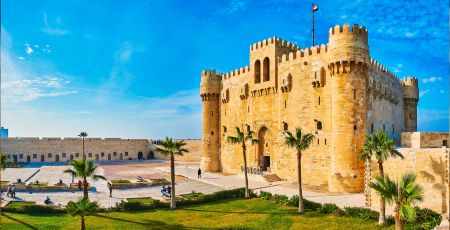
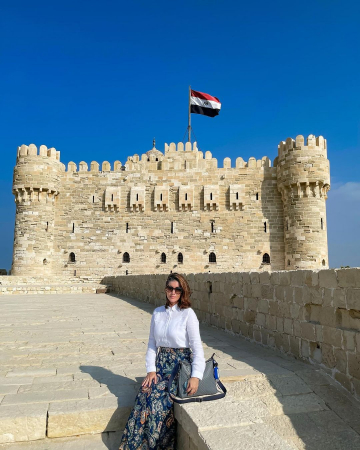
Located on the very Grounds of the ancient lighthouse in Alexandria , the Citadel & fort of Sultan Qaitbay is a landmark of the coastal city of Alexandria is filled with history and amazing details for you to DIscover.

El Alamein is a historic WWII battleground 100km west of Alexandria where decisive 1942 battles turned the war's tide. Today it features war memorials and museums alongside New El Alamein City, a modern smart city development opened in 2018.

Alexandria, founded by Alexander the Great in 331 BC, is Egypt's legendary Mediterranean seaport. Once home to the ancient Great Library and Pharos Lighthouse, this historic city of 5.3 million residents blends remarkable ancient wonders with vibrant modern coastal culture.