Table of content
- What are the must-see places in Jordan?
- What makes Petra worth visiting, and how long do you need there?
- What can you see in Wadi Rum, and is it worth a night?
- Is the Dead Sea worth visiting, and what can you do there?
- What can you see in Amman and Jerash?
- Are Madaba and Mount Nebo worth a stop on the way south?
- Is Aqaba worth adding to a trip around Jordan?
- What can you see in Jordan in 3, 5 or 7 days?
- When is the best time to visit Jordan's attractions?
- How do you get around between sights in Jordan?
- How much do entry tickets cost in Jordan, and is the Jordan Pass worth it?
- What else do UK travellers ask about Jordan?
What are the must-see places in Jordan?
The must-sees are Petra, Wadi Rum, the Dead Sea, and the Roman city of Jerash with the Citadel in Amman. Madaba, Mount Nebo and the Red Sea at Aqaba fill out a week.
Jordan is small enough that most of it fits into one trip, and the route is almost a straight line. Amman is a hilly, friendly capital where a day goes on the Citadel, the souks and a long lunch. The King's Highway runs south past mosaics and crusader castles to Petra, where the rock turns pink and the crowds thin out as the canyon walls close in. Wadi Rum is the clean break: red sand, silence and a sky full of stars. The Dead Sea, the lowest point on Earth, is the soft landing at the end.
|
Place |
Why go |
Time needed |
Best for |
|---|---|---|---|
|
Petra |
The rock-cut capital of the Nabataeans |
A full day |
Everyone, first thing in the morning |
|
Wadi Rum |
Red desert, rock bridges and Bedouin camps |
4 hours to an overnight stay |
Stargazers and families |
|
Dead Sea |
Floating at 420 metres below sea level |
Half a day |
Anyone who wants to unwind |
|
Jerash |
One of the best-preserved Roman cities in the region |
2–3 hours |
History fans |
|
Amman |
Citadel, Roman Theatre, souks and food |
1 day |
City lovers and first-timers |
|
Madaba and Mount Nebo |
The mosaic map and a view over the valley |
Half a day |
A stop on the King's Highway |
|
Aqaba |
Warm water and coral reefs |
1–3 days |
Winding down after the desert |
Customize Your Dream Vacation!
Get in touch with our local experts for an unforgettable journey.
Plan Your Trip
What makes Petra worth visiting, and how long do you need there?
Petra is worth a full day, and the walk to the Treasury is only the start. Plan 6–8 hours to add the Royal Tombs and the Monastery, and be at the gate when it opens.
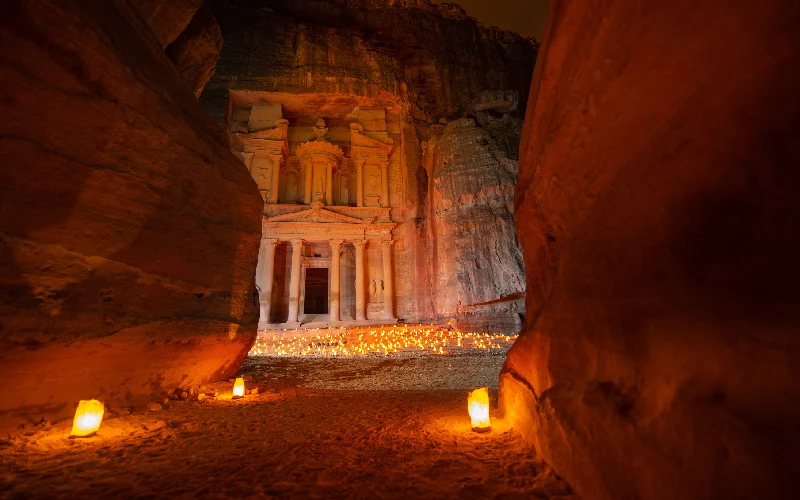
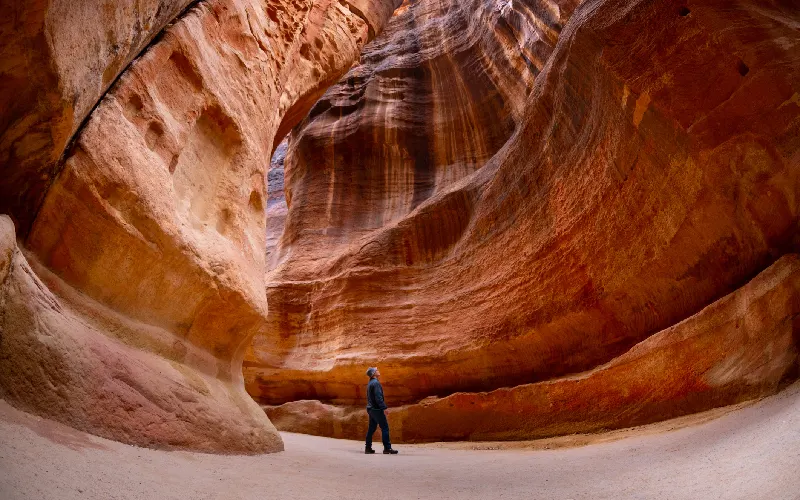
You walk in through the Siq, a narrow canyon around 1.2 kilometres long, with rock walls rising high on either side and the path curving so you cannot see what is coming.
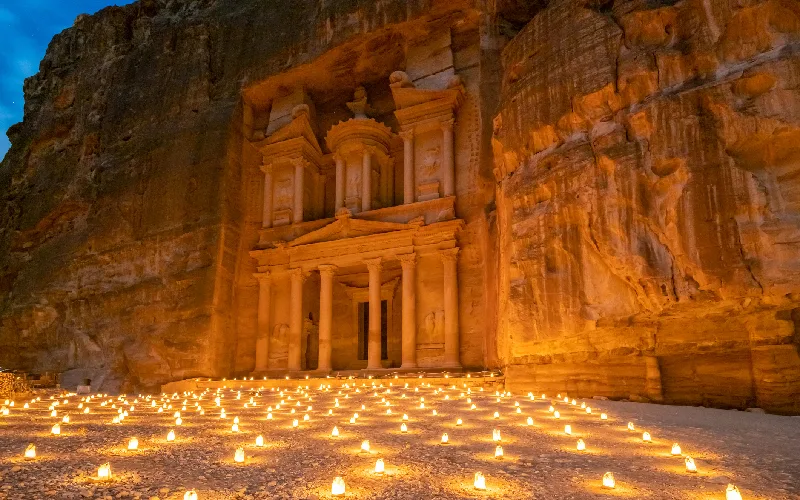
Then a slice of pink-gold appears at the far end, and the Treasury, carved straight into the cliff, fills the gap. Petra was the capital of the Nabataeans, a trading people who grew rich on desert routes, and the Treasury is only the first of hundreds of tombs, temples and houses cut into the sandstone.
Beyond the Treasury the valley opens out into the Street of Facades, the Theatre and the Royal Tombs. The Monastery, up around 800 rock-cut steps, is larger than the Treasury and far quieter. On selected evenings, Petra by Night lights the Siq with candles and ends at the Treasury, and it needs a separate ticket.
|
Opening hours |
Ticket price |
Time needed |
How to get there |
Best time |
|---|---|---|---|---|
|
Around 6:00–18:00 in summer, earlier closing in winter |
Around 50 JOD for one day (≈£57), included in the Jordan Pass |
6–8 hours |
About 3 hours by road from Amman; stay in Wadi Musa |
First thing in the morning, spring and autumn |
Memphis Tours Expert Tip: Be at the gate when it opens and walk straight to the Treasury. You arrive before the tour groups and the heat, and you can save the Monastery climb for early afternoon or the following morning if you have two days.
Don't miss
- The Siq at the start, when it is still quiet
- The Treasury, and the view down onto it from the high trails
- The Monastery at the top of the steps
- The Royal Tombs, along the main valley
- Petra by Night, if your dates line up
If you would rather have it arranged, our Petra and Wadi Rum tour covers both with a private guide and a night in the desert.
What can you see in Wadi Rum, and is it worth a night?
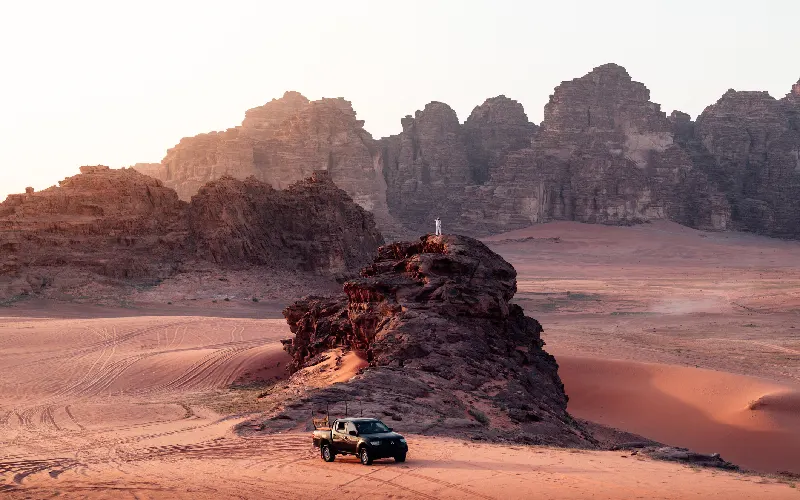
Wadi Rum is worth at least one night: a 4x4 tour by day and a camp under the stars. It gives you red sand, rock bridges and a silence you will not find anywhere else in Jordan.
Known as the Valley of the Moon, Wadi Rum is a protected desert where sandstone mountains rise straight out of red and gold sand, in a landscape that looks like Mars. People have lived here for thousands of years, and Bedouin families still run the camps and the jeep tours today. You can visit as a day trip from Petra or Aqaba, but the evening is the point: sunset on the rocks, dinner cooked in the sand, and a sky so full of stars that you stop talking.
A 2–3 hour jeep tour covers the main sights, including rock bridges and dunes, and longer tours add camel rides and sunrise walks. Camps range from simple tents to heated domes with proper beds.
|
Opening hours |
Ticket price |
Time needed |
How to get there |
Best time |
|---|---|---|---|---|
|
Open all day; tours run from sunrise to sunset |
Entry around 5 JOD (≈£6), included in the Jordan Pass; jeep tours extra from around 15 JOD |
4 hours to overnight |
1.5–2 hours from Petra; about 1 hour from Aqaba |
Late afternoon into evening, spring and autumn |
Memphis Tours Expert Tip: Nights in the desert get cold, even in spring, so ask your camp for extra blankets. Book a sunset jeep tour and eat at camp, then stay up for the stars after the generators go off.
Don't miss
- Sunset from a rock ledge or dune
- A rock bridge on a jeep tour
- Dinner cooked in the sand
- Stargazing away from the camp lights
Is the Dead Sea worth visiting, and what can you do there?
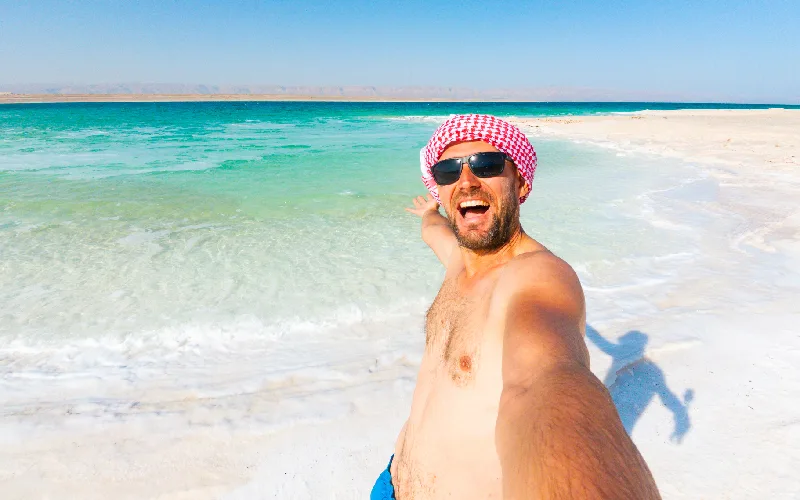
Yes, as a half day. Floating in the Dead Sea is a few minutes of oddness and an afternoon of rest, and it works best as the end of a trip, not the start.
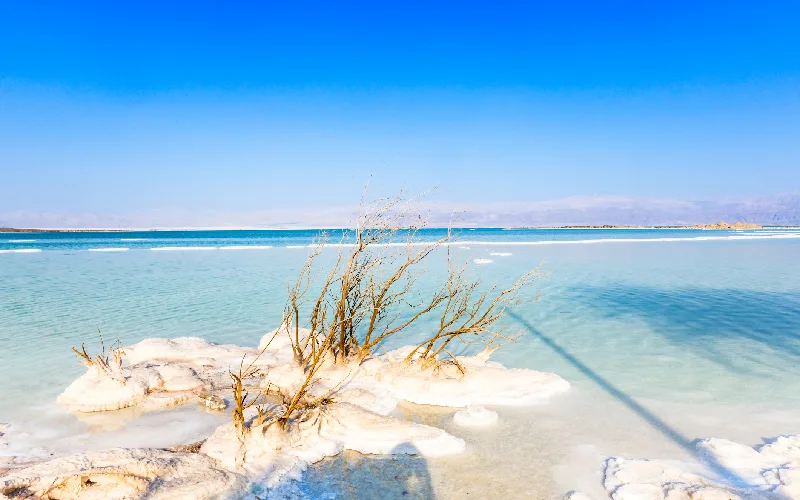
The Dead Sea sits around 420 metres below sea level, the lowest point on Earth, and the water is roughly seven times saltier than the ocean. You wade in slowly, lie back, and the water holds you up whether you want it to or not. The classic photo is floating with a newspaper. Mud from the shore is meant to be rubbed over your skin and left to dry, which is messier than it sounds but a good laugh.
Most people use a resort beach or a day pass, which gives you showers, towels and lunch. The sea has been shrinking for decades, so beaches and access points have moved, which is one reason a resort pass is the simplest option.
|
Opening hours |
Ticket price |
Time needed |
How to get there |
Best time |
|---|---|---|---|---|
|
Resort beaches around 8:00 to sunset |
Day pass with lunch around US$45 (≈£33) |
Half a day |
About 1 hour from Amman |
Afternoon, autumn to spring |
Memphis Tours Expert Tip: Stay in for no more than 15 to 20 minutes, don't shave beforehand, and keep the water well away from your eyes. Rinse off straight after and drink plenty of water, because the heat and the salt dry you out quickly.
Don't miss
- The float, with a newspaper for the photo
- A mud treatment on the beach
- Sunset over the water, with the hills of the far shore turning pink
What can you see in Amman and Jerash?
Amman rewards a day and Jerash half a day. Together they cover Roman Jordan, a hilltop Citadel, and the best of the capital's food and souks.
Amman is built over hills, and the Citadel is the best place to start. It looks out over the city, and the columns of the Temple of Hercules stand against the skyline. Below it, the Roman Theatre still seats thousands, and downtown's souks and cafés are where you get your first proper Jordanian meal: hummus, falafel and strong coffee with cardamom.
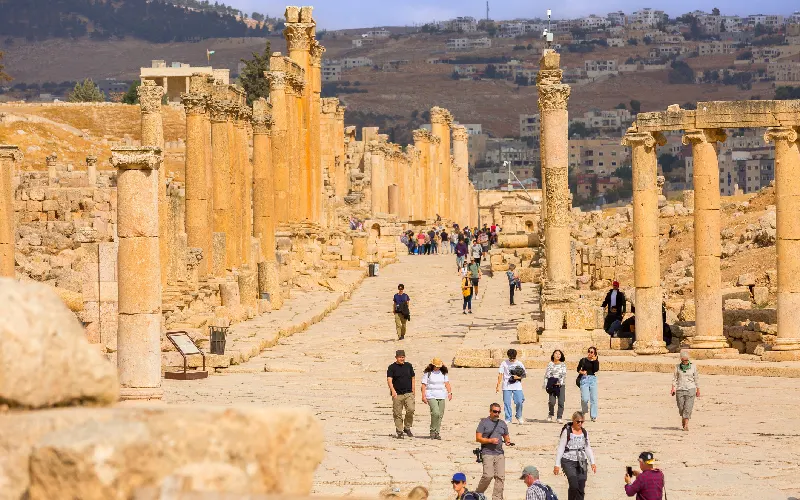
Jerash is about an hour north of Amman and is one of the best-preserved Roman cities in the region. You enter through Hadrian's Arch, cross an oval plaza lined with columns, and walk along a colonnaded street that still shows the ruts of ancient carts. Two theatres, temples and fountains fill out the rest, and in the morning you can have much of it nearly to yourself.
|
Site |
Opening hours |
Ticket price |
Time needed |
Best time |
|---|---|---|---|---|
|
Amman Citadel |
Around 8:00 to late afternoon |
Around 3 JOD (≈£3.50) |
1–2 hours |
Late afternoon for the light |
|
Roman Theatre, Amman |
Around 8:00 to late afternoon |
Around 3 JOD (≈£3.50) |
1 hour |
Morning |
|
Jerash |
Around 8:00 to late afternoon |
Around 10 JOD (≈£11) |
2–3 hours |
Just after opening |
Memphis Tours Expert Tip: Do Jerash in the morning and Amman in the afternoon. You get Jerash before the coaches and the heat, and you are back in the capital for the Citadel at golden hour and dinner downtown.
Don't miss
- The Temple of Hercules at the Amman Citadel
- The Roman Theatre
- Hadrian's Arch and the oval plaza at Jerash
- The colonnaded street, with its original paving
Are Madaba and Mount Nebo worth a stop on the way south?
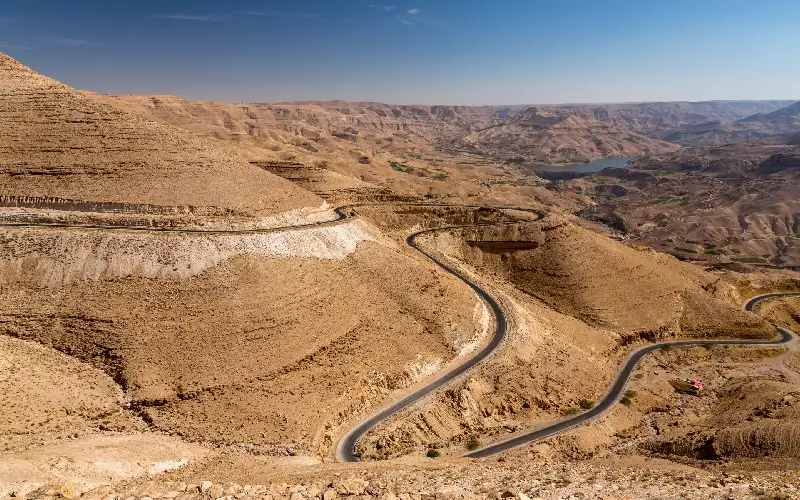
Yes, if you drive the King's Highway: a stop at Madaba and Mount Nebo takes about half a day and breaks up the road to Petra.
Madaba is a small town famous for the 6th-century mosaic map of the Holy Land on the floor of St George's Church, a vast piece of work made from tiny stones. Mount Nebo is a short drive away, the place where Moses is said to have looked out over the Promised Land. On a clear day the view runs across the Jordan Valley and the Dead Sea, and the viewpoint itself is quiet and unhurried.
Quick facts: allow half a day for both stops, about 30 minutes from Amman. Tickets cost a few JOD each, and mornings give the clearest views.
Don't miss
- The mosaic map in Madaba
- The Mount Nebo viewpoint
- Karak Castle, if you take the King's Highway rather than the faster Desert Highway
Is Aqaba worth adding to a trip around Jordan?
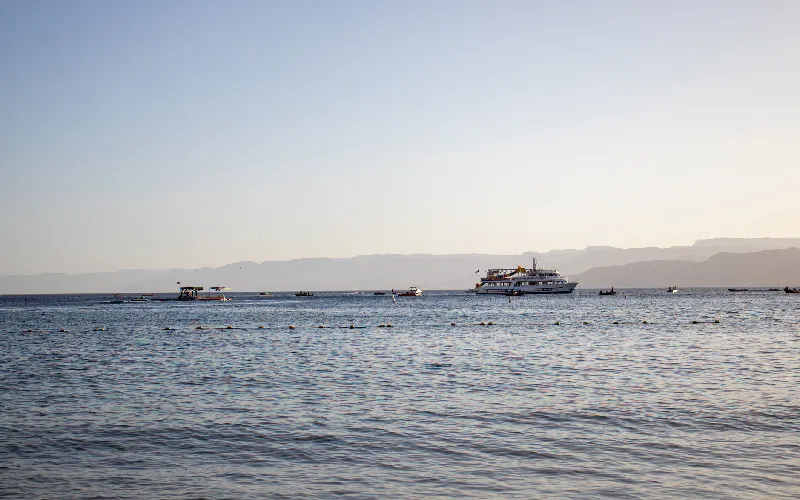
Yes, if you have a week or more. Aqaba is Jordan's only coastal city, with warm water, coral reefs and a relaxed finish after the desert.
The Gulf of Aqaba is the draw. Reefs sit close to the shore, so you can snorkel or dive for an afternoon without a long boat ride, and the water is warm for most of the year. The town has a fort, a seafront and good fish restaurants, and it is only about an hour from Wadi Rum, so it pairs well with a desert night.
Quick facts: allow 1–3 days. Aqaba is about 4 hours by road from Amman and about 1 hour from Wadi Rum, and autumn to spring is warm without being scorching.
Don't miss
- A snorkelling or diving trip on the reefs
- Aqaba Fort
- Sunset along the seafront
What can you see in Jordan in 3, 5 or 7 days?
In 3 days you can see Amman, Jerash and Petra, in 5 days you can add Wadi Rum and the Dead Sea, and in 7 days you can add Madaba, Nebo and Aqaba or a slower pace. Build the trip as a loop starting and ending in Amman.
|
Days |
Route |
What you see |
|---|---|---|
|
3 days |
Amman, Jerash, Petra |
Day 1: Amman Citadel and Jerash. Day 2: King's Highway via Madaba and Mount Nebo to Petra. Day 3: Petra, then back to Amman |
|
5 days |
Amman, Petra, Wadi Rum, Dead Sea |
Day 1: Amman and Jerash. Day 2: Madaba, Nebo and Petra. Day 3: Petra. Day 4: Wadi Rum and a desert camp. Day 5: Dead Sea float, then Amman |
|
7 days |
The full loop |
Days 1–2: Amman and Jerash. Day 3: Madaba, Nebo and drive to Petra. Day 4: Petra. Day 5: Wadi Rum. Day 6: Aqaba or Dead Sea. Day 7: Dead Sea float and flight home |
The 7-day version is the one most UK visitors end up wanting. It fits a week off work, covers the headline sites and still leaves a full day for Petra. Our 7-day Jordan package follows this route, and our First Time in Jordan guide covers where to stay in each place. If you are combining Jordan with Egypt, read what to see in Egypt too.
When is the best time to visit Jordan's attractions?
The best time to visit Jordan for sightseeing is spring (March to May) and autumn (September to November). Summers are hot around Petra and Wadi Rum, and winters can be cold and wet in the hills.
Spring (March–May) and autumn (September–November) are the best seasons, with comfortable temperatures, clear light and good conditions for the desert and the Red Sea. Spring is the busiest time at Petra. June to August is very hot in the desert and at Petra, so start early and rest in the afternoon. December to February is colder and wetter, with occasional snow around Petra, while the Dead Sea and Aqaba stay mild.
Book early for Easter and October half term, when hotels near Petra fill up first. Ramadan changes the rhythm of the day, with some cafés and restaurants closed until sunset, so check the dates for your year before you book.
How do you get around between sights in Jordan?
Use a private driver, tour or hire car for the long hops, and ride-hailing apps in Amman. The route runs in a loop from Amman, so most transfers are 1–4 hours.
Amman to Jerash and Amman to the Dead Sea are each about 1 hour by private driver or taxi. Amman to Petra is about 3 hours by private driver, tour or hire car, and Petra to Wadi Rum is a 1.5–2 hour private transfer. Wadi Rum to Aqaba takes about 1 hour, and Amman to Aqaba about 4 hours by private driver or hire car.
In Amman, ride-hailing apps such as Uber and Careem are easier than negotiating with taxis. Between cities, the faster Desert Highway saves time, while the King's Highway is slower but more scenic and passes Madaba, Nebo and Karak. A driver or guide makes the long days far more relaxing.
How much do entry tickets cost in Jordan, and is the Jordan Pass worth it?
The Jordan Pass is usually the best-value way to pay, at around 70–80 JOD (≈£80–£91). It covers your visa fee, Petra entry and over 40 other sites if you stay at least three nights. Prices are in Jordanian dinars, rounded here at around £1.15 to 1 JOD.
|
Item |
Around (JOD) |
Approx. in £ |
Notes |
|---|---|---|---|
|
Jordan Pass, 1-day Petra |
70 |
£80 |
Includes visa waiver and 40+ sites |
|
Jordan Pass, 2-day Petra |
75 |
£85 |
Two consecutive days at Petra |
|
Jordan Pass, 3-day Petra |
80 |
£91 |
Three consecutive days at Petra |
|
Visa on arrival |
40 |
£46 |
Waived with the Pass if you stay 3+ nights |
|
Petra, one day |
50 |
£57 |
Included in the Pass |
|
Petra by Night |
17 |
£20 |
Separate ticket, not in the Pass |
|
Jerash |
10 |
£11 |
Included in the Pass |
|
Amman Citadel |
3 |
£3.50 |
Included in the Pass |
|
Wadi Rum entry |
5 |
£6 |
Jeep tours extra, from around 15 JOD |
|
Dead Sea resort day pass |
US$45 |
£33 |
With lunch |
Buy the Jordan Pass online before you travel, as the visa waiver only applies if you buy it first. For a full trip with the Pass, a Petra by Night ticket, a jeep tour and a Dead Sea day pass, budget around £150 per adult. Cards are accepted at many main sites, but carry some cash for tips and smaller entries.
Yes. British travellers need a visa, which costs around 40 JOD (about £46) on arrival. If you stay three or more nights, buy the Jordan Pass online before you travel and the visa fee is waived. Check GOV.UK before booking, as entry rules can change.
A direct flight from the UK to Amman takes around five hours, and Jordan is two to three hours ahead of UK time depending on the season. Amman is the usual gateway for a tour. Book early for Easter and October half term, when seats and hotels in Petra fill up first.
The FCDO lifted its earlier warning against all but essential travel in June 2026, and the main sights, such as Petra, Wadi Rum, Amman and the Dead Sea, sit outside the areas it still warns against. It advises against all travel within 3km of the Syrian border. Check GOV.UK's Jordan travel advice before booking, as it changed during 2026.
Jordan is a predominantly Muslim country, so lightweight clothes that cover shoulders and knees work best, for men and women, away from resort beaches. In the desert, add layers for cold nights. Wear sturdy, closed shoes for Petra's uneven stone, plus a hat, sunglasses and plenty of water.
Jordan uses the Jordanian dinar (JOD), which is worth more than a pound. Cards work at Petra's gate, hotels and larger restaurants, but carry cash for tips, taxis, small cafés and desert camps. Withdraw from bank ATMs in Amman and keep small notes handy for tips.
For a first visit, yes. A licensed guide explains the Nabataean story behind the carvings, which signs rarely do, and can steer you around the busiest hours. Agree the price and the length of the tour before you start, and book through your operator or hotel rather than at the gate.
Yes, partly. The walk from the visitor centre to the Treasury is around 2km each way on mostly gentle ground, and horses cover the first stretch. Beyond the Treasury, paths are uneven, and the Monastery is a climb of around 800 steps. Donkeys help on the steps, but check the animal looks well cared for.