
 Home
Home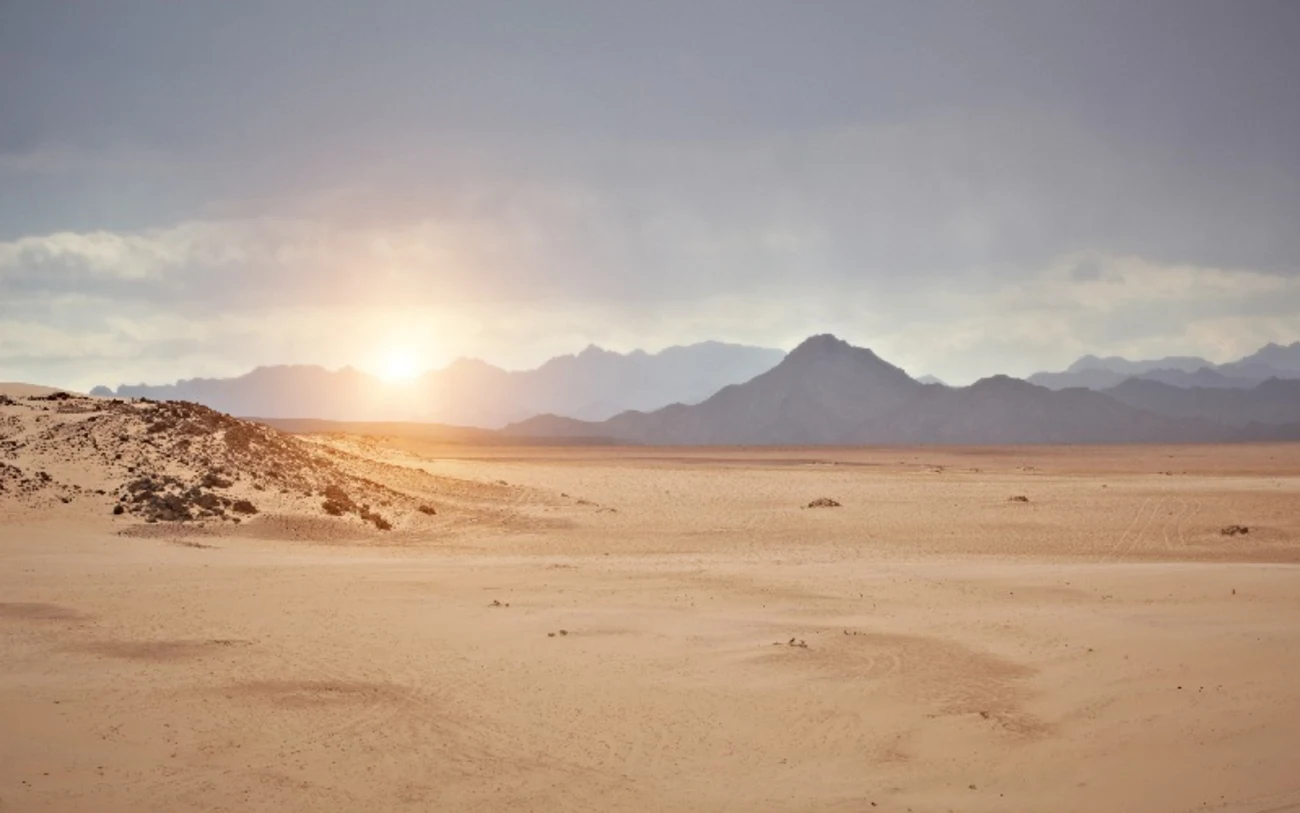
The Sinai Peninsula is a vast triangular landmass covering about 60,000 km², forming a natural bridge between Africa and Asia. Inhabited for over 5,000 years, it has played a crucial role in Egypt’s history since the First Dynasty around 3100 BC. Despite its desert reputation, Sinai receives significant rainfall that supports diverse ecosystems and communities, with Al-Arish as its modern capital. Home to Mount Sinai—sacred to Judaism, Christianity, and Islam—the peninsula’s spiritual importance and strategic location have made it a focal point of religious devotion, trade, and conflict throughout history.
The Land Bridge Between Continents
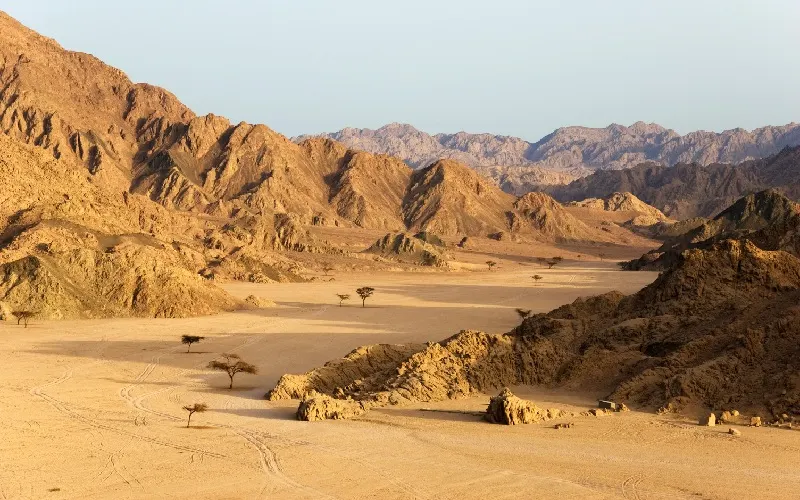
Sinai's position between Africa and Asia
Few places on Earth command such geographical authority as this singular peninsula, standing as the planet's only terrestrial connection between Africa and Asia. Water defines its boundaries with elegant precision: the Mediterranean Sea forms its northern edge, while the Gulf of Suez and Suez Canal create the western frontier, and the Gulf of Aqaba establishes the eastern border. The eastern passage to Asia stretches approximately 200 kilometers wide, contrasting with the more compact 125-kilometer Isthmus of Suez that links it to African soil.
This extraordinary positioning has transformed the peninsula into humanity's most contested crossroads. Ancient powers from the Levant, Mesopotamia, and Asia Minor have recognized its value for millennia, understanding that whoever controls Sinai controls the flow between continents. The peninsula's gateway function has rendered it geopolitically magnetic throughout every era of recorded civilization.
Geological and tectonic significance
Earth's tectonic forces converge here with remarkable intensity. The peninsula sits at a geological triple junction where the Gulf of Suez rift, the Aqaba–Levant transform fault, and the Red Sea rift meet in dramatic fashion. This creates a subplate caught between the mighty African and Arabian plates, its boundaries carved by the fault systems of both the Gulf of Suez and Gulf of Aqaba.
Modern GPS technology reveals the dynamic nature of this geological theater. The Red Sea spreads at varying rates between 14±1 to 5.6±1 mm per year in a north-northeast direction, while the Gulf of Aqaba experiences left-lateral transform motion at approximately 8-9 mm annually. The Gulf of Suez moves far more slowly, showing minimal extensional motion of less than 1 mm per year.
These powerful forces have sculpted three magnificent topographical regions: towering granite peaks in the south that culminate at Mount Catherine's 2,640-meter summit, a central plateau that slopes gradually northward, and expansive northern coastal plains decorated with wind-carved sand dunes.
Natural resources and water systems
Beneath Sinai's surface lies a treasure trove of geological riches. Petroleum deposits concentrate primarily along the Red Sea coastal areas and spread throughout the peninsula's interior. The mineral wealth extends to phosphates, manganese, iron ore, and uranium, while natural gas extraction operations tap into substantial reserves. Ancient Egyptians discovered turquoise here, beginning mining operations that stretch back thousands of years.
Water tells an equally fascinating story across this desert landscape. Annual precipitation delivers over 1.6 million acre-feet (2 billion cubic meters) of precious moisture. Nature distributes this bounty efficiently: one-quarter becomes surface runoff, while another quarter seeps into underground reservoirs. The northeastern regions capture Egypt's highest rainfall totals, receiving approximately 304 mm each year.
Two primary water sources sustain the peninsula: renewable flash flood waters and the ancient Nubian Aquifer's non-renewable groundwater reserves. Wadi El-Arish stands as the hydrological champion, its vast watershed capturing over 60 percent of all peninsula precipitation, creating potential for future agricultural expansion across North Sinai's promising landscapes.
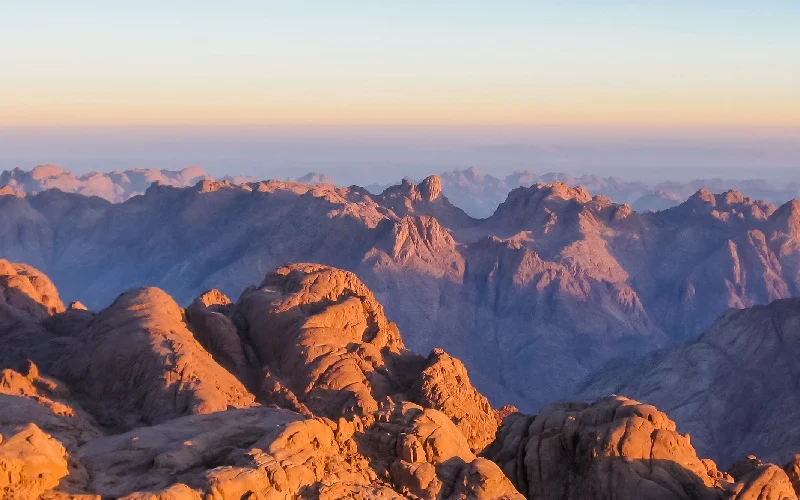
The Sinai Peninsula is characterized by diverse landscapes. It includes a northern coastal plain, a central plateau, and rugged highlands in the south. The highest peak, Mount Catherine, reaches 2,640 meters. Despite being classified as a desert, the peninsula receives significant precipitation, supporting varied ecosystems and wildlife.
Religious and Cultural Significance
Few places on Earth command such universal reverence across the world's major faiths. The Sinai Peninsula emerges as sacred terrain where divine encounters have shaped the spiritual foundations of billions, its rugged mountains and hidden valleys bearing witness to moments that transformed human understanding of the divine.
Mount Sinai and the Ten Commandments
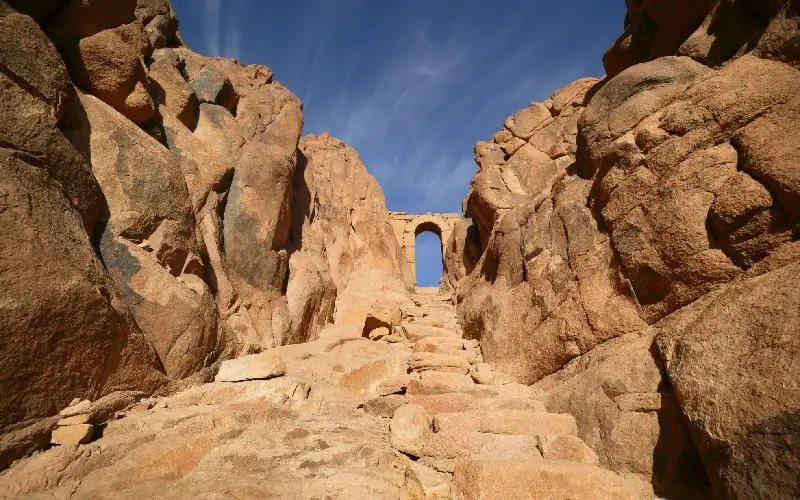
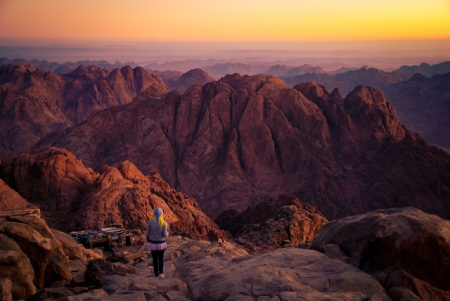
Jabal Musa—the Mountain of Moses—rises from the peninsula's heart as perhaps humanity's most consequential peak. Here, according to biblical tradition, occurred one of history's most pivotal divine revelations: Moses receiving the Ten Commandments. These stone-carved laws would establish the bedrock principles that still guide human conduct today: the worship of one God, prohibitions against murder and theft, commandments to honor parents and observe the Sabbath. Ancient texts describe the mountain's transformation during this sacred moment—clouds engulfing its summit while thunder shook the earth, lightning pierced the darkness, and smoke billowed skyward.
St. Catherine's Monastery and Christian heritage
Nestled at Mount Sinai's base sits an architectural marvel that has defied the passage of seventeen centuries. St. Catherine's Monastery holds the extraordinary distinction of being the world's oldest continuously inhabited Christian monastery, its walls rising between 527-565 CE under Byzantine Emperor Justinian I's orders. Tradition places its location at the very spot where Moses encountered the burning bush. Remarkably, this sacred institution has never fallen to destruction, preserving its Greek and Roman heritage through countless political upheavals.
Within the monastery's ancient walls lie treasures that rival the Vatican's own collections. The monastery's library contains manuscripts of incalculable historical value, second only to the Vatican Library in importance. This repository of knowledge, established alongside the monastery itself, earned recognition from Guinness World Records as the planet's oldest continuously operating library—a testament to unbroken scholarly tradition spanning nearly fifteen centuries.
Sinai in Jewish, Christian, and Islamic traditions
The mountain's spiritual significance transcends individual religions, creating a rare convergence of Abrahamic faith traditions. Jewish teaching holds that Mount Sinai witnessed not merely the giving of written law, but the revelation of the complete oral tradition that would guide generations. Christians view this sacred peak as the foundation of God's covenant relationship with humanity, later fulfilled through Christ's mission.
Islamic reverence for the mountain appears in the Quran itself, where it is honored as Ṭūr Sīnā, while the nearby Wādī Ṭuwā is considered equally sacred. The monastery's unique character becomes evident in its remarkable Fatimid mosque, constructed in 1106 CE—a symbol of interfaith harmony rarely seen elsewhere. Most extraordinarily, the monastery claims protection through a document allegedly granted by Prophet Muhammad himself, establishing this remote outpost as a bridge between the world's great monotheistic traditions where mutual respect has flourished across the centuries.
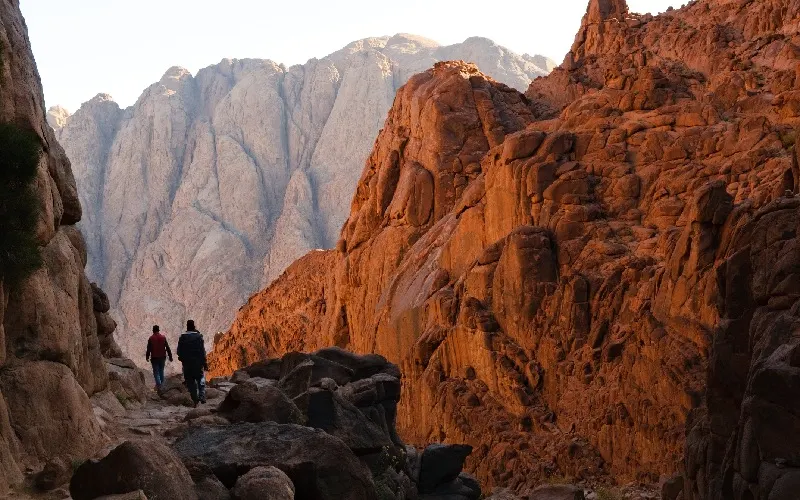
The Sinai Peninsula holds great religious significance for Judaism, Christianity, and Islam. Mount Sinai is revered as the place where Moses received the Ten Commandments. St. Catherine's Monastery, located at the foot of Mount Sinai, is the world's oldest continuously inhabited Christian monastery and houses valuable religious artifacts and manuscripts.
Customize Your Dream Vacation!
Get in touch with our local experts for an unforgettable journey.
Plan Your TripHistorical Transitions and Power Struggles
Countless empires have coveted Sinai's strategic position, each leaving distinctive marks upon this contested landscape as civilizations rose and fell across millennia.
Ancient Egyptian and Nabataean presence
Egyptian pharaohs recognized Sinai's mineral wealth early, establishing mining operations at Wadi Maghareh and Serabit el-Khadim to extract turquoise and copper. These precious stones adorned royal jewelry and religious artifacts, making Sinai's mines crucial to ancient Egyptian prestige. Simultaneously, the resourceful Nabataeans carved their own niche in southern Sinai, constructing a temple on Jebel Serbal around the 1st century BC. Their sophisticated trade networks spanned from Yemen's ports to Damascus's markets, with Sinai serving as a vital link in these lucrative commercial chains.
Roman annexation and Byzantine influence
Rome's imperial appetite consumed the Nabataean Kingdom following King Rabbel II Soter's death in 106 AD, transforming the territory into Arabia Petraea province. Centuries later, Emperor Justinian's ambitious vision materialized as St. Catherine's Monastery rose between 527-565 CE, cementing Byzantine spiritual authority in the region. The peninsula found itself incorporated into Palaestina Salutaris province during the 6th century, reflecting the eastern empire's administrative reach.
Islamic conquests and Crusader routes
Amr al-As led Muslim armies through Sinai in 639 AD, ushering in a new era of Islamic governance. The peninsula's strategic value persisted during the Crusades, when European knights traversed these ancient paths between Cairo and Damascus. Sultan Saladin fortified this critical corridor, constructing a citadel on Pharaoh Island near modern Taba. Sinai became an essential segment of Via Maris, facilitating movement between Egypt and northern territories.
Modern wars and the Egypt-Israel peace process
Contemporary conflicts brought repeated upheavals to Sinai's inhabitants. Israeli forces occupied the peninsula twice—briefly during the 1956 Suez Crisis from October to March 1957, then for fifteen years following the 1967 Six-Day War until April 1982. Egypt's 1973 Operation Badr during the Yom Kippur War successfully reclaimed eastern Suez territories. Peace finally arrived through the landmark 1979 Egypt-Israel treaty, which established permanent borders and completed Israeli withdrawal by April 1982.
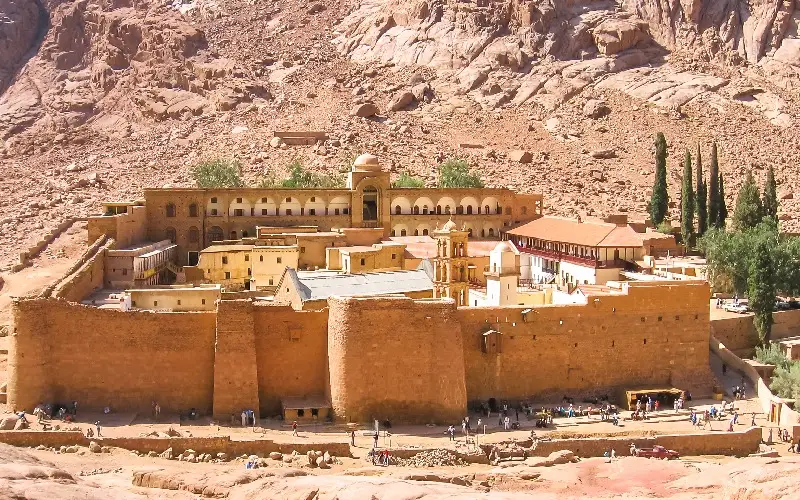
The Sinai Peninsula has been a crucial crossroads of civilizations for millennia. It has witnessed the rise and fall of numerous empires, from ancient Egyptian mining operations to Nabataean trade routes, Roman annexation, Byzantine influence, and Islamic conquests. Its strategic position connecting Africa and Asia has made it central to regional geopolitics throughout history.
Sinai's People and Environmental Realities
Bedouin life and cultural preservation
Eight distinct tribal communities shape the cultural fabric of Sinai Peninsula, with indigenous Bedouins representing roughly 30% of the region's inhabitants . These remarkable societies have crafted survival strategies perfectly adapted to desert conditions over countless generations, sustaining themselves through fishing along coastal waters, herding across interior valleys, and cultivating small agricultural plots. Their social organization operates through time-tested tribal leadership structures that govern everything from dispute resolution to resource allocation—systems entirely distinct from mainland Egyptian governance .
Traditional Bedouin culture pulses with artistic expression that mirrors the peninsula's rugged beauty. Ancient melodies accompany poetry recitations under starlit skies, while intricate handicrafts showcase skills passed down through family lines. Modern pressures threaten these cultural treasures, yet many communities fiercely guard their heritage, recognizing that their customs represent living libraries of desert wisdom accumulated over millennia.
Ecological zones and wildlife
Four distinct ecological realms unfold across Sinai's varied terrain, each harboring unique biological communities. Mediterranean coastal influences dominate northern plains, gradually yielding to central plateau conditions before ascending into the dramatic southern highlands. This ecological diversity nurtures an astonishing 472 plant species , many possessing medicinal properties that local healers have utilized for generations.
Wildlife enthusiasts discover remarkable creatures adapted to harsh desert conditions. The elusive Sinai leopard prowls mountain caves, while sure-footed Nubian ibex navigate cliff faces with extraordinary agility. Striped hyenas roam nocturnal territories, though habitat fragmentation increasingly threatens these magnificent predators . The peninsula's geographical position creates isolated microclimates where endemic species evolve in remarkable isolation, producing creatures found nowhere else across the globe.
Modern development and environmental stress
Tourism infrastructure has transformed coastal areas along the Gulf of Aqaba dramatically over recent decades. Resort complexes now dot shorelines once known only to fishing communities, bringing economic opportunities alongside environmental challenges. Groundwater reserves face unprecedented depletion, while coral reef ecosystems suffer from increased human activity and waste discharge. Solid waste management struggles to keep pace with growing visitor numbers and expanding settlements.
Military activities have scarred portions of the landscape, leaving behind unexploded ordnance and disturbed terrain that requires careful rehabilitation. Conservation scientists work urgently to balance ecological preservation with community economic needs, particularly as shifting climate patterns place additional stress on already limited water resources. The challenge becomes protecting Sinai's natural heritage while ensuring local populations can thrive in their ancestral homeland.
Recent decades have seen rapid coastal development, primarily focused on tourism infrastructure along the Gulf of Aqaba. This expansion has introduced environmental challenges such as groundwater depletion, coral reef degradation, and waste management issues. Conservation efforts now face the dual challenge of preserving ecological systems while addressing the economic needs of local populations.
Sinai stands as a land of contrasts and convergence, where geological wonders, human ambition, and spiritual significance intertwine. Throughout millennia, empires, traders, and religious communities have left their mark, yet the peninsula’s mountains, deserts, and valleys remain enduring witnesses. Its unique position between Africa and Asia, combined with unexpected ecological richness and vibrant cultural traditions, creates a landscape of paradoxes—sacred sites beside military posts, arid deserts nourished by rainfall, Bedouin life alongside modern settlements. Sinai’s resilience and spiritual heritage, epitomized by St. Catherine’s Monastery, highlight its enduring capacity to inspire reverence, bridging faiths, civilizations, and continents. Today, Sinai continues to shape human history, culture, and imagination, remaining a place where diverse worlds meet and endure.
The Sinai Peninsula is an integral part of Egypt. While it was temporarily under Israeli control during the Suez Crisis (1956-1957) and following the Six-Day War (1967-1982), it was fully returned to Egypt as part of the 1979 Egypt-Israel peace treaty. Today, it remains Egyptian territory, though some areas face travel restrictions due to security concerns.
Despite its desert classification, Sinai hosts diverse flora and fauna. You can encounter ibex, foxes, hyenas, lizards, and numerous bird species. Seasonal rainfall supports shrubs, acacia trees, and rare desert wildflowers. Coastal areas feature coral reefs teeming with marine life.
The Sinai is home to several Bedouin tribes, including the Tarabin, Sawarka, and Muzeina. These communities preserve traditional lifestyles, crafts, and oral histories, offering visitors insight into centuries-old desert survival practices.
Key attractions include Mount Sinai and St. Catherine’s Monastery, the Colored Canyon, Ras Mohammed National Park, and the beaches of the Gulf of Aqaba. These sites offer hiking, diving, historical exploration, and desert safari experiences.
Travelers are advised to stick to well-known tourist areas, follow local guidance, and hire licensed guides for desert or mountainous excursions. Some northern and central regions may have travel restrictions due to security concerns.
Sinai has served as a vital trade and military corridor, connecting Egypt to the Levant and Arabia. Ancient Egyptians mined turquoise and copper here, while later civilizations used its routes for commerce and military campaigns. Its strategic position shaped both economic and political developments throughout history.



The Sinai Peninsula is a historic crossroads between continents, sacred to three religions and central to Egypt’s story for over 5,000 years.

Marsa Alam is a Red Sea coastal paradise in Egypt, known for exceptional diving, coral reefs, white beaches, and the vast wilderness of Wadi el-Gemal National Park.